
The Era of 'Fair Trade' AI Music Has Arrived, and It's Finally Paying Artists
A new wave of 'Clean-Room' AI platforms is reshaping the music industry in 2026, offering generative tools trained exclusively on licensed data that compensate the original creators.
By Factlen Editorial Team
- Ethical AI Platforms
- Focuses on building clean-room models and sustainable business frameworks that compensate rights-holders.
- Independent Artists
- Focuses on leveraging AI to augment human creativity and retain royalties without legal risk.
- Rights Organizations
- Focuses on transparency, copyright eligibility, and preventing royalty fraud via audio fingerprinting.
What's not represented
- · Major Record Labels
- · Traditional Session Musicians
Why this matters
For years, AI music tools threatened to replace human artists and steal their copyrighted work. The rise of 'Fair Trade' AI platforms flips the script, allowing independent musicians to harness powerful generative tools legally while ensuring the original artists who trained the models finally get paid.
Key points
- New 'Clean-Room' AI music platforms are training exclusively on licensed, opt-in data.
- Original artists whose music trains these ethical models now receive a share of the generated revenue.
- Major streaming platforms have begun purging tracks made with unauthorized AI vocal clones.
- The 'Human Spark' mandate requires artists to prove human involvement to secure copyright protection.
- Rights organizations are using audio fingerprinting to block 100% machine-generated tracks from claiming royalties.
The era of artificial intelligence in music being synonymous with copyright theft and lawsuits is coming to an end. In June 2026, a new wave of "Clean-Room" AI platforms is reshaping the music industry, proving that generative tools can empower creators while fairly compensating the original artists who trained them.[3][7]
For the past two years, the narrative around AI in music has been dominated by multi-billion-dollar lawsuits against tech companies that scraped copyrighted catalogs without permission. Now, the industry is executing a massive pivot toward consent, transparency, and ethical sourcing.[1][3]
Leading this shift are platforms like Beatoven.ai and Musical AI, which have partnered to launch a fully licensed, rightsholder-compensating generative AI platform. Their new models are trained on a verified database of over three million legally sourced songs, loops, and samples.[1]
When a track generated by these ethical models is streamed or utilized commercially, the revenue does not solely go to the user who prompted it. A proportional share is routed back to the original rights-holders whose data informed the AI's output, mimicking the structure of traditional streaming royalties.[1]

Production software giant LANDR has also entered the ethical AI space, releasing new songwriting assistants called Blueprints and Layers. These tools operate under what the company has branded a "Fair Trade AI framework," ensuring all training data comes exclusively from artists who explicitly opted in and are paid for their contributions.[2]
This ethical pivot is not just a moral victory for musicians; it has become a strict legal necessity. In early 2026, major Digital Service Providers (DSPs) like Spotify and Apple Music began aggressively purging tracks that utilized unauthorized AI vocal clones or relied on scraped training data.[3]
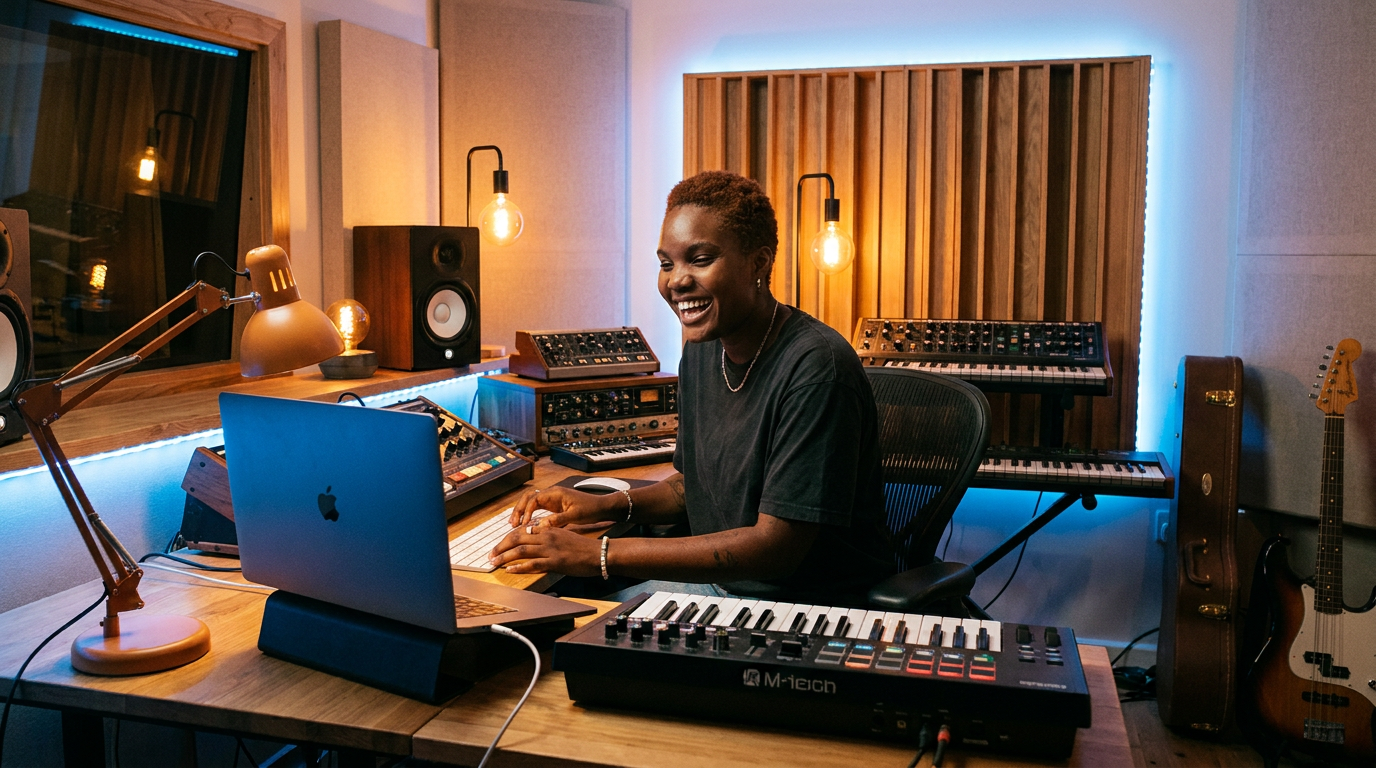
To survive the platform purges, independent artists are rapidly adopting "AI-augmented" workflows rather than relying on pure algorithmic generation. By using fairly trained tools, musicians can generate multitrack song starters, alter vocal pitches for demos, or create atmospheric background scores without fearing future copyright strikes.[2][6][7]
To survive the platform purges, independent artists are rapidly adopting "AI-augmented" workflows rather than relying on pure algorithmic generation.
Distribution platforms are actively adapting to this new reality to protect their users. Services like ONCE have introduced distribution models specifically designed for the AI era, charging a flat $2 fee to distribute an AI-assisted track to major streaming platforms.[4]
Crucially, roughly $0.92 of that distribution fee is funneled directly into an Artist Compensation Fund for working musicians. In exchange, these ethical distributors allow creators to keep 100% of their master recording royalties, provided the tracks pass automated AI provenance scanning.[4]

This built-in provenance scanning ensures that DSPs receive the necessary disclosure metadata upon upload, keeping the releases fully compliant with tightening platform rules and shielding artists from unexpected takedowns.[4]
Regulatory bodies are also cementing the rules of engagement for this new ecosystem. The UK's PRS for Music recently rolled out a comprehensive 2026 policy requiring its members to clearly specify if a registered work is "AI-assisted."[5]
To enforce this transparency, PRS and other global rights organizations are utilizing advanced audio fingerprinting technology. These systems scan catalogs to detect tracks that are 100% machine-generated, preventing fraudulent royalty claims from flooding the system and diluting the payout pool for human artists.[5]
Meanwhile, the US Copyright Office has firmly established the "Human Spark" mandate. Under this 2026 framework, a song is only eligible for full copyright protection if the artist can demonstrate that the primary creative decisions—such as arrangement, lyricism, and final production—were made by a human.[3][5]

This vital distinction between "AI-generated" (purely algorithmic) and "AI-assisted" (human-directed) has become the defining legal boundary of the modern music business. It ensures that AI functions as a collaborative instrument, much like a synthesizer or a drum machine, rather than a wholesale replacement for human artistry.[5][6]
How we got here
Late 2024
Major record labels launch multi-billion-dollar lawsuits against early AI music generators for scraping copyrighted catalogs.
Mid 2025
The concept of 'Fairly Trained' certification emerges, encouraging platforms to use only licensed data.
Early 2026
Major streaming services begin purging thousands of tracks that utilize unauthorized AI vocal clones.
June 2026
Platforms like Beatoven.ai, LANDR, and ONCE roll out comprehensive 'Fair Trade' AI models and ethical distribution networks.
Viewpoints in depth
Ethical AI Platforms
Focuses on building clean-room models and sustainable business frameworks.
Companies like LANDR and Musical AI argue that the tech industry's 'move fast and break things' era is over. By prioritizing opt-in consent and routing a share of revenue back to the original rights-holders, these platforms believe they can offer enterprise-grade generative tools without inviting devastating copyright lawsuits.
Independent Artists
Focuses on leveraging AI to augment human creativity without legal risk.
For bedroom producers and independent musicians, ethical AI levels the playing field. Instead of fearing platform takedowns, creators are using fairly trained models to generate multitrack song starters, test vocal arrangements, and produce high-quality demos, retaining 100% of their master royalties in the process.
Rights Organizations
Focuses on transparency, copyright eligibility, and preventing royalty fraud.
Groups like the UK's PRS for Music emphasize that the line between human and machine must remain clear. By deploying audio fingerprinting and enforcing the 'Human Spark' mandate, they aim to protect the royalty pool from being drained by fully automated, algorithmic spam.
What we don't know
- How major record labels will adapt their own proprietary AI models to compete with these independent ethical platforms.
- Whether the payout rates for training-data royalties will be substantial enough to serve as a primary income stream for original artists.
Key terms
- Fair Trade AI
- A framework where artificial intelligence models are trained only on ethically sourced data from creators who explicitly opted in and are compensated.
- Audio Fingerprinting
- Technology used by rights organizations to scan and identify tracks that are entirely machine-generated, preventing fraudulent royalty claims.
- AI-Augmented Workflow
- A production process where a human musician uses AI as a collaborative tool—such as for generating song starters or testing vocal pitches—rather than relying on it to create a finished song autonomously.
Frequently asked
What is a 'Clean-Room' AI model?
An AI model trained exclusively on licensed, public-domain, or opt-in data, ensuring the generated output does not infringe on copyrighted works.
Do original artists get paid when AI music is streamed?
Yes. Under the new 'Fair Trade' frameworks, rights-holders whose data trained the AI receive a proportional share of the model's revenue when the generated tracks are used.
Can I copyright an AI-generated song in 2026?
Only if you can prove significant human involvement. The 'Human Spark' mandate requires the primary creative decisions, like arrangement and lyrics, to be made by a human.
Sources
Source coverage
7 outlets
3 viewpoints surfaced







[1]Music WeekEthical AI Platforms
Tech firms Musical AI and Beatoven.ai join forces for fully licensed generative AI platform
Read on Music Week →[2]MusicRadarEthical AI Platforms
LANDR announces new 'ethical' AI music-making assistants for songwriting and production
Read on MusicRadar →[3]ArtistRackIndependent Artists
The 2026 Ethical AI Music Framework: A Guide for Independent Artists
Read on ArtistRack →[4]ONCEEthical AI Platforms
AI Music Royalties: How You Get Paid (2026)
Read on ONCE →[5]ACE StudioRights Organizations
PRS for Music (UK) AI Policy Summary
Read on ACE Studio →[6]RouteNoteIndependent Artists
Ethical AI music generation: are Musical AI and Beatoven.ai shaping the future of copyright?
Read on RouteNote →[7]MelodyCraftEthical AI Platforms
Beatoven AI Review 2026: Is This Ethical AI Music Generator Worth It?
Read on MelodyCraft →


Every angle. Every day.
Get entertainment stories with full source coverage and perspective breakdowns delivered to your inbox.