
US and Iran Sign Draft Peace Deal, But Switzerland Implementation Talks Abruptly Cancelled
The US and Iran have signed a 14-point memorandum to end their 15-week war and reopen the Strait of Hormuz. However, the diplomatic framework is already fracturing as technical talks in Switzerland were postponed amid ongoing regional strikes.
By Factlen Editorial Team
- Market & Policy Analysts
- Focuses on the logistical hurdles of restoring the global oil supply chain and the timeline for market relief.
- Deal Skeptics & Regional Actors
- Views the framework as a dangerous capitulation that rewards Iranian aggression and leaves its nuclear infrastructure intact.
- US Administration
- Views the deal as a necessary economic pivot that ends a costly war and stabilizes global markets.
What's not represented
- · Commercial shipping companies navigating the physical risks of the Strait of Hormuz.
- · Lebanese civilians affected by the ongoing proxy strikes.
Why this matters
The 15-week conflict effectively closed the Strait of Hormuz, driving up global energy costs and threatening a broader regional war. While the draft peace deal promises immediate relief for oil markets and a halt to the fighting, the sudden cancellation of implementation talks means the risk of renewed military escalation remains dangerously high.
Key points
- The US and Iran signed a 14-point memorandum to end their 15-week conflict and reopen the Strait of Hormuz.
- Technical implementation talks scheduled in Switzerland were abruptly postponed by the Swiss Foreign Ministry.
- Global oil prices dropped over 4% on the news, though analysts warn physical supply will remain tight.
- The draft deal includes a $300 billion reconstruction plan and the unfreezing of Iranian assets.
- Hezbollah-linked media claims Iran delayed its delegation due to ongoing Israeli strikes in Lebanon.
- Vice President Vance sharply criticized Israeli opposition to the deal, citing US taxpayer funding of Israel's defense.
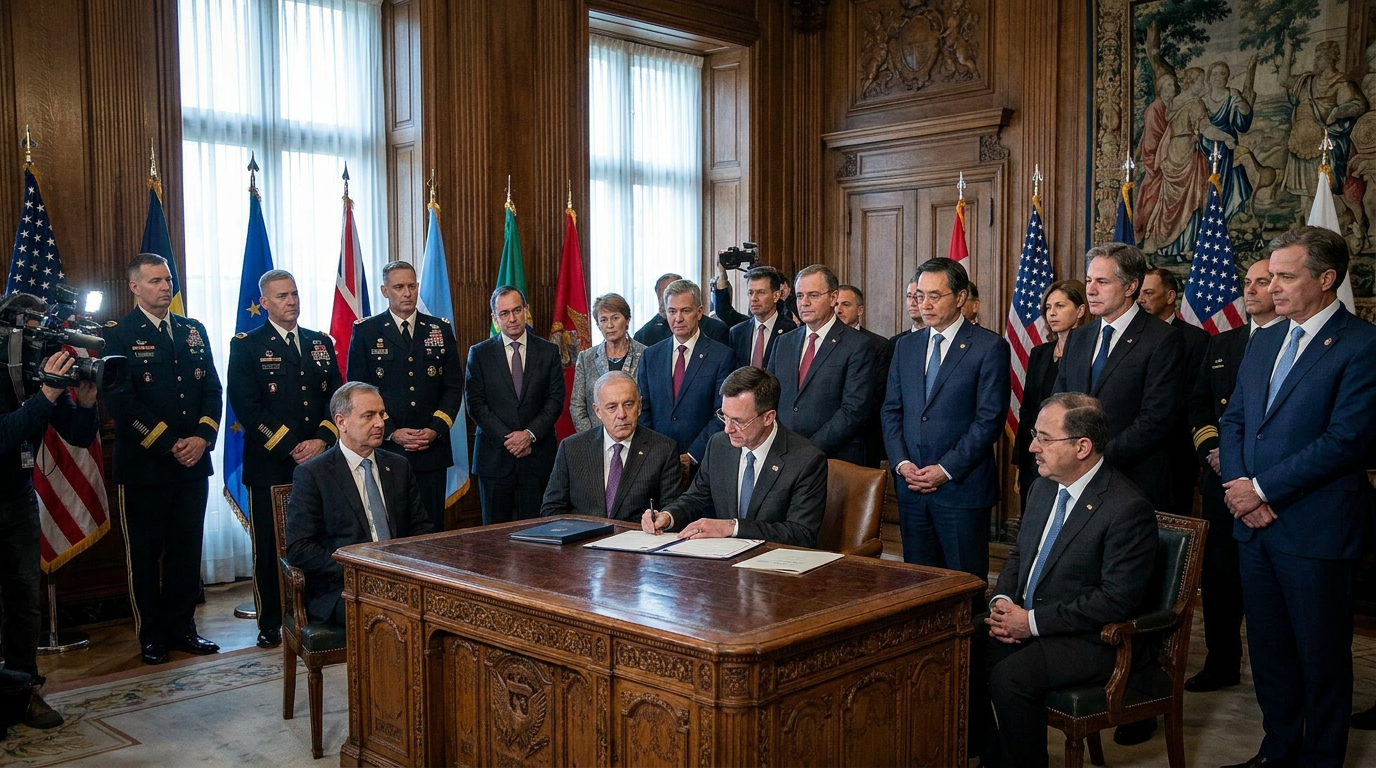
The United States and Iran have officially signed a 14-point memorandum of understanding designed to end their 15-week military conflict, but the path to implementation has immediately hit a diplomatic wall. The core claim of the agreement is a permanent cessation of hostilities across all fronts, including proxy battlegrounds in Lebanon, in exchange for sweeping economic relief. Evidence of the deal's initial momentum emerged when the White House confirmed the remote signing of the pact, officially starting a 60-day negotiating clock to finalize Iran's nuclear obligations. However, the fragility of the arrangement was exposed on Friday when highly anticipated technical talks in Switzerland—intended to iron out the logistics of the ceasefire—were abruptly postponed by the Swiss Foreign Ministry. The sudden cancellation highlights the transparent uncertainty surrounding the deal, as regional violence threatens to unravel the diplomatic framework before the ink is fully dry.[1][2][7][8]
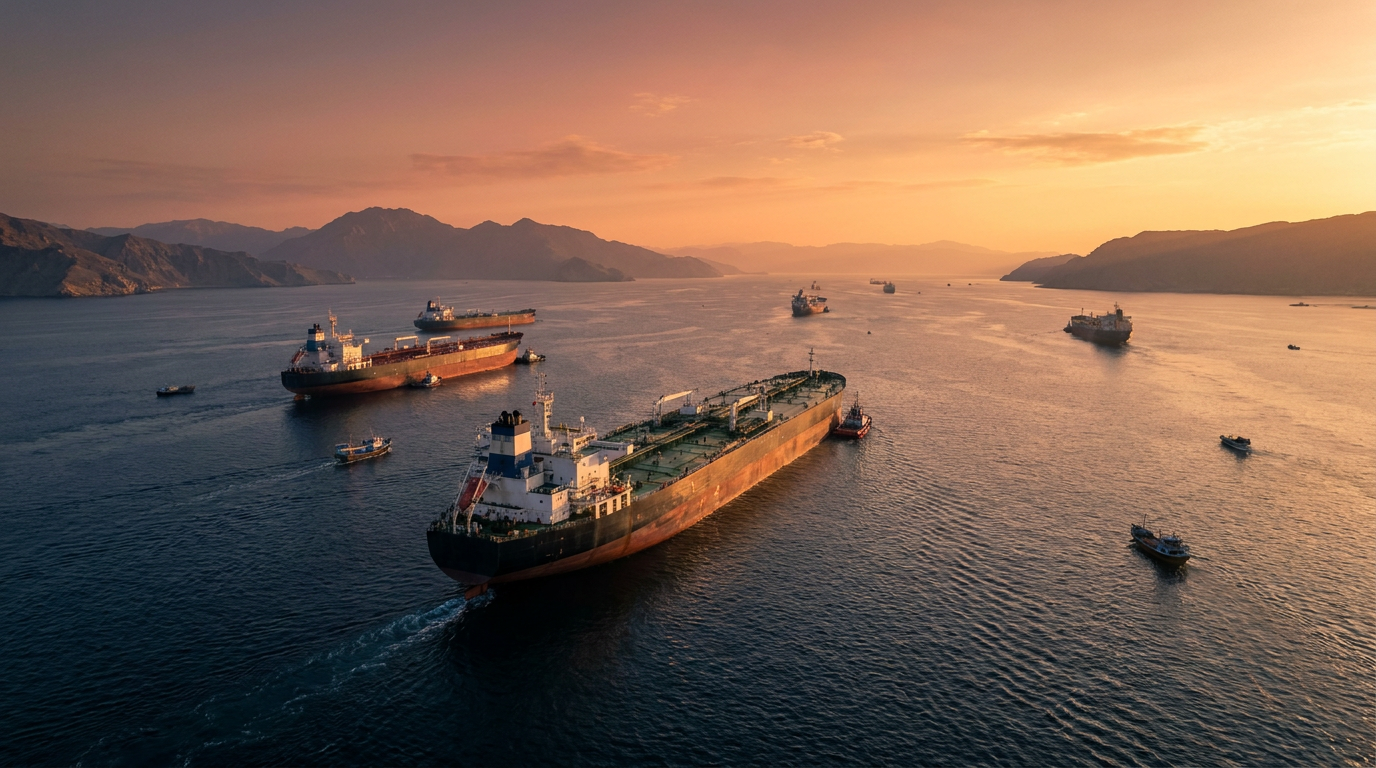
A central pillar of the memorandum is the immediate lifting of the United States naval blockade that has choked Iranian ports for months. The evidence for this shift is already materializing on the water. Vice President JD Vance confirmed during a White House briefing that the US Navy has allowed more than a dozen commercial vessels to pass through the blockade line, signaling a tangible de-escalation. The agreement stipulates that Iran will allow toll-free transit through the critical maritime chokepoint for the next 60 days while regional dialogue determines the future administration of the strait. This marks a significant concession from Washington, which had previously maintained a rigid stance on maritime enforcement, relying on warships, fighter jets, and thousands of personnel to restrict Tehran's ability to export crude oil.[2][3][4]
Despite these political assurances, maritime intelligence suggests that the physical reality of reopening the waterway is highly complex and fraught with operational risk. The presence of sea mines and the need for extensive security guarantees mean that normalized shipping operations will face significant logistical delays. Shipping firms and maritime insurers have indicated that clarity on liability and physical safety is required before normal operations can resume. President Donald Trump acknowledged these hurdles, clarifying that while the blockade is lifting, the actual flow of traffic depends on the successful removal of explosive hazards laid during the height of the conflict. Consequently, shippers remain cautious about immediately resuming full-scale transit, waiting for verifiable evidence that the shipping lanes are entirely clear of military threats.[1][5]

The economic implications of the peace draft are massive, with the primary claim being that a reopened Strait of Hormuz will rapidly cool global energy inflation. The evidence from financial markets strongly supports this anticipation. Following the announcement of the framework, global oil prices experienced their sharpest drop since March, with Brent crude tumbling 4.1% to $84 per barrel and US West Texas Intermediate falling 4.7% to near $80. Investors rapidly priced out the geopolitical risk premium that had accumulated during the 110-day closure of a waterway that typically handles one-fifth of the world's petroleum consumption. The relief has also spread into broader financial markets, with global equities futures moving higher as investors price in lower energy costs and a reduced risk of further military escalation.[5][6]
However, energy analysts caution against expecting an immediate return to pre-war supply levels. S&P Global reports that while the memorandum is inherently bearish for future risk premiums, the physical crude markets will remain exceptionally tight through the summer. The conflict effectively removed millions of barrels of oil and liquefied natural gas from the global supply chain, and the logistical reality of restoring normalized transit will take months. Supply losses are expected to exceed 1.5 billion barrels by the end of June, with energy intelligence firms projecting that full Hormuz normalization and the clearing of the supply backlog could extend well into 2027. This transparent uncertainty means that consumers may not feel the immediate benefits of the diplomatic breakthrough at the fuel pump.[6]
However, energy analysts caution against expecting an immediate return to pre-war supply levels.
The most contested aspect of the draft deal involves the unprecedented financial concessions offered to Tehran in exchange for nuclear compliance. According to policy analysts reviewing the framework, the United States and its regional partners have committed to developing a $300 billion reconstruction plan for Iran. Furthermore, the draft terms reportedly mandate the unfreezing of billions in Iranian assets held in foreign banks and the waiving of US-backed sanctions on oil exports, petrochemicals, and related banking services. In return, the US claims Iran has agreed to dilute its stockpile of highly enriched uranium and freeze its nuclear weapons program, effectively dismantling the infrastructure that initially sparked the military confrontation.[2][3]

The evidence supporting the exact sequencing of these nuclear steps remains weak and highly guarded, leading to internal friction within the negotiating teams. Reports indicate that President Trump has requested last-minute amendments to the text specifically regarding the timeline and physical transfer of Iran's enriched uranium. Administration officials noted that the White House wants more specific guarantees about how the US takes possession of the nuclear material before finalizing the broader sanctions relief. Simultaneously, Iranian hardliners are threatening to walk away from the table if full economic relief is not immediately realized, warning that Tehran will not honor its commitments if Washington attempts to alter the agreed-upon framework.[7][9]
The immediate mechanism for resolving these nuclear and logistical disputes was supposed to be a summit at the Bürgenstock resort in Switzerland, involving delegations from the US, Iran, Qatar, and Pakistan. The claim that diplomacy was on track collapsed when the Swiss Foreign Ministry announced the indefinite postponement of the talks, stating only that preparatory work was continuing and that no additional information was available. Vice President Vance subsequently scrapped his plans to travel to Geneva, with the White House attempting to downplay the cancellation by noting that the logistics of such high-stakes negotiations are rarely simple or predictable.[7]
The evidence points to regional proxy violence as the primary catalyst for the breakdown of the Swiss summit. Hezbollah-linked media outlets reported that Tehran intentionally delayed sending its delegation in direct protest of ongoing, limited Israeli military strikes in southern Lebanon. The 14-point memorandum explicitly calls for a halt to fighting on all fronts, including Lebanon, which was drawn into the conflict when Tehran-backed Hezbollah fired rockets at Israel. Tehran has publicly stated that if Israel keeps troops in Lebanon and continues its aerial bombardments, it would be considered a direct violation of the agreement with Washington, justifying Iran's refusal to proceed with the technical talks.[1][2][8]

The friction over the Lebanon strikes has exposed a severe and highly public rift between the United States and Israel regarding the merits of the peace deal. The US administration's claim is that the agreement is a necessary pivot to stabilize the global economy, but Israeli leadership views the framework as a dangerous capitulation that leaves Iran's nuclear infrastructure largely intact while rewarding them with massive financial windfalls. In response to Israeli criticism, Vice President Vance delivered an unusually sharp rebuke from the White House briefing room, telling Israeli officials to "wake up and smell the reality" of their international isolation.[4]
Vance explicitly reminded the US's closest Middle Eastern ally that American taxpayers had funded two-thirds of the weapons used to defend Israel over the past three months, signaling a dramatic shift in Washington's tolerance for continued regional escalation. The administration's posture marks a stark departure from the war's early days. President Trump initially called for regime change in Tehran and pledged to obliterate Iran's ballistic missile program. Now, the peace deal focuses much more narrowly on reopening the Strait of Hormuz and stabilizing the US stock market, with the president openly bragging that the ceasefire announcement pushed 401ks to an all-time high.[4]
The overarching uncertainty of this evidence-pack is whether the 60-day negotiating clock can survive the current diplomatic vacuum. President Trump has explicitly warned that the memorandum is not a final deal and that the US will "go back to bombing" if Iran fails to meet its obligations or attempts to stall the nuclear dismantling process. With the Switzerland talks indefinitely on hold, Israeli strikes continuing in Lebanon, and hardliners in both Washington and Tehran demanding amendments to the text, the evidence suggests that the 14-point memorandum is less of a definitive peace treaty and more of a highly volatile ceasefire that could fracture at any moment.[1][8][9]
How we got here
Feb 2026
US and Israeli airstrikes target Iranian military sites, sparking a 15-week regional war.
Mar 2026
Iran effectively closes the Strait of Hormuz, disrupting one-fifth of global oil supplies.
Apr 2026
The US imposes a strict naval blockade on Iranian ports to pressure Tehran.
Jun 17, 2026
The US and Iran remotely sign a 14-point memorandum of understanding to end hostilities.
Jun 19, 2026
Scheduled technical talks in Switzerland are abruptly postponed amid regional proxy violence.
Viewpoints in depth
US Administration Advocates
The White House views the deal as a necessary economic pivot that ends a costly war.
Administration officials argue that the 14-point memorandum achieves the primary goal of reopening the Strait of Hormuz, which is vital for stabilizing global energy markets and protecting the US economy. They emphasize that the 60-day negotiating window provides leverage to dismantle Iran's nuclear program without committing to endless regional warfare, framing the financial concessions as a pragmatic trade-off for global economic security.
Market & Policy Analysts
Energy experts focus on the logistical hurdles of restoring the global oil supply chain.
While acknowledging the bearish impact on future oil prices, market analysts warn that the physical reality of the Strait of Hormuz remains perilous. They point out that clearing sea mines and establishing robust security guarantees will take months, meaning the physical crude market will remain tight through the summer. Their perspective strips away the political rhetoric to focus on the timeline of actual supply normalization, which they project could extend into 2027.
Deal Skeptics & Regional Actors
Israeli leaders and regional hawks view the framework as a dangerous capitulation.
Skeptics argue that the deal rewards Iranian aggression with massive financial windfalls, including a $300 billion reconstruction plan and the unfreezing of billions in assets. Israeli officials, in particular, warn that the agreement leaves Iran's nuclear infrastructure largely intact and provides Tehran with the resources to fund future proxy conflicts. They view the cancellation of the Switzerland talks as proof that Iran intends to stall the nuclear disarmament phase while reaping the immediate economic benefits.
What we don't know
- When or if the postponed technical talks in Switzerland will be rescheduled.
- Whether Iran will agree to the specific amendments requested by President Trump regarding enriched uranium.
- How long it will take to physically clear the Strait of Hormuz of sea mines to allow full commercial transit.
Key terms
- Strait of Hormuz
- A critical maritime chokepoint between the Persian Gulf and the Gulf of Oman, through which roughly 20% of the world's oil passes.
- Naval Blockade
- A military operation in which ships and aircraft prevent vessels from entering or leaving a specific port or region.
- Highly Enriched Uranium
- Uranium that has been processed to increase the concentration of the U-235 isotope, making it usable for nuclear weapons.
- Geopolitical Risk Premium
- The extra amount investors pay for an asset, such as oil, due to the risk of political instability or war disrupting supply.
Frequently asked
Is the US-Iran war officially over?
The two nations have signed a memorandum of understanding to permanently end military operations, but the ceasefire is fragile and technical implementation talks have stalled.
Will gas prices go down immediately?
While global crude prices dropped significantly following the announcement, analysts warn that clearing the Strait of Hormuz and restoring full supply will take months.
Why were the Switzerland talks cancelled?
The Swiss Foreign Ministry postponed the talks indefinitely. Reports indicate Iran delayed its delegation in protest of ongoing Israeli military strikes in Lebanon.
What is Iran getting in this deal?
The draft framework includes the lifting of US sanctions, the unfreezing of billions in assets, and a proposed $300 billion regional reconstruction plan.
Sources
Source coverage
9 outlets
3 viewpoints surfaced









[1]CBS NewsDeal Skeptics & Regional Actors
What to know about the Iran war: Trump signs 14-point memorandum
Read on CBS News →[2]Council on Foreign RelationsMarket & Policy Analysts
Where the U.S.-Iran Deal Lands on Core Issues
Read on Council on Foreign Relations →[3]PBSUS Administration
Vance says U.S. allows more than dozen ships through to Iranian ports, lifting blockade under deal
Read on PBS →[4]The Washington PostUS Administration
Vice President Vance warns Israel against criticizing its chief ally
Read on The Washington Post →[5]ICISMarket & Policy Analysts
Oil prices fall by more than 4% on US-Iran peace deal
Read on ICIS →[6]S&P GlobalMarket & Policy Analysts
FACTBOX: US-Iran deal eases oil supply fears but full restoration to take time
Read on S&P Global →[7]Fox NewsDeal Skeptics & Regional Actors
Switzerland says planned talks between US, Iran, Qatar, Pakistan postponed
Read on Fox News →[8]The GuardianDeal Skeptics & Regional Actors
US-Iran peace talks abruptly cancelled amid renewed Israeli strikes in Lebanon
Read on The Guardian →[9]The Jerusalem PostDeal Skeptics & Regional Actors
Trump requests amendments to enriched uranium clause in US-Iran ceasefire deal draft
Read on The Jerusalem Post →
More in news politics
See all 9 stories →Cognitive Science
The Science of 'Prebunking': How Cognitive Vaccines Are Defeating Misinformation
6 sources

AI Forensics
What Actually Works for Detecting AI Content in 2026: An Evidence Pack
7 sources

US-Iran Deal
US and Iran Sign Historic Ceasefire MOU, Ending 15-Week War Amid Regional Backlash
7 sources
Labor Law
House Passes Bill Mandating Binding Arbitration for First Union Contracts
8 sources
Every angle. Every day.
Get news politics stories with full source coverage and perspective breakdowns delivered to your inbox.