
U.S. and Iran Sign 14-Point Peace Agreement, Ending 15-Week War
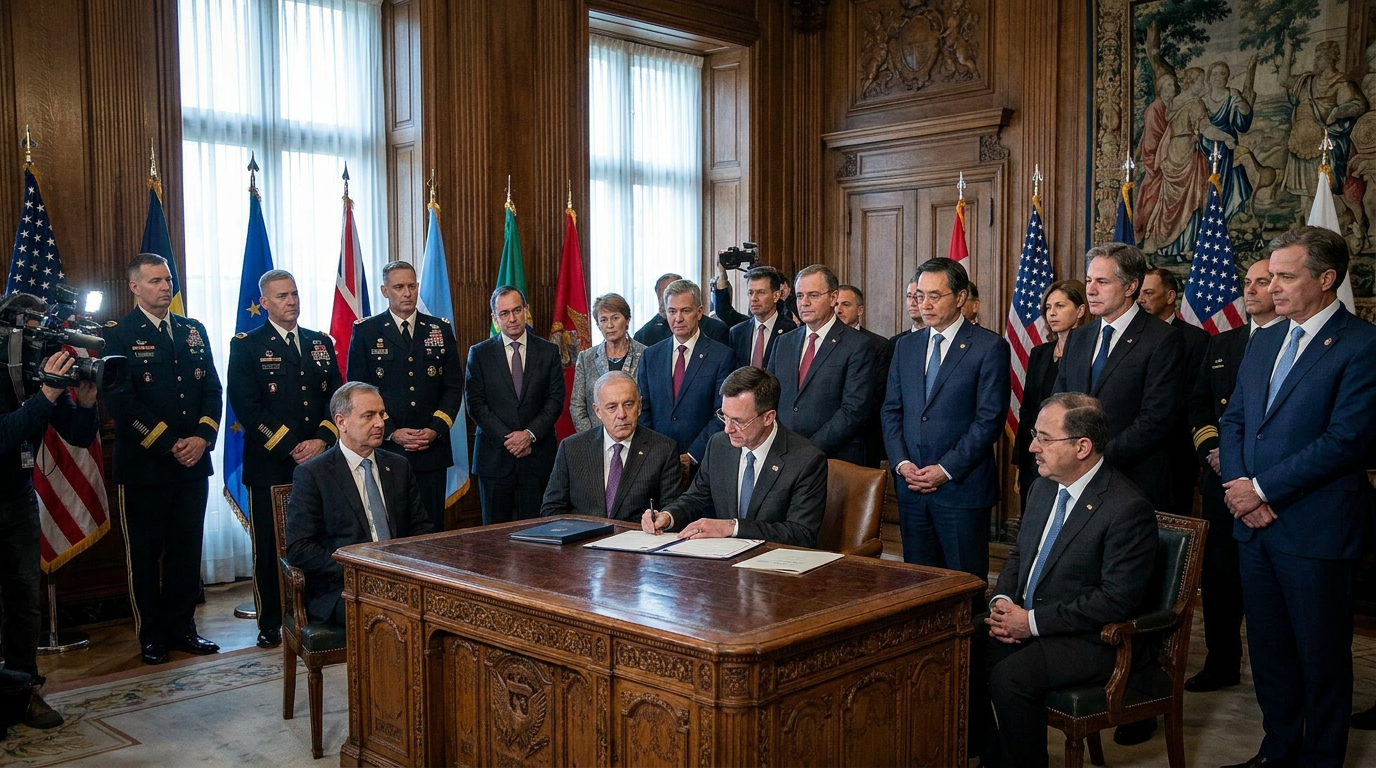
President Trump and Iranian President Pezeshkian have signed a Memorandum of Understanding to end military operations, lift the U.S. naval blockade, and reopen the Strait of Hormuz while launching a 60-day window for nuclear negotiations.
By Factlen Editorial Team
- Trump Administration
- Argues the war successfully forced Iran to the table, securing an end to their nuclear ambitions and stabilizing global markets.
- US Domestic Critics
- Argues the war was an unnecessary disaster that left the US strategically weaker, pointing out that the 2015 JCPOA achieved similar nuclear constraints without bloodshed.
- Iranian Leadership
- Frames the agreement as a tactical victory and proof of Iranian resilience, claiming the US sued for peace out of economic desperation.
- Israeli Defense Establishment
- Supports defanging Iran's nuclear program but refuses to halt military operations against Hezbollah in Lebanon, despite the MOU's terms.
What's not represented
- · Lebanese Civilians
- · Global Shipping Companies
Why this matters
This agreement halts a devastating regional conflict that severely disrupted global energy markets and supply chains. If the 60-day negotiation window succeeds, it could permanently alter the Middle East's security architecture; if it fails, the U.S. has threatened to resume a war that has already cost thousands of lives.
Key points
- The U.S. and Iran signed a 14-point MOU to permanently end military operations.
- The U.S. will lift its naval blockade and waive oil sanctions within 30 days.
- Iran will immediately reopen the Strait of Hormuz for commercial shipping.
- Negotiators have 60 days to finalize a treaty regarding Iran's nuclear program.
- Israel has defied the MOU's mandate to halt military operations in Lebanon.
After 15 weeks of devastating conflict that choked global energy markets and reshaped the Middle East, the United States and Iran have signed a 14-point Memorandum of Understanding (MOU) to permanently end military operations.[3][5]
The preliminary agreement, signed by U.S. President Donald Trump and Iranian President Masoud Pezeshkian, establishes a 60-day window to negotiate a final, binding resolution regarding Tehran's nuclear program. In exchange for Iran's commitment to down-blend its enriched uranium, the U.S. has agreed to lift its naval blockade of Iranian ports within 30 days and issue immediate waivers for Iranian oil exports.[4][5][6][8]
The economic stakes of the truce are massive. The MOU requires Iran to immediately reopen the Strait of Hormuz—a critical global energy chokepoint—and guarantee toll-free commercial passage for the next 60 days. If a final nuclear deal is reached, the agreement also outlines a U.S.-backed plan to unlock a $300 billion regional reconstruction fund for the Islamic Republic.[5][6]

President Trump aggressively defended the agreement, framing it as the ultimate vindication of his decision to go to war. Speaking after the signing, Trump claimed the deal amounted to the "unconditional surrender" he had demanded since the conflict began in late February. He pointed to tumbling global oil prices and record-high U.S. stock markets as proof of the deal's success, dismissing domestic critics of the pact as "fools."[1][4]
However, the agreement has drawn sharp criticism from across the U.S. political spectrum. Former President Barack Obama argued that the 15-week war had cost billions of dollars and thousands of lives, only to leave the United States strategically "worse off." Obama noted that the 2015 JCPOA—which Trump abandoned during his first term—had already constrained Iran's nuclear ambitions without requiring a catastrophic regional war.[2]
However, the agreement has drawn sharp criticism from across the U.S.
Conservative hawks have also voiced alarm over the concessions granted to Tehran. Republican Senator Bill Cassidy labeled the MOU the "worst foreign policy blunder in decades," arguing that the immediate unfreezing of assets and lifting of sanctions rewards Iranian aggression. Critics warn that by securing massive economic relief after shutting down the Strait of Hormuz, Iran has learned that holding the global economy hostage is an effective negotiating tactic.[6][7]

In Tehran, the narrative is one of endurance rather than surrender. Iran's new Supreme Leader, Mojtaba Khamenei—who assumed power after his father, Ayatollah Ali Khamenei, was killed in the initial U.S.-Israeli airstrikes—endorsed the MOU but framed it as a tactical pause. Iranian state media and leadership have characterized the agreement as a product of U.S. economic desperation, arguing that Washington sued for peace to save global markets.[1][3]
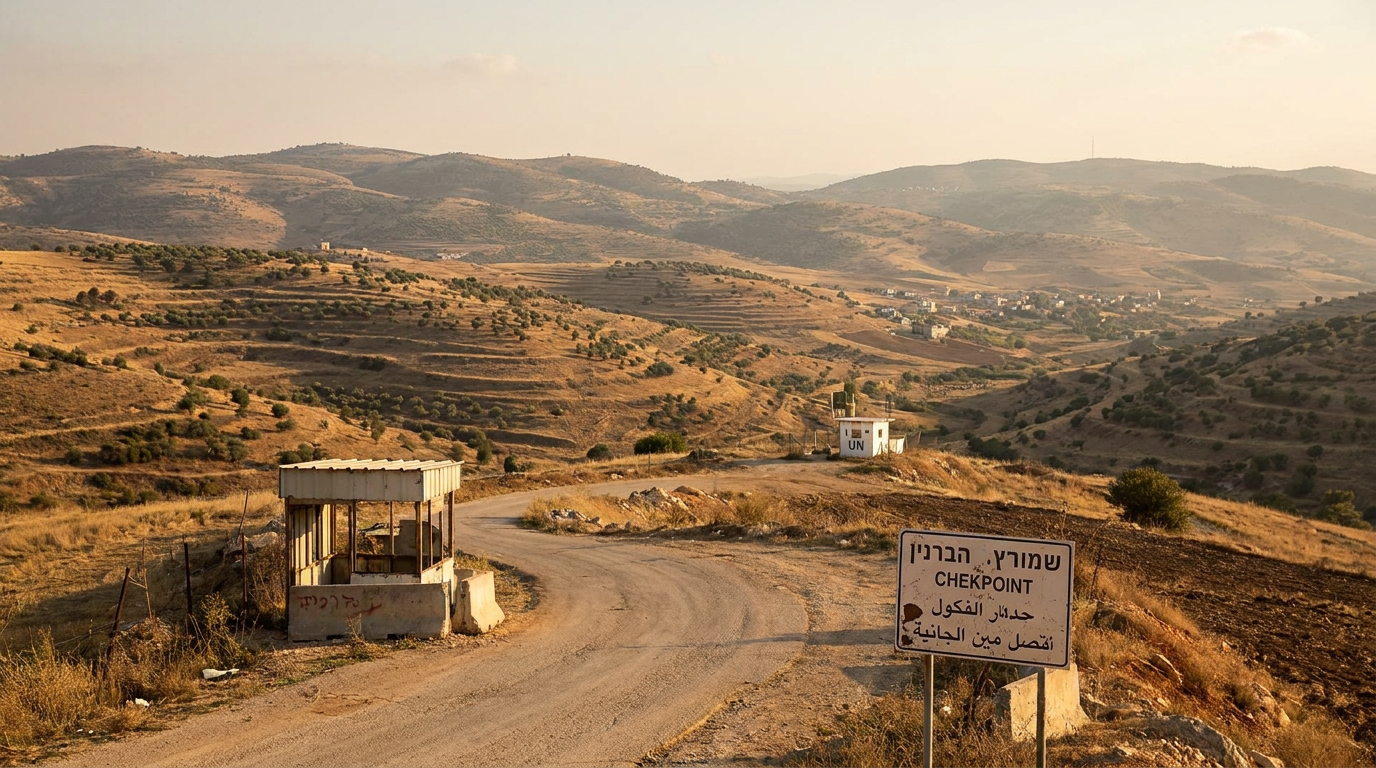
The MOU's implementation faces immediate hurdles, particularly regarding the conflict's secondary fronts. The text explicitly demands an immediate halt to military operations "on all fronts, including in Lebanon," effectively requiring Iran to rein in Hezbollah.[3]
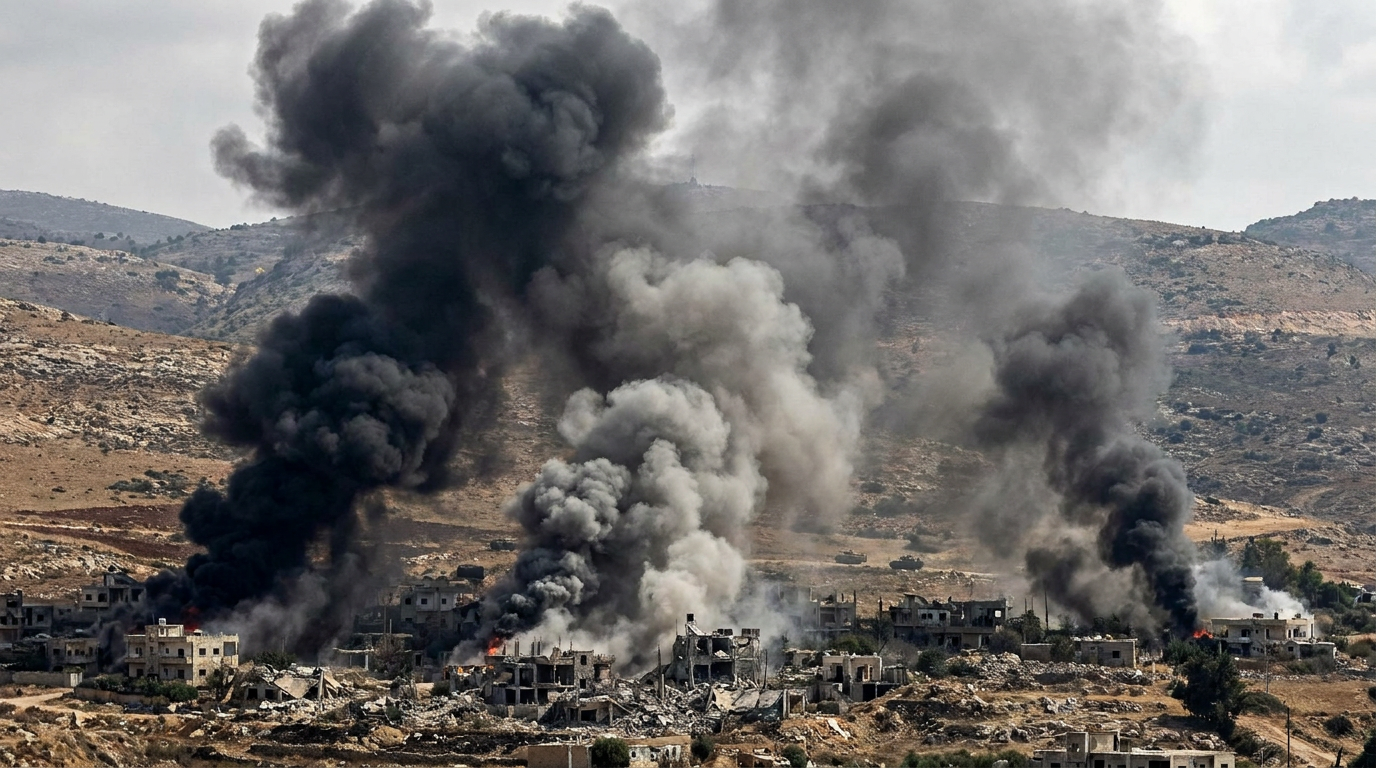
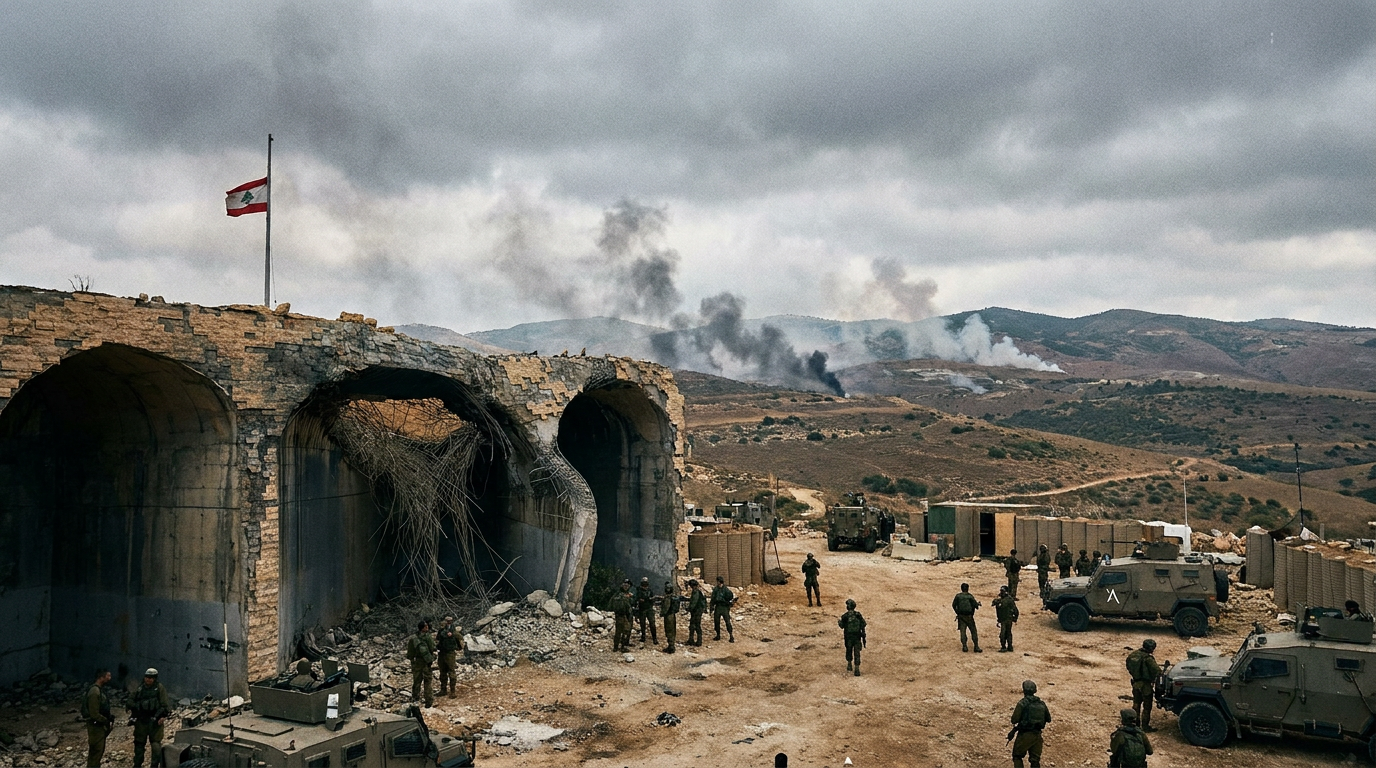
Israel, however, is not a direct signatory to the U.S.-Iran MOU and has publicly defied the ceasefire mandate in Lebanon. The Israeli military announced it will maintain a "security zone" in southern Lebanon and continue operations against Hezbollah, prompting frustration from the Trump administration. Vice President JD Vance publicly warned that Israeli military actions risk blowing up the fragile peace process just as a breakthrough is reached.[3][4]
Enforcement of the primary U.S.-Iran truce also remains precarious. The MOU is a framework, not a finalized treaty, and relies on both sides maintaining goodwill during the 60-day negotiation period. Western analysts note that the document is filled with diplomatic loopholes, lacking a concrete enforcement mechanism for the nuclear down-blending process.[3][7][8]

The Trump administration has made clear that the threat of force remains on the table if talks collapse. Defense Secretary Pete Hegseth warned that the U.S. military is fully prepared to reimpose an "ironclad" naval blockade if Tehran fails to surrender its nuclear material. Trump himself reiterated at a recent G7 summit that he is prepared to resume dropping bombs if Iran violates the terms.[3][4]
For now, global markets are breathing a sigh of relief as the immediate threat of a wider regional conflagration recedes. But as the 60-day clock ticks down, negotiators face the daunting task of converting a fragile ceasefire into a permanent treaty that satisfies Trump's demands for total nuclear disarmament, Iran's demands for economic survival, and the security concerns of a deeply fractured Middle East.[5][7][8]
How we got here
Feb 28, 2026
U.S. and Israel launch airstrikes against Iran, sparking a 15-week conflict.
April 8, 2026
A tenuous two-week ceasefire is brokered, temporarily pausing the heaviest bombardments.
June 14, 2026
Negotiators finalize the text of a 14-point Memorandum of Understanding.
June 17, 2026
President Trump and Iranian President Pezeshkian officially sign the MOU, ending hostilities.
Viewpoints in depth
Trump Administration's View
The war successfully forced Iran to surrender its nuclear ambitions.
The Trump administration views the MOU as a total victory and a vindication of its aggressive military posture. Officials argue that the 15-week bombing campaign and severe naval blockade broke Tehran's economic back, forcing them to accept terms they previously rejected. By pointing to the immediate drop in global oil prices and surging domestic stock markets, the administration claims the short-term pain of the conflict has yielded long-term global stability and permanently neutralized the Iranian nuclear threat.
U.S. Critics' View
The war was a costly blunder that achieved no more than previous diplomacy.
Domestic critics, including former President Obama and several Republican hawks, argue the conflict was a strategic disaster. They point out that the U.S. spent billions of dollars and lost lives only to return to a diplomatic framework similar to the 2015 JCPOA. Furthermore, critics warn that by granting immediate sanctions relief and unfreezing billions in assets after Iran closed the Strait of Hormuz, the U.S. has effectively rewarded Tehran for holding the global economy hostage.
Iranian Leadership's View
The agreement is a tactical pause forced by U.S. economic desperation.
In Tehran, the narrative is one of resilience. Supreme Leader Mojtaba Khamenei and state media frame the MOU not as a surrender, but as a necessary tactical pause in a longer struggle. They argue that the U.S. was forced to the negotiating table because Washington could no longer sustain the economic damage caused by the closure of the Strait of Hormuz. For Iran's leadership, securing immediate sanctions relief and a potential $300 billion reconstruction fund represents a massive diplomatic coup.
Israeli Defense Establishment's View
The nuclear deal is welcome, but the fight against Hezbollah must continue.
While Israeli officials broadly support the dismantling of Iran's nuclear program, they are deeply opposed to the MOU's requirement to halt military operations on all fronts, specifically in Lebanon. The Israeli military views Hezbollah as an existential threat that must be neutralized regardless of Washington's agreements with Tehran. This has led to open defiance of the ceasefire mandate, creating significant friction with the Trump administration as Israel insists on maintaining its security zone in southern Lebanon.
What we don't know
- Whether Iran will fully comply with the required down-blending of its enriched uranium.
- How the U.S. will enforce the agreement if negotiations collapse after the 60-day window.
- Whether Israel's continued military operations in Lebanon will cause Iran to abandon the pact.
Key terms
- Memorandum of Understanding (MOU)
- A formal preliminary agreement that outlines the broad terms of a peace deal before final technical details are negotiated.
- Strait of Hormuz
- A critical maritime chokepoint between the Persian Gulf and the Gulf of Oman, through which a significant portion of the world's oil supply passes.
- JCPOA
- The 2015 Joint Comprehensive Plan of Action, an Obama-era agreement that constrained Iran's nuclear program in exchange for sanctions relief, which Trump abandoned in 2018.
- Down-blending
- The process of diluting highly enriched uranium into a lower-grade form that cannot be used to manufacture nuclear weapons.
Frequently asked
Does this agreement permanently end the war?
The MOU permanently terminates military operations, but it is a preliminary framework. A final, binding treaty must be negotiated within 60 days.
What happens to Iran's nuclear program?
Iran has agreed to negotiate the disposition of its enriched uranium, with down-blending under international supervision identified as the minimum requirement.
Will the Strait of Hormuz reopen?
Yes. The agreement requires Iran to immediately arrange safe, toll-free passage for commercial vessels for the next 60 days.
Is Israel part of this ceasefire?
Israel is not a direct signatory. While the MOU calls for an end to fighting in Lebanon, Israel has stated it will maintain a security zone and continue operations against Hezbollah.
Sources
Source coverage
8 outlets
4 viewpoints surfaced








[1]Fox NewsTrump Administration
Trump says Iran deal amounts to the 'unconditional surrender' he always demanded
Read on Fox News →[2]The GuardianUS Domestic Critics
Barack Obama says US is 'worse off' than before war with Iran
Read on The Guardian →[3]The Washington PostIsraeli Defense Establishment
By threatening to resume bombing, President Donald Trump may have already breached the deal he just signed
Read on The Washington Post →[4]CBS NewsTrump Administration
Trump calls critics of U.S.-Iran deal 'fools'
Read on CBS News →[5]Channel News AsiaIranian Leadership
Snap Insight: US-Iran MOU is not yet a deal to end the war
Read on Channel News Asia →[6]Gulf NewsUS Domestic Critics
US lifts Iran ports blockade as uncertainty clouds Swiss Iran talks
Read on Gulf News →[7]Atlantic Council
Experts react: The US and Iran just announced an interim peace deal
Read on Atlantic Council →[8]Axios
Scoop: U.S. and Iran reach deal but need Trump's final approval
Read on Axios →
More in news politics
See all 7 stories →Election Tech
Evidence Pack: Can AI Watermarking Actually Stop Political Deepfakes?
8 sources

Middle East Truce
Israel-Hezbollah Ceasefire Takes Effect as Fragile U.S.-Iran Truce Faces Immediate Tests
8 sources
U.S.-Iran Deal
Israel and Hezbollah Agree to Ceasefire as U.S.-Iran Swiss Talks Face Delays
8 sources
Middle East Diplomacy
U.S.-Iran Talks Stall as Israel-Hezbollah Ceasefire Faces Immediate Violations
8 sources
Every angle. Every day.
Get news politics stories with full source coverage and perspective breakdowns delivered to your inbox.