
U.S.-Iran Talks Stall as Israel-Hezbollah Ceasefire Faces Immediate Violations
A U.S.-backed ceasefire between Israel and Hezbollah is on the brink of collapse following continued Israeli strikes in Lebanon, coinciding with the abrupt postponement of critical U.S.-Iran negotiations in Switzerland.
By Factlen Editorial Team
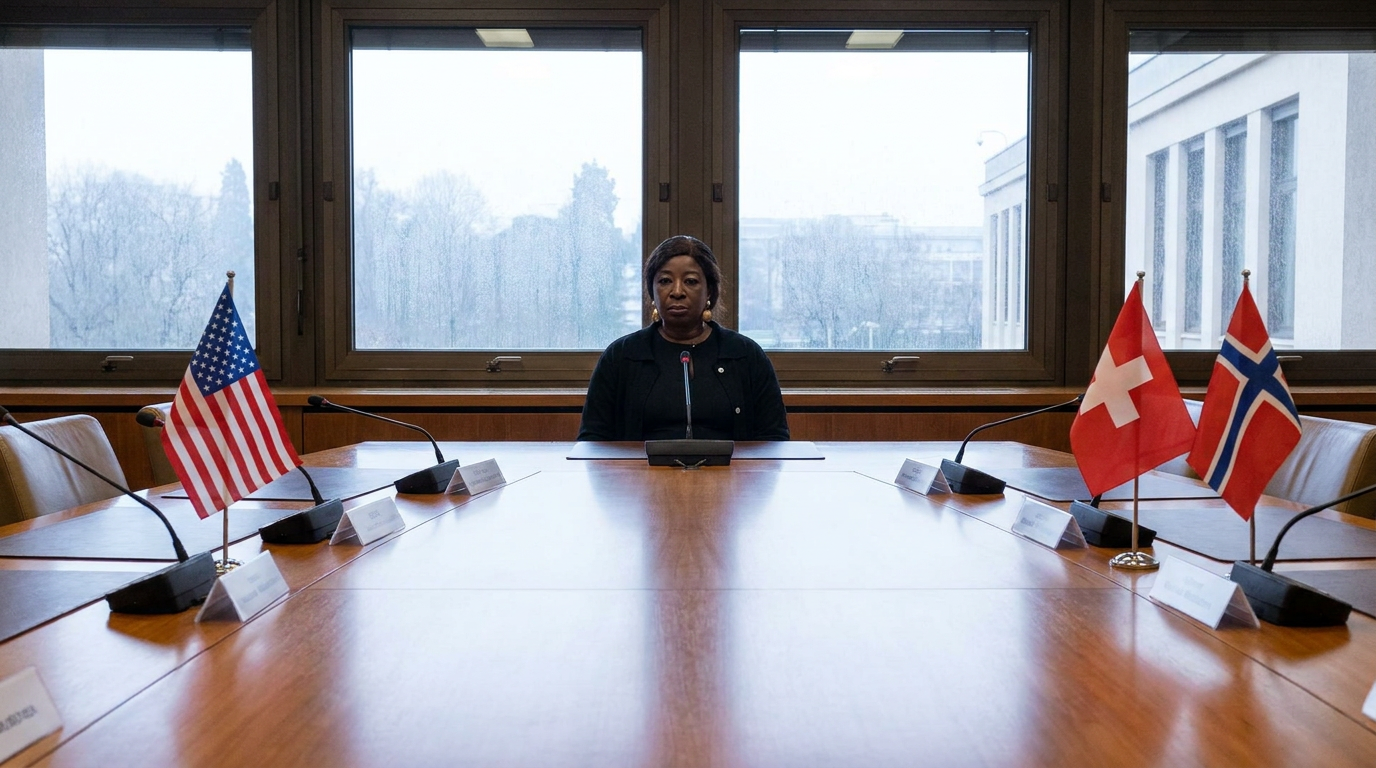
- U.S. Diplomatic Corps
- Focuses on securing a comprehensive regional peace framework and preventing a wider war.
- Iranian Hardliners
- Deeply suspicious of U.S. intentions, prioritizing the survival of the regime and its proxy network over diplomatic concessions.
- Israeli Security Establishment
- Prioritizes the physical degradation of hostile forces on Israel's borders, viewing diplomacy as secondary to military deterrence.
- Lebanese & Regional Voices
- Highlights the humanitarian toll of the conflict and accuses foreign powers of using Lebanon as a battleground for broader geopolitical struggles.
What's not represented
- · European Mediators
- · Global Energy Markets
- · International Shipping Companies
Why this matters
The collapse of the U.S.-brokered ceasefire and the stalling of the broader 'Trump Iran framework' threaten to ignite a wider regional war and disrupt global energy markets. With the Strait of Hormuz already heavily mined, a breakdown in diplomacy could severely impact international shipping and U.S. strategic interests in the Middle East.
Key points
- A U.S.-backed ceasefire between Israel and Hezbollah is faltering amid continued Israeli strikes in Lebanon.
- Crucial U.S.-Iran negotiations in Switzerland, part of the new 'Trump Iran framework,' have been abruptly postponed.
- Iran's Supreme Leader Mojtaba Khamenei publicly criticized the U.S. deal but authorized the Iranian president to continue talks.
- At least 47 people have been killed in Lebanon since midnight as military operations continue.
- The Strait of Hormuz remains heavily mined, posing a long-term threat to global shipping and energy markets.
The fragile U.S.-backed ceasefire between Israel and Hezbollah, intended to halt months of escalating violence, faced an immediate crisis on Friday. Despite formal agreements meant to de-escalate the northern border, Israeli forces continued military operations in Lebanon, resulting in at least 47 deaths since midnight.[2][8]
The localized violence in the Levant is inextricably linked to a much larger diplomatic breakdown. Highly anticipated negotiations between the United States and Iran, scheduled to take place in Switzerland, were abruptly postponed, leaving international mediators scrambling to salvage the dialogue.[1][7]
These talks were widely considered the first major test of the newly proposed "Trump Iran framework," an ambitious diplomatic initiative aimed at restructuring U.S.-Iranian relations. The framework attempts to link regional security guarantees—specifically reining in proxy militias—directly to economic and sanctions relief.[1]

The delay in Geneva coincides with a significant political shift in Tehran. Ayatollah Mojtaba Khamenei, Iran's Supreme Leader, publicly distanced himself from the U.S. agreement. In a rare public address, he stated that while he personally dislikes the deal, he allowed the Iranian president to proceed with negotiations.[3]
Khamenei emphasized that engaging in the framework does not equate to acceding to all American demands, signaling to domestic hardliners that Tehran retains its strategic independence despite the economic incentives offered by Washington.[3]
Meanwhile, the situation on the ground in Lebanon threatens to unravel the entire diplomatic architecture. Regional observers and Lebanese officials accuse Israel of using the final hours before the ceasefire's implementation to maximize destruction and permanently degrade Hezbollah's infrastructure.[4]
Meanwhile, the situation on the ground in Lebanon threatens to unravel the entire diplomatic architecture.
Israeli officials, however, maintain that their operations are necessary to neutralize imminent threats and establish a secure buffer zone, arguing that Hezbollah has historically used ceasefires to rearm and reposition its forces along the border.[1][4]
The stakes of this diplomatic tightrope extend far beyond the immediate borders of Israel and Lebanon. The strategic Strait of Hormuz remains a critical flashpoint, with ongoing concerns about naval mines threatening international shipping lanes.[5]

Military analysts note that even if a comprehensive political agreement is reached, the physical remnants of the conflict—such as deep-sea mines in the Strait—could outlast the war and continue to pose a severe risk to the global energy supply chain.[5]
The U.S. State Department has yet to announce a new date for the Switzerland talks, leaving the region in a state of perilous limbo. European allies who helped broker the initial framework are reportedly working backchannels to keep diplomatic lines open.[6][7]

How we got here
Early 2026
The U.S. administration proposes the 'Trump Iran framework' to address both nuclear enrichment and regional proxy conflicts.
June 17, 2026
Israel and Hezbollah tentatively agree to a U.S.-brokered ceasefire intended to halt cross-border hostilities.
June 18, 2026
Ayatollah Mojtaba Khamenei delivers a speech distancing himself from the U.S. negotiations.
June 19, 2026
The ceasefire deadline arrives, but Israeli strikes continue in Lebanon and the Switzerland talks are officially delayed.
Viewpoints in depth
U.S. Administration's View
The White House views the framework as a necessary comprehensive settlement to stabilize the Middle East.
The administration argues that piecemeal agreements have failed. The 'Trump Iran framework' is designed to link regional proxy behavior directly to Tehran's economic relief. They view the current violence as a final jockeying for leverage before the terms are locked in, rather than a fundamental collapse of the deal.
Iranian Leadership's View
Tehran approaches the deal with deep skepticism, prioritizing sanctions relief while maintaining its 'Axis of Resistance'.
Ayatollah Mojtaba Khamenei's public distancing is a calculated political maneuver. By allowing the president to negotiate while personally criticizing the U.S., the Supreme Leader insulates himself from potential failure. Iran's primary goal is economic survival, but it refuses to fully dismantle its network of regional proxies, viewing them as essential deterrents against Israeli and U.S. military action.
Israeli Security Establishment's View
Israel prioritizes immediate border security and views the U.S.-Iran talks as a potential threat to its operational freedom.
Israeli officials are deeply concerned that a U.S.-Iran grand bargain might force them to accept a hostile Hezbollah presence on their northern border. The continued strikes in Lebanon, despite the ceasefire agreement, reflect a military doctrine of degrading enemy capabilities as much as possible, driven by a belief that diplomatic frameworks rarely provide genuine security guarantees.
What we don't know
- When, or if, the postponed U.S.-Iran talks in Switzerland will be rescheduled.
- Whether the continued Israeli strikes in Lebanon will prompt a formal withdrawal by Hezbollah from the ceasefire agreement.
- The specific concessions the U.S. offered Iran in the 'Trump Iran framework' to bring them to the table.
Key terms
- Trump Iran framework
- A comprehensive diplomatic initiative proposed by the U.S. administration aimed at simultaneously addressing Iran's nuclear program and its support for regional militias.
- Strait of Hormuz
- A narrow, strategically critical waterway between the Persian Gulf and the Gulf of Oman through which roughly 20% of the world's oil supply passes.
- Axis of Resistance
- A political and military network led by Iran, including Hezbollah in Lebanon, Hamas in Gaza, and various militias in Iraq and Syria.
Frequently asked
Why were the Switzerland talks postponed?
While no official reason was provided, the delay coincides with escalating violence in Lebanon and public skepticism from Iran's Supreme Leader regarding the deal's terms.
Is the Israel-Hezbollah ceasefire officially dead?
Not officially, but it is severely compromised. Despite the agreement, military operations have continued, resulting in dozens of casualties.
What did Iran's Supreme Leader say about the deal?
Ayatollah Mojtaba Khamenei stated he dislikes the agreement with the U.S. but permitted the Iranian president to negotiate, emphasizing that Iran will not concede to all American demands.
Sources
Source coverage
8 outlets
4 viewpoints surfaced






[1]Fox NewsIsraeli Security Establishment
Israel–Hezbollah ceasefire becomes first test of Trump Iran framework after talks delay
Read on Fox News →[2]Al JazeeraLebanese & Regional Voices
Israel continues attacks on Lebanon despite agreeing to ceasefire
Read on Al Jazeera →[3]The New York TimesIranian Hardliners
Iran’s Supreme Leader Says He Dislikes Deal With U.S., but Allowed It
Read on The New York Times →‘Destruction is the goal’: Israel steers between the US, Iran, and Lebanon
Read on Al Jazeera →Demining the Strait of Hormuz
Read on The New York Times →[6]U.S. Department of StateU.S. Diplomatic Corps
Update on U.S. Diplomatic Engagements in Switzerland
Read on U.S. Department of State →[7]ReutersU.S. Diplomatic Corps
U.S.-Iran nuclear and regional security talks postponed indefinitely
Read on Reuters →[8]BBC NewsLebanese & Regional Voices
Lebanon reports dozens killed as ceasefire deadline passes
Read on BBC News →

More in news politics
See all 7 stories →State vs Federal
DOJ Sues Virginia Over Laws Banning ICE Masks and Limiting Immigration Enforcement
7 sources
Immigration Enforcement
DOJ Sues Virginia to Block New Laws Restricting ICE Agents and Banning Masks
7 sources
FISA Standoff
Trump Halts DNI Confirmation and FISA Renewal to Force Vote on SAVE America Act
8 sources
School Meals
Fact-Checking the Evidence on Universal Free School Meals: Impacts on Health, Behavior, and Budgets
7 sources

Every angle. Every day.
Get news politics stories with full source coverage and perspective breakdowns delivered to your inbox.