
Memory stocks are posting record AI profits, but their valuations remain surprisingly low
Despite triple-digit earnings growth driven by the AI boom, memory chipmakers are trading at single-digit multiples due to historical fears of a cyclical crash.
By Factlen Editorial Team
- Structural Supercycle Believers
- Argue that AI infrastructure has fundamentally broken the historical boom-bust cycle.
- Cyclical Skeptics
- Believe the current memory boom is just an extended version of the traditional cycle that will end in oversupply.
- Supply Chain Pragmatists
- Focused on the immediate procurement crisis caused by AI memory cannibalizing standard chip production.
What's not represented
- · Consumer electronics buyers facing higher prices
- · Foundry equipment manufacturers
Why this matters
Understanding the mechanics of the memory chip cycle helps investors distinguish between temporary market booms and permanent structural shifts in the AI economy, offering a rare glimpse into how the physical infrastructure of artificial intelligence is valued.
Key points
- Memory chipmakers are posting record profits but trading at single-digit P/E ratios.
- Investors fear a repeat of the historical boom-and-bust cycle that has plagued the industry for decades.
- AI requires High Bandwidth Memory (HBM), which takes three times the manufacturing capacity of standard chips.
- The shift toward HBM is starving the conventional memory market, driving up costs for PC and smartphone makers.
The artificial intelligence boom has minted fortunes across the technology sector, but one critical corner of the industry is posting record-shattering profits while trading at bargain-basement prices. Memory semiconductor manufacturers—the companies that build the essential data-storage chips powering everything from smartphones to AI supercomputers—are having their best year in history. Yet, despite triple-digit earnings growth, Wall Street is treating them like a ticking time bomb.[1]
The disconnect between fundamental performance and market valuation is striking. During its most recent quarter, Micron Technology posted a staggering 756 percent year-over-year growth in earnings per share, while Samsung Electronics saw its earnings surge by nearly 500 percent. Despite this massive influx of cash, shares of Micron, Samsung, and SK Hynix are trading at price-to-earnings ratios in the single digits. Micron trades at roughly 9 times forward earnings, while SK Hynix and Samsung sit at around 6.5 times—a fraction of Nvidia’s 23 times multiple and the broader S&P 500’s 20.3 average.[1]
To understand why investors are so terrified of these record profits, one has to look at the brutal history of the memory chip business. For three decades, the industry has followed a predictable and devastating pattern known as the "hog cycle." A surge in demand leads to skyrocketing prices, which prompts manufacturers to aggressively over-invest in new fabrication plants. When those massive facilities finally come online years later, they flood the market with supply, crashing prices and wiping out profit margins.[1][5]

This boom-and-bust rhythm has bankrupted companies and destroyed shareholder value so reliably that investors have learned to never trust the phrase "this time is different." And according to the historical clock, the current boom is living on borrowed time. We are currently 30 months removed from the industry's mid-2023 trough, which means this upcycle has already matched the duration of the longest historical peaks on record. By traditional metrics, the market should be bracing for an imminent crash.[5]
However, a growing chorus of industry analysts and hyperscale cloud providers argue that the artificial intelligence revolution has fundamentally rewritten the economics of memory. They contend that the industry is entering a "supercycle"—a structural shift where the insatiable demand for AI infrastructure creates a permanent demand floor, replacing the lumpy, consumer-driven cycles of the past.[3]
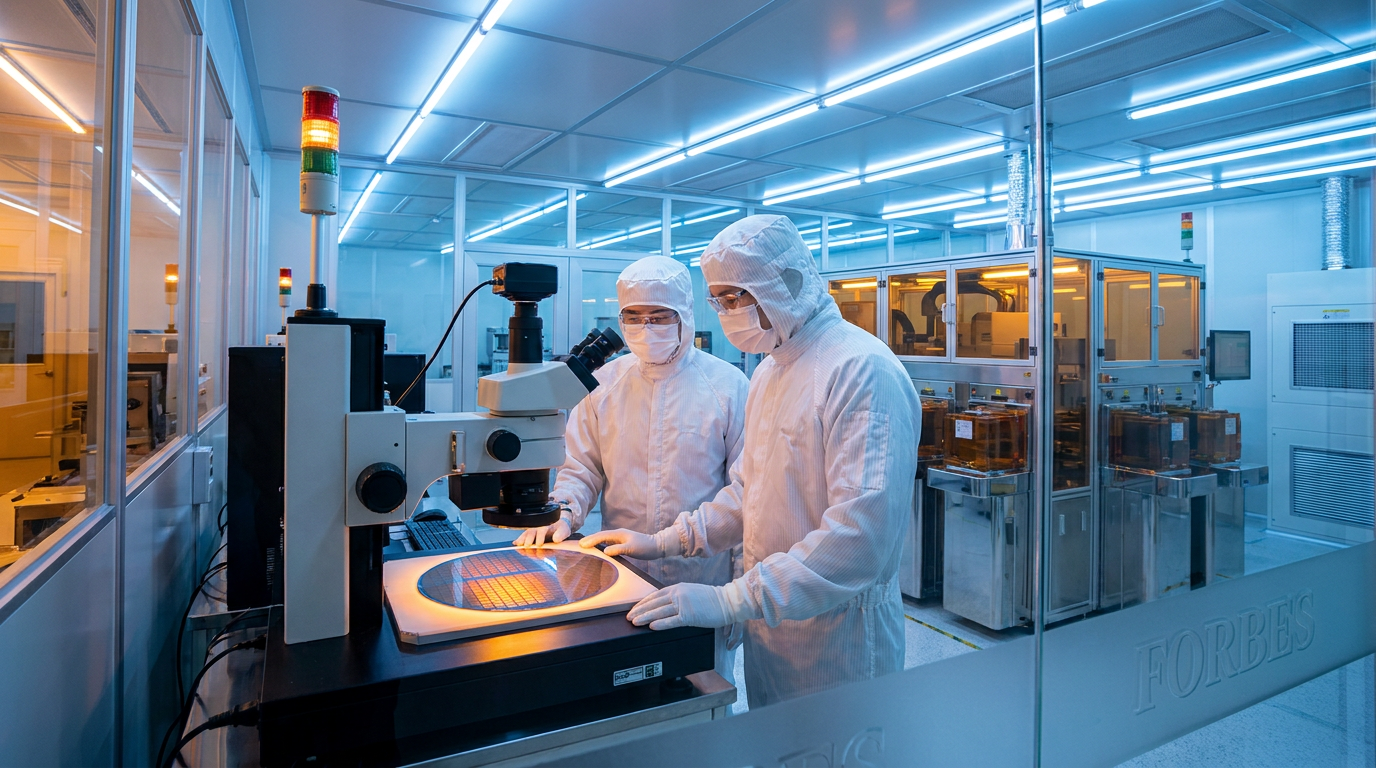
At the center of this disruption is a specialized technology called High Bandwidth Memory, or HBM. Unlike conventional DRAM, which arranges memory dies side-by-side, HBM stacks multiple layers of memory vertically—typically 12 to 16 layers deep—and connects them through microscopic through-silicon vias. This complex 3D architecture allows data to move at the unprecedented speeds required by advanced AI accelerators, making it the undisputed bottleneck in modern data centers.[2][3]
The manufacturing reality of HBM is what makes this cycle entirely different from previous booms. Producing HBM is incredibly complex and capacity-intensive. Industry data reveals a staggering "cannibalization ratio": manufacturing one bit of HBM requires approximately three times the wafer capacity of standard DDR5 memory. As manufacturers rush to meet AI demand, they are effectively deleting massive amounts of overall production capacity from the global supply chain.[2][4][5]

The manufacturing reality of HBM is what makes this cycle entirely different from previous booms.
The scale of this reallocation is historic. By the end of 2026, HBM is projected to consume roughly 25 percent of total DRAM wafer production globally, up from 19 percent just a year prior. Because the industry operates as an effective oligopoly—with SK Hynix, Samsung, and Micron controlling over 95 percent of the market—this coordinated pivot toward high-margin AI chips is fundamentally altering the global supply balance.[2][5]
The immediate consequence of this shift is a cascading shortage that is actively starving the conventional memory ecosystem. By dedicating their most advanced fabrication lines to HBM, chipmakers have created a persistent, structural undersupply of the standard DDR4 and DDR5 memory used in personal computers, smartphones, and traditional enterprise servers. This dislocation has driven contract prices for commodity DRAM up by as much as 40 percent quarter-over-quarter.[4][5]
Furthermore, the financial mechanics of the AI boom look nothing like the consumer electronics cycles of the past. Hyperscalers like Amazon, Microsoft, and Google are not buying memory on the spot market; they are securing massive portions of future DRAM wafer output under multi-year forward agreements. This means that a significant percentage of the industry's 2026 and 2027 production capacity is already sold, effectively locking in revenue and preventing the sudden inventory gluts that triggered past crashes.[2]

Despite these structural changes, cyclical skeptics remain unconvinced. They point out that while HBM is currently constrained, manufacturing yields will inevitably improve. Samsung, for instance, is rapidly ramping up its HBM capacity, and as production processes mature, the supply response could arrive several quarters earlier than consensus projections. When that happens, skeptics argue, the immutable laws of semiconductor overcapacity will reassert themselves.[3][5]
There are also geopolitical wildcards that could disrupt the oligopoly's pricing power. Chinese manufacturers like CXMT are aggressively pursuing HBM capabilities, backed by massive state subsidies. While export controls currently restrict their access to the most advanced lithography equipment, any breakthrough in domestic Chinese production could introduce a flood of cheap supply into the lower tiers of the memory market, undermining the current margin structure.[2]
Meanwhile, the reality of this supercycle is creating a nightmare for hardware procurement teams. With memory costs soaring, original equipment manufacturers are being forced to adapt. Instead of building buffer inventories—a classic late-cycle behavior that usually precedes a crash—PC and smartphone makers are actively reducing the memory content in their devices to protect their own profit margins.[4][5]
Yet, even some of the most hardened bears are beginning to capitulate. Major investment banks that predicted a "DRAM winter" just a year ago have recently pivoted to supercycle calls, projecting continued price increases and raising price targets for companies like Micron. Historically, this kind of bear capitulation is a mid-cycle signal, suggesting that the peak may still be quarters, or even years, away.[5]

Ultimately, the memory sector in 2026 represents one of the most fascinating standoffs in modern finance. Wall Street is pricing these companies as if a devastating crash is just around the corner, anchored by decades of boom-and-bust trauma. But if the structural demands of artificial intelligence have truly broken the cycle, the market is currently offering the foundational companies of the AI era at the valuation of a dying industry.[6]
How we got here
Mid-2023
The memory semiconductor market hits its cyclical trough, with prices crashing and manufacturers bleeding cash.
2024
The generative AI boom accelerates, driving unprecedented demand for specialized High Bandwidth Memory (HBM).
Early 2026
Major memory manufacturers like SK Hynix and Micron cross the $1 trillion market capitalization threshold.
June 2026
Memory stocks post record earnings growth, yet their valuations remain compressed due to investor fears of a cyclical peak.
Viewpoints in depth
Structural Supercycle Believers
Argue that AI infrastructure has fundamentally broken the historical boom-bust cycle.
This camp, which includes major hyperscalers and bullish analysts, points to the unique manufacturing demands of High Bandwidth Memory. Because HBM requires three times the wafer space and is sold on multi-year forward contracts, they argue the industry has a built-in demand floor that prevents the sudden oversupply crashes of the past.
Cyclical Skeptics
Believe the current memory boom is just an extended version of the traditional cycle.
Value investors and traditional semiconductor analysts note that the current upcycle is already 30 months old—matching the longest historical peaks. They argue that as manufacturing yields improve and new fabrication plants come online in 2027, the inevitable flood of supply will crush margins, just as it has in every previous cycle.
Supply Chain Pragmatists
Focused on the immediate procurement crisis caused by HBM cannibalization.
Hardware OEMs and procurement teams are less concerned with stock valuations and more focused on the fact that HBM is starving the conventional DRAM market. With contract prices for standard memory surging, these pragmatists are actively reducing the memory content in consumer devices to protect their own profit margins.
What we don't know
- Whether Chinese manufacturers like CXMT will successfully bypass export controls to flood the market with cheap memory.
- Exactly when new fabrication plants will come online to relieve the current structural shortage.
Key terms
- DRAM (Dynamic Random Access Memory)
- The standard working memory used in computers and servers to store data that is actively being used.
- HBM (High Bandwidth Memory)
- A specialized, high-performance memory technology that stacks chips vertically to deliver the massive data speeds required by AI processors.
- Wafer Cannibalization
- The process where manufacturing complex new chips consumes disproportionately more physical silicon space, reducing the overall volume of chips a factory can produce.
- Hyperscalers
- Massive cloud service providers, such as Amazon Web Services, Microsoft Azure, and Google Cloud, that operate data centers on a global scale.
Frequently asked
Why are memory stocks trading at such low valuations?
Investors are historically conditioned to expect a crash after a period of high profits in the memory sector, leading them to assign low price-to-earnings multiples despite record current earnings.
How does AI change the memory chip market?
AI requires High Bandwidth Memory (HBM), which is much harder to manufacture and takes up more factory capacity, creating a structural supply shortage that could prevent the traditional oversupply crashes of the past.
Will consumer electronics get more expensive?
Yes, because chipmakers are dedicating their factories to high-margin AI memory, the supply of standard memory used in PCs and smartphones is shrinking, driving up costs for device manufacturers.
Sources
Source coverage
6 outlets
3 viewpoints surfaced






[1]MarketWatchCyclical Skeptics
Memory stocks are having their best year ever. Why do they still look so cheap?
Read on MarketWatch →[2]Investing.comStructural Supercycle Believers
Why 2026 Marks a Structural Shift in Tech Economics
Read on Investing.com →[3]SK Hynix NewsroomStructural Supercycle Believers
2026 Market Outlook – Focus on the HBM-Led Memory Supercycle
Read on SK Hynix Newsroom →[4]ICAllInSupply Chain Pragmatists
2026 DRAM Supercycle: How HBM Shift Is Crushing DDR4 & DDR5 Supply
Read on ICAllIn →[5]Luminix AISupply Chain Pragmatists
DRAM Cycle Analysis 2026: Boom-Bust Pricing, Inventory Levels, Micron & Peak Timing Indicators
Read on Luminix AI →[6]Factlen Editorial TeamStructural Supercycle Believers
Synthesis by Factlen editorial team
Read on Factlen Editorial Team →
More in finance
See all 10 stories →Retirement Strategy
The Longevity Dividend: Why the 'Hard Stop' at 65 is Being Replaced by Phased Retirement
7 sources

Conservation Finance
How 'Debt-for-Nature' Swaps Are Turning Sovereign Liabilities Into Climate Solutions
7 sources

Assumable Mortgages
How Assumable Mortgages Are Unlocking 3% Rates for Homebuyers
7 sources

Career Strategy
Employers to College Students: Skip the Perfect GPA and Get a Summer Job
6 sources

Every angle. Every day.
Get finance stories with full source coverage and perspective breakdowns delivered to your inbox.