
DOJ Sues Virginia Over Laws Banning ICE Masks and Limiting Immigration Enforcement
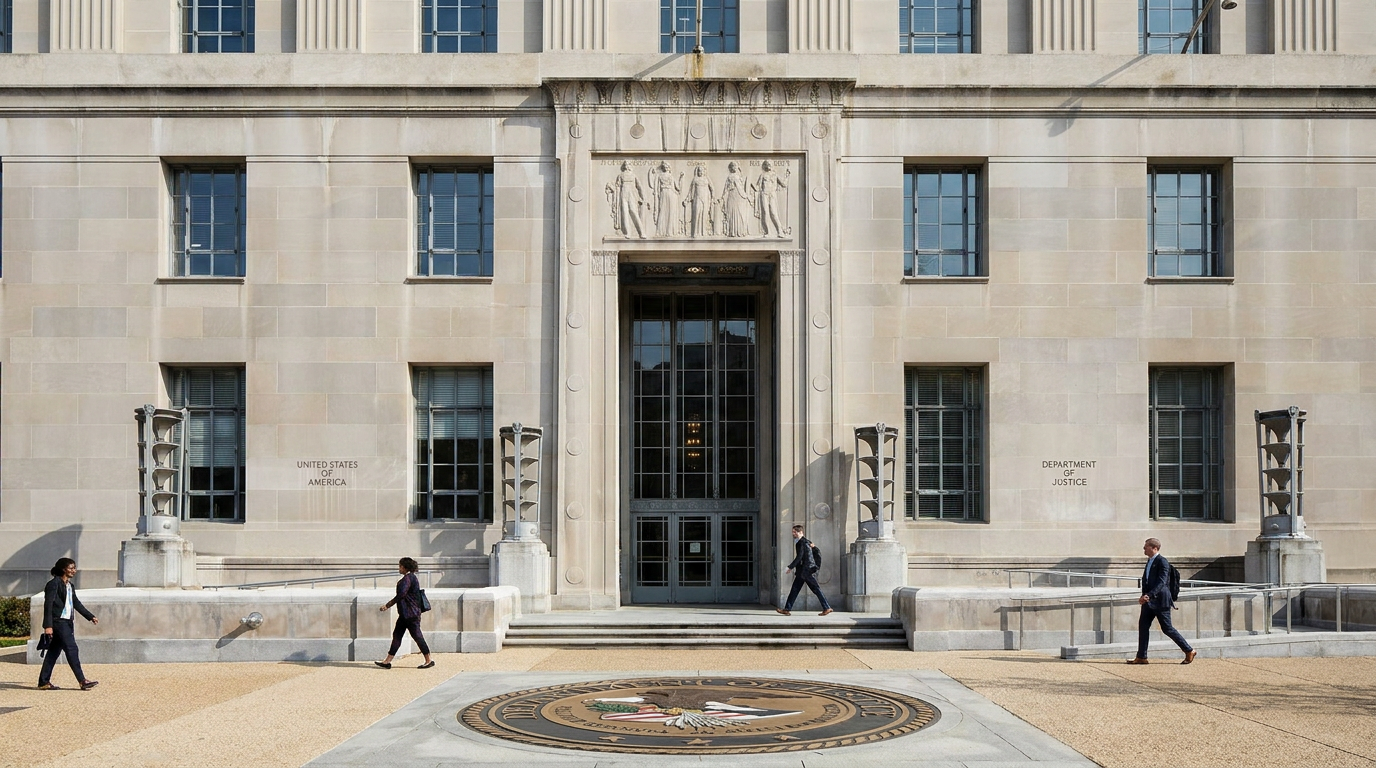
The Justice Department has filed a lawsuit against Virginia, arguing that new state laws prohibiting federal agents from wearing masks and restricting cooperation with ICE violate the U.S. Constitution.
By Factlen Editorial Team
- Federal Law Enforcement Advocates
- Argue that state laws cannot supersede federal authority and that mask bans endanger officers.
- State Leadership & Transparency Advocates
- Argue that states have a right to demand accountability and protect their residents from fear-based policing.
- Immigrant Rights & Civil Liberties Groups
- Argue that federal immigration enforcement overreaches and that state non-cooperation is a vital legal shield.
What's not represented
- · Local Virginia law enforcement officers
- · Undocumented immigrants living in Virginia
Why this matters
This lawsuit sets up a high-stakes legal battle over the Supremacy Clause and state sovereignty, testing exactly how far states can go to shield their residents from the federal government's aggressive deportation agenda.
Key points
- The DOJ is suing Virginia over new laws that restrict federal immigration enforcement.
- The state laws ban law enforcement officers, including federal agents, from wearing face masks while on duty.
- The legislation also functionally prohibits local police from entering into 287(g) agreements with ICE.
- The DOJ argues the laws violate the Supremacy Clause and endanger federal agents.
- Virginia Governor Abigail Spanberger argues the laws are necessary for transparency and public trust.
The U.S. Department of Justice has launched a sweeping federal lawsuit against Virginia, escalating a bitter legal battle over the state's new laws that restrict how federal immigration agents can operate within its borders.[1][2]
At the center of the dispute is a legislative package signed last month by Democratic Governor Abigail Spanberger. Set to take effect on July 1, the laws make it a misdemeanor for law enforcement officers—explicitly including federal agents—to wear face coverings while performing official duties. The legislation also mandates visible identification and functionally prohibits local police departments from entering into 287(g) agreements, which deputize local officers to assist Immigration and Customs Enforcement (ICE).[2][3][4]

Acting Attorney General Todd Blanche condemned the state's actions, arguing they violate the U.S. Constitution's Supremacy Clause, which bars states from regulating federal government operations. The DOJ contends that the mask ban is not about transparency, but rather a deliberate attempt to "dox" and harass federal agents, creating severe physical risks for officers and their families.[2][3][6]
Governor Spanberger, a former CIA case officer and federal postal inspector, defended the legislation as a necessary measure to restore public trust. She argued that masked federal agents conducting "fear-based policing and enforcement theatre" on American streets undermine accountability and sow confusion in local communities.[2][7]

Governor Spanberger, a former CIA case officer and federal postal inspector, defended the legislation as a necessary measure to restore public trust.
The DOJ's lawsuit casts a wide net, naming not only the Commonwealth of Virginia but also State Attorney General Jay Jones and Fairfax County Commonwealth's Attorney Steve Descano. The DOJ singled out Descano, accusing the top prosecutor in the deep-blue county of 1.1 million residents of being too "lenient" on undocumented immigrants accused of crimes, labeling the area a "center of significant immigration operations."[2][3][4]
The Virginia clash is the latest front in the Trump administration's aggressive nationwide push to dismantle "sanctuary" policies and ramp up mass deportations. The DOJ has recently filed similar lawsuits against jurisdictions in New Jersey, California, and Michigan, seeking to compel local cooperation with federal immigration authorities.[1][3][5]

Civil liberties advocates argue that the DOJ's aggressive litigation strategy is an attempt to bully states into participating in a federal deportation dragnet. They point to state data indicating that the vast majority of individuals swept up in recent Virginia ICE detentions had no prior criminal convictions, fueling arguments that state non-cooperation is a vital shield for vulnerable residents.[5][7]
With the July 1 implementation date looming, the DOJ is seeking a preliminary injunction to block the laws from taking effect. The outcome of the case in the federal court in Richmond could establish a major legal precedent regarding exactly how far states can go to passively or actively resist federal immigration enforcement.[2][3][4]
How we got here
Jan 2026
Governor Abigail Spanberger takes office and signs an executive order allowing the state to withdraw from ICE cooperation agreements initiated by her predecessor.
May 2026
Spanberger signs legislation banning law enforcement masks and restricting ICE cooperation, set to take effect July 1.
June 11, 2026
The DOJ files a federal lawsuit against Virginia, seeking a preliminary injunction to block the laws.
Viewpoints in depth
Federal Law Enforcement Advocates
Argue that state laws cannot supersede federal authority and that mask bans endanger officers.
This camp, which includes the DOJ and conservative commentators, argues that the Supremacy Clause explicitly prevents states from regulating federal operations. They view the mask ban as a malicious attempt to expose federal agents to doxing and harassment by activists. Furthermore, they argue that banning 287(g) agreements forces ICE to conduct more dangerous at-large arrests in communities rather than safely taking custody of individuals within secure local jails.
State Leadership & Transparency Advocates
Argue that states have a right to demand accountability and protect their residents from fear-based policing.
Led by Governor Spanberger and state Democrats, this perspective emphasizes that transparency is a prerequisite for public trust in law enforcement. They argue that masked, unidentified federal agents conducting neighborhood sweeps resemble authoritarian tactics rather than standard policing. By restricting state cooperation, they aim to ensure that local police resources are used for community safety rather than federal immigration enforcement, which they argue often targets non-violent residents.
Immigrant Rights & Civil Liberties Groups
Argue that federal immigration enforcement overreaches and that state non-cooperation is a vital legal shield.
Civil liberties organizations view the DOJ's lawsuit as an attempt to bully states into participating in a mass deportation dragnet. They point to data showing that the majority of recent ICE detainees in Virginia had no criminal record, arguing that federal operations disrupt communities and tear families apart. They support state-level resistance as a necessary check on federal power, arguing that local jurisdictions should not be forced to act as force multipliers for ICE.
What we don't know
- Whether a federal judge will grant the DOJ's request for a preliminary injunction before the laws take effect on July 1.
- How the DOJ plans to enforce federal immigration laws in Virginia if the state's non-cooperation measures are upheld in court.
Key terms
- Supremacy Clause
- A clause in the U.S. Constitution establishing that federal law takes precedence over state laws, meaning states cannot interfere with or regulate federal operations.
- 287(g) Agreement
- A program that allows U.S. Immigration and Customs Enforcement (ICE) to delegate specific immigration enforcement authority to state and local law enforcement agencies.
- Sanctuary Jurisdiction
- A broad term for cities, counties, or states that limit their cooperation with federal immigration enforcement, often by refusing to hold individuals in jail solely for ICE.
- Doxing
- The act of publicly revealing private or identifying information about an individual on the internet, typically with malicious intent.
Frequently asked
What is a 287(g) agreement?
A 287(g) agreement is a voluntary contract that allows the federal government to deputize state and local law enforcement officers to perform certain functions of federal immigration agents, such as identifying and detaining undocumented immigrants in local jails.
Why did Virginia ban masks for law enforcement?
Governor Abigail Spanberger stated the ban is meant to ensure transparency and accountability, arguing that masked agents conducting operations erode public trust and contribute to "fear-based policing."
Can a state arrest a federal agent?
Under the Supremacy Clause of the U.S. Constitution, states generally cannot regulate or criminalize the lawful operations of federal agents performing their official duties. The DOJ argues Virginia's law unconstitutionally attempts to do exactly this.
Sources
Source coverage
7 outlets
3 viewpoints surfaced






[1]Fox NewsFederal Law Enforcement Advocates
DOJ warns former red state is becoming the next California as governor embraces ICE limits
Read on Fox News →[2]The Washington PostState Leadership & Transparency Advocates
DOJ sues Virginia over new laws limiting federal immigration enforcement
Read on The Washington Post →[3]U.S. Department of JusticeFederal Law Enforcement Advocates
Justice Department Files Lawsuit Against State of Virginia for Obstructing Federal Law Enforcement
Read on U.S. Department of Justice →[4]WJLAState Leadership & Transparency Advocates
DOJ files lawsuit after Virginia law bans federal ICE officers from wearing masks
Read on WJLA →[5]Balls and StrikesImmigrant Rights & Civil Liberties Groups
How Federal Judges Can Bring Down the Hammer On ICE
Read on Balls and Strikes →[6]Voz MediaFederal Law Enforcement Advocates
The DOJ sues Virginia over a law banning ICE agents from wearing masks
Read on Voz Media →[7]Virginia Governor's OfficeState Leadership & Transparency Advocates
Governor Spanberger Takes Action to Protect Virginians from Federal Immigration Overreach
Read on Virginia Governor's Office →
More in news politics
See all 7 stories →Climate Grants
Federal Judge Rules EPA's Cancellation of $2.8 Billion Climate Justice Grant Program Unlawful
7 sources
Crowdsourced Moderation
Does Crowdsourced Fact-Checking Actually Work? The Evidence on Community Notes
6 sources

Middle East Peace
Israel and Hezbollah agree to renewed ceasefire, saving fragile US-Iran peace deal
7 sources
Makerfield By-Election
Andy Burnham Wins Makerfield By-Election, Setting Stage for Labour Leadership Challenge
8 sources

Every angle. Every day.
Get news politics stories with full source coverage and perspective breakdowns delivered to your inbox.