
Beyond Awareness: How the Rare Impact Fund is Reshaping Youth Mental Health in 2026
Crossing the $30 million mark, the philanthropic initiative is directing its 2026 grants toward building a robust nonclinical mental health workforce.
By Factlen Editorial Team
- Mental Health Advocates
- Focuses on the urgent need for accessible, stigma-free care in local communities.
- Philanthropic Strategists
- Advocates for structural, scalable funding models over traditional awareness campaigns.
- Industry Observers
- Analyzes the shift in consumer expectations for beauty and entertainment brands.
What's not represented
- · Clinical Psychiatrists
- · Gen Z Consumers
Why this matters
By funding community health workers and peer counselors rather than just awareness campaigns, this initiative is building the actual infrastructure needed to support young people facing mental health crises today.
Key points
- The Rare Impact Fund has crossed the $30 million mark in its first five years of operation.
- A new $2.5 million grant program in 2026 targets the nonclinical mental health workforce.
- The initiative aims to address the severe global shortage of licensed therapists and psychiatrists.
- The fund is sustainably financed by a 1% pledge from all global sales of Rare Beauty.
- The founder was honored at the 2026 Social Impact Summit for redefining beauty philanthropy.
For decades, celebrity philanthropy often followed a predictable playbook: high-profile galas, awareness campaigns, and one-off donations. But as the global youth mental health crisis deepens, a new model of sustained, structural intervention is taking root. At the forefront of this shift is the Rare Impact Fund, which in 2026 has transitioned from a high-profile launch into a formidable philanthropic engine. Rather than simply encouraging young people to talk about their struggles, the initiative is actively funding the infrastructure required to support them when they do.[1][5]
The scale of the ambition was clear from the fund's inception in 2020, launched alongside the cosmetics company Rare Beauty. The stated mission was to mobilize $100 million over ten years to expand access to mental health services and education for young people worldwide. Five years into that decade-long pledge, the organization has already crossed the $30 million threshold, partnering with 30 distinct nonprofit organizations globally.[3][4]
These partners include established heavyweights like The JED Foundation, The Trevor Project, and Didi Hirsch Mental Health Services. By channeling resources into these organizations, the fund ensures that support reaches young people exactly where they are—in schools, within local community centers, and during acute moments of crisis. It is a targeted approach that bypasses the friction of building new programs from scratch, opting instead to supercharge existing, evidence-based frameworks.[4][5]
In the spring of 2026, the Rare Impact Fund took its most structural step yet, launching a public Request for Proposals backed by a $2.5 million funding pool. This initiative, which includes a $500,000 investment from the Enlight Foundation, is specifically designed to strengthen the nonclinical youth mental health workforce. Grants ranging from $250,000 to $500,000 are being awarded to organizations that recruit, train, and retain mental health workers outside of traditional clinical settings.[2][5]

The focus on the nonclinical workforce addresses a critical bottleneck in global mental health care. According to data from the World Health Organization, the demand for psychiatric and psychological services has skyrocketed globally, yet the supply of licensed clinicians has not kept pace. The National Alliance on Mental Illness notes that this shortage leaves millions of young people on indefinite waitlists, exacerbating their conditions. By funding community health workers, peer support specialists, and school-based counselors, the initiative builds a vital middle layer of care.[2][5][6][7]
This middle layer is often where the most effective early interventions occur. Nonclinical workers are frequently embedded in the communities they serve, allowing them to provide culturally responsive, stigma-free support that resonates with diverse youth populations. They can identify warning signs, offer immediate coping strategies, and bridge the gap between initial distress and formal clinical care if necessary.[2][7]
This middle layer is often where the most effective early interventions occur.
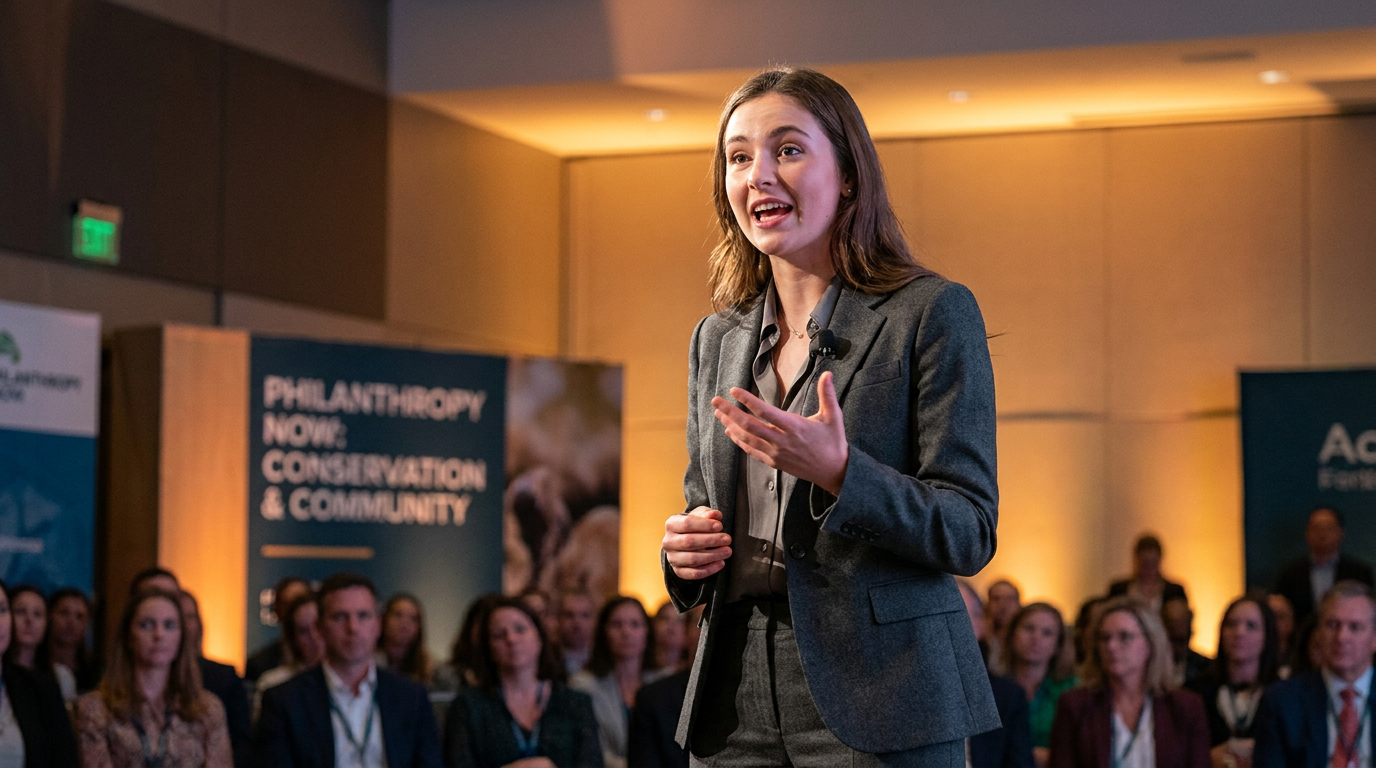
The strategic maturity of this approach has not gone unnoticed by the broader philanthropic and business communities. In March 2026, the Fashion Institute of Technology and the Social Impact Fund honored the initiative's founder with the Excellence in Beauty Philanthropy Award at the Social Impact Summit in New York City. The recognition marked a significant moment, elevating mental health advocacy to the same level of industry prestige as artistic or commercial achievement.[3][4]
The summit highlighted how the underlying business model has redefined corporate social responsibility in the beauty sector. By legally pledging one percent of all global sales directly to the Rare Impact Fund, the company has created a sustainable, predictable revenue stream that scales automatically with the brand's commercial success. This insulates the charity from the fatigue that often plagues traditional fundraising efforts.[4][5]

This integrated model is increasingly viewed as the new gold standard for celebrity-led enterprises. Analyses in the Harvard Business Review have highlighted how consumers, particularly Gen Z, demand that brands possess a genuine, verifiable commitment to social issues rather than superficial marketing. The success of this model proves that embedding a philanthropic mission into the core financial structure of a company is not just ethically sound, but commercially potent.[1][4][8]
The founder's personal transparency has been the catalyst for this entire ecosystem. By publicly navigating her own mental health challenges—including a bipolar diagnosis and the grueling realities of seeking effective treatment—she stripped away the glossy veneer typically associated with celebrity narratives. This authenticity resonates deeply with a generation that values vulnerability over perfection.[2][5]
"I knew from the start that I wanted Rare Beauty to help create real change," the founder noted during the 2026 summit. "For too long, young people have faced mental health challenges without the support they deserve. Through the brand and the Rare Impact Fund, we're working together with partners to expand resources, reduce stigma, and meet young people where they are."[4]
Looking ahead, the fund's trajectory suggests it is well on its way to achieving its $100 million goal by 2030. But the true measure of its success will not just be the capital raised; it will be the structural changes it leaves behind. By investing heavily in the nonclinical workforce today, the initiative is laying the groundwork for a more resilient, accessible mental health infrastructure for decades to come.[1][5]

The ripple effects of this strategy are already being felt across the nonprofit sector. Organizations receiving the $500,000 grants are able to scale their operations, hire more diverse staff, and reach marginalized communities that have historically been excluded from traditional mental health care systems. It is a localized approach fueled by global capital.[2][3]
Ultimately, the story of the Rare Impact Fund in 2026 is one of maturation. It has evolved from a celebrity passion project into a sophisticated philanthropic institution capable of moving markets and shaping public health strategies. In an era where entertainment news is often dominated by fleeting controversies, this sustained commitment to youth well-being stands as a powerful, necessary counter-narrative.[1][5]
How we got here
September 2020
Rare Beauty and the Rare Impact Fund officially launch with a $100 million, 10-year goal.
2024–2025
The fund expands its global footprint, partnering with 30 nonprofits including The Trevor Project and The JED Foundation.
February 2026
The Fashion Institute of Technology announces it will honor the initiative with the Excellence in Beauty Philanthropy Award.
April 2026
The fund launches a $2.5 million Request for Proposals specifically targeting the nonclinical mental health workforce.
Viewpoints in depth
Philanthropic Strategists
Advocates for structural, scalable funding models over traditional awareness campaigns.
This camp argues that the era of celebrity 'awareness' campaigns has reached the point of diminishing returns. Instead, they champion the Rare Impact Fund's model of embedding a fixed percentage of corporate revenue into a philanthropic arm. By focusing on the nonclinical workforce, strategists believe the fund is addressing the actual supply-chain bottleneck in mental health care, providing scalable solutions rather than just highlighting the problem.
Mental Health Advocates
Focuses on the urgent need for accessible, stigma-free care in local communities.
For public health officials and advocacy groups, the severe shortage of licensed psychiatrists and therapists is a crisis that cannot be solved quickly. They emphasize that community health workers and peer counselors are essential first responders. This perspective values the fund's commitment to culturally responsive care, noting that young people are far more likely to seek help when it is offered in familiar, non-stigmatizing environments by people who share their lived experiences.
Industry Observers
Analyzes the shift in consumer expectations for beauty and entertainment brands.
Market analysts and fashion industry leaders view the initiative as a defining case study in modern brand building. They note that Gen Z and Gen Alpha consumers increasingly demand authentic social impact from the companies they patronize. Observers argue that Rare Beauty's success proves that philanthropy is no longer just a tax write-off or a PR strategy; it is a core component of commercial viability in the 2020s.
What we don't know
- How the nonclinical workforce grants will be distributed internationally versus domestically in 2026.
- Whether other major celebrity-led brands will adopt the exact 1% revenue pledge model in the coming years.
Key terms
- Nonclinical workforce
- Professionals and volunteers, such as peer support specialists and community health workers, who provide mental health support outside of traditional medical or psychiatric settings.
- Culturally responsive care
- Mental health services that recognize and integrate the cultural backgrounds, values, and experiences of the individuals being supported.
- Purpose-driven business
- A commercial enterprise that embeds a specific social or environmental mission into its core operational and financial model.
Frequently asked
What is the Rare Impact Fund?
A philanthropic initiative launched in 2020 dedicated to expanding access to youth mental health services globally.
What is the 2026 Grant Programme focusing on?
The 2026 grants, totaling over $2.5 million, are specifically aimed at strengthening the nonclinical youth mental health workforce, such as peer counselors and community health workers.
How is the fund financed?
Beyond traditional donations and grants, Rare Beauty legally pledges 1% of all global sales directly to the Rare Impact Fund, creating a sustainable revenue pipeline.
Why focus on nonclinical workers?
There is a severe global shortage of licensed therapists and psychiatrists. Nonclinical workers provide immediate, culturally responsive support and help bridge the gap in care.
Sources
Source coverage
8 outlets
3 viewpoints surfaced







[1]Factlen Editorial TeamPhilanthropic Strategists
Synthesis by Factlen editorial team
Read on Factlen Editorial Team →[2]Global South OpportunitiesIndustry Observers
Rare Impact Fund 2026 Grants: Up to $500,000 for Youth Mental Health Initiatives
Read on Global South Opportunities →[3]Opportunities for YouthIndustry Observers
Rare Impact Fund 2026 Grant Opportunity (RFP)
Read on Opportunities for Youth →[4]FIT NYCIndustry Observers
2026 Social Impact Summit x NYC Honors Selena Gomez
Read on FIT NYC →[5]Rare Impact FundMental Health Advocates
Our Mission and Vision for Youth Mental Health
Read on Rare Impact Fund →[6]World Health OrganizationMental Health Advocates
Adolescent mental health
Read on World Health Organization →[7]National Alliance on Mental IllnessMental Health Advocates
Mental Health By the Numbers
Read on National Alliance on Mental Illness →[8]Harvard Business ReviewPhilanthropic Strategists
The Rise of the Purpose-Driven Beauty Brand
Read on Harvard Business Review →

Every angle. Every day.
Get entertainment stories with full source coverage and perspective breakdowns delivered to your inbox.