
How Elite Athletes Beat Extreme Heat: The Science of Core Cooling and Acclimation
As summer tournaments push athletes to their thermal limits, sports scientists are deploying advanced cooling technologies and biological acclimation protocols to prevent performance collapse.
By Factlen Editorial Team
- Sports Physiologists
- Focus on biological heat acclimation, core temperature metrics, and physiological adaptations as the primary defense against extreme heat.
- Sports Technologists
- Advocate for the use of advanced cooling garments, ingestible sensors, and real-time data monitoring to optimize performance and safety.
- Player Welfare Advocates
- Emphasize the inherent dangers of extreme heat, pushing for mandatory hydration breaks, rescheduled matches, and strict environmental safety thresholds.
What's not represented
- · Amateur athletes who lack access to expensive cooling technology and acclimation facilities
- · Stadium engineers tasked with designing passive cooling systems for outdoor venues
Why this matters
As global temperatures rise, understanding how the human body regulates heat is no longer just for elite athletes—it is crucial knowledge for anyone exercising, working, or spending time outdoors in the summer. The cooling technologies and acclimation protocols developed for professional sports offer practical, science-backed strategies for preventing heat illness in everyday life.
Key points
- Working muscles generate 70% of their energy as heat, forcing the cardiovascular system to split resources between performance and cooling.
- For every degree core temperature rises above optimal, athletic performance can drop by 10 to 20 percent.
- Pre-cooling with ice vests lowers skin temperature and delays the onset of critical thermal fatigue.
- Biological heat acclimation expands blood plasma volume and produces more dilute sweat, preserving vital electrolytes.
- High wet-bulb temperatures render both acclimation and sweating ineffective, making external cooling interventions essential for safety.
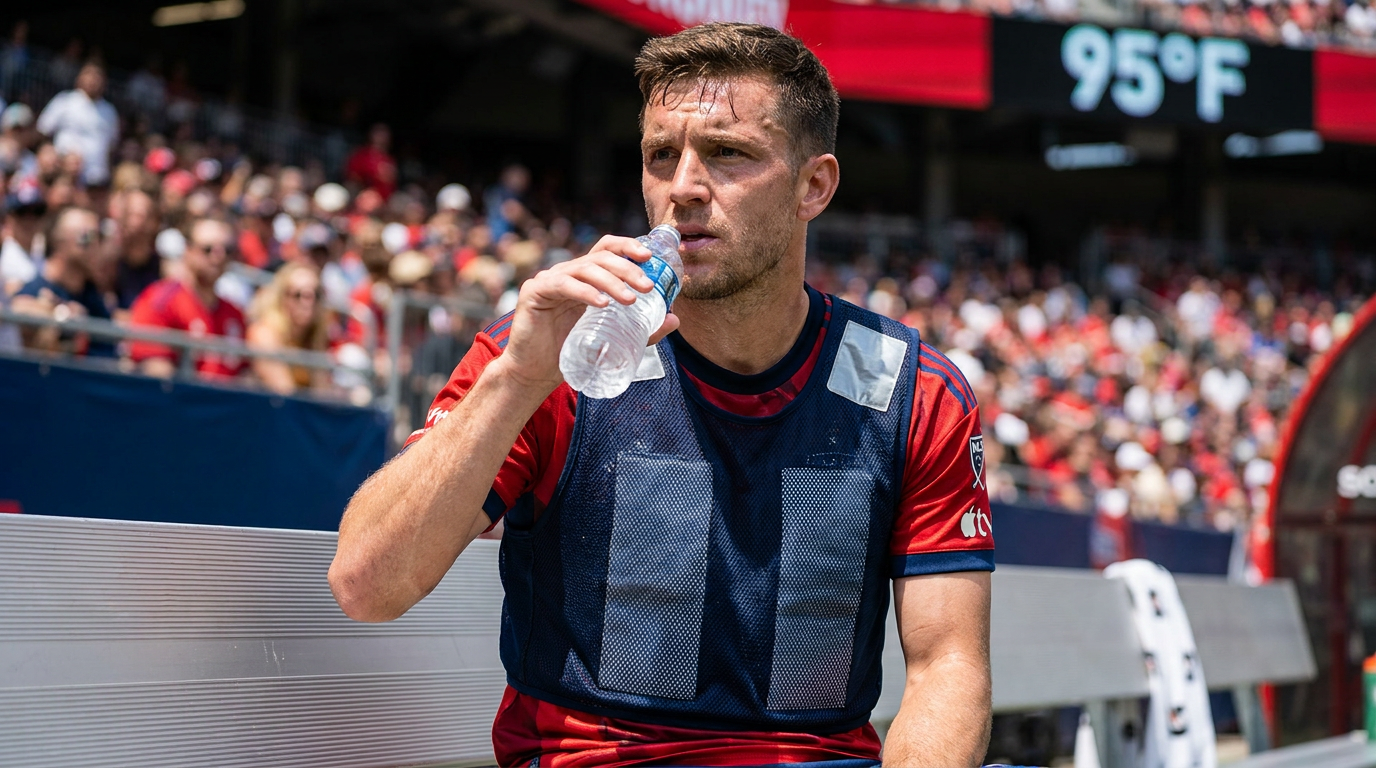
The 2026 World Cup in North America is pushing elite athletes to their absolute thermal limits. Early matches in host cities like Miami and Monterrey have already been played in what analysts classify as 'severe heat,' prompting immediate interventions such as air-conditioned stadium environments and mandatory hydration breaks. But behind the scenes, a quiet revolution in sports science is dictating how teams prepare for these extreme conditions. The focus has shifted from merely surviving the heat to actively engineering the human body to thrive in it, utilizing a combination of advanced wearable technology, precise biological acclimation protocols, and targeted cooling interventions.[1][6]
The fundamental problem athletes face in extreme heat is mechanical inefficiency. Working human muscles generate roughly 70 percent of their energy as heat rather than forward movement. In temperate climates, this excess heat is easily dissipated into the surrounding air. However, when environmental temperatures climb, the body's cardiovascular system is forced into a high-stakes physiological tug-of-war. The heart must split its resources between delivering oxygen-rich blood to the working muscles and pumping blood to the surface of the skin to release heat through sweating. This divided effort immediately compromises athletic output, forcing the athlete to work harder just to maintain their baseline pace.[2][3]
This physiological balancing act has a strict and unforgiving ceiling. Research indicates that for every single degree an athlete's core temperature rises above its optimal resting state, physical performance can drop by 10 to 20 percent. Once an athlete's core temperature approaches the critical threshold of 39.5°C (103.1°F), the brain intervenes. The central nervous system actively reduces muscle recruitment—a protective mechanism designed to force the athlete to slow down and prevent catastrophic, life-threatening heat illness. For an elite marathoner or a midfielder in the 89th minute, hitting this thermal ceiling means an abrupt and involuntary end to their peak performance.[2][3]
To combat this biological limit, sports scientists have shifted their focus from simple hydration strategies to comprehensive thermoregulation. The most visible and widely adopted intervention is 'pre-cooling'—the practice of artificially lowering the body's temperature in the hours and minutes before an event begins. The mathematical goal of pre-cooling is simple: to widen the margin between the athlete's starting temperature and their critical thermal limit, thereby buying them more time at maximum exertion before fatigue inevitably sets in.[2][3][6]

The clinical evidence supporting pre-cooling is robust and growing. A comprehensive systematic review and meta-analysis published in the Journal of Sports Science and Medicine found that external pre-cooling significantly enhances endurance performance in hot and humid conditions. Athletes who utilize these strategies consistently demonstrate a delayed onset of thermal fatigue and improved sustained power output compared to control groups. The data shows that while pre-cooling cannot change the environmental conditions, it effectively resets the athlete's internal starting line.[2]
Cooling vests, packed with phase-change materials or crushed ice, have become the most common tool in the pre-cooling arsenal. While these garments are less effective at dropping deep core temperature than full cold-water immersion—which remains the gold standard but is logistically difficult on a sports field—they excel at rapidly lowering skin temperature. This localized cooling reduces immediate cardiovascular strain and significantly improves the athlete's perception of thermal comfort, allowing them to push harder during the crucial opening phases of a match.[3][4]
'Mid-cooling' during natural breaks in play has also become ubiquitous at the highest levels of sport. Data collected during the extreme heat of the Doha World Athletics Championships revealed that 93 percent of elite competitors utilized mid-cooling strategies, including cold-water head dousing and the application of ice vests. For sports with built-in intervals, such as the half-time break in soccer or changeovers in tennis, these rapid interventions are critical for resetting the athlete's thermal state and blunting the cumulative rise in core temperature.[4]
'Mid-cooling' during natural breaks in play has also become ubiquitous at the highest levels of sport.
Internal cooling methods are also gaining traction as a rapid-response tool. Ingesting ice slushies lowers core temperature from the inside out, absorbing massive amounts of heat energy as the crushed ice melts in the stomach. However, the evidence regarding slushies is mixed; while they effectively lower core metrics in laboratory settings, some athletes report severe gastrointestinal discomfort during high-intensity exercise, which can completely negate the intended performance benefits. Consequently, sports dietitians must trial these methods extensively during training before deploying them in competition.[2][3]
Tracking these thermal metrics has finally moved from the controlled environment of the laboratory to the chaos of the playing field. Wearable technology, such as the non-invasive CORE sensor used extensively by professional cycling teams in the UCI WorldTour, now allows coaches to monitor an athlete's 'Heat Strain Index' in real time. This minute-by-minute data stream helps medical teams optimize pacing strategies, identify players at risk of heat exhaustion, and deploy cooling interventions exactly when the data indicates they are needed most.[5]
Despite these impressive technological advances in cooling garments and real-time sensors, the consensus among sports physiologists remains clear: the single most important intervention is biological heat acclimation. A major consensus statement published in the British Journal of Sports Medicine emphasizes that repeated exercise-heat exposures over a period of one to two weeks are absolutely essential for optimizing performance and protecting athlete safety in warm environments. You cannot simply ice your way out of a severe heatwave; the body itself must be fundamentally altered to handle the stress.[3]

Acclimation triggers a cascade of profound physiological changes that make the athlete mechanically and thermally more efficient. Within days of heat exposure, the body expands its blood plasma volume, which improves overall cardiovascular stability and ensures there is adequate blood volume to supply both the working muscles and the cooling mechanisms of the skin. Additionally, the athlete's maximum sweat rate increases dramatically, and the biological trigger for sweating occurs at a much lower core temperature, allowing the body to begin dissipating heat earlier in the exercise bout before critical thresholds are reached.[3]
Crucially, the sweat produced by an acclimated athlete is fundamentally different—it is much more dilute. As the body adapts to chronic heat exposure, the sweat glands become highly efficient, learning to reabsorb sodium and chloride before the fluid reaches the skin's surface. This vital adaptation preserves the body's internal electrolyte stores, maintaining a delicate fluid balance and significantly reducing the risk of severe muscle cramping and hyponatremia during prolonged exertion in the sun. For endurance athletes, this electrolyte preservation is often the difference between finishing a race and collapsing on the course.[3][4]
There is an ongoing debate within the sports science community regarding the best method to achieve these vital adaptations. While 'active' acclimation—physically training in the heat at a high intensity—is universally considered the gold standard, 'passive' acclimation techniques like post-exercise sauna use or hot-water immersion are becoming increasingly popular. Evidence suggests these passive methods are highly effective supplements, especially for athletes based in colder climates who cannot travel to hot host cities weeks in advance of a major tournament. By artificially elevating the core temperature in a controlled environment, athletes can trick their bodies into triggering the necessary biological adaptations without the physical wear and tear of extra training sessions.[3]
The research also highlights a significant and concerning data gap regarding female athletes. Historically, thermoregulation and sports science studies have heavily skewed toward male participants, leading to generalized protocols that may not serve everyone equally. Recent comprehensive reviews indicate that female athletes may require significantly longer acclimation periods—typically 8 to 14 days of continuous exposure—to achieve the same consistent physiological adaptations as their male counterparts. This discrepancy underscores the urgent need for highly individualized, sex-specific preparation protocols rather than a one-size-fits-all approach to heat management, ensuring all athletes are adequately protected.[2][3]

Uncertainty also surrounds the psychological impact of advanced cooling technologies. Pre-cooling significantly lowers an athlete's perception of heat strain, which can dramatically improve their early-game pacing, decision-making, and overall confidence. However, some researchers warn of a potential placebo trap: artificially lowering skin temperature without achieving a corresponding drop in deep core temperature might mask dangerous biological warning signs. If an athlete feels artificially cool due to an ice vest, they might be encouraged to push past safe biological limits, inadvertently increasing their risk of exertional heatstroke by ignoring the body's natural fatigue signals.[3][4]
Furthermore, all cooling and acclimation strategies face a hard, uncompromising physical limit: the wet-bulb temperature. When extreme heat is combined with high humidity, the surrounding air becomes saturated with moisture, meaning sweat can no longer evaporate from the skin. Because evaporation is the human body's primary mechanism for releasing heat, these 'uncompensable' environments render even the most advanced biological acclimation largely useless. In these dangerous conditions, core temperatures will inevitably rise regardless of an athlete's fitness or preparation, making external interventions, mandatory hydration breaks, and strict safety thresholds the only viable defense against mass casualties.[1][3]
As global temperatures continue to rise and sporting mega-events are increasingly hosted in extreme summer climates, the intersection of environmental science and sports medicine will only grow more critical. The evidence gathered from recent tournaments is clear: surviving extreme heat is no longer just a matter of athletic grit, hydration, or mental toughness. It requires a meticulously planned, scientifically validated approach to human thermoregulation. By combining biological acclimation with cutting-edge cooling technology, sports scientists are ensuring that the pursuit of peak performance does not come at the cost of player safety, allowing human achievement to continue pushing boundaries even as the climate shifts.[1][6]
How we got here
1990s
Sports science begins integrating basic hydration and cooling strategies into professional team sports.
2004
Early studies demonstrate that wearing cooling vests during active warm-ups significantly improves endurance running performance in the heat.
2019
The Doha World Athletics Championships highlight the widespread adoption of mid-cooling, with 93% of elite athletes utilizing the strategy.
2024
Wearable core temperature sensors become widely adopted in professional cycling and endurance sports to track real-time heat strain.
June 2026
The FIFA World Cup in North America brings unprecedented attention to extreme heat mitigation and player safety protocols.
Viewpoints in depth
Sports Physiologists
Advocates for biological adaptation over technological intervention.
This camp argues that while cooling vests and slushies are useful supplements, they cannot replace the fundamental biological changes achieved through heat acclimation. They point to evidence showing that expanding blood plasma volume and altering sweat composition are the only sustainable ways to maintain cardiovascular stability during prolonged exertion. They caution against over-relying on external cooling, which can sometimes mask the body's natural warning signals.
Sports Technologists
Proponents of real-time data and advanced cooling materials to maximize performance.
Technologists focus on the margins of performance, arguing that in elite sports, a fraction of a degree in core temperature can determine the outcome of a match. They champion the integration of wearable sensors that provide minute-by-minute Heat Strain Index data, allowing coaches to deploy phase-change cooling vests and internal cooling strategies precisely when an athlete approaches their thermal limit. For this camp, technology is the great equalizer against extreme climates.
Player Welfare Advocates
Voices prioritizing athlete safety and strict environmental regulations over competition schedules.
This perspective, often represented by player unions and medical ethicists, argues that human biology has hard limits that neither acclimation nor technology can fully overcome—particularly in high wet-bulb temperatures. They advocate for structural changes to sports, such as moving kickoff times to the evening, enforcing mandatory cooling breaks, or even postponing events when environmental thresholds are breached, insisting that entertainment must never supersede athlete health.
What we don't know
- Whether artificially lowering skin temperature with cooling vests masks dangerous biological warning signs, potentially increasing the risk of heatstroke.
- The exact physiological mechanisms that cause female athletes to require longer heat acclimation periods than male athletes.
- How effectively athletes can adapt to rapid 'climate shocks' when traveling between high-altitude, low-humidity venues and sea-level, high-humidity venues within days.
Key terms
- Core Temperature
- The operating temperature of the body's deep internal structures, which must be tightly regulated to maintain athletic performance and prevent heat illness.
- Heat Acclimation
- A series of biological adaptations, such as increased blood plasma volume and earlier sweat onset, that reduce physiological strain when exercising in hot environments.
- Pre-cooling
- The practice of artificially lowering the body's temperature before an event begins to increase the margin before critical heat limits are reached.
- Heat Strain Index
- A real-time metric combining core and skin temperature data to estimate the total thermal stress placed on an athlete's body.
Frequently asked
What is wet-bulb temperature?
Wet-bulb temperature is a metric that combines heat and humidity. It is crucial for athletes because high humidity prevents sweat from evaporating, which is the body's primary method of cooling itself.
How long does it take to acclimate to heat?
Most sports science guidelines recommend 7 to 14 days of repeated exercise in the heat to achieve full biological acclimation, though female athletes may consistently require the longer end of that window.
Do cooling vests lower core body temperature?
Cooling vests primarily lower skin temperature and improve thermal comfort. While they delay the rise in core temperature, they are less effective at dropping deep core temperature than full cold-water immersion.
Why do athletes drink ice slushies during games?
Ingesting crushed ice lowers core temperature from the inside out, absorbing significant heat energy as it melts in the stomach, providing a rapid cooling effect during short breaks in play.
Sources
Source coverage
6 outlets
3 viewpoints surfaced




[1]The GuardianPlayer Welfare Advocates
Two World Cup matches were played in 'severe heat', analysis finds
Read on The Guardian →[2]Journal of Sports Science and MedicineSports Technologists
The Effect of Pre-Exercise Cooling on Performance Characteristics: A Systematic Review and Meta-Analysis
Read on Journal of Sports Science and Medicine →[3]British Journal of Sports MedicineSports Physiologists
Consensus recommendations on training and competing in the heat
Read on British Journal of Sports Medicine →[4]International Journal of Sports Physiology and PerformanceSports Physiologists
Hydration and cooling in elite athletes: relationship with performance
Read on International Journal of Sports Physiology and Performance →[5]CORE Body TemperatureSports Technologists
CORE Launches Heat Zones To Help Athletes Prepare for Scorching Summer Races
Read on CORE Body Temperature →[6]Factlen Editorial TeamPlayer Welfare Advocates
Synthesis by Factlen editorial team
Read on Factlen Editorial Team →

More in sports
See all 9 stories →Yankees vs Reds
Yankees Host Reds in Series Opener: Pitching Matchups, Lineup Notes, and Predictions
6 sources

AL Central Matchup
Tigers Host AL Central-Leading White Sox as Tarik Skubal Returns to Comerica Park
6 sources

Wrigley Matinee
Cubs and Blue Jays Clash at Wrigley Field in Marquee Pitching Duel
5 sources

VNL 2026
Belgium and Germany Clash in High-Stakes VNL Encounter in Ankara
6 sources
Every angle. Every day.
Get sports stories with full source coverage and perspective breakdowns delivered to your inbox.