
The Longevity Revolution: How Science and the NCAA Transformed Elite Gymnastics
Women's artistic gymnastics has shifted from a sport dominated by teenagers to one ruled by athletes in their mid-to-late twenties, driven by biomechanics, load management, and the college pipeline.
By Factlen Editorial Team
- Sports Scientists
- Focuses on the biomechanical and physiological data, emphasizing that mature muscle mass and load management are required for modern gymnastics.
- College & Elite Coaches
- Highlights the structural changes in the sport, particularly how the NCAA pipeline and the open-ended scoring system reward sustained development.
- Athlete Advocates
- Views the longevity trend as a triumph of athlete agency, celebrating the move away from abusive, burnout-inducing training environments.
What's not represented
- · Junior developmental coaches adapting to the new timeline
- · Gymnastics federations from countries without a college sports system
Why this matters
The transformation of gymnastics proves that prioritizing athlete health, leveraging sports science, and treating competitors as adults doesn't diminish athletic excellence—it extends and elevates it. This blueprint for sustainable, injury-free performance is now influencing youth sports globally.
Key points
- The average age of elite female gymnasts has risen to its highest point since the 1960s.
- The open-ended scoring system requires explosive power that favors mature muscle mass.
- Sports science and load management have drastically reduced career-ending overuse injuries.
- NCAA gymnastics now serves as a high-performance incubator rather than a retirement home.
- A cultural shift toward athlete agency has reduced burnout and extended careers.
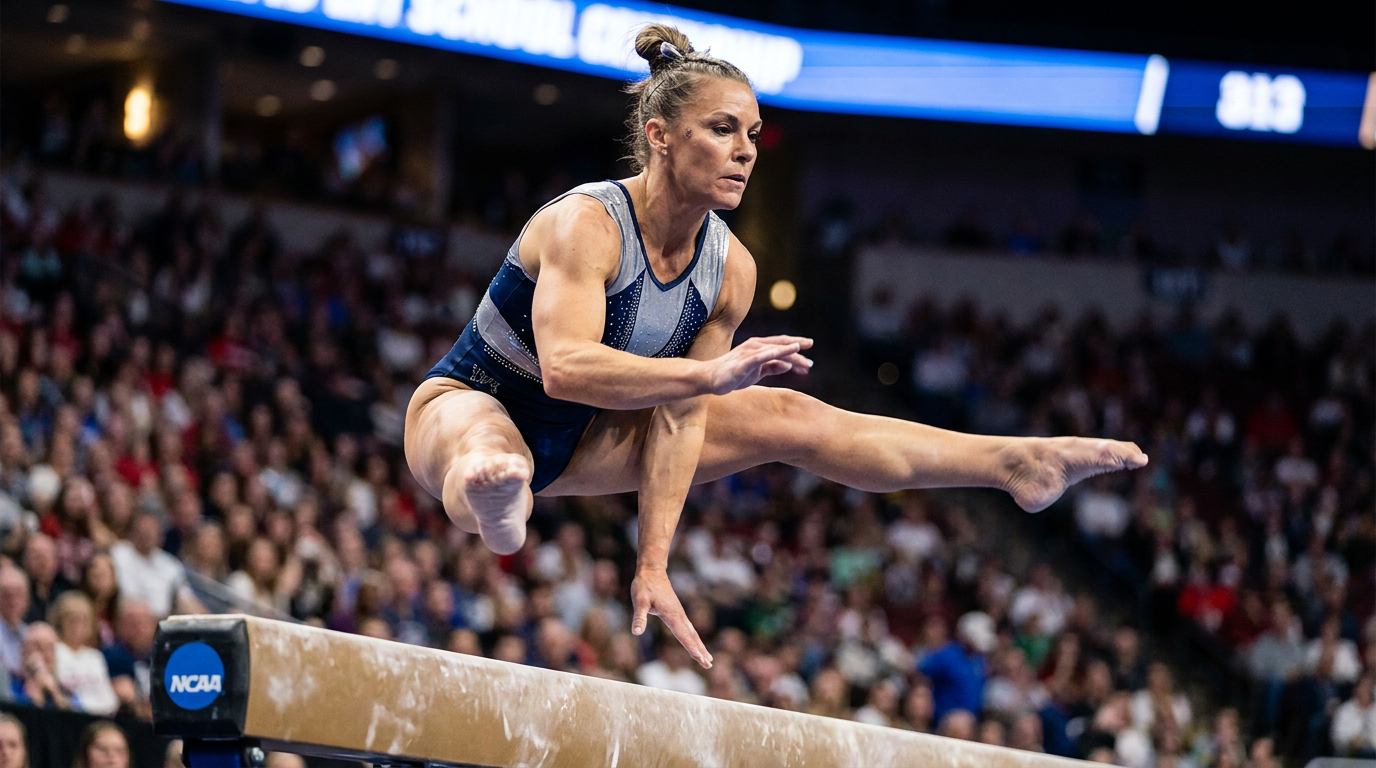
The image of the elite female gymnast has fundamentally changed. Gone are the days of fourteen-year-old "pixies" peaking at their first international competition and retiring before they finish high school. In 2026, women's artistic gymnastics is a sport ruled by mature, powerful adults.[1][7]
The shift that became undeniable at the 2024 Paris Olympics—where the average age of female gymnastics medalists hit 22.7, the highest mark since 1964—has now solidified into the sport's new baseline. Podiums are routinely swept by women in their mid-to-late twenties, upending decades of conventional wisdom about athletic peaks.[2]
This is not a demographic fluke; it is a physiological and cultural revolution. A combination of advanced biomechanics, the explosion of the NCAA gymnastics pipeline, and a profound cultural reckoning has transformed women's artistic gymnastics into a sport of longevity, proving that health and high performance are not mutually exclusive.[1][7]

To understand the shift, one must look at the mechanics of the sport itself. The introduction of the open-ended Code of Points in 2006 fundamentally altered the physical requirements of a champion. By removing the "Perfect 10" ceiling, the sport began rewarding unprecedented, compounding difficulty.[4]
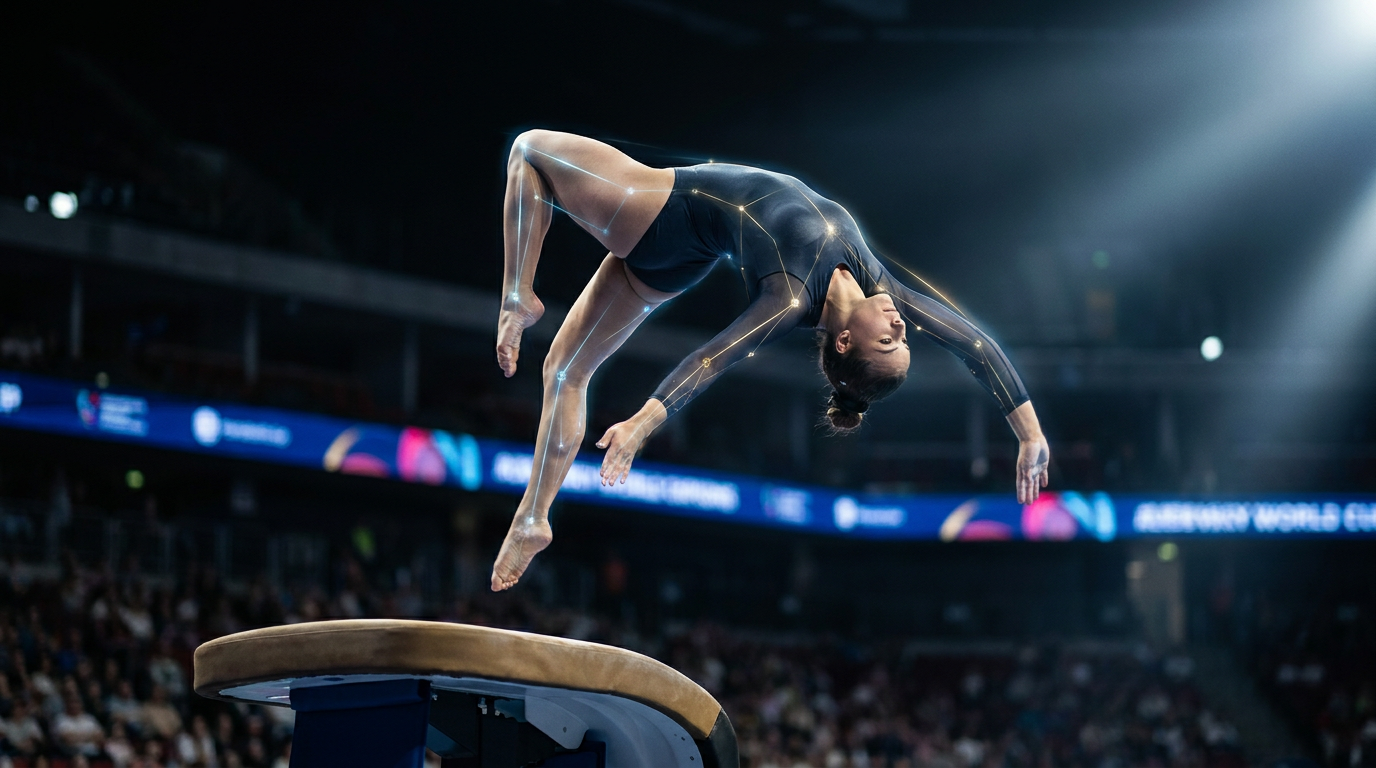
Athletes now need to generate massive explosive power to complete double-twisting double backflips on the floor and complex, high-flying vault entries. That level of raw, fast-twitch power requires mature muscle mass and bone density, traits that sports scientists note are simply not fully developed in a pre-pubescent frame.[3][4]
As the skills grew more demanding, biomechanics and injury prevention protocols had to catch up. Historically, up to 40 percent of elite gymnastics injuries were attributed to overuse and repetitive impact, effectively putting a ticking clock on a young athlete's joints.[3]
Today, elite training facilities utilize force plates and motion-capture technology to analyze landing mechanics. Coaches emphasize "soft landings" that distribute impact forces, which can exceed 2.37 times an athlete's body weight during tumbling passes, safely through the kinetic chain rather than isolating stress on the ankles and lower back.[3][5]
Load management, a concept long utilized in professional basketball and soccer, has finally entered the gymnastics lexicon. Instead of demanding fifty repetitions of a high-impact skill in a single afternoon, modern coaching prioritizes precision, neuromuscular control, and adequate rest.[5]

The NCAA has played an equally massive role in this longevity revolution. For decades, college gymnastics was viewed as a victory lap—a place where burned-out elites went to compete with downgraded routines and heal their bodies before quietly retiring.[6]
The NCAA has played an equally massive role in this longevity revolution.
That paradigm has entirely flipped. College programs are now high-performance incubators where athletes maintain elite skills and even upgrade them. The weekly competition schedule of the NCAA forces athletes to learn how to pace themselves, competing consistently without peaking too early.[6]
The advent of Name, Image, and Likeness (NIL) rights accelerated this trend. Athletes no longer have to choose between earning a living as a professional and competing in the NCAA; they can do both, incentivizing them to stay in the sport longer and utilize university-level sports science resources.[6][7]
The 2026 NCAA Championships in Fort Worth showcased this crossover perfectly. Multiple Olympians anchored their college teams, executing world-class routines while simultaneously preparing for the elite international season—a dual-track career that was considered impossible a decade ago.[6]

Beyond the physical and financial changes, there is a profound psychological shift. The sport has undergone a highly publicized cultural reckoning, actively moving away from authoritarian coaching models that treated young athletes as disposable commodities.[7]
Adult athletes have agency. A twenty-four-year-old gymnast can communicate with her coaches about pain, fatigue, and mental blocks in a way a young teenager simply cannot, fostering a collaborative training environment.[1][7]
This collaborative approach extends careers. When athletes feel heard and protected, they are significantly less likely to suffer the catastrophic mental burnout that defined previous generations of the sport.[7]
Equipment innovations have quietly supported this trend in the background. Modern spring floors and vaulting tables offer better energy return and shock absorption, sparing the joints of older athletes and allowing them to train high-level skills with less wear and tear.[3]

The result is a sport that is not only safer but significantly more dynamic for the viewer. Fans are treated to athletes who have spent a decade refining their artistry, execution, and emotional expression, rather than watching a revolving door of prodigies.[1][4]
Questions remain about the absolute ceiling of this trend. While athletes in their late twenties are currently thriving, sports scientists are now studying whether elite performance can be safely sustained into the early thirties without diminishing returns.[3][5]
How we got here
1997
The International Gymnastics Federation raises the minimum age for senior elite competition to 16.
2006
The open-ended Code of Points is introduced, removing the Perfect 10 and rewarding extreme difficulty.
2021
The NCAA introduces NIL rights, allowing college gymnasts to earn money while maintaining eligibility.
2024
The Paris Olympics features the oldest women's gymnastics podiums in over 60 years.
2026
NCAA and elite circuits become fully integrated, with athletes seamlessly crossing over between the two.
Viewpoints in depth
Sports Scientists & Biomechanists
Emphasizes the physical necessity of maturity in modern gymnastics.
Researchers point out that the sheer physics of modern gymnastics makes the "pixie" body type obsolete. To safely land a tumbling pass that exerts more than double an athlete's body weight in compression force, a gymnast needs mature bone density and significant fast-twitch muscle mass. Biomechanists argue that the longevity trend is a natural evolutionary response to the sport's scoring system, aided by better equipment and strict load management protocols that prevent the joint degradation seen in the 1990s.
NCAA & Elite Coaches
Focuses on the structural and financial changes that keep athletes in the gym.
For coaches, the longevity revolution is a product of the NCAA pipeline. Before NIL rights, athletes had to choose between cashing in on their Olympic fame or competing in college. Now, they can do both. College coaches note that the weekly cadence of NCAA meets teaches athletes how to pace their bodies and compete consistently without peaking too early—a skill that translates perfectly when they return to the elite international stage.
Athlete Advocates
Celebrates the cultural shift away from abusive practices toward athlete empowerment.
Advocates view the rising age of gymnasts as a triumph of human rights within the sport. For decades, the sport relied on a culture of silence, where young teenagers were subjected to extreme over-training and emotional abuse. Adult women, however, have the agency to say no, to communicate pain, and to demand collaborative coaching. This psychological safety, advocates argue, is the true secret to preventing burnout and extending careers.
What we don't know
- Whether elite performance can be safely sustained into an athlete's early or mid-thirties.
- How countries without an NCAA-style college system will adapt their training pipelines to keep older athletes funded and competitive.
Key terms
- Open-Ended Code of Points
- The scoring system introduced in 2006 that removed the 'Perfect 10' ceiling, rewarding athletes for completing highly difficult and complex skills.
- Load Management
- The deliberate monitoring and limitation of physical stress and repetitions during training to prevent overuse injuries.
- NIL (Name, Image, Likeness)
- Rules allowing NCAA athletes to earn money from endorsements, incentivizing gymnasts to stay in college rather than turning professional early.
- Force Plate
- A biomechanical measuring instrument embedded in the floor used to analyze the impact and pressure distribution of a gymnast's landing.
Frequently asked
Why did female gymnasts used to peak at 15 or 16?
Under the old scoring system and training methods, extreme flexibility and low body weight were prioritized. The sport did not yet require the massive explosive power needed for today's highly difficult skills.
Can college gymnasts compete in the Olympics?
Yes. Recent rule changes and training adaptations allow athletes to compete simultaneously in the NCAA and on the elite international circuit, a crossover that is becoming increasingly common.
Does this mean teenagers can no longer win medals?
Teenagers still compete and win at the highest levels, but they are now increasingly viewed as being in the developmental phase of their careers rather than at their absolute physical peak.
Sources
Source coverage
7 outlets
3 viewpoints surfaced





[1]Factlen Editorial TeamAthlete Advocates
Synthesis by Factlen editorial team
Read on Factlen Editorial Team →[2]Olympics.comAthlete Advocates
Age Trends in Olympic Gymnastics: The Shift to Maturity
Read on Olympics.com →[3]Journal of Sports SciencesSports Scientists
Biomechanical Assessment of Injury Prevention Techniques in Elite Gymnastics
Read on Journal of Sports Sciences →[4]International Gymnast MagazineCollege & Elite Coaches
How the Open-Ended Code of Points Rewrote Gymnastics Physiology
Read on International Gymnast Magazine →[5]British Journal of Sports MedicineSports Scientists
Load Management and Soft Landing Protocols in Artistic Gymnastics
Read on British Journal of Sports Medicine →[6]ESPNCollege & Elite Coaches
The Elite Eight: How Olympians are Dominating the 2026 NCAA Gymnastics Championships
Read on ESPN →[7]The AthleticAthlete Advocates
The End of the Pixie Era: How Adult Women Reclaimed Gymnastics
Read on The Athletic →
More in sports
See all 9 stories →Yankees vs Reds
Yankees Host Reds in Series Opener: Pitching Matchups, Lineup Notes, and Predictions
6 sources
AL Central Matchup
Tigers Host AL Central-Leading White Sox as Tarik Skubal Returns to Comerica Park
6 sources

Wrigley Matinee
Cubs and Blue Jays Clash at Wrigley Field in Marquee Pitching Duel
5 sources

VNL 2026
Belgium and Germany Clash in High-Stakes VNL Encounter in Ankara
6 sources
Every angle. Every day.
Get sports stories with full source coverage and perspective breakdowns delivered to your inbox.