
Canada Cuts Bank Capital Requirements to Unlock $74 Billion for AI and Defense
Canada's financial regulator has lowered the capital buffer for the country's largest banks for the first time in three years, freeing up massive lending capacity to fund critical infrastructure, defense, and artificial intelligence.
By Factlen Editorial Team
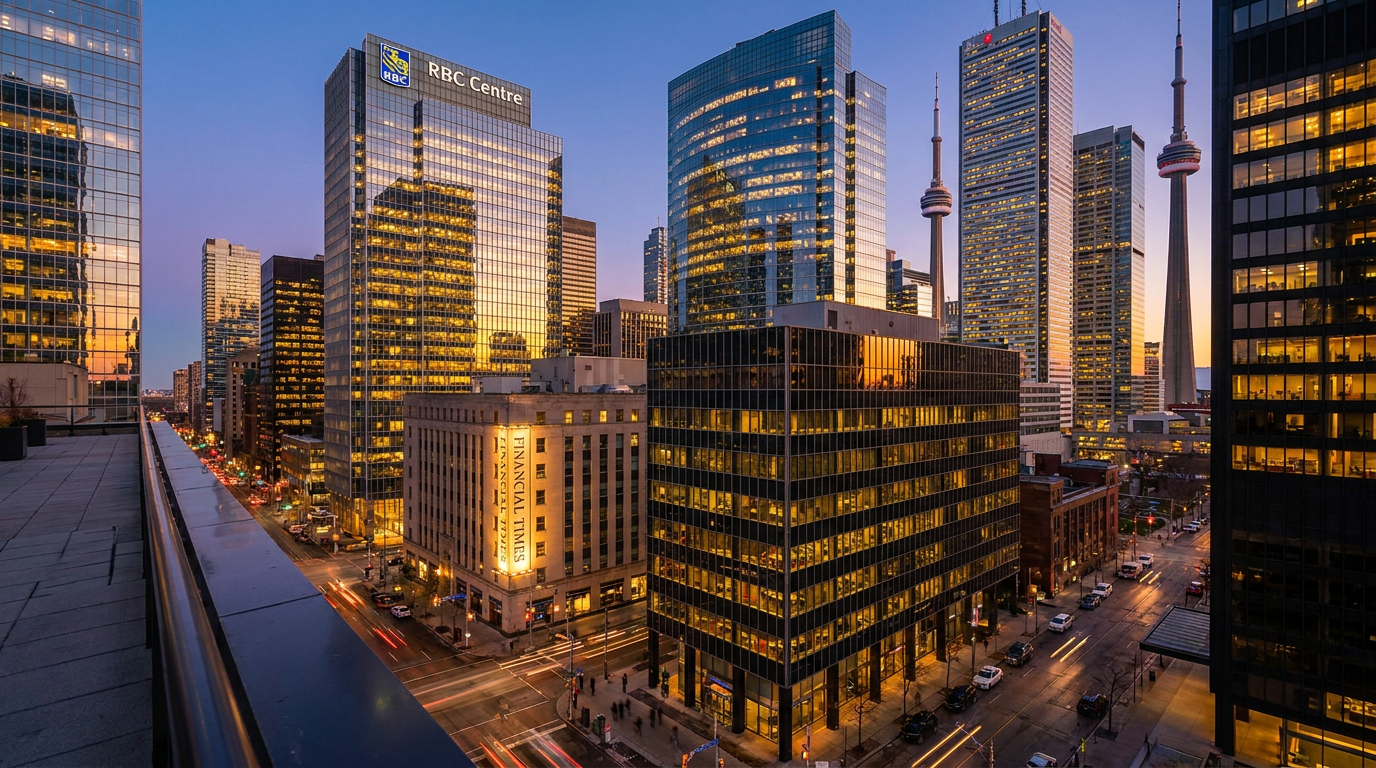
- Regulatory Pragmatists
- Excess capital should be deployed to modernize the economy.
- Financial Stability Hawks
- Lowering capital buffers during global uncertainty is premature.
- The Banking Sector
- A welcome opportunity to boost lending and shareholder returns.
What's not represented
- · Small and medium-sized business owners
- · Retail banking customers
Why this matters
By lowering the mandatory cash cushion banks must hold, Canada is effectively unleashing up to $673 billion in new lending capacity. This signals a major shift from pandemic-era caution to aggressive industrial investment, directly affecting how infrastructure and technology projects are financed.
Key points
- OSFI has lowered the Domestic Stability Buffer for Canada's largest banks from 3.5% to 3.0%.
- The regulatory cut immediately unlocks roughly $74 billion in excess capital, translating to $673 billion in new lending capacity.
- Regulators explicitly targeted the capital release to fund domestic adaptation in artificial intelligence, defense, and critical infrastructure.
- The move marks a philosophical shift for Canadian regulators, prioritizing economic modernization over extreme risk aversion.
Canada's top financial regulator has initiated a major macroeconomic policy shift, lowering the mandatory capital buffer for the country's largest banks for the first time in three years. The Office of the Superintendent of Financial Institutions (OSFI) announced the reduction on Friday, signaling a definitive pivot from pandemic-era caution toward aggressive domestic investment. The move is designed to free up billions of dollars in lending capacity, specifically targeting capital-intensive sectors that are deemed critical to Canada's future economic competitiveness.[1][2]
At the center of the policy change is the Domestic Stability Buffer (DSB), a regulatory requirement that forces banks to hold a certain percentage of their assets in reserve. OSFI has officially lowered the DSB from 3.5 percent to 3.0 percent of total risk-weighted assets. While a half-percentage-point reduction may sound incremental, the sheer scale of Canada's banking sector magnifies its impact. According to the regulator, this adjustment immediately unlocks roughly $74 billion in excess capital cushion that the banks were previously required to keep locked in the vault.[2][4]
Because modern financial institutions operate on a fractional reserve system, that $74 billion does not translate to a simple 1-to-1 increase in lending. Instead, it acts as a foundation upon which banks can underwrite a vastly larger portfolio of loans. OSFI estimates that this specific capital release equates to an expansion in risk-weighted assets of approximately $673 billion. This represents a massive injection of potential liquidity into the Canadian economy, providing the Big Six banks with the regulatory headroom to dramatically expand their domestic risk-taking activities.[1][2]

This regulatory easing is not a routine adjustment to the business cycle; it is a targeted industrial policy maneuver. OSFI Superintendent Peter Routledge explicitly framed the cut as a "green light" for banks to deploy capital into specific, high-priority sectors. The regulator's announcement highlighted the need to aid the Canadian economy's adaptation to shifting global dynamics, explicitly naming artificial intelligence, defense and security, and critical infrastructure as the primary targets for this newly unlocked $673 billion in lending capacity.[1][3]
The urgency behind this policy shift stems from a rapidly changing geopolitical landscape. As global supply chains fracture and trade tensions rise, Canada is facing mounting pressure to modernize its industrial base and meet international defense commitments. Financial leaders have increasingly warned that the country must speed up the development of energy projects, critical mineral extraction, and advanced technologies to maintain its economic sovereignty. Regulators have concluded that the financial system, which has built up massive reserves, must now step up to finance this multi-generational transition.[3][7]
To understand the mechanics of this move, it is necessary to look at how the Domestic Stability Buffer functions. Introduced in 2018, the DSB acts as a mandatory "rainy day fund" applied exclusively to Canada's domestic systemically important banks (D-SIBs). The mechanism is countercyclical by design: regulators raise the buffer during periods of strong economic growth to force banks to stockpile capital, and they lower it during periods of stress or transition to ensure that banks can continue lending to households and businesses without breaching their minimum requirements.[6]
The DSB is a critical component of a broader metric known as the Common Equity Tier 1 (CET1) ratio, which compares a bank's highest-quality capital against its risk-weighted assets. Under the current framework, OSFI requires the Big Six lenders to maintain a minimum CET1 ratio of 11.0 percent. However, years of conservative management and high profitability have left Canada's major banks heavily over-capitalized. Across the sector, the average CET1 ratio currently sits at a robust 13.5 percent, giving the institutions a massive cushion above the regulatory floor.[2][6]

Under the current framework, OSFI requires the Big Six lenders to maintain a minimum CET1 ratio of 11.0 percent.
While this extreme capitalization makes the Canadian banking system incredibly safe, regulators grew concerned that it was producing unintended negative consequences. In recent briefings, Routledge suggested that the strict regulatory capital environment was inadvertently contributing to a culture of "risk aversion" among the major lenders. By hoarding capital to maintain ratios well above the required minimums, banks were effectively starving the domestic economy of the risk capital needed to fund innovative, early-stage, or capital-intensive projects.[3]
Historically, Canada's banking sector has been defined by this exact brand of extreme conservatism, boasting a track record of zero bank failures over the last 30 years. However, the current regulatory leadership has signaled a profound philosophical shift. Earlier this year, Routledge argued that regulators and financial institutions must be willing to accept slightly more risk in the system. The underlying thesis is that the broader macroeconomic danger of technological stagnation and under-investment now outweighs the localized risk of individual loan defaults.[7]
Artificial intelligence represents one of the most pressing areas where this risk aversion was threatening Canada's competitiveness. OSFI has previously published reports highlighting that effective AI adoption requires staggering amounts of capital for specialized infrastructure, data centers, and technical expertise. The regulator warned that underinvestment in AI not only limits economic productivity but also poses systemic risks, as financial institutions need advanced AI to detect emerging cyber threats and financial crimes. Unlocking $673 billion is intended to directly address this capital shortfall.[1][2]
Defense and critical infrastructure face similar financing hurdles. With NATO allies pressuring Canada to meet the 2 percent GDP defense spending target, and the domestic power grid requiring massive upgrades to support electrification and data centers, the government cannot fund these initiatives through public debt alone. By lowering the capital buffer, OSFI is effectively deputizing the Big Six banks to act as the primary financiers for these national security and infrastructure imperatives, shifting the burden of capital allocation to the private sector.[1][4]

To ensure that banks actually deploy this capital rather than simply holding it in reserve, OSFI took an additional structural step. Alongside the immediate rate cut, the regulator lowered the maximum upper limit of the DSB range from 4.0 percent to 3.0 percent. This structural cap is designed to send a clear, long-term signal to bank executives: the regulator will not suddenly reverse course and demand higher capital buffers next year. This certainty is crucial for banks when underwriting multi-year infrastructure or technology loans.[2][3]
Despite the regulator's confidence, the policy shift has drawn skepticism from financial stability hawks. Advisory groups, including the C.D. Howe Institute's Domestic Stability Buffer Council, recently recommended that OSFI maintain the buffer at 3.5 percent. These economists argue that the global economic environment remains highly volatile, pointing to high energy prices, persistent inflation, and the looming threat of international trade wars. From their perspective, reducing the banking sector's shock absorbers during a period of profound global uncertainty is a premature and unnecessary gamble.[6]
Routledge and OSFI have countered these concerns by pointing to the sheer math of the banks' balance sheets. Even after the buffer reduction, the 3.0 percent DSB and the overarching 11.0 percent CET1 requirement leave Canadian banks among the most well-capitalized financial institutions in the world. The regulator maintains that this remaining buffer provides "substantial resilience" to the banking system, ensuring that lenders can absorb severe macroeconomic shocks without requiring taxpayer interventions or triggering a systemic crisis.[3][6]
The ultimate success of this policy maneuver now rests in the hands of bank executives. With the regulatory constraints loosened, markets will closely monitor the upcoming quarterly earnings reports to see exactly where the Big Six banks direct this $673 billion in capacity. While OSFI has explicitly called for investments in domestic AI, defense, and infrastructure, banks operate on a mandate to maximize shareholder value. The coming months will reveal whether this capital flows into nation-building projects, or if it is diverted toward share buybacks, increased dividends, and foreign acquisitions.[6]
How we got here
2018
OSFI introduces the Domestic Stability Buffer (DSB) to ensure banks build capital during economic expansions.
June 2023
The DSB is raised to 3.5%, forcing banks to hold more capital amid rising interest rates and economic uncertainty.
March 2026
OSFI Superintendent Peter Routledge signals a willingness to accept more risk in the financial system to boost national resilience.
June 19, 2026
OSFI officially cuts the DSB to 3.0%, unlocking up to $673 billion in lending capacity.
Viewpoints in depth
The Regulator's View
Excess capital should be deployed to modernize the economy.
OSFI Superintendent Peter Routledge argues that the regulatory environment had inadvertently fostered 'risk aversion' among Canada's major lenders. By hoarding capital well above the 11% minimum, banks were starving the domestic economy of necessary investment. The regulator views this capital release as a 'green light' for banks to finance the country's transition, particularly in capital-intensive sectors like artificial intelligence, defense, and resource extraction, which are critical for Canada's geopolitical standing.
Financial Stability Hawks
Lowering capital buffers during global uncertainty is premature.
Conservative economists and advisory groups, including the C.D. Howe Institute's DSB Council, view the timing of the cut with skepticism. They argue that the global economic environment—characterized by high energy prices, fractured supply chains, and shifting trade policies—remains highly volatile. From this perspective, the DSB was functioning exactly as intended: as a robust shock absorber. Reducing the buffer now, they warn, removes a layer of protection before the full impact of global economic shifts has materialized.
The Banking Sector
A welcome opportunity to boost lending and shareholder returns.
For Canada's Big Six banks, the regulatory relief is a significant win. The high capital requirements had constrained their ability to expand loan portfolios and improve return on equity. While regulators hope the $673 billion in new capacity will flow into domestic infrastructure and AI, bank executives also view the unlocked capital as an opportunity to pursue foreign acquisitions, increase dividends, or execute share buybacks, balancing national priorities with shareholder demands.
What we don't know
- Whether the Big Six banks will actually direct the unlocked capital toward domestic infrastructure and AI, or prioritize share buybacks and foreign acquisitions.
- How quickly the $673 billion in new lending capacity will filter down into the broader Canadian economy.
- Whether the reduced capital buffer will leave banks vulnerable if a sudden, severe global recession materializes.
Key terms
- Domestic Stability Buffer (DSB)
- A regulatory 'rainy day fund' that requires major banks to hold extra capital during good economic times to absorb potential future losses.
- Common Equity Tier 1 (CET1)
- A core measure of a bank's financial strength, comparing its highest-quality capital (like common stock) against its risk-weighted assets.
- Risk-Weighted Assets (RWA)
- A bank's assets or off-balance-sheet exposures, weighted according to their level of risk, used to determine minimum capital requirements.
- Fractional Reserve Banking
- A system where banks hold only a fraction of their deposits in reserve and lend out the rest, allowing a small capital release to generate a large increase in lending.
Frequently asked
What is the Domestic Stability Buffer (DSB)?
It is a mandatory capital reserve that Canada's largest banks must hold to absorb unexpected losses during economic downturns.
Why did the regulator lower the buffer?
OSFI believes banks have built up excessive capital and wants them to use that money to fund critical sectors like artificial intelligence, defense, and infrastructure.
Does this make Canadian banks less safe?
Regulators argue the banks remain highly resilient, as their overall capital ratios (averaging 13.5%) still sit well above the required 11.0% minimum.
Sources
Source coverage
7 outlets
3 viewpoints surfaced






[1]BloombergRegulatory Pragmatists
'Take Risk': Canada Regulator Cuts Bank Capital Level to Boost Lending
Read on Bloomberg →[2]Office of the Superintendent of Financial InstitutionsRegulatory Pragmatists
OSFI lowers Domestic Stability Buffer to 3.0% so Canada's largest banks can deploy more capital
Read on Office of the Superintendent of Financial Institutions →[3]Investment ExecutiveRegulatory Pragmatists
OSFI gives big banks 'green light' to invest
Read on Investment Executive →[4]Financial PostThe Banking Sector
Canada Regulator Cuts Bank Capital Level to Boost Lending
Read on Financial Post →[5]BNN BloombergThe Banking Sector
'Take Risk': Canada Regulator Cuts Bank Capital Level to Boost Lending
Read on BNN Bloomberg →[6]Yahoo FinanceFinancial Stability Hawks
Regulator cuts big banks' capital buffer for the first time in three years
Read on Yahoo Finance →[7]CTV NewsThe Banking Sector
Financial leaders pushing for new approaches amid geopolitical tensions
Read on CTV News →

More in business
See all 6 stories →Credit Markets
A European CLO Tranche Just Defaulted for the First Time Since 2008. Here is Why It Matters.
7 sources
Gig Economy
The Rise of the Gig Passport: How Portable Credentials Are Rewriting the Rules of Freelance Work
7 sources

Student Debt
Federal Student Loan Interest Rates to Rise July 1, Offset by Massive New Autopay Discount
8 sources

Mindful Drinking
The 'Dry Bar Illusion': How Zebra Striping is Reshaping Beverage Marketing
8 sources

Every angle. Every day.
Get business stories with full source coverage and perspective breakdowns delivered to your inbox.