
AI Models Decode Sperm Whale 'Alphabet' and Hidden Structures in Animal Communication
Artificial intelligence is cracking the code of animal communication, revealing that species like sperm whales use complex phonetic alphabets and grammatical structures. The breakthrough promises to revolutionize wildlife conservation and redefine humanity's relationship with the natural world.
By Factlen Editorial Team
- Marine Biologists & Conservationists
- Argue that decoding animal languages will foster profound human empathy and revolutionize wildlife protection by allowing us to monitor ecosystem health directly.
- AI & Machine Learning Researchers
- Focus on the technical triumph of applying large language models to non-human audio, proving that AI can map universal linguistic structures without text.
- Legal & Ethical Scholars
- Warn that while interspecies communication challenges anthropocentric laws, the ability to synthesize animal calls could be exploited by poachers or commercial industries.
What's not represented
- · Indigenous communities with traditional ecological knowledge of animal communication
- · Commercial fishing and maritime shipping industries affected by new whale protection zones
Why this matters
Decoding animal communication shatters the long-held belief that complex language is uniquely human. By understanding what animals are saying, society can radically improve conservation efforts, monitor ecosystem health in real-time, and foster a deeper empathy for the natural world.
Key points
- AI models have discovered that sperm whales communicate using a complex phonetic alphabet complete with vowels and diphthongs.
- Researchers successfully used machine learning to decode the coordinated vocalizations of a sperm whale pod during a live birth.
- Large-scale audio language models are revealing hidden grammatical structures in the calls of bats, mice, and zebra finches.
- Conservationists hope interspecies translation will foster human empathy and allow real-time monitoring of ecosystem health.
- Ethicists warn that generative AI could be exploited by poachers or commercial industries to synthesize animal calls and manipulate wildlife.
For centuries, the intricate clicks, squeaks, and songs of the animal kingdom have remained a profound mystery to human ears. But the barrier between species is beginning to fracture. In a watershed moment for biology and artificial intelligence, researchers have successfully used advanced machine learning models to decode the underlying structures of animal communication. The most striking breakthrough arrived this spring, when scientists announced the discovery of a "phonetic alphabet" used by sperm whales. By feeding vast datasets of underwater recordings into neural networks, researchers found that these massive marine mammals communicate using complex grammatical structures, complete with vowels and diphthong-like patterns that closely mirror human speech.[1][5]
The sheer volume of data required to understand animal languages previously made translation impossible. In the past, marine biologists and ecologists spent years manually annotating audio spectrograms, struggling to isolate individual voices in noisy environments. Today, the same deep learning architectures that power large language models like ChatGPT are being deployed in the wild. These AI systems excel at pattern recognition, munching through millions of audio files to identify subtle variations in pitch, timing, and context that human researchers would inevitably miss. "Machine learning is absolutely essential," noted Professor Nicolas Mathevon, whose team recently used AI to process over 122,000 squeaks from African striped mice in just twelve days.[2][3]
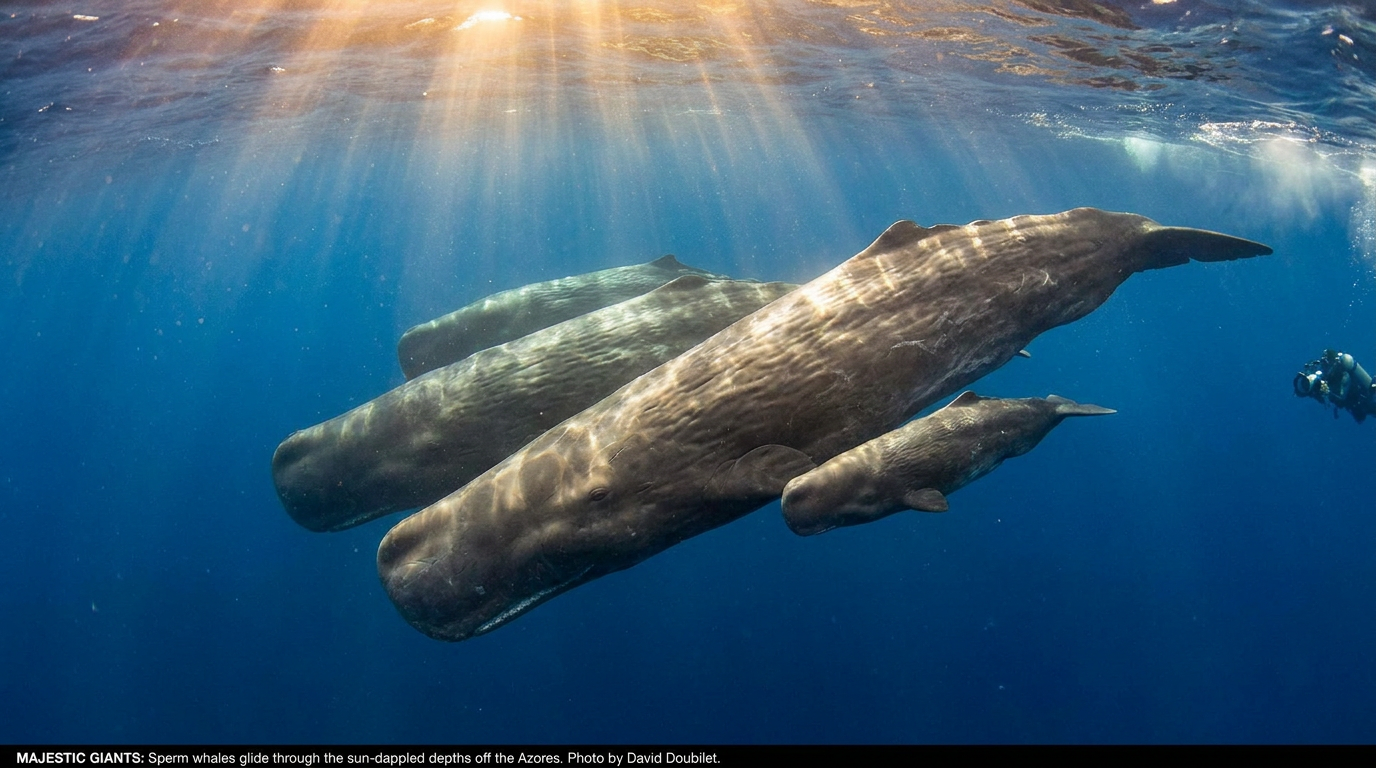
The vanguard of this interspecies translation effort is Project CETI (Cetacean Translation Initiative), a multidisciplinary coalition of marine biologists, cryptographers, and AI experts focused entirely on sperm whales. Sperm whales possess the largest brains on Earth and live in deeply complex, matrilineal societies. They communicate in the pitch-black depths of the ocean using rapid sequences of clicks known as codas. Until recently, scientists understood these codas only as basic identifiers. However, CETI’s latest AI-driven analysis revealed that sperm whales actively modulate the length and tone of their clicks to alter meaning, creating a combinatorial language system that researchers describe as one of the closest known parallels to human phonology.[1][5][7]

The power of this technology was vividly demonstrated when Project CETI researchers captured the birth of a sperm whale off the coast of Dominica. Using high-resolution drone footage paired with underwater acoustic arrays, the team fed the data into a custom computer vision and audio segmentation model called Whale Tales. The AI successfully mapped the chaotic scene, isolating the specific vocalizations of individual whales as the pod assembled around the pregnant female. The data revealed highly coordinated social behavior and collective attentiveness, proving that the whales were actively communicating complex instructions and emotional support during the birthing process.[1][5]
While sperm whales offer a compelling use case, the push to decode non-human language extends far beyond the ocean. The Earth Species Project (ESP), a nonprofit research organization, is developing foundational AI models designed to process the vocalizations of the entire animal kingdom. Late last year, ESP introduced NatureLM-audio, a large-scale language model tailored specifically for bioacoustics. By training the model on a massive corpus of diverse animal sounds, researchers are discovering that many species share hidden linguistic structures. Zebra finches, for instance, have been shown to use strict grammatical rules, combining vocal elements in specific orders to change their meaning—much like how word order dictates the meaning of a human sentence.[4][6]
While sperm whales offer a compelling use case, the push to decode non-human language extends far beyond the ocean.
In Israel, researchers are using similar machine learning techniques to decode the highly social, chaotic squeaks of Egyptian fruit bats. By feeding nearly 15,000 distinct bat calls into an AI model, scientists discovered that the bats possess unique, context-specific vocalizations for fighting, mating, and jostling for perch positions. Remarkably, the AI revealed that bats alter their tone depending on exactly who they are addressing, using different inflections for close family members versus strangers. Because the AI processes the raw audio data without human assumptions, it eliminates the anthropocentric bias that has historically clouded animal behavioral studies.[2][3]

The ultimate goal of these initiatives is not merely scientific curiosity, but a fundamental transformation of humanity's relationship with the natural world. Speaking at the SXSW conference in March 2026, Earth Species Project co-founder Aza Raskin emphasized that the objective is not necessarily to talk back to animals, but to "open the aperture of our own empathy." By proving that animals possess rich, communicative, and cultural lives, researchers hope to redefine how society values and protects ecosystems. "When you know them and speak their language, they move from being 'out there' to being 'in your heart,'" Raskin explained.[4][6]
This paradigm shift is already beginning to influence conservation strategies and legal frameworks. The More-Than-Human Life (MOTH) Program at New York University recently partnered with Project CETI to explore how AI-assisted translation could disrupt the legal landscape. If science can definitively prove that cetaceans and other animals possess a capacity for complex language, it challenges the foundational legal theories that confine rights and personhood exclusively to humans. Conservationists envision a near future where AI monitors the real-time "word of mouth" of an ecosystem, allowing humans to detect environmental threats, stress, or habitat degradation directly from the animals experiencing it.[4][7]

Despite the profound optimism surrounding these breakthroughs, the ability to decode and potentially mimic animal communication carries significant ethical risks. If AI models become capable of generating synthetic animal calls with high fidelity, the technology could easily be weaponized. Ethicists warn that poachers could use generative audio to lure endangered species into traps, or the commercial ecotourism industry could artificially summon whales and dolphins for paying customers, severely disrupting their natural behaviors. To mitigate these dangers, organizations like ESP and CETI are establishing strict ethical guidelines, ensuring that the development of interspecies AI remains focused on listening and protection rather than exploitation.[3][7]
Looking ahead, the timeline for deeper interspecies understanding is accelerating rapidly. Project CETI has set an ambitious goal to fully comprehend at least twenty distinct sperm whale expressions—such as specific commands for diving, sleeping, or hunting—within the next five years. As deep learning architectures continue to scale, the prospect of a digital Rosetta Stone for the natural world is shifting from science fiction to an inevitable reality. For the first time in human history, the technology exists to truly listen to the millions of other species sharing the planet, offering a fleeting but profound opportunity to repair our fractured relationship with the natural world.[1][3][6]
How we got here
2017
Earth Species Project is founded to apply machine learning to non-human communication.
2020
Project CETI launches its multidisciplinary effort to decode the language of sperm whales.
Late 2025
Researchers introduce NatureLM-audio, a large-scale AI model tailored specifically for animal bioacoustics.
March 2026
Project CETI publishes findings detailing a highly complex phonetic alphabet used by sperm whales.
April 2026
AI successfully decodes the coordinated social vocalizations of a sperm whale pod during a live birth.
Viewpoints in depth
Marine Biologists & Conservationists
Decoding animal communication is a vital tool for fostering empathy and revolutionizing wildlife protection.
For marine biologists and ecologists, the AI-driven translation of animal languages is the ultimate key to decentering humanity. By proving that species like sperm whales and zebra finches possess rich, generational cultures and complex grammar, conservationists hope to trigger a profound shift in public empathy. They envision a future where AI acts as an ecological stethoscope, allowing researchers to monitor the health, stress levels, and needs of an ecosystem directly from the animals themselves, fundamentally changing how we approach environmental stewardship.
AI & Machine Learning Researchers
The breakthrough proves that deep learning models can identify universal linguistic structures across entirely different modalities.
Computer scientists view this milestone as a testament to the sheer pattern-recognition power of modern artificial intelligence. By feeding raw, unannotated audio into large-scale models like NatureLM-audio, researchers bypassed the need for a 'Rosetta Stone.' The AI successfully mapped the multidimensional 'shapes' of animal communication, proving that complex grammar and syntax are not exclusively human traits, but mathematical structures that emerge naturally in social species. This success paves the way for AI to decode virtually any complex, noisy dataset in the natural world.
Legal & Ethical Scholars
Interspecies communication challenges existing legal frameworks but introduces severe risks of human exploitation.
Legal scholars argue that proving animals possess language could upend the foundations of personhood and animal rights, forcing courts to reconsider how non-human species are treated under the law. However, ethicists remain deeply concerned about the dual-use nature of generative AI. If models become capable of synthesizing high-fidelity animal calls, the technology could be weaponized by poachers to lure endangered species, or abused by the ecotourism industry to artificially summon wildlife, creating an urgent need for strict regulatory guardrails.
What we don't know
- Whether humans will eventually be able to engage in ethical, two-way communication with wild animals.
- How the legal system will adapt if science definitively proves that non-human species possess complex language and culture.
- The full extent to which other marine and terrestrial species share universal grammatical structures.
Key terms
- Bioacoustics
- The cross-disciplinary science that combines biology and acoustics to study how animals produce and receive sound.
- Coda
- A standardized, rapid sequence of clicks used by sperm whales to communicate complex information with one another.
- Large Audio Language Model
- An artificial intelligence system trained on vast amounts of audio data to recognize linguistic patterns and structures without relying on written text.
- Phonology
- The system of relationships among the speech sounds that constitute the fundamental components of a language.
Frequently asked
Can humans actually talk to animals using AI?
Not yet. Current research is focused entirely on listening and decoding the underlying structures of animal calls, though two-way communication may be possible in the future.
How does artificial intelligence translate animal sounds?
AI models process massive datasets of raw audio, using pattern recognition to identify subtle variations in pitch, timing, and context that reveal complex grammatical rules.
Why are researchers specifically studying sperm whales?
Sperm whales have the largest brains on Earth and live in complex, matrilineal societies, communicating through distinct click patterns called codas that are ideal for machine learning analysis.
What are the ethical risks of decoding animal languages?
Ethicists warn that if AI learns to synthesize animal calls, the technology could be exploited by poachers to lure wildlife or by the ecotourism industry to manipulate animal behavior.
Sources
Source coverage
7 outlets
3 viewpoints surfaced







[1]The GuardianMarine Biologists & Conservationists
Sperm whales' vocalized communications are remarkably similar to our own, researchers discover
Read on The Guardian →[2]India TimesLegal & Ethical Scholars
Research claims AI could eventually lead to humans communicating directly with animals
Read on India Times →[3]Science FocusAI & Machine Learning Researchers
We're on the verge of decoding animal communication
Read on Science Focus →[4]VMLAI & Machine Learning Researchers
AI is breaking the ultimate language barrier: between humans and nature
Read on VML →[5]Project CETIMarine Biologists & Conservationists
A Sperm Whale Is Born: Cooperation and Shifts in Coda Vocal Styles
Read on Project CETI →[6]Earth Species ProjectMarine Biologists & Conservationists
The Next Frontier of Understanding Life on Earth
Read on Earth Species Project →[7]MOTH ProgramLegal & Ethical Scholars
NYU's MOTH Program and Project CETI explore legal implications of AI-assisted translation
Read on MOTH Program →

Every angle. Every day.
Get ai stories with full source coverage and perspective breakdowns delivered to your inbox.