
EPA Transmits California Emissions Waivers to Congress for Repeal Amid Sweeping Climate Lawsuits
The U.S. Environmental Protection Agency has sent four California air pollution waivers to Congress for potential nullification, escalating a legal war with environmental groups over the administration's sweeping rollback of greenhouse gas regulations.
By Factlen Editorial Team
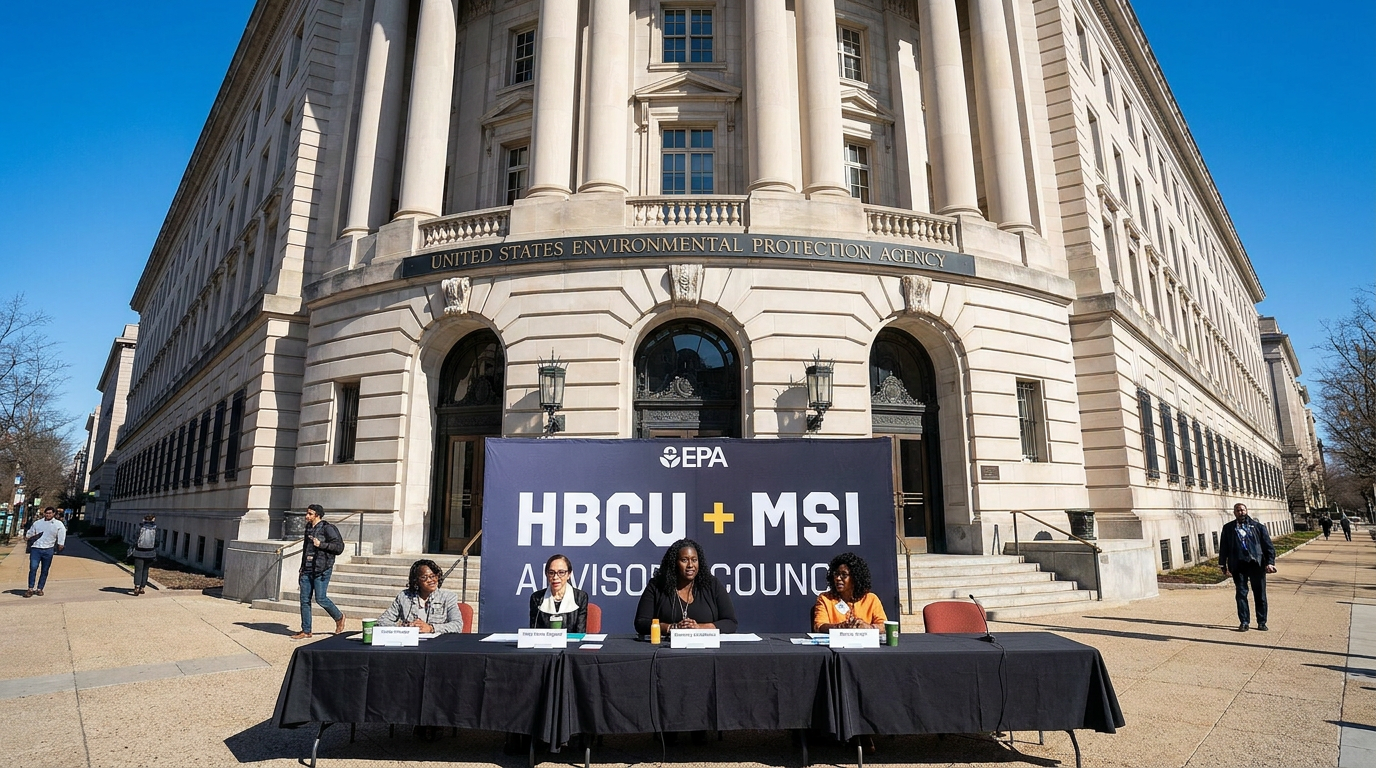
- Environmental Groups & Blue States
- Contends that the EPA is abandoning its legal mandate to protect public health and ignoring established climate science.
- Trump Administration & Fossil Fuel Industry
- Argues that the EPA is correcting regulatory overreach, restoring consumer choice, and lowering costs by eliminating aggressive EV mandates.
- Automakers & Industry Analysts
- Caught in the middle, many automakers prefer a unified national standard but warn that abrupt rollbacks create planning uncertainty.
What's not represented
- · International climate negotiators relying on U.S. emissions reductions
- · Public health officials treating respiratory illnesses in smog-heavy regions
Why this matters
The outcome of this legal battle will determine whether the federal government and individual states have the authority to regulate greenhouse gases. If the EPA's rollbacks survive court challenges, it could permanently alter the U.S. auto industry's transition to electric vehicles and severely hinder global climate goals.
Key points
- The EPA has sent four California emissions waivers to Congress, allowing lawmakers to potentially nullify the state's strict EV mandates.
- The move is part of a broader Trump administration effort to dismantle federal climate regulations, including the recent rescission of the 2009 Endangerment Finding.
- Environmental groups, led by the EDF, have filed a notice of intent to sue the EPA, arguing the rollbacks ignore established climate science.
- Over a dozen states follow California's emissions standards, meaning the waivers dictate policy for nearly a third of the U.S. auto market.
- Automakers are caught in the middle, warning that regulatory whiplash disrupts billions of dollars in long-term electric vehicle investments.
On June 12, 2026, the U.S. Environmental Protection Agency formally transmitted four California air pollution waivers to Congress, opening the door for lawmakers to nullify the state's authority to set its own vehicle emission standards. The move marks the latest escalation in the Trump administration's sweeping effort to dismantle federal climate regulations, following the EPA's historic rescission of the 2009 "Endangerment Finding" earlier this year. By leveraging the Congressional Review Act, the administration aims to permanently strip California of its unique ability to mandate electric vehicle sales and enforce strict tailpipe limits.[1][2]
The four waivers at the center of the dispute were approved under the Biden administration and include California's Advanced Clean Cars I program. Under the Clean Air Act, California is the only state permitted to seek a waiver to set emissions rules stricter than the federal baseline, owing to its historical struggles with severe smog. However, because Section 177 of the Act allows other states to adopt California's standards, the waivers effectively dictate environmental policy for more than a dozen states—including New York, Massachusetts, and Washington. Together, this bloc represents nearly a third of the U.S. auto market.[1][2]

The EPA's transmission of the waivers relies on a novel interpretation of the Congressional Review Act (CRA), a statute that allows lawmakers to overturn recently issued federal rules with a simple majority vote. The EPA argues that previous Democratic administrations unlawfully withheld the waivers from congressional review, classifying them as administrative actions rather than formal rules. In a statement, the agency asserted that the waivers impose "costly emission requirements" that force consumers to buy "expensive and impractical" electric vehicles, framing the rollback as a restoration of consumer choice and free-market principles.[5][6]
The administration's aggressive deregulatory push has triggered a massive legal counteroffensive. On June 15, the Environmental Defense Fund (EDF) and a coalition of allied groups filed a formal notice of intent to sue the EPA over its repeal of the Endangerment Finding. Established in 2009 following the landmark Supreme Court case Massachusetts v. EPA, the Endangerment Finding classified greenhouse gases as a direct threat to public health and welfare. For nearly two decades, it has served as the foundational legal bedrock for all federal climate regulations across the transportation and energy sectors.[3][4]
The administration's aggressive deregulatory push has triggered a massive legal counteroffensive.
Environmental advocates argue that the EPA's reversal ignores decades of established climate science and violates the agency's core mandate to protect public health. The EDF's petition alleges that the EPA systematically downplayed climate harms, discarded well-established health benefits from reducing soot and smog, and relied on a flawed, secretive review process to justify the repeal. "The EPA's repeal of the endangerment finding and safeguards to limit vehicle emissions marks a complete dereliction of the agency's mission," said a representative from the Union of Concerned Scientists, echoing the sentiment of the broader coalition.[3][4]

The escalating legal war has left the global auto industry caught in the crossfire. While fuel producers and conservative advocacy groups have cheered the rollbacks as a victory against government overreach, major automakers are facing profound planning uncertainty. Companies like Ford, General Motors, and Volkswagen have already committed tens of billions of dollars to retooling their supply chains and transitioning their fleets to electric vehicles. Industry analysts warn that the regulatory whiplash between successive administrations deprives automakers of the predictable national framework they need to execute long-term manufacturing strategies.[2][7]
Furthermore, auto executives and economic analysts have expressed concern that abandoning domestic emissions standards could cede the future of the global automotive market to foreign competitors. As the European Union and China aggressively push forward with their own zero-emission mandates and heavily subsidize their domestic EV industries, a U.S. retreat from clean energy standards risks leaving American manufacturers isolated and technologically outpaced. Some automakers have even signaled they will continue to follow California's stricter framework voluntarily, regardless of the federal rollback, to maintain a unified production line for global export.[7][8]

The conflict is ultimately expected to be decided by the Supreme Court, which has grown increasingly skeptical of broad regulatory authority exercised by federal agencies. Legal scholars note that if the conservative-majority Court upholds the EPA's rescission of the Endangerment Finding and the revocation of the California waivers, it could permanently alter the landscape of U.S. environmental law. Such a ruling would effectively strip the executive branch of its ability to regulate greenhouse gases, meaning any future federal action on climate change would require explicit, new legislation from a deeply divided Congress.[3][7]
In the near term, the battle moves to Capitol Hill, where Republicans are expected to swiftly introduce resolutions of disapproval to nullify the four California waivers under the CRA. Meanwhile, the statutory 180-day clock on the EDF's notice of intent to sue is ticking, setting the stage for a sprawling federal court showdown later this year. As extreme weather events linked to a strengthening El Niño continue to strain infrastructure across the country, the outcome of these intersecting legal and political fights will dictate the trajectory of U.S. climate policy for a generation.[4][6]
How we got here
2007
The Supreme Court rules in Massachusetts v. EPA that the agency has the authority to regulate greenhouse gases if they endanger public health.
2009
The EPA issues the Endangerment Finding, establishing the legal foundation for federal climate regulations.
February 2026
The Trump administration's EPA formally rescinds the Endangerment Finding, dismantling the basis for federal greenhouse gas limits.
June 12, 2026
The EPA transmits four California air pollution waivers to Congress for potential nullification under the CRA.
June 15, 2026
The Environmental Defense Fund and allied groups file a notice of intent to sue the EPA over the Endangerment Finding repeal.
Viewpoints in depth
Trump Administration & Fossil Fuel Industry
Argues the EPA is correcting regulatory overreach and restoring consumer choice.
Proponents of the rollback argue that the EPA's previous climate mandates were economically disastrous and legally dubious. By rescinding the Endangerment Finding and revoking California's unique waiver authority, the administration asserts it is protecting American consumers from being forced into expensive, impractical electric vehicles. Fuel producers and conservative lawmakers emphasize that the Clean Air Act was designed to combat local smog, not to restructure the global energy economy, and that major policy shifts of this magnitude require explicit congressional approval.
Environmental Groups & Blue States
Contends the EPA is abandoning its legal mandate and ignoring established climate science.
Environmental advocates and Democratic state leaders view the EPA's actions as a catastrophic abdication of duty that caters exclusively to the fossil fuel industry. They point to decades of peer-reviewed science—and the Supreme Court's own 2007 ruling in Massachusetts v. EPA—as proof that greenhouse gases are pollutants that endanger public health. By stripping California of its ability to protect its own citizens and dismantling the federal Endangerment Finding, critics argue the administration is not only violating the Clean Air Act but also accelerating the devastating impacts of global climate change.
Automakers & Industry Analysts
Caught in the middle, the auto industry seeks regulatory certainty above all else.
While some auto executives quietly welcome relief from stringent short-term compliance targets, the broader industry is frustrated by the constant regulatory whiplash. Having already committed tens of billions of dollars to EV research, battery plants, and supply chain overhauls, automakers rely on predictable, unified national standards to plan their production cycles. Analysts warn that a fragmented U.S. market—where federal rules lag far behind the standards of Europe, China, and a defiant California—forces companies to choose between building dirtier cars for the domestic market or staying globally competitive in the zero-emission transition.
What we don't know
- It remains unclear how the conservative-majority Supreme Court will rule on the inevitable legal challenges to the EPA's rollbacks.
- We do not yet know if Congress will successfully secure the votes needed to officially nullify the California waivers under the CRA.
- It is uncertain how automakers will adjust their production lines if the U.S. market permanently splinters between federal and state standards.
Key terms
- Endangerment Finding
- A 2009 EPA ruling classifying greenhouse gases as a threat to public health, which legally required the agency to regulate carbon emissions under the Clean Air Act.
- Congressional Review Act (CRA)
- A federal law allowing Congress to quickly nullify rules created by federal agencies via a simple majority vote.
- Clean Air Act
- The comprehensive federal law passed in 1970 that regulates air emissions from stationary and mobile sources to protect public health.
- Section 177
- A provision in the Clean Air Act that allows other states to adopt California's stricter vehicle emission standards instead of the federal baseline.
Frequently asked
What is the Endangerment Finding?
Issued by the EPA in 2009, it is a formal scientific determination that greenhouse gases threaten public health and welfare, serving as the legal basis for federal climate regulations.
Why does California have special emissions rules?
Under the Clean Air Act, California was granted unique authority to request waivers to set stricter-than-federal emissions standards due to its historical struggles with severe smog.
What is the Congressional Review Act (CRA)?
The CRA is a federal law that allows Congress to quickly overturn recently issued agency rules with a simple majority vote, bypassing the usual lengthy regulatory repeal process.
How many states follow California's emissions standards?
More than a dozen states, representing nearly a third of the U.S. auto market, have adopted California's stricter vehicle emissions rules under Section 177 of the Clean Air Act.
Sources
Source coverage
8 outlets
3 viewpoints surfaced








[1]ReutersAutomakers & Industry Analysts
US EPA sends California emissions rules to Congress for potential reversal
Read on Reuters →[2]PoliticoAutomakers & Industry Analysts
EPA sends more California waivers to the GOP buzzsaw
Read on Politico →[3]The New York TimesEnvironmental Groups & Blue States
Trump Erased a Bedrock Climate Rule. Here Come the Lawsuits.
Read on The New York Times →[4]Environmental Defense FundEnvironmental Groups & Blue States
EDF, allies file notice of intent to sue EPA in matter related to the Endangerment Finding
Read on Environmental Defense Fund →[5]U.S. Environmental Protection AgencyTrump Administration & Fossil Fuel Industry
EPA Fulfills Statutory Obligation by Transmitting Four California Waiver Rules to Congress
Read on U.S. Environmental Protection Agency →[6]Fox NewsTrump Administration & Fossil Fuel Industry
EPA sends California emissions waivers to Congress for review, targeting EV mandates
Read on Fox News →[7]Harvard Salata InstituteAutomakers & Industry Analysts
The legal reasoning behind the endangerment rescission
Read on Harvard Salata Institute →[8]CalMattersEnvironmental Groups & Blue States
US Senate blocks California's electric car mandate in historic vote
Read on CalMatters →

More in news politics
See all 6 stories →UK Government
UK Prime Minister Keir Starmer Expected to Resign Amid Party Pressure
7 sources

Peace Negotiations
US and Iranian Delegations Open High-Stakes Peace Talks in Switzerland
8 sources

Labour Leadership
Keir Starmer Expected to Resign as UK Prime Minister Amid Labour Mutiny
6 sources

Misinformation Defense
Fact-Checking the 'Cognitive Vaccine': Does Prebunking Actually Stop Misinformation?
6 sources

Every angle. Every day.
Get news politics stories with full source coverage and perspective breakdowns delivered to your inbox.