
The 2026 Guide to Choosing a Smart Ring for Health Tracking
Smart rings have evolved from niche gadgets to mainstream health trackers, offering a discreet alternative to smartwatches. Here is how to navigate the 2026 market, balance subscription costs, and choose the right ring for your lifestyle.
By Factlen Editorial Team
- Premium Ecosystem Seekers
- Users who prioritize highly polished apps, clinical accuracy, and deep holistic health insights, and are willing to pay a monthly subscription for the best experience.
- Subscription Skeptics
- Consumers who refuse to pay recurring monthly fees for their own health data, favoring brands that offer a one-time purchase model.
- Android Loyalists
- Users deeply embedded in the Samsung ecosystem who prioritize seamless device integration over cross-platform compatibility.
What's not represented
- · Traditional watch enthusiasts who prefer mechanical timepieces
- · Medical professionals evaluating the clinical utility of consumer ring data
Why this matters
As smart rings become more capable and affordable, they offer a less intrusive way to monitor sleep, stress, and recovery than bulky smartwatches. Choosing the right one requires navigating a complex landscape of upfront costs, monthly subscriptions, and smartphone compatibility.
Key points
- Smart rings have become a mainstream alternative to smartwatches for health and sleep tracking.
- Oura Ring 4 remains the premium benchmark but requires a $5.99 monthly subscription.
- Samsung's Galaxy Ring offers a subscription-free alternative exclusively for Android users.
- Budget options like RingConn Gen 2 Air provide up to 12 days of battery life for under $200.
- Smart rings excel at passive recovery tracking but are not ideal for active GPS workouts or heavy weightlifting.
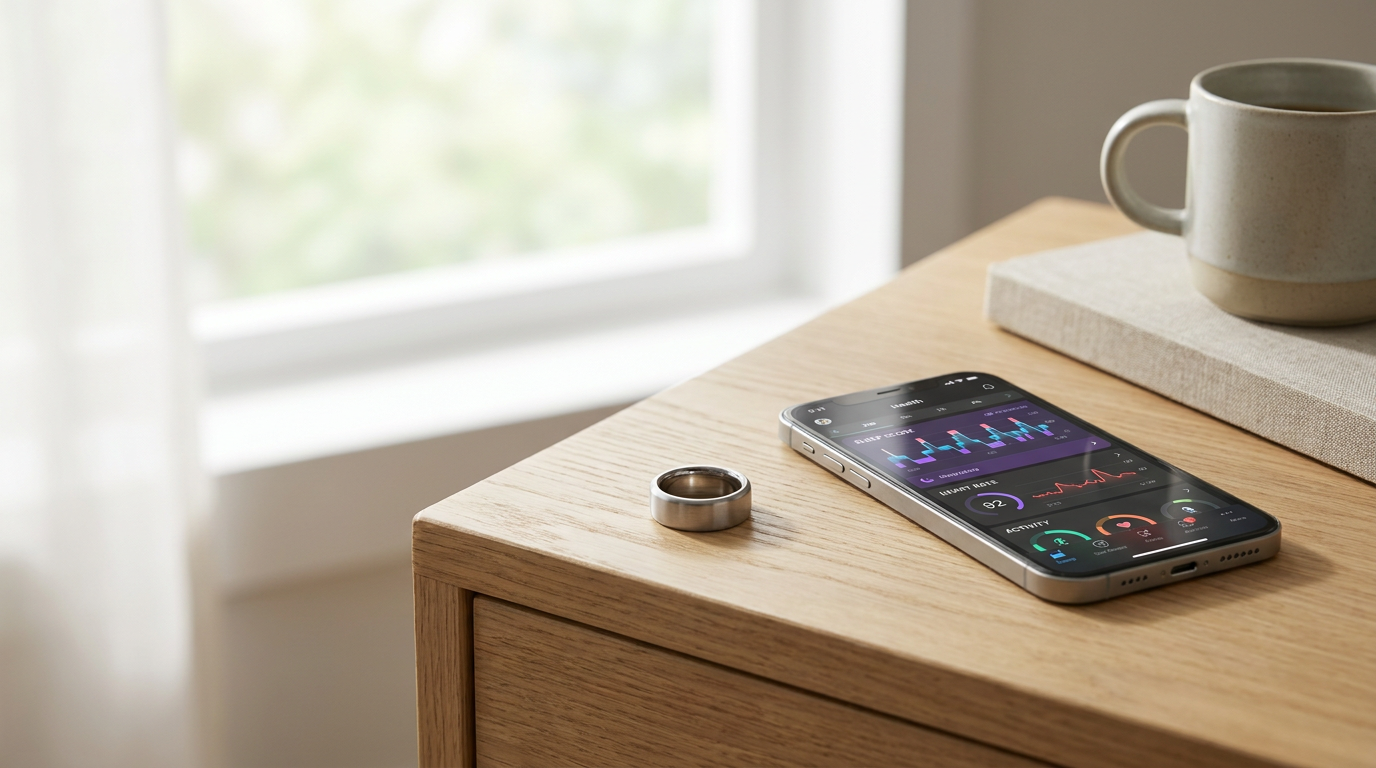
Over the past decade, fitness tracking has been dominated by glowing screens strapped to our wrists. But in 2026, the smart ring has officially transitioned from a niche curiosity to a mainstream health essential. Condensing the power of a smartwatch into a discreet metallic band, these wearables offer a more comfortable, less distracting way to monitor well-being. For those who find sleeping with a bulky watch cumbersome or simply prefer traditional analog timepieces, smart rings provide an appealing alternative. The market has exploded this year, with established tech giants and nimble startups fiercely competing to dethrone early pioneers.[1][2]
Despite their jewelry-like appearance, modern smart rings are packed with miniaturized technology. If you look at the inner band, you will see a cluster of tiny sensor domes, including red and green LEDs. These use photoplethysmography to illuminate the blood vessels in your finger, measuring heart rate and blood oxygen levels. Because the blood vessels in the finger are closer to the surface and less prone to movement artifacts than those on the wrist, rings can often capture highly accurate cardiovascular data. Alongside these optical sensors, built-in accelerometers track movement, while negative temperature coefficient sensors monitor minute fluctuations in skin temperature.[3][4]

This sensor array excels at passive, continuous monitoring, making smart rings the undisputed champions of sleep and recovery tracking. Throughout the night, they quietly log sleep stages, breathing regularity, and heart rate variability—a crucial metric that indicates how well your nervous system is recovering from stress. By morning, companion apps synthesize this data into actionable readiness or recovery scores. Unlike smartwatches, which often require daily charging, most smart rings in 2026 boast battery lives ranging from five to an impressive twelve days, meaning you rarely have to take them off.[1][5]
However, it is vital to understand what smart rings cannot do. If you are a dedicated marathoner looking for real-time pacing data, or a weightlifter gripping heavy knurled barbells, a ring is not the right tool for active workouts. They lack built-in GPS, and gripping heavy objects can scratch the ring's finish or disrupt the sensor readings. Most models require you to manually log workouts via a smartphone app, and their active heart rate tracking during intense movement still lags behind dedicated sports watches or chest straps. They are designed for holistic health and recovery, not for shaving seconds off a 5K time.[1][4]
The most significant decision when buying a smart ring in 2026 is not about titanium versus ceramic, but rather how you want to pay for your data. The market is currently split into two distinct camps: the subscription model and the one-time purchase. Oura, the company that largely created the category, charges a premium upfront price and requires a monthly fee—currently around $5.99—to access your detailed health metrics. In response, a wave of competitors has aggressively marketed themselves as subscription-free, offering full access to their apps with no recurring costs.[2][3]

The most significant decision when buying a smart ring in 2026 is not about titanium versus ceramic, but rather how you want to pay for your data.
For those willing to pay the monthly fee, the Oura Ring 4 remains the industry benchmark. Reviewers consistently praise its highly polished companion app, which translates complex data into personalized, easy-to-understand health guidance. The Ring 4 features a sleek titanium design with nearly flush inner sensors, making it exceptionally comfortable for continuous wear. While the upfront cost sits around $349, its accuracy in sleep staging and stress detection—backed by a growing body of clinical validation—keeps it at the top of most recommendation lists.[3][5]
Samsung has successfully disrupted the market with the Galaxy Ring, offering a compelling alternative for Android users. Priced at a premium $399, it entirely eliminates the monthly subscription fee, integrating seamlessly into the existing Samsung Health ecosystem. The Galaxy Ring features a unique concave design that helps protect it from daily scratches, and it ships with a brilliant wireless charging case that resembles a premium earbuds case. However, it is strictly limited to the Android ecosystem, leaving iPhone users out of luck.[1][2]
For buyers seeking value and longevity, brands like RingConn and Amazfit have introduced highly capable alternatives. The RingConn Gen 2 and its lighter sibling, the Gen 2 Air, start at a highly competitive $199 and boast battery lives that can stretch up to 12 days on a single charge. Like Samsung, they require no subscription. The Amazfit Helio Ring, often found for under $150, provides excellent core tracking and water resistance up to 100 meters, proving that entry-level smart rings no longer feel like budget compromises.[2][4]

Regardless of which model you choose, physical fit and durability are critical considerations. Because fingers swell and shrink throughout the day based on temperature and hydration, a poorly sized ring will yield inaccurate data and feel uncomfortable. All major manufacturers offer plastic sizing kits, and buyers are strongly advised to wear a sizing ring for at least 24 hours before ordering the real device. Additionally, while many rings are marketed as aerospace-grade titanium, they are still prone to scratching against metal door handles, keys, or weights, making lighter colors like silver generally better at hiding wear than matte black.[2][5]
Ultimately, choosing a smart ring in 2026 comes down to ecosystem loyalty and budget tolerance. If you want the most refined software experience and do not mind a monthly fee, Oura remains the safest bet. If you are an Android user looking to avoid subscriptions, the Samsung Galaxy Ring is a seamless addition to your digital life. And for those who want robust health tracking without breaking the bank, the new generation of budget-friendly rings proves that you do not need to spend a fortune to keep your finger on the pulse of your health.[3][4][5]
How we got here
2015
Oura launches its first-generation smart ring on Kickstarter, pioneering the modern finger-based health tracker.
2021
Oura introduces the Gen 3 ring and shifts to a controversial monthly subscription model for health data.
2024
Samsung enters the market with the Galaxy Ring, validating the category for mainstream tech giants.
2026
The market fragments into premium subscription models and highly capable, subscription-free budget alternatives.
Viewpoints in depth
Premium Ecosystem Seekers
Users who prioritize highly polished apps and deep holistic health insights, willing to pay a monthly subscription.
For this camp, the hardware is only half the product; the real value lies in the software. They argue that a $5.99 monthly fee is justified if the companion app can accurately interpret complex biometric data and provide actionable lifestyle guidance. This perspective heavily favors the Oura Ring, citing its years of clinical validation, superior sleep staging algorithms, and intuitive interface that translates raw data into a simple daily 'readiness' score.
Subscription Skeptics
Consumers who refuse to pay recurring monthly fees for their own health data.
This rapidly growing segment believes that once you purchase a piece of hardware, you should own the data it generates. They actively reject the software-as-a-service model for wearables, arguing that subscription fatigue has reached a tipping point. This camp champions alternatives like RingConn, Amazfit, and Ultrahuman, pointing out that these devices now offer 90% of the premium features—including HRV and SpO2 tracking—without locking users into perpetual monthly payments.
Android Loyalists
Users deeply embedded in the Samsung ecosystem who prioritize seamless device integration.
For users already invested in Samsung smartphones and Galaxy Watches, the Galaxy Ring represents the missing piece of a unified health ecosystem. They value the frictionless integration with Samsung Health, where data from their watch and ring can be synthesized without third-party apps. This group is willing to pay a higher upfront hardware cost ($399) to avoid subscriptions, provided the device works flawlessly within their existing digital walled garden.
What we don't know
- Whether Apple will eventually enter the smart ring market and disrupt the current ecosystem.
- How long smaller startup brands can sustain free software updates without transitioning to a subscription model.
Key terms
- Photoplethysmography (PPG)
- An optical technology that uses light to measure changes in blood volume, commonly used by wearables to track heart rate.
- Heart Rate Variability (HRV)
- The variation in time between consecutive heartbeats, used as a key indicator of physical stress and nervous system recovery.
- SpO2
- A measurement of blood oxygen saturation, indicating how efficiently oxygen is being delivered throughout the body.
Frequently asked
Can I lift weights while wearing a smart ring?
It is generally not recommended. Gripping heavy metal barbells can scratch the ring's finish and disrupt the optical sensors, leading to inaccurate heart rate readings.
Do smart rings work with iPhones?
Most smart rings, including Oura and RingConn, work seamlessly with both iOS and Android. However, the Samsung Galaxy Ring is strictly limited to Android devices.
How do I know what size smart ring to buy?
Manufacturers provide plastic sizing kits before shipping the final product. You should wear the sizing ring for at least 24 hours to account for natural finger swelling throughout the day.
Are smart rings waterproof?
Yes, the vast majority of premium smart rings in 2026 are water-resistant up to 50 or 100 meters, making them perfectly safe for showering and swimming.
Sources
Source coverage
5 outlets
3 viewpoints surfaced





[1]Runner's WorldAndroid Loyalists
The best smart rings: Oura, Ultrahuman and more, tested
Read on Runner's World →[2]Tech AdvisorSubscription Skeptics
Best smart rings 2026: Oura and top alternatives tested
Read on Tech Advisor →[3]PCMagPremium Ecosystem Seekers
Buying Guide: The Best Smart Rings for 2026
Read on PCMag →[4]ForbesSubscription Skeptics
I Tested The Best Smart Rings Of 2026: Here Are My Top Picks
Read on Forbes →[5]WareablePremium Ecosystem Seekers
Best smart rings 2026: Oura and top alternatives tested
Read on Wareable →

More in shopping
See all 8 stories →Laptop Hardware
How to Choose a Laptop in 2026: ARM, x86, and the Rise of the NPU
9 sources
Display Tech
OLED vs. Mini-LED: The 2026 Gaming Monitor Trade-Off
6 sources

Consumer Deals
Amazon Sets Prime Day 2026 for Mid-July as Rival Retailers Launch Competing Summer Sales
7 sources

TV Displays
OLED vs. Mini-LED: The 2026 TV Buyer's Trade-Off Guide
7 sources

Every angle. Every day.
Get shopping stories with full source coverage and perspective breakdowns delivered to your inbox.