
Streaming Platforms Solve the "Mumbled Dialogue" Problem With AI Audio Boosts
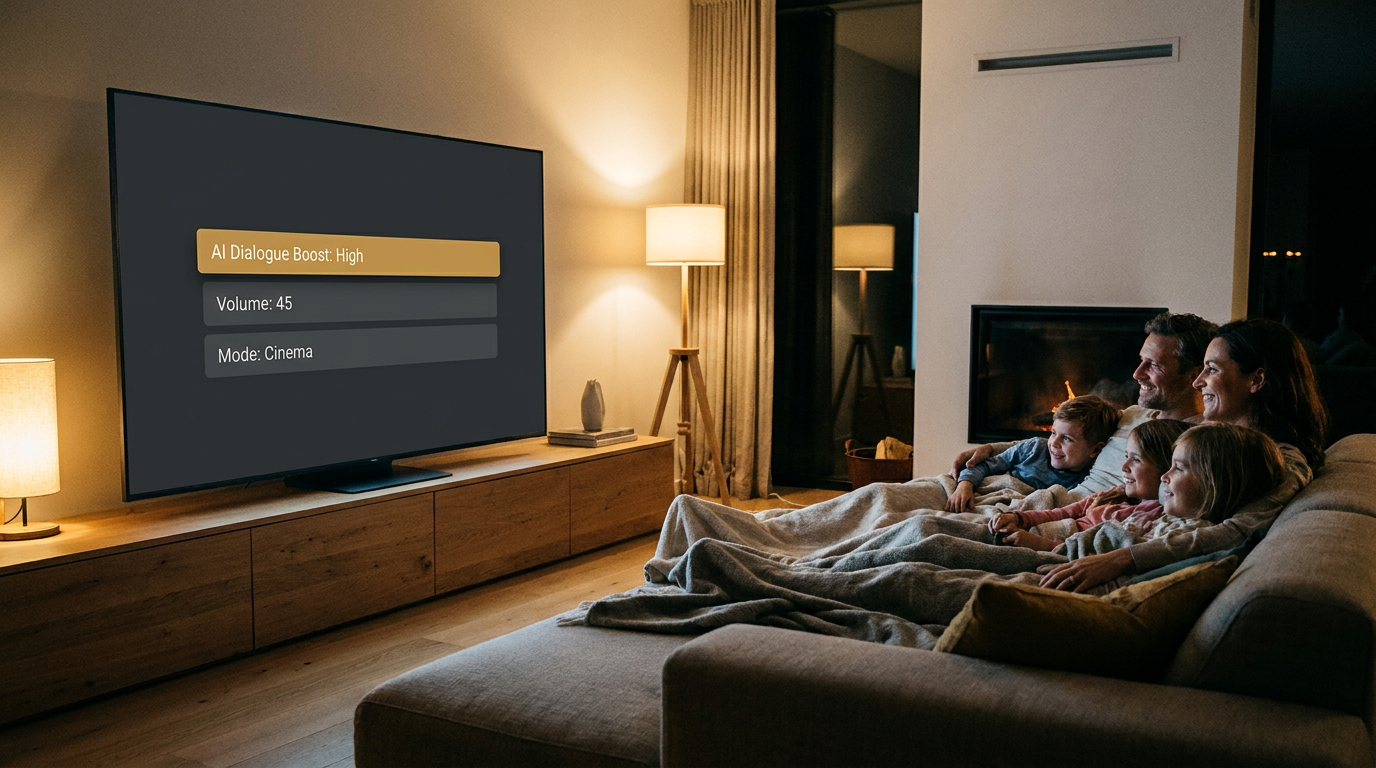
Major streaming services are rolling out AI-powered dialogue enhancement and sensory-friendly viewing modes, allowing users to isolate speech from loud background noise and customize their viewing experience.
By Factlen Editorial Team
- Accessibility Advocates
- Customizable audio and visual filters are a fundamental right that allows neurodivergent and hearing-impaired audiences to participate in culture.
- Everyday Viewers
- AI audio tools solve the universal frustration of the 'volume see-saw' and the over-reliance on subtitles.
- Audio Engineers & Technologists
- The challenge lies in using AI to isolate speech without destroying the artistic integrity of the original sound mix.
What's not represented
- · Film Directors
- · Voice Actors
Why this matters
For the millions of viewers who rely on subtitles just to understand modern TV mixes, or those with sensory processing sensitivities, these new tools make entertainment accessible, customizable, and frustration-free.
Key points
- Major streaming platforms are adopting AI-powered audio separation to enhance dialogue clarity.
- The technology isolates human speech from background noise without distorting the original artistic mix.
- On-device processing allows viewers to adjust dialogue boost levels in real-time.
- Sensory-friendly viewing modes are expanding, letting users filter out intense strobe lights and loud noises.
- These tools provide massive accessibility wins for the hearing impaired and neurodivergent audiences.
For years, watching a blockbuster movie or prestige television drama at home has required a frustrating, remote-clutching ritual: turning the volume up to hear whispered dialogue, only to frantically mute the television when an action sequence suddenly rattles the living room windows. This dynamic range problem, exacerbated by audio mixes designed for high-end theatrical surround-sound systems rather than standard television speakers, drove millions of perfectly hearing-capable viewers to permanently enable subtitles. But in 2026, the streaming industry is finally solving the "mumbled dialogue" epidemic. Driven by breakthroughs in artificial intelligence and on-device processing, major platforms are rolling out sophisticated audio-separation tools that allow viewers to isolate and boost human speech without distorting the rest of the soundtrack.[7][8]
Amazon Prime Video initially pioneered the approach with its "Dialogue Boost" feature, and the technology is now rapidly becoming a baseline expectation across the broader streaming ecosystem. Unlike older television settings that simply compressed the entire audio track—making everything sound flat and lifeless—this new generation of AI tools preserves the artistic intent of the original mix. The system intelligently identifies points in a movie or series where dialogue is actively competing with background music, wind, or explosions, and applies targeted enhancements only where necessary. As streaming normalizes in 2026, with platforms focusing heavily on user retention and interface improvements, these accessibility features are being heavily marketed as premium upgrades.[1][3]
The underlying technology represents a significant leap forward from traditional audio equalization. According to researchers at Amazon Science, the system utilizes deep-neural-network compression to identify speech-dominant audio channels in real-time. It then applies complex source separation to isolate the dialogue, emphasizes the specific frequency bands that are most critical for human speech intelligibility, and seamlessly remixes those elements back into the original audio track. Originally, this required massive cloud-computing power to pre-process audio files before they were streamed. Today, the AI models have been compressed enough to run locally on consumer hardware, allowing the processing to happen instantly on smart TVs and streaming sticks.[1]

"This AI-driven approach provides targeted enhancement to spoken dialogue, rather than simply amplifying the center channel in a home theater system," notes the audiology analysis site HearingUp. Because the processing can now run directly on-device, viewers can adjust the prominence of dialogue on the fly, choosing between varying levels of boost depending on the specific scene or their personal preference. Customers have reported that the technology is particularly effective at clarifying whispered conversations, deciphering heavy regional accents, and cutting through the chaotic audio of massive battle sequences, allowing them to finally turn off the subtitles and focus entirely on the cinematography.[2]
The impact of this technological shift extends far beyond mere convenience for the average binge-watcher. While everyday viewers celebrate the end of the "volume see-saw," these features are a profound game-changer for the nearly 20 percent of the global population living with some form of hearing loss. For decades, this demographic had to rely on specialized, expensive hardware just to follow a basic plotline. Companies like ZVOX built entire product lines around dialogue-clarifying soundbars, offering up to 20 levels of proprietary voice enhancement. Now, that life-changing capability is being democratized through software, built directly into the streaming apps that billions of people already use every day.[6]

The impact of this technological shift extends far beyond mere convenience for the average binge-watcher.
The push for customizable, inclusive viewing is also expanding rapidly into the visual realm, ushering in a new era of "sensory-friendly" streaming. For years, brick-and-mortar theater chains like AMC have partnered with organizations like the Autism Society to offer special screenings with the lights turned up and the sound turned down, creating a safe, predictable environment for neurodivergent guests. Streaming platforms and innovative third-party developers are now bringing that exact same ethos into the living room, utilizing AI to map out the sensory intensity of a film before the viewer even presses play.[4]
Services like Enjoy Movies Your Way and Clearplay are gaining significant traction by offering granular filtering options that integrate directly with streaming giants like Netflix, Disney+, and Apple TV+. These tools allow families to automatically skip graphic content, instantly mute sudden loud noises, or disable intense strobe lighting that could trigger sensory overload or photosensitive reactions. By giving users complete control over the playback speed, language, and visual intensity, these platforms are ensuring that pop-culture moments are accessible to audiences who previously had to sit out of the cultural conversation entirely.[5]

As the streaming wars mature throughout 2026, the industry battleground has definitively shifted from pure subscriber acquisition to user experience, accessibility, and long-term retention. Platforms are realizing that giving viewers precise control over how they watch is just as important as what they watch. With artificial intelligence continuing to lower the barrier for real-time audio and video manipulation, the future of television is no longer a one-size-fits-all broadcast. Instead, it is a highly malleable, entirely personalized experience that adapts to the unique sensory needs of every individual in the audience.[7]
How we got here
2022
Amazon begins testing cloud-based Dialogue Boost on select original titles.
April 2023
Amazon officially announces Dialogue Boost for Prime Video, targeting the hearing impaired.
2024-2025
Third-party apps like Clearplay and Enjoy Movies Your Way expand sensory filtering options for major streaming services.
June 2026
AI-driven audio enhancement and sensory-friendly modes become standard expectations across the broader streaming industry.
Viewpoints in depth
Accessibility Advocates
Customizable audio and visual filters are a fundamental right that allows neurodivergent and hearing-impaired audiences to participate in culture.
For decades, the entertainment industry treated accessibility as an afterthought, offering basic closed captions and little else. Advocates argue that AI-driven tools finally democratize the viewing experience. By allowing users to strip away sensory overload and isolate dialogue, platforms are ensuring that millions of people who previously felt excluded from pop-culture moments can now engage safely and comfortably.
Everyday Viewers
AI audio tools solve the universal frustration of the 'volume see-saw' and the over-reliance on subtitles.
The modern mixing trend of burying dialogue under massive orchestral scores and explosive sound effects has alienated general audiences. Viewers argue that they shouldn't need a $5,000 home theater system just to understand what actors are saying. For this camp, the widespread adoption of dialogue boosting is a massive quality-of-life improvement that restores the simple pleasure of relaxing in front of the television.
Audio Engineers & Technologists
The challenge lies in using AI to isolate speech without destroying the artistic integrity of the original sound mix.
Audio professionals spend months meticulously crafting the soundscapes of films and television shows. Initially skeptical of algorithms altering their work, many technologists are now embracing deep-neural-network source separation. Because the AI intelligently targets only the frequencies necessary for speech intelligibility—rather than just compressing the entire track—engineers argue it preserves the director's original vision far better than older, blunt-force volume leveling.
What we don't know
- It remains unclear if directors and showrunners will push back against users altering their intended cinematic mixes.
- We do not yet know if these AI audio models will struggle with highly stylized or heavily accented independent films.
- The timeline for standardizing these features across smaller, niche streaming platforms is still uncertain.
Key terms
- Source Separation
- An audio processing technique that isolates specific sounds—like human speech—from a mixed audio track containing music and sound effects.
- Deep-Neural-Network Compression
- The process of shrinking complex AI models so they can run efficiently on consumer devices, like smart TVs, rather than requiring massive cloud servers.
- Dynamic Range
- The difference between the quietest and loudest sounds in an audio mix. High dynamic range often makes dialogue hard to hear over action sequences.
- Sensory-Friendly
- Content or environments modified to reduce intense stimuli, such as loud noises or flashing lights, to accommodate individuals with sensory processing sensitivities.
Frequently asked
What is AI dialogue boost?
It is an audio feature that uses artificial intelligence to isolate human speech from background noise and music, making conversations easier to hear without raising the overall volume.
Do I need to buy a new TV to use these features?
Not necessarily. While some processing happens on newer smart TVs and streaming sticks, many platforms apply the AI enhancements directly through their streaming apps.
What does a sensory-friendly viewing mode do?
Sensory-friendly modes allow viewers to filter out intense visual strobe effects, graphic content, and sudden loud noises, creating a safer experience for neurodivergent audiences.
Sources
Source coverage
8 outlets
3 viewpoints surfaced








[1]Amazon ScienceAudio Engineers & Technologists
Dialogue Boost: How Amazon is using AI to enhance TV and movie dialogue
Read on Amazon Science →[2]HearingUpAccessibility Advocates
Amazon's Dialogue Boost: A Game-Changer for TV Audio
Read on HearingUp →[3]Son-VidéoEveryday Viewers
Dialogue boost, the new Prime Video feature
Read on Son-Vidéo →[4]AMC TheatresAccessibility Advocates
AMC Sensory Friendly Films
Read on AMC Theatres →[5]Enjoy Movies Your WayAccessibility Advocates
Filter content from major streaming services
Read on Enjoy Movies Your Way →[6]ZVOXAudio Engineers & Technologists
The AV157 Dialogue Clarifying Speaker
Read on ZVOX →[7]CNETEveryday Viewers
Best streaming services for 2026
Read on CNET →[8]Business InsiderEveryday Viewers
Our top picks for the best streaming services
Read on Business Insider →
Every angle. Every day.
Get entertainment stories with full source coverage and perspective breakdowns delivered to your inbox.