
How Sports Science and Biometrics Are Extending the Careers of Esports Athletes
Professional gaming is abandoning its notorious "grind culture" in favor of traditional sports science, using biometrics, physical therapy, and psychology to prevent early burnout and extend player careers.
By Factlen Editorial Team
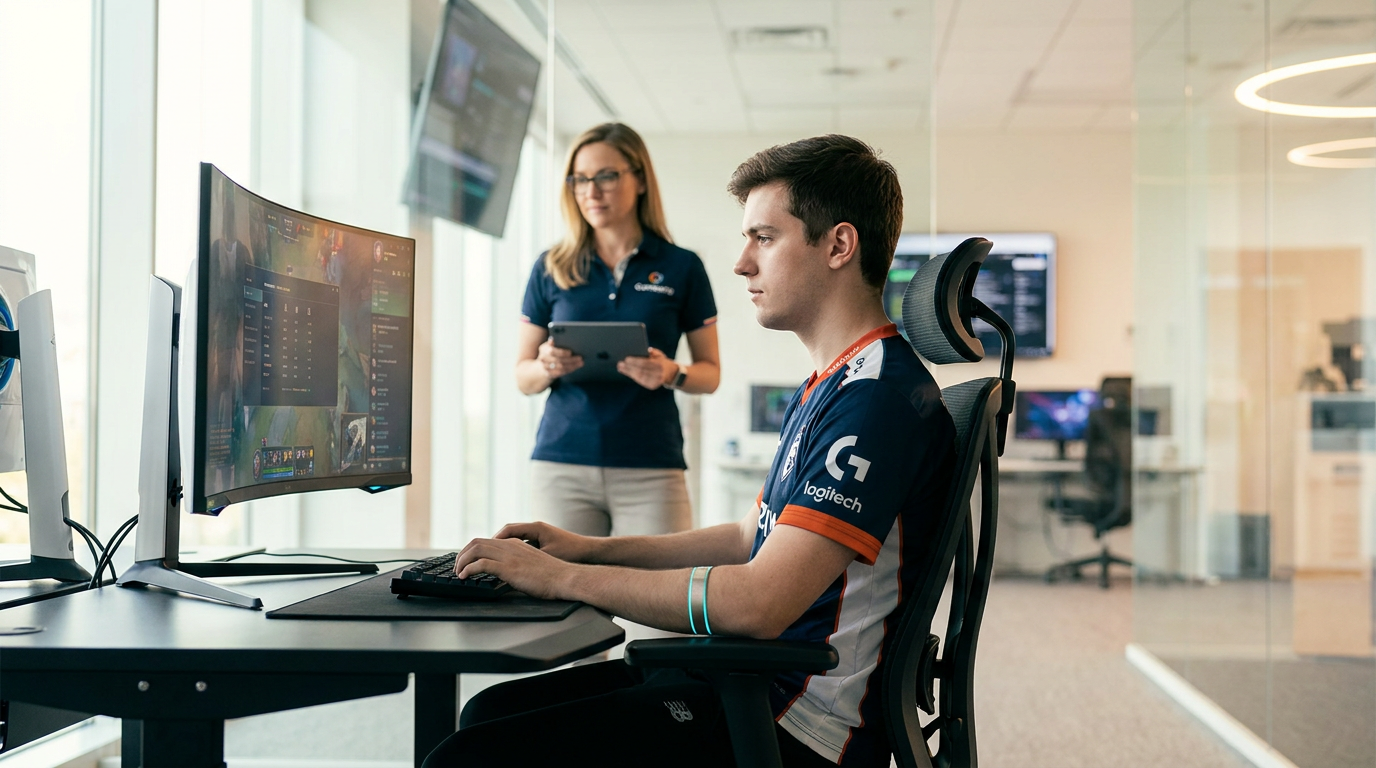
- Sports Scientists & Medical Staff
- Focuses on biomechanics, injury prevention, and physical interventions to extend player careers.
- Esports Psychologists
- Prioritizes mental resilience, stress management, and cognitive performance under high-pressure conditions.
- Team Management
- Views sports science as a necessary investment to protect star players and maintain a competitive edge.
- Academic Institutions
- Sees the professionalization of esports as a new frontier for specialized education and research.
What's not represented
- · Casual gamers who lack access to professional sports science resources
Why this matters
As esports matures into a multi-billion-dollar industry, the health and longevity of its players are becoming paramount. The integration of traditional sports science not only protects young athletes from permanent injury but also sets a healthier standard for millions of amateur gamers worldwide.
Key points
- Esports athletes historically retired by age 25 due to severe physical injuries and mental burnout.
- Elite gamers perform up to 600 actions per minute, placing immense strain on their hands and wrists.
- Top organizations are now hiring physical therapists and sports psychologists to protect players.
- Biometric tracking is being used to monitor heart rate variability and prevent overtraining.
- Universities are launching dedicated degree programs in Esports Sports Science.
For years, the lifecycle of a professional esports athlete mirrored that of a gymnast: a meteoric rise in their late teens, followed by an abrupt, often painful retirement by age 25. The culprit was rarely a decline in passion or strategic understanding, but rather a physical and mental breakdown brought on by the relentless demands of competitive gaming.[4]
Today, that narrative is rapidly changing. The esports industry is undergoing a physiological revolution, abandoning the old "grind culture"—which glorified playing until exhaustion—in favor of structured, evidence-based sports science. Organizations are realizing that protecting their human investments requires more than just better gaming chairs.[7]
To understand why this medical intervention is necessary, one must look at the sheer physical output of an elite gamer. While traditional sports feature gross motor movements, esports rely entirely on hyper-fast fine motor skills. Professional players routinely execute 400 to 600 actions per minute (APM) during competitive matches.[4][5]

This translates to roughly 10 micro-movements every second. Over a typical 50-hour practice week, the repetitive strain on the fingers, wrists, and forearms is immense. Without intervention, this relentless pacing leads to tendinopathy, nerve compression, and ganglion cysts—debilitating injuries that have prematurely ended the careers of numerous top-tier competitors.[4][5]
In response, leading organizations are restructuring their back-office staff. Teams are hiring full-time Directors of Player Performance and integrating physical therapists into their daily operations. These specialists enforce mandatory stretching routines, optimize ergonomic setups to reduce wrist compression, and monitor posture to prevent chronic neck and back pain.[4]

The physical demands of esports extend far beyond the hands and wrists. During high-stakes tournament rounds, a player's physiological stress response mirrors that of a traditional athlete. Heart rates can spike to 140 beats per minute, accompanied by surges of adrenaline and cortisol that tax the cardiovascular system.[2][7]
The physical demands of esports extend far beyond the hands and wrists.
To manage this hidden physical toll, teams are increasingly turning to biometrics. Wearable technology tracks heart rate variability (HRV) and sleep quality, allowing coaches to measure a player's central nervous system fatigue. If a player's metrics indicate severe overtraining, their practice hours are capped, and active recovery protocols are initiated.[7]
Parallel to physical health is the formal integration of esports psychology. The cognitive load of competitive gaming is staggering, requiring sustained focus, rapid decision-making, and emotional regulation under intense public scrutiny. Players often face these pressures while still developing emotionally and socially.[1]
Esports psychologists work with players to build mental resilience and combat "tilt"—a state of emotional frustration that severely derails in-game decision-making. Through mindfulness training, visualization, and structured performance routines, players learn to maintain their composure when millions of dollars and championship titles hang in the balance.[1]
Interestingly, much of this methodology is borrowed directly from traditional sports science. Nutritionists design specific meal plans to stabilize blood sugar and prevent cognitive crashes during marathon tournaments. Meanwhile, physical trainers prescribe cardiovascular exercise to improve blood flow to the brain, which directly enhances reaction times and focus.[6]

This professionalization is now being formalized in academia. Universities are launching dedicated degree programs in Esports Sports Science, training the next generation of coaches, analysts, and therapists in biomechanics, ergogenic aids, and cognitive performance specifically tailored for digital athletes.[3]
The transition is not without friction. Convincing young prodigies to step away from the keyboard and onto a treadmill requires a massive cultural shift. Many players still harbor the ingrained belief that any time not spent practicing in-game is time wasted, making player buy-in a critical hurdle for performance staff.[1][7]

Yet, the results are becoming impossible to ignore. As holistic training regimens become the industry standard, the definition of an esports athlete is evolving. By treating the mind and body with the same precision as their in-game mechanics, today's professionals are not just playing better—they are building sustainable careers that will last well into their thirties and beyond.[7]
How we got here
2015
High-profile retirements of star players in their early 20s due to wrist injuries spark industry-wide concern.
2019
Universities begin launching dedicated degree programs in Esports Sports Science and Management.
2022
Major esports organizations start hiring full-time Directors of Player Performance and medical staff.
2026
Biometric tracking and structured physical training become standard practice for top-tier competitive teams.
Viewpoints in depth
Sports Scientists & Medical Staff
Focuses on biomechanics, injury prevention, and physical interventions to extend player careers.
Medical professionals view esports through the lens of occupational health and repetitive strain. They emphasize that the human hand was not evolved to perform 600 micro-movements per minute for hours on end. Their primary goal is implementing preventative care—such as ergonomic optimization, mandatory stretching, and cardiovascular fitness—to ensure that the tendons and nerves in a player's upper extremities can withstand the rigors of a decade-long career.
Esports Psychologists
Prioritizes mental resilience, stress management, and cognitive performance under high-pressure conditions.
Psychologists argue that the heaviest toll in esports is cognitive. Players are often thrust into high-stakes, highly scrutinized environments during their formative adolescent years. This camp focuses on equipping players with the tools to manage performance anxiety, regulate their emotions after a loss, and separate their personal identity from their in-game performance, ultimately preventing the severe burnout that drives many early retirements.
Team Management
Views sports science as a necessary investment to protect star players and maintain a competitive edge.
For organizational leaders, player health is directly tied to return on investment. Star players are the lifeblood of an esports franchise, driving tournament winnings, sponsorships, and merchandise sales. Management views the cost of hiring performance directors and medical staff as a necessary insurance policy to keep their most valuable assets healthy, competitive, and marketable for as long as possible.
What we don't know
- The long-term physiological impact of sustaining 400+ actions per minute over a 15-to-20-year career span.
- How the eventual integration of fully immersive virtual reality (VR) will shift the physical demands and injury risks of competitive gaming.
Key terms
- APM (Actions Per Minute)
- The number of clicks and keystrokes a player performs in one minute, serving as a key metric of mechanical speed.
- Tilt
- A state of mental or emotional frustration that severely degrades a player's decision-making and in-game performance.
- Biometrics
- The measurement of physical characteristics, such as heart rate variability and sleep quality, used to track stress and central nervous system fatigue.
- Ganglion Cyst
- A fluid-filled lump that often develops along tendons or joints in the wrists and hands due to repetitive strain.
- Grind Culture
- The traditional esports mindset that prioritizes relentless, continuous practice over structured rest and recovery.
Frequently asked
Why do esports players retire so young?
Historically, players retired in their mid-20s due to severe burnout and repetitive strain injuries, such as carpal tunnel syndrome, caused by relentless practice schedules without proper physical care.
How is traditional sports science used in gaming?
Teams hire physical therapists, nutritionists, and sports psychologists to monitor biometrics, enforce ergonomic posture, and implement exercise routines that counteract the effects of prolonged sitting.
Does physical fitness actually improve gaming performance?
Yes. Research shows that cardiovascular health improves blood flow to the brain, enhancing cognitive function, reaction times, and the ability to maintain focus during high-pressure tournaments.
Sources
Source coverage
7 outlets
4 viewpoints surfaced







[1]American Psychological AssociationEsports Psychologists
The psychology of esports: Enhancing performance and mental health
Read on American Psychological Association →[2]National Institutes of HealthSports Scientists & Medical Staff
Health and Performance in Esports: A Public Health Perspective
Read on National Institutes of Health →[3]Shenandoah UniversityAcademic Institutions
Esports Sports Science Degree Program
Read on Shenandoah University →[4]The IndependentTeam Management
Inside the hidden injury crisis threatening the future of esports
Read on The Independent →[5]American Osteopathic AssociationSports Scientists & Medical Staff
Esports health issues: Common injuries and how to prevent them
Read on American Osteopathic Association →[6]MDPISports Scientists & Medical Staff
The Association between Esports Participation and Physical Health
Read on MDPI →[7]Factlen Editorial TeamTeam Management
Synthesis by Factlen editorial team
Read on Factlen Editorial Team →
Every angle. Every day.
Get gaming esports stories with full source coverage and perspective breakdowns delivered to your inbox.