
The Right to Repair Revolution: How 2026 Became the Tipping Point for Consumer Ownership
A wave of new laws across the US, EU, and Canada is forcing manufacturers to unlock their devices, fundamentally changing how we fix everything from smartphones to tractors.
By Factlen Editorial Team
- Consumer & Environmental Advocates
- Argue that repair access reduces e-waste, lowers costs, and restores true ownership.
- Independent Repair Businesses
- Focus on market competition, breaking manufacturer monopolies, and keeping local economies strong.
- Security & Industry Proponents
- Warn that unrestricted access to diagnostics could compromise device safety and critical infrastructure cybersecurity.
What's not represented
- · Original Equipment Manufacturers (OEMs)
- · Cybersecurity Insurance Providers
Why this matters
For years, consumers have been forced to replace expensive devices or pay premium fees for authorized repairs due to software locks and restricted parts. The global enforcement of right-to-repair laws in 2026 restores true ownership, promising to significantly lower household costs, boost local repair businesses, and drastically reduce electronic waste.
Key points
- The EU Right to Repair Directive takes effect in July 2026, mandating reasonable repair prices and spare parts availability.
- EU consumers who choose to repair a defective product will receive an automatic 12-month warranty extension.
- Five US states—California, New York, Colorado, Minnesota, and Oregon—now have active consumer electronics repair laws.
- Oregon and Minnesota have banned 'parts pairing,' preventing manufacturers from using software to block third-party components.
- The movement is expanding beyond smartphones to include agricultural equipment, vehicles, and home appliances.
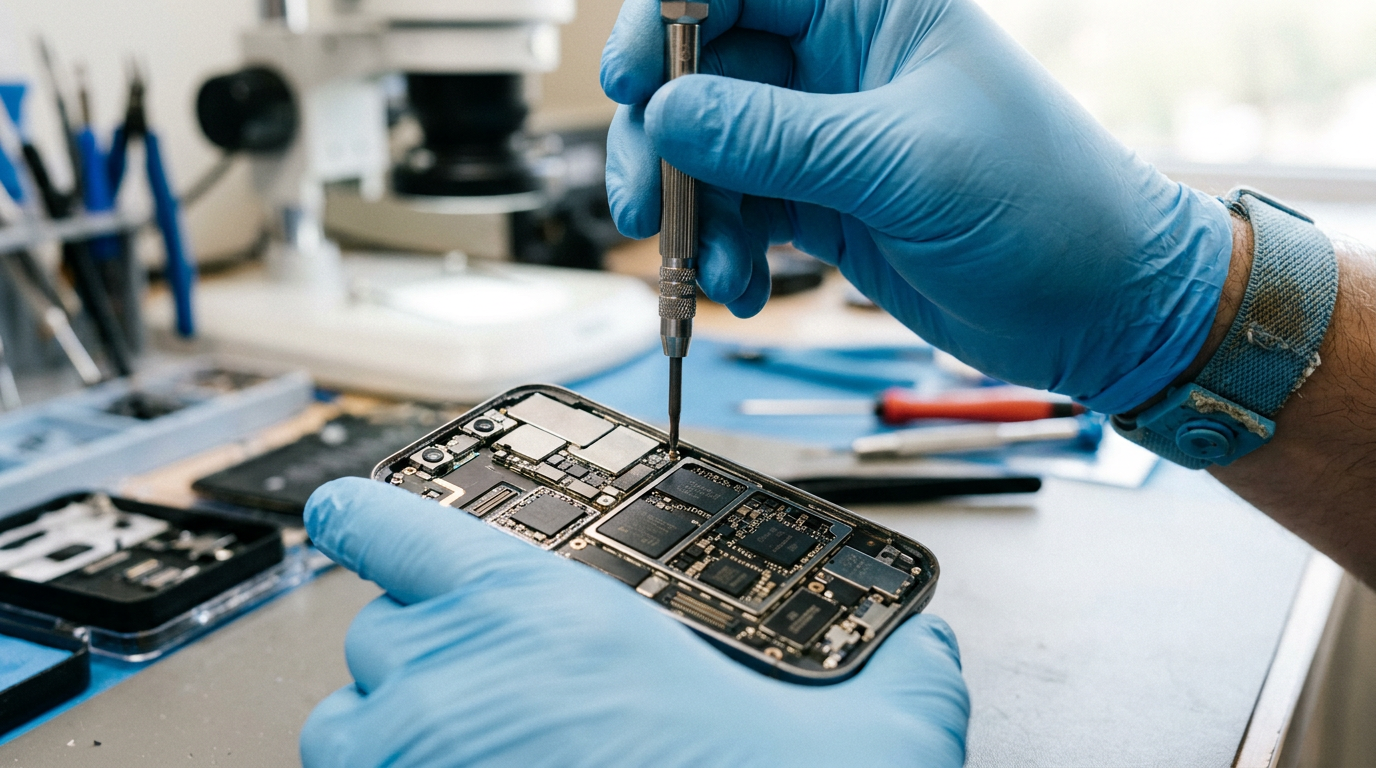
For decades, the implicit contract of commerce was simple: if you bought a product, you owned it, and you could fix it. But as the world digitized, that premise eroded. Modern smartphones, tractors, and refrigerators are increasingly sealed shut with proprietary screws, glued-in batteries, and software locks. When a screen cracks or a sensor fails, consumers are often forced into a frustrating binary: pay exorbitant fees at an authorized manufacturer service center, or throw the device away and buy a new one.[1][5][6]
By 2026, however, the "right to repair" movement has transformed from a niche grievance of hardware hackers into a formidable legal reality. A wave of sweeping legislation across the European Union, the United States, and Canada is systematically dismantling the repair monopolies that tech giants and equipment manufacturers have spent years building. The era of the disposable, glued-shut gadget is facing an unprecedented regulatory reckoning.[4][5][6]
The most seismic shift is occurring in Europe. On July 31, 2026, the European Union's Right to Repair Directive officially takes effect across all member states. The directive fundamentally rewrites the rules of consumer electronics and appliances, legally requiring manufacturers to repair covered products—such as washing machines, smartphones, and electronic displays—at a reasonable price and within a reasonable timeframe, even after the original warranty has expired.[5][10]
Crucially, the EU law introduces a novel mechanism designed to alter the math of planned obsolescence. If a consumer chooses to repair a defective product rather than replace it during the legal guarantee period, the manufacturer must extend the product's warranty by an additional 12 months. Furthermore, brands are now mandated to keep spare parts available for years after a product's initial release, ensuring that independent repair shops are not starved of the components they need to operate.[10]

Across the Atlantic, the United States is driving change through a powerful patchwork of state-level mandates. While Congress has yet to pass a comprehensive federal law, five states—California, New York, Colorado, Minnesota, and Oregon—have enacted broad consumer electronics repair laws that are now in active enforcement. These laws generally require original equipment manufacturers to make diagnostic tools, repair manuals, and spare parts available to the general public.[4][10]
Oregon and Minnesota have pushed the boundary even further by explicitly banning "parts pairing." Parts pairing is a controversial practice where manufacturers use software to digitally tether a specific component to a device's motherboard. If an independent technician installs a perfectly functional replacement part without the manufacturer's proprietary software handshake, the device may reject it or disable key features. By outlawing this practice, lawmakers are sending a clear message that repairs cannot be held hostage by software design.[10]
The battle extends far beyond consumer electronics. In the agricultural and automotive sectors, farmers and independent mechanics have long argued that manufacturers are withholding the diagnostic data required to service modern, computer-heavy vehicles. In response, the Federal Trade Commission, alongside state attorneys general, has pursued antitrust litigation against companies like John Deere, alleging that their repair restrictions violate federal competition laws.[1][8]
Simultaneously, bipartisan federal legislation like the REPAIR Act has gained traction, aiming to guarantee that independent auto shops have timely access to vehicle data. For small businesses, this is an existential fight. Independent repair facilities maintain a majority of the vehicles on American roads, and advocates argue that locking them out of diagnostics inflates costs, causes severe delays, and strips consumers of their right to choose.[1][7]
This economic reality has forged an unusual bipartisan consensus. Polling indicates that 99 percent of car owners believe it is important to choose where their vehicle is repaired. For conservative lawmakers and small-business advocates, the right to repair is championed as a defense of free-market competition and private property rights. If a manufacturer controls both the product and the repair process, competition disappears, local economies suffer, and prices inevitably rise.[1][7]

This economic reality has forged an unusual bipartisan consensus.
Environmental advocates champion the movement with equal fervor, pointing to the catastrophic rise of electronic waste. E-waste is one of the fastest-growing waste streams globally, flooding landfills with toxic heavy metals and lithium-ion batteries that frequently cause fires at recycling facilities. By extending the lifespan of devices, right-to-repair laws drastically reduce the need for raw material extraction and lower the carbon footprint associated with manufacturing new goods.[4][10]
Beyond economics and ecology, the movement is fostering a resurgence of community resilience. Around the world, grassroots "Repair Cafes" have proliferated, bringing neighbors together to fix broken household items free of charge. Participants describe these gatherings as a powerful antidote to disposable consumer culture, highlighting how the simple act of troubleshooting a broken toaster or mending a torn jacket can build human connection and self-reliance.[2]
Despite these victories, the transition is not without friction. Manufacturers and industry groups have historically lobbied against right-to-repair legislation, citing severe concerns over intellectual property, product quality, and safety. They argue that modern devices are highly complex, and that allowing unauthorized technicians to tinker with high-capacity batteries or sensitive medical equipment could lead to dangerous malfunctions and inflated healthcare costs.[9]
The most potent counter-argument centers on cybersecurity, particularly regarding critical infrastructure. In Colorado, lawmakers recently debated amending the state's right-to-repair law to exempt servers, routers, and firewalls used in critical networks. Proponents of the exemption argued that allowing third-party access to the diagnostic software of essential IT equipment could expose vulnerabilities to nation-state hackers and compromise public safety.[3]
However, cybersecurity experts and right-to-repair advocates push back against this logic, arguing that "security by obscurity" is a flawed paradigm. They contend that safe design should be an inherent property of the product, not reliant on a repair monopoly. Restricting who can service a system, they argue, actually introduces dangerous delays during crisis conditions, preventing operators from swiftly patching vulnerabilities or replacing failing hardware.[3]

Faced with mounting legal pressure, the market is already adapting. Major technology companies that once fiercely opposed the movement—including Apple, Google, and Samsung—have launched their own self-service repair programs. These initiatives allow consumers to purchase genuine parts and rent professional-grade tools to perform common fixes at home, a concession that would have been unthinkable just a few years ago.[5][10]
As 2026 unfolds, the focus shifts from passing laws to enforcing them. Scholars and regulators are closely watching to see if manufacturers will comply with the spirit of the legislation, or if they will attempt to price replacement parts so high that independent repair remains economically unviable. The development of standardized repairability scores and open-source firmware requirements will likely define the next frontier of the debate.[6][9]
Ultimately, the right to repair represents a profound course correction in consumer technology. By forcing the hardware ecosystem to open up, lawmakers are not just reducing waste and lowering costs; they are restoring the fundamental premise of ownership for the digital age. The message from regulators and consumers alike is clear: if you cannot fix it, you do not truly own it.[1][6]
How we got here
2021
The FTC issues its 'Nixing the Fix' report, highlighting the anti-competitive nature of repair restrictions.
Dec 2023
New York's Digital Fair Repair Act takes effect, becoming the first broad electronics repair law in the US.
May 2024
The European Union formally adopts the Right to Repair Directive.
Nov 2024
Canada passes Bill C-244, creating a federal repair exception to digital locks.
Jan 2026
Colorado's expanded consumer electronics repair law officially takes effect.
Jul 2026
Deadline for all EU member states to transpose the Right to Repair Directive into national law.
Viewpoints in depth
Consumer & Environmental Advocates
Advocates argue that repair access is essential for reducing waste and lowering costs.
Organizations like iFixit and U.S. PIRG view the right to repair as a fundamental property right and a critical climate intervention. They argue that planned obsolescence and software locks artificially inflate consumer costs and generate millions of tons of toxic e-waste. By forcing manufacturers to provide parts and manuals, advocates believe society can transition to a circular economy where devices are maintained rather than discarded.
Independent Repair Businesses
Small repair shops argue that manufacturer monopolies starve them of data and stifle competition.
For independent mechanics and local tech repair shops, access to diagnostic software and original parts is an existential issue. Groups like the National Federation of Independent Business argue that when manufacturers control the repair ecosystem, they create an anti-competitive monopoly. Restoring access levels the playing field, keeps repair dollars in local communities, and prevents consumers from facing long wait times at authorized dealerships.
Manufacturers & Security Proponents
Industry groups warn that unrestricted repair access could compromise device safety and cybersecurity.
Tech giants and equipment manufacturers have historically argued that modern devices are too complex for unauthorized tinkering. They warn that improper repairs of high-capacity batteries or medical equipment pose severe safety risks. Furthermore, cybersecurity experts have raised concerns that mandating open access to the diagnostic software of critical infrastructure—such as servers and routers—could expose vulnerabilities to malicious actors and weaken network defenses.
What we don't know
- How aggressively manufacturers will price their replacement parts, which could still make independent repairs economically unviable.
- Whether the US Congress will pass a comprehensive federal law to unify the current patchwork of state regulations.
- How the cybersecurity concerns surrounding critical infrastructure repair will be resolved in future legislative amendments.
Key terms
- Right to Repair
- A legal and social movement advocating for consumers and independent shops to have access to the parts, tools, and manuals needed to fix products.
- Parts Pairing
- A digital lock that ties a specific hardware component to a device's motherboard via software, preventing unauthorized replacements from functioning.
- Planned Obsolescence
- The practice of designing products with a limited useful lifespan so they will become obsolete, forcing consumers to buy replacements.
- E-waste
- Discarded electronic appliances and devices, which represent one of the fastest-growing and most toxic waste streams globally.
Frequently asked
What is 'parts pairing'?
Parts pairing is a practice where manufacturers use software to link a specific component to a device. If a replacement part is installed without the manufacturer's proprietary software handshake, the device may reject it or disable features.
Does the right to repair apply to cars and tractors?
Yes. Several states have laws covering agricultural equipment, and federal bills like the REPAIR Act aim to guarantee independent mechanics access to vehicle diagnostic data.
How does the EU directive change warranties?
Under the new EU rules taking effect in July 2026, if a consumer opts to repair a defective product rather than replace it during the legal guarantee period, the warranty is extended by an additional 12 months.
Why do manufacturers oppose these laws?
Manufacturers argue that restricting repairs to authorized technicians ensures product safety, protects intellectual property, and prevents cybersecurity vulnerabilities.
Sources
Source coverage
10 outlets
3 viewpoints surfaced










[1]The Washington TimesIndependent Repair Businesses
The conservative case for 'right to repair'
Read on The Washington Times →[2]Los Angeles TimesIndependent Repair Businesses
Letters to the Editor: The 'right to repair' movement shows how powerful human connections are
Read on Los Angeles Times →[3]The Colorado SunSecurity & Industry Proponents
Opinion: Rolling back Colorado's right-to-repair laws will weaken critical infrastructure safety
Read on The Colorado Sun →[4]Waste DiveConsumer & Environmental Advocates
Where right-to-repair legislation is heating up in 2025
Read on Waste Dive →[5]WikipediaConsumer & Environmental Advocates
Right to repair
Read on Wikipedia →[6]Factlen Editorial TeamConsumer & Environmental Advocates
Synthesis by Factlen editorial team
Read on Factlen Editorial Team →[7]National Federation of Independent BusinessIndependent Repair Businesses
Small Business Demands the Right to Repair
Read on National Federation of Independent Business →[8]Institute for Local Self-RelianceIndependent Repair Businesses
Enact Right-to-Repair Laws
Read on Institute for Local Self-Reliance →[9]The Regulatory ReviewSecurity & Industry Proponents
Tinkering With the Right to Repair
Read on The Regulatory Review →[10]SundrConsumer & Environmental Advocates
Right to Repair: Laws in the US, Canada & EU (2026)
Read on Sundr →
Every angle. Every day.
Get opinion stories with full source coverage and perspective breakdowns delivered to your inbox.