
U.S. and Iranian Delegations Begin 60-Day Peace Talks in Switzerland to Cement Fragile Ceasefire
Negotiators have arrived in Bürgenstock to implement the Islamabad Memorandum, but the talks face immediate hurdles over Israel's ongoing campaign in Lebanon and congressional demands for accountability over the deadly Minab school bombing.
By Factlen Editorial Team

- U.S. Administration
- Prioritizes reopening the Strait of Hormuz and securing nuclear concessions while attempting to manage the fallout of the Minab strike.
- Iranian Government
- Demands immediate sanctions relief and an absolute halt to Israeli military operations in Lebanon before finalizing any peace agreement.
- Israeli Government
- Refuses to be constrained by a bilateral U.S.-Iran agreement, maintaining its military campaign to neutralize threats in southern Lebanon.
- U.S. Congressional Oversight
- Focuses on accountability and transparency, threatening Pentagon funding to force the release of the civilian harm investigation into the Minab bombing.
What's not represented
- · Lebanese Civilians
- · Families of Minab Victims
Why this matters
The outcome of these negotiations will determine whether the four-month war that disrupted global energy markets is permanently resolved. If the talks collapse over the Lebanon ceasefire or domestic political fights, the Strait of Hormuz could remain closed, triggering severe economic shocks and a potential resumption of direct military conflict.
Key points
- U.S. and Iranian delegations, led by VP JD Vance and Parliament Speaker Mohammad Bagher Ghalibaf, have begun 60 days of technical talks in Switzerland.
- The negotiations aim to implement the Islamabad Memorandum, which outlines reopening the Strait of Hormuz and lifting U.S. sanctions.
- Iran is threatening to halt progress unless the U.S. forces Israel to end its military operations in southern Lebanon, a condition Israel rejects.
- The talks are overshadowed by the February 28 U.S. missile strike on an Iranian girls' school in Minab, which killed over 150 civilians.
- The U.S. Senate Armed Services Committee is threatening to cut Defense Secretary Pete Hegseth's travel budget by 75% until the Pentagon releases its investigation into the Minab strike.
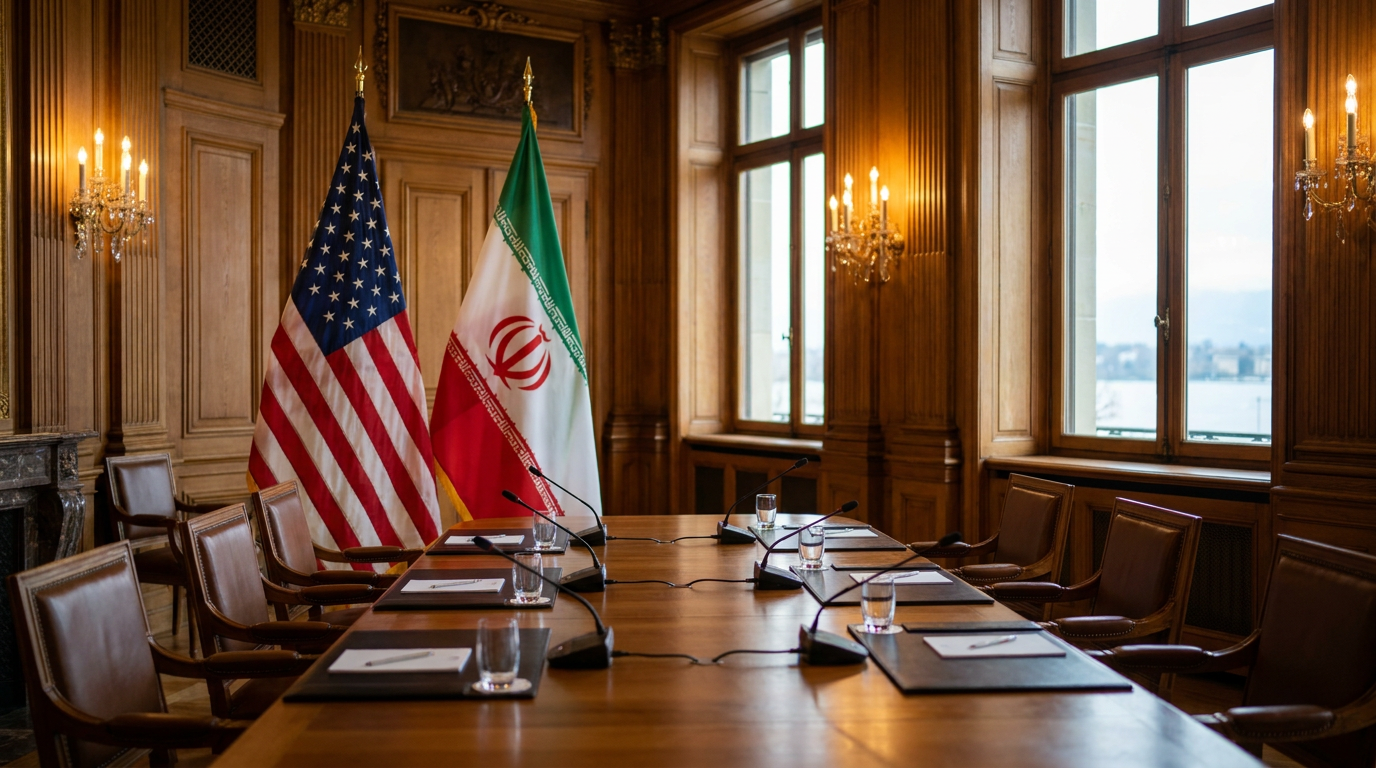
High in the Swiss Alps, delegations from the United States and Iran have converged at the Bürgenstock resort to negotiate an end to a devastating four-month war. Led by U.S. Vice President JD Vance and Iranian Parliament Speaker Mohammad Bagher Ghalibaf, the talks represent the most significant diplomatic engagement between the two nations in years. The stakes are monumental: finalizing a permanent ceasefire, reopening the globally vital Strait of Hormuz, and addressing the nuclear program. The arrival of the delegations on Sunday initiates a planned 60-day window of technical negotiations mediated by Pakistan and Qatar.[1][5]
The framework guiding these discussions is the "Islamabad Memorandum," an interim agreement electronically signed last Wednesday by U.S. President Donald Trump and Iranian President Masoud Pezeshkian. The memorandum outlines a phased de-escalation. For Washington, the immediate priority is restoring commercial transit through the Strait of Hormuz, which Iran closed in response to the conflict, sending shockwaves through global energy markets. For Tehran, the core demands revolve around the lifting of U.S. sanctions on Iranian oil exports and the unfreezing of state assets held overseas.[5][7]
However, the diplomatic architecture is already straining under the weight of regional realities, specifically the ongoing conflict in Lebanon. Clause 1 of the Islamabad Memorandum explicitly requires the "immediate and permanent termination of military operations on all fronts, including in Lebanon." This provision was a hardline requirement from Tehran, which views the survival of its allied militant group, Hezbollah, as a core security interest. Vice President Vance acknowledged this reality upon departure, stating the U.S. goal is to "make progress on the Lebanon ceasefire issue" alongside nuclear negotiations.[1][2]
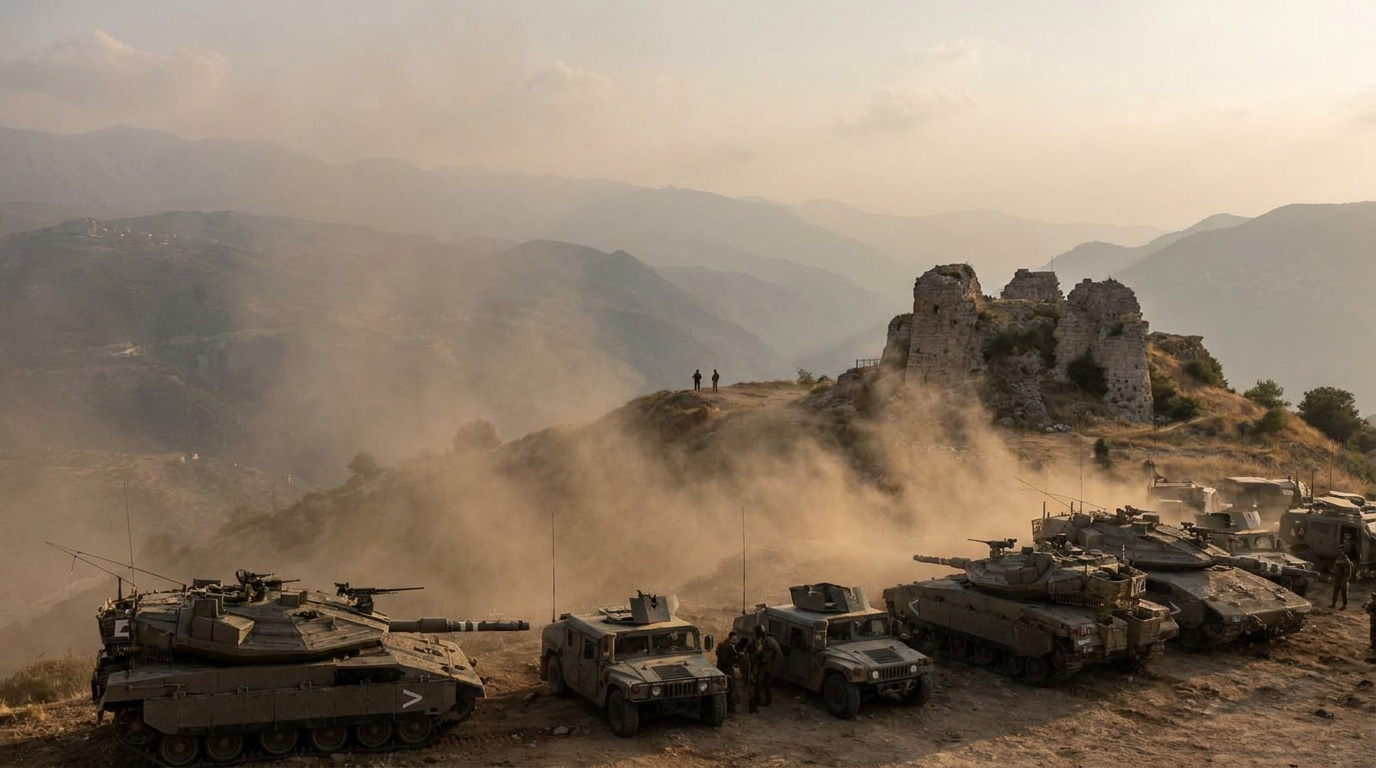
The critical vulnerability of the memorandum is that Israel, which is currently occupying portions of southern Lebanon, is not a signatory. The Israel Defense Forces (IDF) have maintained their campaign against Hezbollah, insisting that Israeli troops will remain deployed within a 10-kilometer security zone to protect northern Israeli residents. Israeli Prime Minister Benjamin Netanyahu has reportedly instructed the military to hold its fire in certain instances, but the broader offensive continues, exposing a glaring disconnect between Washington's diplomatic promises and its regional ally's military objectives.[4][7]

Iran has weaponized this disconnect, making the broader peace agreement entirely contingent on Israel's withdrawal. Iranian Foreign Ministry spokesman Esmaeil Baghaei warned over the weekend that without the implementation of the Lebanon ceasefire clause, entry into the final negotiation phase is "not possible." To enforce this demand, Tehran has kept the Strait of Hormuz closed, effectively using the global economy as leverage to force the Trump administration to rein in the Israeli military.[4][7]
Iran has weaponized this disconnect, making the broader peace agreement entirely contingent on Israel's withdrawal.
As the delegations sit down in Switzerland, the negotiations are heavily shadowed by the horrific event that initiated the war: the February 28 United States missile strike on the Shajareh Tayyebeh Elementary School in Minab, Iran. The strike, carried out on the first day of the conflict, killed between 156 and 175 civilians, the vast majority of them young schoolgirls. Upon arriving in Zurich, Ghalibaf explicitly invoked the tragedy, stating that the "innocent children of Minab" were watching over the delegation's every action.[1][5]
The Minab bombing has evolved from a battlefield tragedy into a major political crisis in Washington. Preliminary military investigations indicate that the Pentagon relied on seven-year-old targeting data, failing to recognize that a building adjacent to an Islamic Revolutionary Guard Corps (IRGC) base had been converted into a girls' school. Despite these internal findings, the Department of Defense has yet to formally release its civilian harm assessment or hold any officials accountable, prompting fierce backlash from congressional oversight committees.[1][3]

The Senate Armed Services Committee has taken the extraordinary step of weaponizing the Pentagon's budget to force transparency. In the latest draft of the National Defense Authorization Act (NDAA), lawmakers included a provision that would slash Defense Secretary Pete Hegseth's travel funding by 75 percent until he submits the unredacted investigation into the Minab strike to Congress. Senator Jack Reed, the top Democrat on the committee, stated the measure is designed to force accountability and prevent the military from repeating the "errors of the past."[3]
The Trump administration has largely sought to move past the Minab incident as it pursues the broader peace deal. When questioned about the stalled investigation during a recent summit in France, President Trump dismissed the need for immediate accountability. "Mistakes are made. War is nasty," Trump told reporters, adding that the strike happened "a long time ago" and that "nobody did that on purpose." This rhetoric has alarmed human rights advocates and former defense officials, who warn that burying the investigation undermines the laws of armed conflict.[1]
The intersection of the Minab fallout and the Lebanon standoff creates a highly volatile negotiating environment in Bürgenstock. Iranian negotiators arrive with immense domestic pressure to secure tangible concessions—both economic relief and a halt to Israeli operations—to justify engaging with a U.S. administration that launched the deadliest strike on Iranian civilians in decades. Hardliners in Tehran have already criticized the talks, arguing that Washington cannot be trusted to uphold its end of the bargain, particularly regarding Israel.[1][5]

For the United States, the 60-day window offers a narrow opportunity to stabilize a region that has been on the brink of total collapse. Beyond the immediate ceasefire logistics, Vance and the U.S. envoys are pushing to secure access for International Atomic Energy Agency (IAEA) inspectors to return to Iranian nuclear sites. Achieving this while simultaneously managing the domestic fallout over the Pentagon's targeting failures and navigating Israel's independent military strategy will require unprecedented diplomatic maneuvering.[6][7]
The Swiss government, acting in its long-standing role as a protective power and neutral facilitator, has emphasized that the mere presence of the delegations is a victory for diplomacy. Yet, as the technical talks commence, the structural flaws of the Islamabad Memorandum are fully exposed. The agreement relies on the assumption that the United States can dictate the military posture of an allied nation that did not sign the pact, all while attempting to build trust with an adversary still mourning a catastrophic intelligence failure.[4][8]
How we got here
Feb 28, 2026
A U.S. Tomahawk missile strikes a girls' school in Minab, Iran, initiating the war and killing over 150 civilians.
April 2026
An initial two-week ceasefire is agreed upon, though confusion remains over whether Lebanon is included in the pause.
June 17, 2026
The U.S. and Iran electronically sign the Islamabad Memorandum of Understanding to end the conflict.
June 18, 2026
The U.S. Senate Armed Services Committee moves to block Pentagon travel funds over the unreleased Minab investigation.
June 21, 2026
Delegations arrive in Switzerland to begin 60 days of technical negotiations to finalize the peace agreement.
Viewpoints in depth
The U.S. Diplomatic Tightrope
Washington is attempting to secure a historic peace deal without alienating its closest Middle Eastern ally.
The Trump administration's strategy hinges on compartmentalizing the conflict. By focusing the Swiss talks on maritime security in the Strait of Hormuz and nuclear inspections, the U.S. hopes to secure tangible economic and security wins. However, this approach requires downplaying the Minab school bombing as a tragic mistake of the past, a stance that has provoked fierce resistance from congressional oversight committees demanding accountability from Defense Secretary Pete Hegseth.
Tehran's Leverage Play
Iran is using its control over global energy transit to force the U.S. to restrain Israel.
Iranian negotiators, led by Mohammad Bagher Ghalibaf, arrived in Switzerland with a clear mandate: the Islamabad Memorandum is a package deal. Tehran views the reopening of the Strait of Hormuz not as a preliminary concession, but as its primary leverage to ensure the U.S. enforces Clause 1—the cessation of Israeli operations in Lebanon. By invoking the victims of the Minab strike, Iranian leadership is also signaling to its domestic hardliners that it will not capitulate to Washington without significant, verifiable concessions.
Israel's Independent Security Doctrine
Israel refuses to let a bilateral U.S.-Iran agreement dictate its military operations against Hezbollah.
From the perspective of the Israeli government, the Islamabad Memorandum is a flawed document that attempts to legislate Israel's security borders without its consent. The IDF maintains that a 10-kilometer buffer zone in southern Lebanon is a non-negotiable requirement to protect northern Israeli communities from Hezbollah. Consequently, Israel views the U.S. pressure to halt its Lebanon campaign as an overreach, choosing instead to risk the broader U.S.-Iran peace framework to achieve its immediate tactical objectives.
What we don't know
- Whether the Pentagon will release the unredacted civilian harm investigation into the Minab school bombing before the Senate votes on the defense budget.
- How the United States plans to enforce the Lebanon ceasefire clause of the Islamabad Memorandum given Israel's refusal to halt operations.
- If Iran will permit IAEA inspectors to access its nuclear facilities before U.S. sanctions are officially lifted.
Key terms
- Islamabad Memorandum
- The provisional ceasefire agreement brokered between the U.S. and Iran, setting the framework for the current Swiss negotiations.
- Strait of Hormuz
- A critical maritime chokepoint between the Persian Gulf and the Gulf of Oman, through which a significant portion of the world's oil supply passes.
- Tomahawk Cruise Missile
- A long-range, precision-guided munition used by the U.S. military, identified as the weapon that struck the Minab school.
- National Defense Authorization Act (NDAA)
- The annual U.S. legislation that sets the budget and policies for the Department of Defense, currently being used by the Senate to force accountability.
Frequently asked
What is the Islamabad Memorandum?
It is a provisional ceasefire agreement electronically signed by the U.S. and Iran to end their four-month war, reopen the Strait of Hormuz, and lift certain sanctions.
Why is Israel's campaign in Lebanon a sticking point?
The U.S.-Iran deal requires a ceasefire on all fronts, but Israel is not a signatory and continues to target Hezbollah in southern Lebanon, prompting Iran to threaten to halt the talks.
What happened in Minab?
On the first day of the war, a U.S. missile struck an Iranian girls' school due to outdated intelligence, killing over 150 civilians. The Pentagon has yet to release its investigation into the strike.
Sources
Source coverage
8 outlets
4 viewpoints surfaced








[1]The GuardianU.S. Congressional Oversight
Four months after the horrific Iran school bombing, fears grow that Trump and Hegseth will bury the truth
Read on The Guardian →[2]Al JazeeraIranian Government
US, Iranian delegations arrive in Switzerland for technical talks
Read on Al Jazeera →[3]The Washington PostU.S. Congressional Oversight
Senators seek to block Hegseth travel funds until Pentagon releases report on Iran school strike
Read on The Washington Post →[4]The Times of IsraelIsraeli Government
Iran says won't enter talks for final agreement with US without end to Lebanon war
Read on The Times of Israel →[5]Anadolu AgencyIranian Government
US, Iranian delegations arrive in Switzerland for technical talks
Read on Anadolu Agency →[6]XinhuaU.S. Administration
Senior U.S., Iranian delegations gather in Switzerland for talks on broader political settlement
Read on Xinhua →[7]Institute for the Study of War
Iran Update Special Report, June 18, 2026
Read on Institute for the Study of War →[8]Swiss Federal Department of Foreign Affairs
Memorandum of Understanding between the USA and Iran
Read on Swiss Federal Department of Foreign Affairs →

More in news politics
See all 5 stories →Information Ecosystem
The Evidence Behind Bridging Algorithms: How Decentralized Fact-Checking is Actually Working
7 sources

US-Iran Deal
How the Fragile US-Iran Peace Deal Could Unravel Over Lebanon
8 sources
Lebanon Border
Israel Limits Lebanon Actions to Salvage US-Iran Deal, but Refuses to Withdraw
7 sources
Every angle. Every day.
Get news politics stories with full source coverage and perspective breakdowns delivered to your inbox.