
Trump Administration Shifts Civil Rights and Special Education Oversight in Bid to Dismantle Education Department
The U.S. Department of Education has transferred its civil rights enforcement and special education programs to the Justice and Health and Human Services departments, advancing the administration's goal of hollowing out the agency.
By Factlen Editorial Team
- Decentralization Advocates
- Argues that dismantling the federal education bureaucracy returns power to states and aligns services with better-equipped agencies.
- Student Rights Organizations
- Warns that fragmenting oversight dilutes civil rights enforcement and improperly treats special education as a medical issue.
- Federal Oversight Defenders
- Views the interagency transfers as an illegal executive workaround to abolish a congressionally mandated department.
What's not represented
- · State-level education superintendents who will have to navigate the new multi-agency reporting structure.
- · Local school board members responsible for implementing IDEA accommodations under HHS guidance.
Why this matters
By shifting the oversight of the $15 billion special education budget and the enforcement of Title IX to non-education agencies, the administration is fundamentally altering how students seek federal protection. The move effectively dismantles the 46-year-old Education Department's core functions without requiring congressional approval to abolish the agency.
Key points
- The Trump administration is transferring the Education Department's civil rights and special education divisions to the DOJ and HHS.
- The move is part of a broader strategy to hollow out the 46-year-old agency using interagency agreements, bypassing Congress.
- Civil rights groups warn that moving enforcement to the Justice Department will bury student discrimination complaints in bureaucracy.
- Disability advocates fear that placing special education under a health agency will result in a 'medical model' approach to student accommodations.
- Democratic lawmakers have condemned the transfers as an illegal abdication of federal responsibility to vulnerable students.
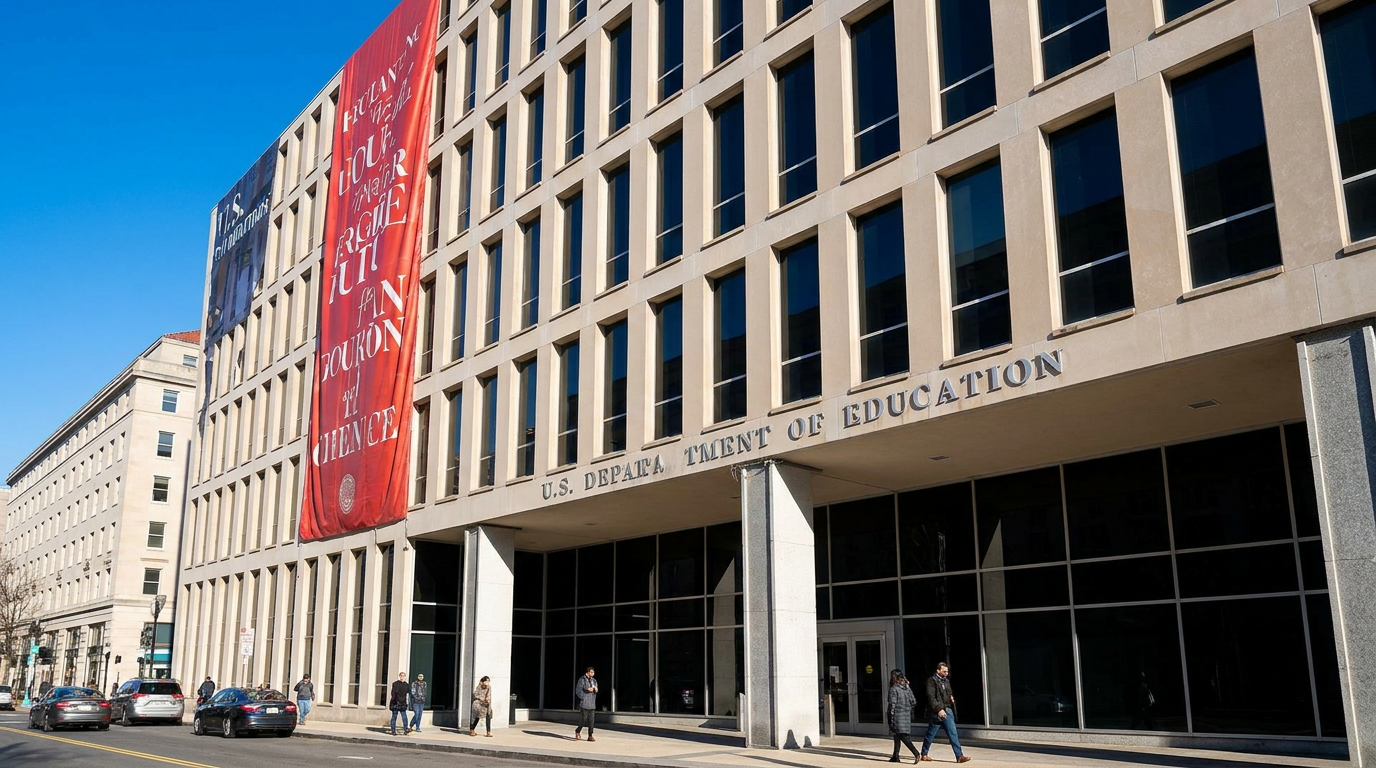
The Trump administration has taken its most aggressive step yet to dismantle the U.S. Department of Education, announcing the transfer of its civil rights and special education divisions to other federal agencies. The move represents a fundamental restructuring of how the federal government oversees student protections, investigates discrimination, and manages billions of dollars in public school funding. By shifting these core responsibilities to the Departments of Justice and Health and Human Services, the administration is effectively hollowing out the 46-year-old cabinet department from the inside, bypassing the need for a congressional vote to officially abolish the agency. The sweeping changes fulfill a major campaign promise to reduce federal involvement in local schooling, but they have ignited fierce backlash from advocates who warn the restructuring will abandon vulnerable students.[2][3][4]
Education Secretary Linda McMahon unveiled four new interagency agreements on Tuesday detailing the structural shifts. Under the new framework, the Office for Civil Rights (OCR) will shift its enforcement and investigative activities to the Department of Justice (DOJ). Simultaneously, the Office of Special Education and Rehabilitative Services (OSERS) will move its programmatic oversight to the Department of Health and Human Services (HHS). The administration also announced that student privacy protection, governed by the Family Educational Rights and Privacy Act (FERPA), along with desegregation advisory services, will be absorbed by the DOJ. These agreements dictate that while the Education Department will retain statutory authority over the programs on paper, the day-to-day management, staffing, and enforcement will be handled entirely by the partner agencies.[1][2][4][5]
The latest transfers bring the total number of outsourced Education Department functions to 14 under the current administration, representing a systematic dismantling of the agency's portfolio. Previous interagency agreements have already shifted the management of the government's massive $1.7 trillion federal student loan portfolio to the Treasury Department. Additionally, major higher education grant programs, including those designed to help first-generation and low-income students access college, have been moved to the Department of Labor to be administered alongside workforce development initiatives. Taken together, these moves leave the Education Department with a rapidly shrinking footprint and a fraction of its historical operational capacity.[4]

Secretary McMahon framed the restructuring as a victory for government efficiency and a necessary step to return educational control to states, parents, and local communities. "As we scale back federal micromanagement when it hinders success, we are equally committed to bolstering the efficacy of federal oversight where it is essential," McMahon said in a statement. The administration argues that the partnerships leverage the specialized expertise of other cabinet agencies, allowing the federal government to cut bureaucratic red tape and deliver services more effectively than a standalone education bureaucracy could achieve.[1][7]
The shift of the OCR to the Justice Department represents a massive change in how the federal government handles discrimination in educational settings. The OCR is historically responsible for investigating thousands of complaints annually regarding racial discrimination, sexual harassment, and Title IX violations in K-12 schools and universities. Acting Attorney General Todd Blanche welcomed the transfer, stating that the DOJ will combine its legal capacities with the OCR to provide "stronger, more coordinated civil rights enforcement" and ensure that discrimination is not tolerated in American schools.[1][3][5]
The shift of the OCR to the Justice Department represents a massive change in how the federal government handles discrimination in educational settings.
However, civil rights groups immediately condemned the transfer, expressing deep skepticism about the DOJ's new role in school-level disputes. The advocacy group Equal Rights Advocates called the move a "dramatic and unlawful deprioritization" of students' rights. Critics expressed alarm that civil rights enforcement is being handed to a Justice Department they accuse of being increasingly weaponized against civil rights defenders. They warn that moving these protections out of an education-focused agency will bury families in bureaucratic chaos and ultimately lead to countless students being unable to access the support and interventions they are legally owed.[6]
Equally contentious is the transfer of OSERS, the division that oversees the landmark Individuals with Disabilities Education Act (IDEA). The move places the oversight of 7.5 million children with disabilities and the administration of roughly $15 billion in annual federal special education grants under the purview of HHS, which is currently led by Secretary Robert F. Kennedy Jr. This shift fundamentally changes the federal touchpoint for thousands of school districts that rely on IDEA funding to provide specialized instruction, individualized education programs (IEPs), and necessary accommodations for students.[2][3][5]

Secretary Kennedy praised the interagency agreement, asserting that the partnership would "cut bureaucratic barriers, better align federal resources, and deliver more effective support" to help individuals with disabilities achieve independence and meaningful employment. Despite these assurances, disability advocates have fiercely opposed the shift since McMahon first floated the idea during her Senate confirmation hearings. Their primary concern is that moving special education to a health agency will result in the application of a "medical model" to student disabilities, fundamentally altering the philosophical approach to special education.[1][2]
Advocates argue that placing special education under HHS risks treating student disabilities as medical conditions that need to be treated or cured, rather than focusing on the civil right to an equitable and accessible academic environment. They also warn that fragmenting education oversight will leave families navigating an impossible bureaucratic maze. A student facing disciplinary action related to a disability might now have to deal with HHS for special education services and the DOJ for civil rights enforcement, rather than coordinating with a single, unified education agency that understands the holistic school environment.[2][3]
The administration's heavy reliance on interagency agreements serves as a strategic legal workaround to bypass the legislative branch. The U.S. Constitution and federal law dictate that only Congress has the authority to officially establish or abolish a cabinet-level department. Because the administration currently lacks the legislative consensus required to dissolve the 46-year-old agency outright, it is utilizing executive branch partnerships to hollow it out from the inside, transferring its daily operations and budgets while leaving an empty shell that technically complies with statutory requirements.[3][4]

Democratic lawmakers blasted the maneuver as an illegal abdication of federal responsibility. Senator Patty Murray, vice chair of the Senate Appropriations Committee, issued a scathing statement accusing McMahon of ignoring the pleas of families and spending taxpayer resources "illegally trying to shutter the Department of Education" instead of helping students. Democrats argue that the administration is prioritizing a political campaign promise over the functional needs of the nation's public school system, deliberately sowing dysfunction among federal employees.[3]
While the Education Department retains statutory authority over these programs on paper, the reality is that day-to-day management, policy enforcement, and grant distribution will now reside entirely within the partner agencies. The administration has indicated it plans to push Congress to formally codify these transfers in future federal budgets. This sets the stage for a massive, high-stakes legislative fight over the future of federal education policy, as lawmakers will soon have to decide whether to fund the new interagency structure or attempt to force the programs back under a unified Department of Education.[2][3][4]
How we got here
1979
Congress establishes the U.S. Department of Education as a cabinet-level agency.
March 2025
President Trump issues an executive order directing the Secretary of Education to plan for the department's closure.
May 2025 - Early 2026
The administration strikes agreements moving student loans to the Treasury and grant programs to the Labor Department.
June 16, 2026
Secretary McMahon announces the transfer of civil rights enforcement to the DOJ and special education to HHS.
Viewpoints in depth
Decentralization Advocates
Proponents argue the restructuring cuts bureaucracy and returns power to states.
Proponents of the restructuring argue that the Department of Education has become a bloated bureaucracy that micromanages local schools. By transferring civil rights to the DOJ and special education to HHS, they believe the federal government can leverage specialized legal and health expertise while returning primary educational control to states and parents. The administration views this as a necessary step to fulfill its mandate of reducing federal overreach in American classrooms.
Student Rights Organizations
Advocates warn the moves will pathologize disabilities and bury civil rights claims.
Advocacy groups argue that education is a holistic civil right, not a fragmented set of legal and medical issues. They warn that moving special education to HHS will pathologize student disabilities, treating them as conditions to be cured rather than accommodating them in an academic setting. Furthermore, they argue that shifting civil rights to the DOJ will create an intimidating, inaccessible system for families trying to report discrimination or harassment at the local school level.
Federal Oversight Defenders
Critics view the interagency agreements as an unlawful executive overreach.
Congressional critics and policy watchdogs view the interagency agreements as a bad-faith executive workaround. Because only Congress can legally abolish a cabinet department, they argue the administration is unlawfully hollowing out the agency from the inside. By deliberately sowing administrative chaos to fulfill a political campaign promise, these critics contend the administration is abdicating its legal responsibility to protect the nation's most vulnerable students.
What we don't know
- Whether Congress will intervene to block the interagency agreements or codify them in the upcoming federal budget.
- How the Department of Health and Human Services will practically manage the distribution of $15 billion in IDEA grants to local school districts.
- If the Justice Department will alter the threshold for investigating Title IX and racial discrimination complaints in schools.
Key terms
- Office for Civil Rights (OCR)
- The federal agency responsible for enforcing civil rights laws, including Title IX, in schools and universities that receive federal funding.
- Individuals with Disabilities Education Act (IDEA)
- A landmark federal law ensuring that students with disabilities receive a free appropriate public education tailored to their specific needs.
- Interagency Agreement
- A written pact between two federal agencies to share resources, delegate tasks, or transfer administrative responsibilities.
Frequently asked
Is the Department of Education officially closed?
No. Only Congress can legally abolish a cabinet-level department. However, the administration is transferring its daily operations to other agencies to effectively hollow it out.
How will this affect federal student loans?
The administration previously transferred the management of the $1.7 trillion federal student loan portfolio to the Treasury Department through a similar interagency agreement.
What happens to Title IX complaints now?
The Office for Civil Rights will coordinate with the Department of Justice to evaluate, investigate, and resolve discrimination and Title IX complaints in schools.
Sources
Source coverage
7 outlets
3 viewpoints surfaced







[1]U.S. Department of EducationDecentralization Advocates
U.S. Department of Education Announces Additional Partnerships to Strengthen Coordination for Individuals with Disabilities Programs, Bolster Civil Rights Enforcement
Read on U.S. Department of Education →[2]Education WeekStudent Rights Organizations
Education Department Outsourcing Special Education and Civil Rights Oversight
Read on Education Week →[3]The 19thFederal Oversight Defenders
Trump administration takes aggressive new steps to shut down the Department of Education
Read on The 19th →[4]Higher Ed DiveFederal Oversight Defenders
Education Department shifts civil rights enforcement to DOJ
Read on Higher Ed Dive →[5]NPRStudent Rights Organizations
Trump further guts Education Dept. by shifting oversight of special ed, civil rights
Read on NPR →[6]Equal Rights AdvocatesStudent Rights Organizations
STATEMENT: Trump administration abandons equal education by carving up Department of Education
Read on Equal Rights Advocates →[7]Fox NewsDecentralization Advocates
My vision for eliminating the Department of Education
Read on Fox News →

More in news politics
See all 5 stories →US-Iran Conflict
US and Iranian Delegations Open High-Stakes Talks in Switzerland to Halt Regional Conflict
8 sources

Content Provenance
How Cryptographic 'Nutrition Labels' Are Fact-Checking the 2026 Elections
7 sources

US-Iran Peace Talks
US and Iran Open High-Stakes Peace Talks in Switzerland Amid Senate Standoff Over School Bombing
7 sources

Every angle. Every day.
Get news politics stories with full source coverage and perspective breakdowns delivered to your inbox.