
The Era of Local AI: How Small Language Models Are Putting Intelligence in Your Pocket
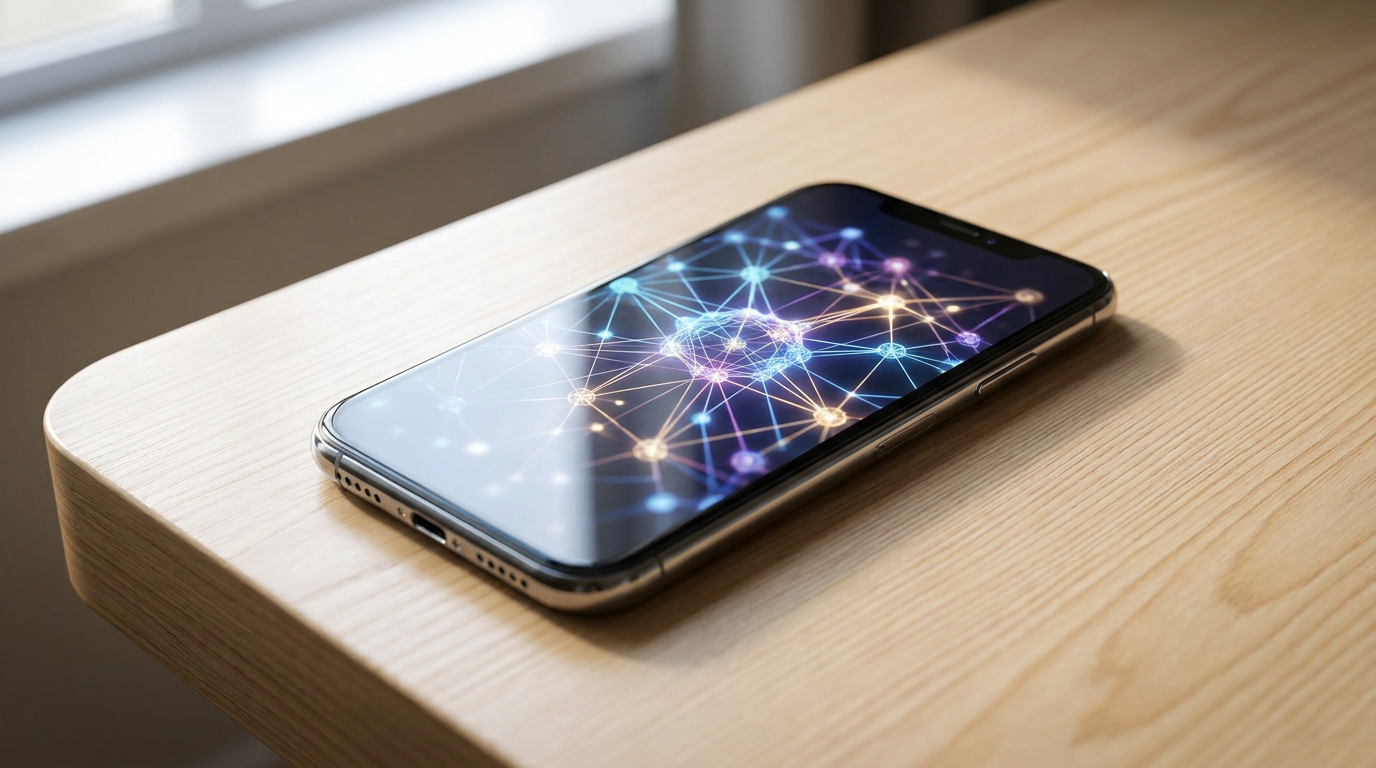
As tech giants pivot from massive cloud brains to compact, on-device models, Small Language Models (SLMs) are delivering zero-latency, privacy-first AI directly to smartphones and laptops.
By Factlen Editorial Team
- Privacy Advocates
- Value SLMs because data never leaves the device, eliminating cloud surveillance risks.
- Enterprise Developers
- See SLMs as a way to cut massive API costs and reduce latency for specialized workflows.
- Hardware Manufacturers
- View local AI as the ultimate driver for a massive hardware upgrade cycle.
- Frontier AI Labs
- Maintain that while SLMs are useful for routing, true reasoning still requires massive cloud infrastructure.
What's not represented
- · Cloud Infrastructure Providers
- · Regulatory Bodies
Why this matters
By running AI locally on your device, SLMs eliminate cloud subscription costs and ensure your sensitive data—from medical queries to private messages—never leaves your phone.
Key points
- Small Language Models (SLMs) run entirely on local devices, eliminating the need for cloud connectivity.
- Apple's WWDC 2026 announcements cemented on-device AI as the new standard for consumer hardware.
- Techniques like distillation and quantization allow massive AI capabilities to fit on mobile chips.
- Local execution ensures absolute data privacy, as sensitive information never leaves the user's device.
- SLMs operate with zero cloud API costs and sub-second latency, democratizing AI for developers.
- Hybrid routing systems escalate complex tasks to secure cloud servers only when local models fall short.
For the past three years, the artificial intelligence industry has been locked in a race to build the biggest brain. Tech giants poured billions into massive data centers, training Large Language Models (LLMs) with trillions of parameters. But in 2026, the most consequential shift in AI isn't happening in a remote server farm. It is happening quietly in our pockets. The era of the Small Language Model (SLM) has arrived, fundamentally changing how humans interact with machine intelligence.[1]
Rather than relying on a constant internet connection to beam queries to a distant cloud, SLMs are designed to run entirely locally—on smartphones, laptops, and edge devices. By shrinking the neural network to a fraction of its original size, developers have unlocked a new paradigm: AI that is instantly responsive, entirely private, and completely free of recurring subscription costs.[1][5]
To understand the shift, it helps to look at the architecture. A language model's "knowledge" is stored in parameters—the internal numeric weights and biases it learns during training. Frontier cloud models like GPT-4 operate with well over a trillion parameters, requiring massive arrays of specialized graphics processing units (GPUs) just to generate a single word.[1][6]
Small Language Models, by contrast, typically range from 1 billion to 10 billion parameters. If a massive LLM is a Swiss Army knife equipped with hundreds of tools for any conceivable scenario, an SLM is a precision screwdriver—highly focused, exceptionally efficient, and perfectly suited for specific tasks. Despite their reduced size, models like Microsoft's Phi-3, Google's Gemma 2, and Meta's Llama 3 retain core natural language capabilities, including summarization, translation, and coding assistance.[5][6][7][8]

The tipping point for consumer adoption arrived at Apple's Worldwide Developers Conference (WWDC) in June 2026. Apple unveiled "Core AI," a native framework that embeds Foundation Models directly into the operating systems of iPhones, iPads, and Macs. Instead of treating AI as a separate chatbot app, Apple wove the intelligence into the fabric of the device, allowing it to operate invisibly in the background.[2][4]
Running these models locally requires serious hardware. Apple announced that its most advanced on-device AI models in iOS 27 require a minimum of 12GB of unified memory, effectively excluding older devices and drawing a hard line in the sand for the next generation of smartphones, including the iPhone 17 Pro and the new iPhone Air. This hardware threshold highlights the intense computational demands of even "small" models.[3]
How exactly do engineers cram the reasoning power of a supercomputer into a device that fits in your hand? The breakthrough relies on two primary techniques: distillation and quantization. Distillation is essentially a teacher-student dynamic. A massive, highly capable cloud model is used to train a smaller model, passing down its refined behaviors and logic without transferring the bloated parameter count.[1][5]
How exactly do engineers cram the reasoning power of a supercomputer into a device that fits in your hand?
Quantization, meanwhile, is a mathematical compression technique. Neural networks typically perform calculations using high-precision 16-bit or 32-bit floating-point numbers. Quantization rounds these numbers down to 8-bit or even 4-bit integers. While this sacrifices a tiny fraction of the model's nuance, it drastically reduces the memory footprint and power consumption, allowing the model to run smoothly on a mobile processor's Neural Processing Unit (NPU).[1][4]

The most profound consequence of this miniaturization is absolute privacy. When an AI model runs locally, the data never leaves the device. For years, enterprises and consumers hesitated to use AI for sensitive tasks—analyzing financial documents, summarizing medical records, or drafting confidential emails—because it required sending that data to a third-party server.[1][2][5]
SLMs eliminate that risk entirely. Because the inference happens on the local silicon, there is no cloud surveillance, no data harvesting for future model training, and no risk of a network breach. This privacy-first architecture is not just a marketing talking point; it is a strict compliance requirement for industries like healthcare and finance, which are now rapidly adopting local AI workflows.[2][4][5]
Beyond privacy, local execution solves the latency problem. Cloud-based AI is inherently bottlenecked by network speeds; every prompt requires a round-trip to a server, resulting in a noticeable delay. On-device SLMs generate responses in milliseconds. This zero-latency performance is critical for real-time applications like live voice translation, autonomous agent workflows, and instant text prediction.[1][5][8]
Furthermore, the economics of AI are being rewritten. Cloud inference is expensive, often charging developers per token generated. By shifting the computational burden to the user's hardware, SLMs operate with zero API costs. This democratization allows small businesses and independent developers to integrate advanced AI features into their software without the fear of crippling server bills.[4][8]

However, Small Language Models are not omniscient. Their compact size means they lack the vast, encyclopedic world knowledge of their trillion-parameter counterparts. If you ask an SLM to write a Python script or summarize a local document, it excels. But if you ask it for an obscure historical fact or a highly complex multi-step reasoning task, it is far more likely to hallucinate or fail.[6]
The industry's solution is hybrid routing. Apple's architecture, for example, defaults to the on-device SLM for fast, private tasks. But if a user's request exceeds the local model's capabilities, the operating system seamlessly escalates the query to "Private Cloud Compute"—a secure server environment—or routes it to a frontier model like ChatGPT, always asking for user consent first.[2][4]

This hybrid approach represents the mature future of artificial intelligence. The massive cloud brains will remain essential for heavy lifting, scientific research, and complex reasoning. But the daily, ambient intelligence that powers our lives—the AI that reads our screens, drafts our messages, and organizes our days—will live entirely on the devices we already own.[1][2][6]
How we got here
July 2023
Meta releases Llama 2, sparking a wave of open-source innovation in smaller, efficient models.
April 2024
Microsoft introduces the Phi-3 family, proving that models under 4 billion parameters can rival much larger systems.
June 2024
Apple announces Apple Intelligence, signaling a major shift toward on-device AI processing.
June 2026
Apple unveils Core AI at WWDC, embedding advanced Foundation Models directly into iOS 27 and macOS 27.
Viewpoints in depth
Privacy Advocates
Focus on the elimination of cloud data transfers for sensitive information.
For privacy advocates, the shift to on-device AI is a monumental victory. By keeping all inference local, SLMs ensure that personal data—from medical queries to private messages—never traverses the internet. This architecture inherently complies with strict data protection regulations like GDPR and HIPAA, removing the primary barrier that has kept highly regulated industries from adopting generative AI.
Enterprise Developers
Prioritize the dramatic reduction in operational costs and latency.
Developers view SLMs as a way to escape the 'cloud tax' imposed by frontier model providers. By running AI locally, businesses can deploy intelligent features without incurring per-token API costs. Furthermore, the sub-second latency achieved by local processing enables real-time applications, such as live translation and autonomous agent workflows, that are impossible when waiting for a cloud server to respond.
Hardware Manufacturers
See local AI as the catalyst for a massive device upgrade supercycle.
For companies building smartphones and laptops, SLMs are the ultimate selling point. Running these models requires significant unified memory and powerful Neural Processing Units (NPUs). Manufacturers are leveraging this requirement to drive consumers toward higher-end devices, as older hardware simply lacks the computational muscle to run modern local AI seamlessly.
What we don't know
- How quickly developers will abandon cloud APIs in favor of local SLM deployment.
- Whether the hardware requirements for local AI will price out lower-income consumers.
- The exact performance ceiling of highly quantized 4-bit models on specialized edge tasks.
Key terms
- Small Language Model (SLM)
- A compact AI model designed to run efficiently on local devices like smartphones and laptops, typically containing under 10 billion parameters.
- Parameter
- The internal numeric values (weights and biases) a neural network learns during training, which store its 'knowledge'.
- Quantization
- A compression technique that reduces the mathematical precision of an AI model, shrinking its file size and memory usage so it can run on mobile chips.
- Distillation
- A training method where a massive, highly capable AI model is used to teach a smaller model, transferring its refined logic into a more compact package.
- Neural Processing Unit (NPU)
- A specialized hardware chip designed specifically to accelerate artificial intelligence calculations efficiently.
Frequently asked
What makes a language model 'small'?
While frontier models like GPT-4 have over a trillion parameters, Small Language Models (SLMs) typically range from 1 billion to 10 billion parameters, allowing them to run on consumer hardware.
Do I need an internet connection to use an SLM?
No. Once the model is downloaded to your device, all processing happens locally on your hardware, meaning it works perfectly in airplane mode.
Are small models as smart as massive cloud models?
Not for general knowledge. They excel at specific tasks like summarizing text or drafting emails, but they lack the vast encyclopedic knowledge and complex reasoning capabilities of trillion-parameter models.
Why do I need a new phone for on-device AI?
Running an AI model locally requires significant RAM. For example, Apple's most advanced on-device models require at least 12GB of unified memory, which older phones do not have.
Sources
Source coverage
8 outlets
4 viewpoints surfaced








[1]Factlen Editorial TeamPrivacy Advocates
Synthesis by Factlen editorial team
Read on Factlen Editorial Team →[2]Apple NewsroomPrivacy Advocates
Apple Intelligence brings powerful AI capabilities into everyday experiences
Read on Apple Newsroom →[3]MacRumorsHardware Manufacturers
Apple's Most Powerful On-Device AI Now Requires iPhone 17 Pro or iPhone Air
Read on MacRumors →[4]InfoQEnterprise Developers
Apple Launches Core AI for Apple-Silicon Optimized On-Device Generative AI
Read on InfoQ →[5]IBMFrontier AI Labs
What are Small Language Models (SLM)?
Read on IBM →[6]Hugging FaceFrontier AI Labs
Small Language Models (SLM): A Comprehensive Overview
Read on Hugging Face →[7]Microsoft Azure BlogFrontier AI Labs
Introducing Phi-3: Redefining what's possible with SLMs
Read on Microsoft Azure Blog →[8]BentoMLEnterprise Developers
The Best Open-Source Small Language Models (SLMs) in 2026
Read on BentoML →


Every angle. Every day.
Get ai stories with full source coverage and perspective breakdowns delivered to your inbox.