
How Synthetic Fuels Are Giving the Supercar a Carbon-Neutral Lifeline
As the 2035 ban on combustion engines approaches, legacy supercar manufacturers are turning to carbon-neutral synthetic fuels to save the V8 and V12.
By Factlen Editorial Team
- Heritage Automakers
- View e-fuels as essential to preserving brand identity and the emotional appeal of combustion engines.
- Enthusiast Media
- Support e-fuels as a lifeline for classic cars and high-performance driving.
- Industrial Technologists
- Focus on the chemical mechanisms and broad industrial applications of synthetic fuels.
What's not represented
- · Mass-market EV manufacturers
- · Renewable energy grid operators
Why this matters
If successful, e-fuels won't just save the V8 and V12 engines for enthusiasts; they could offer a drop-in decarbonization solution for the 1.4 billion existing combustion vehicles on the road today.
Key points
- The EU's 2035 ban on combustion engines includes a loophole for vehicles running exclusively on carbon-neutral synthetic fuels.
- E-fuels are created by combining green hydrogen with carbon dioxide captured from the atmosphere.
- Because they emit only the carbon that was captured to create them, e-fuels offer a net-zero emissions cycle.
- Porsche has opened a pilot plant in Chile, using wind energy to produce e-fuel for its racing programs.
- High production costs and poor energy efficiency remain significant hurdles to mass adoption.
- Formula 1 will switch entirely to sustainable synthetic fuels for its 2026 season to accelerate development.
The automotive industry is currently undergoing a seismic, irreversible shift toward electrification, driven by looming regulatory deadlines and climate imperatives. By 2035, the European Union plans to effectively ban the sale of new passenger cars equipped with traditional internal combustion engines, forcing a massive industrial pivot. For manufacturers of everyday commuter vehicles and family SUVs, the path forward is abundantly clear: battery-electric vehicles (EVs) are the undisputed, pragmatic future. But for the boutique builders of the world's most evocative supercars, this sweeping legislative mandate posed an existential threat to their very identity.[3]
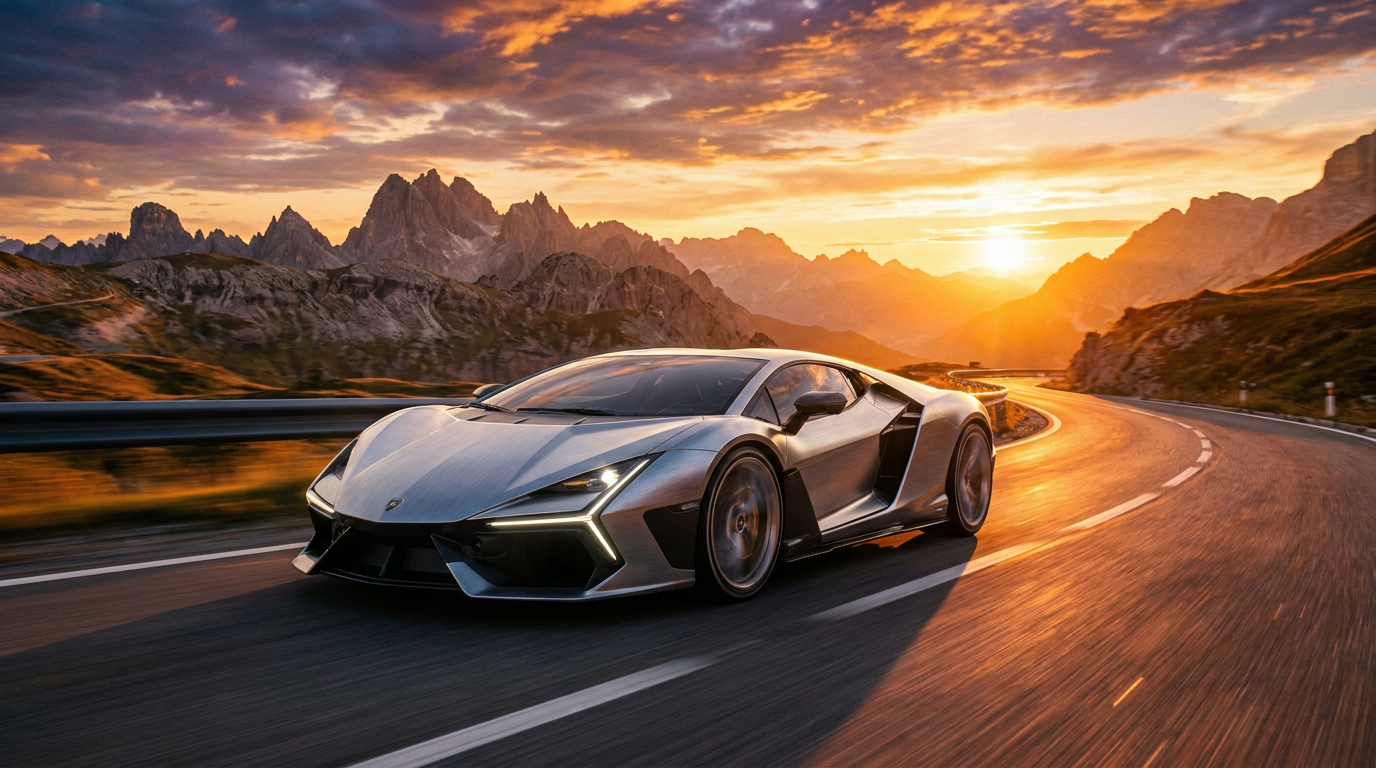
Brands like Ferrari, Lamborghini, and Porsche have built their century-long legacies on the visceral thrill and mechanical artistry of internal combustion. The shrieking crescendo of a naturally aspirated V12 or the mechanical symphony of a rear-mounted flat-six engine is central to their brand identity and customer appeal. As Lamborghini's Chief Technical Officer Rouven Mohr recently noted, while modern EVs offer blistering straight-line speed and impressive acceleration metrics, they currently lack the raw 'emotion side' that traditional supercar buyers demand when spending hundreds of thousands of dollars.[5]
Faced with the very real prospect of silencing their signature engines forever, a coalition of legacy automakers and sympathetic governments pushed back aggressively against the legislation. In a dramatic eleventh-hour intervention, Germany successfully lobbied the European Commission for a crucial, highly specific exemption to the 2035 ban. The resulting loophole dictates that internal combustion engines can legally live on past the deadline, provided they are engineered to run exclusively on carbon-neutral synthetic fuels, commonly known throughout the industry as e-fuels.[3]
This regulatory carve-out has ignited a high-stakes technological race to perfect a fuel that sounds remarkably like science fiction: liquid gasoline manufactured from thin air and water. Unlike conventional fossil fuels, which release ancient carbon that has been trapped underground for millions of years, e-fuels are synthesized in a carefully managed, closed-loop process. This advanced chemical engineering is specifically designed to have a net-zero impact on the atmosphere, offering a way to burn fuel without adding new greenhouse gases to the climate system.[7]

The production of this futuristic e-fuel begins with two abundant resources: water and renewable electricity. In specialized facilities powered entirely by wind or solar energy, large-scale industrial electrolyzers are used to split water molecules into oxygen and 'green' hydrogen. Because the massive amounts of electricity used in this initial step come strictly from renewable sources rather than coal or natural gas grids, the resulting hydrogen is produced without generating any secondary greenhouse gas emissions. This foundational step ensures the entire supply chain starts with a clean energy slate.[1][7]
The second, arguably more complex step in the process involves capturing carbon dioxide directly from the ambient atmosphere or from concentrated industrial biomass waste. This is achieved using cutting-edge Direct Air Capture (DAC) technology, which essentially acts like a massive, highly efficient mechanical forest. Giant fans pull ambient air through chemical filters that scrub and isolate the CO₂, providing the essential carbon building blocks needed to create a hydrocarbon fuel without drilling into the earth's crust. This atmospheric extraction is what gives the fuel its carbon-neutral potential.[1][7]
Finally, the freshly isolated green hydrogen and the captured carbon dioxide are combined in a sophisticated chemical synthesis process. This high-temperature reaction produces synthetic methanol, which is then further refined into a drop-in liquid fuel that is chemically identical to high-octane premium gasoline. When this resulting e-fuel is eventually burned in a combustion engine, it releases CO₂ back into the atmosphere—but critically, it only emits the exact amount of carbon that was originally captured during its production phase.[1][7]
Finally, the freshly isolated green hydrogen and the captured carbon dioxide are combined in a sophisticated chemical synthesis process.
The end result of this complex industrial choreography is a perfectly carbon-neutral cycle. A classic 1960s Ferrari or a brand-new Porsche 911 can burn this synthetic fuel, produce the same intoxicating exhaust note, and theoretically contribute zero net new carbon to the atmosphere. Furthermore, because e-fuel is chemically indistinguishable from conventional petrol, it requires absolutely no engine modifications. It can be seamlessly distributed using the world's existing infrastructure of pipelines, shipping tankers, and neighborhood gas stations. This backward compatibility is arguably its greatest asset.[2][7]

Porsche has rapidly emerged as the most aggressive and visible champion of this synthetic technology. Unwilling to let its iconic 911 sports car become a silent, battery-powered EV, the German automaker invested tens of millions of dollars into HIF Global, a leading e-fuel pioneer. Together with heavy-hitting industrial partners like Siemens Energy and ExxonMobil, they successfully built and launched the Haru Oni pilot plant in Punta Arenas, Chile, proving that the concept could work outside of a laboratory.[1][3]
The remote location in Chilean Patagonia was chosen for one very specific, highly pragmatic reason: relentless wind. The region experiences some of the most consistent and powerful onshore winds on the planet, allowing the plant's massive turbines to operate at peak efficiency for roughly 270 days a year. The Haru Oni facility is already fully operational, churning out thousands of liters of synthetic fuel that Porsche currently uses to power its Mobil 1 Supercup racing series. This real-world testing ensures the fuel can withstand the extreme pressures of motorsport.[6]
Ferrari is also pursuing a pragmatic dual-path strategy to navigate the impending regulations. While the legendary Maranello-based company plans to launch its highly anticipated first fully electric vehicle soon, CEO Benedetto Vigna has publicly confirmed that e-fuels will allow the brand to continue producing its legendary V8 and V12 engines well beyond the 2036 horizon. Ferrari is actively collaborating with energy partners to ensure its future combustion engines are perfectly optimized for these advanced synthetic blends. This ensures their wealthiest clients won't have to compromise on acoustic drama.[3][4]
The ultimate, high-stakes proving ground for e-fuels will undoubtedly be the global racetrack. Formula 1, the undisputed pinnacle of international motorsport, has officially announced that it will switch to 100% sustainable synthetic fuels for the upcoming 2026 season. While F1 cars account for a statistically microscopic fraction of global emissions, the sport serves as a high-visibility, high-budget laboratory. It aims to prove to the public that e-fuels can deliver the extreme performance, efficiency, and reliability required by the world's most advanced hybrid engines.[4]

Despite the undeniable romantic appeal of saving the internal combustion engine, e-fuels face daunting, potentially existential challenges—chief among them being the astronomical cost. Currently, synthetic fuel is staggeringly expensive to produce at scale, with industry estimates placing the cost between $10 and $12 per liter (roughly $38 to $45 per gallon). At those eye-watering prices, e-fuel is strictly a boutique, luxury product reserved for motorsport teams and the ultra-wealthy, far out of reach for the average commuter.[6]
This high cost is a direct, unavoidable result of the process's severe energy intensity. Critics rightly point out that the thermodynamic efficiency of e-fuels is exceptionally poor when compared to battery-electric vehicles. Taking renewable electricity, using it to make hydrogen, combining it with carbon, refining it into liquid fuel, and then burning it in an engine results in massive energy losses at every single step. An EV uses renewable electricity directly, making it vastly more efficient on a per-watt basis.[3][7]

Scaling production to commercially meaningful levels is another monumental logistical hurdle. Porsche ambitiously aims to produce tens of millions of liters of e-fuel by the end of the decade, but the global automotive fleet consumes billions of liters every single day. Diverting massive amounts of precious renewable energy to produce synthetic fuel for luxury sports cars, critics argue, is a gross misallocation of resources when that clean electricity could be used to decarbonize the broader public power grid.[5][6]
Proponents counter that e-fuels were never meant to replace EVs for the masses. Instead, they offer a highly targeted solution for sectors that are notoriously difficult to electrify, such as commercial aviation and maritime shipping, while simultaneously providing a lifeline for the estimated 1.4 billion internal combustion vehicles already on the road today. For the automotive enthusiast, e-fuels represent a necessary compromise: a vital way to preserve the mechanical art and emotional resonance of the supercar in an increasingly carbon-conscious world.[7][8]
How we got here
2022
Porsche and HIF Global open the Haru Oni e-fuel pilot plant in Punta Arenas, Chile.
March 2023
Following pressure from Germany, the EU grants an e-fuel exemption to its 2035 combustion engine ban.
2026
Formula 1 will mandate the use of 100% sustainable synthetic fuels in all race cars.
2035
The European Union's ban on the sale of new traditional fossil-fuel combustion engine cars takes effect.
Viewpoints in depth
Legacy Supercar Manufacturers
Automakers who view e-fuels as essential to preserving their brand heritage and the emotional appeal of combustion engines.
Brands like Porsche, Ferrari, and Lamborghini argue that the visceral experience of a high-revving internal combustion engine cannot be replicated by battery-electric powertrains. For these manufacturers, e-fuels are not an attempt to avoid decarbonization, but a necessary technological bridge. They point out that keeping existing combustion cars on the road with carbon-neutral fuel is more environmentally sound than scrapping them, and that the high margins of supercars can help subsidize the early, expensive stages of e-fuel development.
Environmental Efficiency Advocates
Critics who argue that e-fuels are an inefficient use of renewable energy compared to direct electrification.
Efficiency advocates stress the laws of thermodynamics. Converting renewable electricity into hydrogen, combining it with captured carbon, refining it into a liquid, and then burning it in an engine results in massive energy losses—often retaining less than 20% of the original energy. They argue that this clean electricity would be far better spent charging EV batteries directly or decarbonizing the public grid, rather than being squandered to keep a niche segment of luxury sports cars running.
Motorsport Governing Bodies
Racing organizations using synthetic fuels to maintain the spectacle of motorsport while meeting sustainability goals.
For organizations like Formula 1 and the FIA, e-fuels represent the perfect compromise. Motorsport relies heavily on the auditory and mechanical drama of combustion engines to entertain millions of fans. By mandating 100% sustainable synthetic fuels for the 2026 season, F1 aims to achieve its net-zero carbon goals without silencing the cars. They also view the racetrack as the ultimate high-stress laboratory, accelerating the development of e-fuels for eventual commercial use.
What we don't know
- Whether the cost of e-fuel production can ever be lowered enough to make it viable for everyday consumers, rather than just supercar owners.
- How regulators will enforce the 'exclusive use' of e-fuels in post-2035 combustion cars, preventing owners from filling up with cheaper fossil fuels.
- If there will be enough renewable energy capacity globally to scale e-fuel production without starving the electrical grid.
Key terms
- E-fuel
- A synthetic liquid fuel produced using renewable electricity, water, and captured carbon dioxide.
- Electrolysis
- The process of using electricity to split water molecules into hydrogen and oxygen.
- Direct Air Capture (DAC)
- Technology that extracts carbon dioxide directly from the ambient atmosphere.
- Carbon Neutral
- A state where the carbon emissions produced by burning a fuel are exactly offset by the carbon captured to create it.
Frequently asked
Can I put e-fuel in my current gas-powered car?
Yes. E-fuels are chemically identical to conventional gasoline and require absolutely no engine modifications.
Does burning e-fuel still produce pollution?
Yes. While e-fuels are net-zero for carbon dioxide, they still emit local pollutants like nitrogen oxides (NOx) and particulates when burned.
When will e-fuel be available at regular gas stations?
Not anytime soon. Current production is extremely limited and expensive, mostly reserved for motorsport and pilot testing.
Sources
Source coverage
8 outlets
3 viewpoints surfaced








[1]Porsche AGHeritage Automakers
Porsche's synthetic fuel: a green kind of gasoline
Read on Porsche AG →[2]AutocarEnthusiast Media
'Carbon-neutral' synthetic fuels could complement electrification
Read on Autocar →[3]Top GearEnthusiast Media
EU allows e-fuel exemption in 2035 combustion engine ban
Read on Top Gear →[4]Green Car ReportsHeritage Automakers
Ferrari to keep ICE cars alive with e-fuels
Read on Green Car Reports →[5]Driven Car GuideHeritage Automakers
EVs lack emotion, says Lamborghini CTO backing synthetic fuels
Read on Driven Car Guide →[6]Supercar DriverEnthusiast Media
Synthetic fuel: Saving the internal combustion engine
Read on Supercar Driver →[7]Mitsubishi Heavy IndustriesIndustrial Technologists
What are e-fuels and how are they made?
Read on Mitsubishi Heavy Industries →[8]Factlen Editorial TeamIndustrial Technologists
Synthesis by Factlen editorial team
Read on Factlen Editorial Team →
Every angle. Every day.
Get automotive stories with full source coverage and perspective breakdowns delivered to your inbox.