
UK Prime Minister Keir Starmer Expected to Resign Amid Party Pressure
British Prime Minister Keir Starmer is reportedly preparing to announce his resignation on Monday following mounting pressure from within his own Labour Party. The departure would trigger a leadership contest, with prominent figures like Andy Burnham positioned as likely successors.
By Factlen Editorial Team
- Internal Reformers
- Argue that a change in leadership is necessary to unify the party and implement more ambitious economic policies.
- Institutional Continuity
- Focus on the need for an orderly transition to maintain market stability and governmental function.
- Opposition Critics
- View the leadership change as evidence of government instability and demand an immediate general election.
What's not represented
- · International allies concerned about UK foreign policy continuity
- · Voters in traditional Labour strongholds
Why this matters
A change in UK leadership directly impacts domestic economic policy, international trade relations, and the stability of the British government during a critical period of economic adjustment. The transition will dictate the country's legislative agenda for the remainder of the parliamentary term.
Key points
- Prime Minister Keir Starmer is expected to announce his resignation on Monday.
- The decision follows intense pressure from Labour MPs demanding a change in leadership.
- Starmer will likely remain in a caretaker capacity while a leadership contest takes place.
- Andy Burnham has emerged as the leading candidate to take over the party.
- Conservative opposition leaders are calling for an immediate general election.
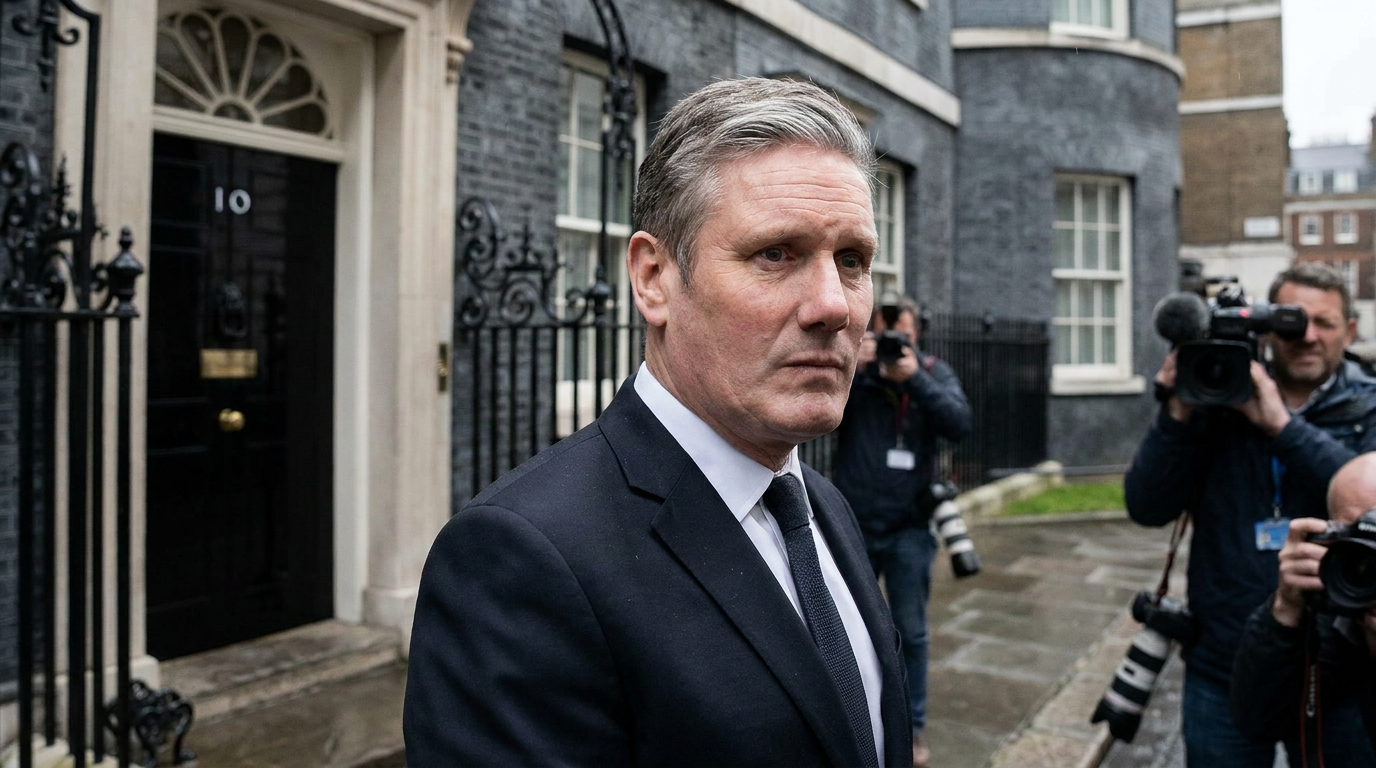
British Prime Minister Keir Starmer is expected to announce his resignation on Monday, bowing to intense and mounting pressure from within the Parliamentary Labour Party. The anticipated departure marks a dramatic turning point for the UK government, ending weeks of speculation about Starmer's political survival. According to weekend reports, the prime minister will outline a specific timetable for an orderly exit from 10 Downing Street, allowing for a structured leadership contest rather than an immediate vacuum.[1][2]
The decision represents a sharp reversal from Starmer's previous posture. For weeks, the prime minister and his inner circle had firmly insisted they would fight any leadership challenge and continue their mandate. However, the sheer volume of Labour Members of Parliament privately and publicly expressing a lack of confidence ultimately made his position untenable. The internal revolt reached a tipping point over the weekend, forcing Downing Street to concede that a transition of power was inevitable.[1][3]
At the center of the succession conversation is Andy Burnham, the prominent Labour figure who has garnered significant backing from the party's restive factions. Burnham's supporters view him as a unifying force capable of resetting the government's agenda and addressing the economic anxieties that have plagued Starmer's tenure. While other candidates are expected to emerge, Burnham is currently positioned as the overwhelming frontrunner to take control of the party apparatus.[1][6]

The mechanics of the transition are being carefully negotiated to prevent market panic and project governmental stability. Starmer is expected to remain in office in a caretaker capacity while the Labour Party executes its formal leadership election rules. This process involves nominations from the Parliamentary Labour Party followed by a ballot of the wider party membership, a sequence that typically takes several weeks to conclude.[2][5]
The mechanics of the transition are being carefully negotiated to prevent market panic and project governmental stability.
Financial markets have so far reacted with cautious optimism to the news of an orderly transition. Analysts note that the certainty of a structured departure is preferable to a protracted, chaotic civil war within the governing party. Early trading indicators suggest that investors are pricing in the leadership change, focusing instead on the broader macroeconomic policies that a new Labour leader might introduce to stimulate the stagnant British economy.[7]
The Conservative opposition has immediately seized upon the turmoil, framing the internal Labour coup as evidence of a fundamentally unstable government. Opposition leaders are amplifying calls for an early general election, arguing that the British public deserves a say in who leads the country, rather than leaving the decision to a small electorate of Labour Party members. However, under current parliamentary rules, the governing party retains the right to change its leader without dissolving Parliament.[3]

Starmer's legacy will likely be defined by his initial success in returning Labour to power, contrasted sharply with his inability to maintain party unity in the face of governing challenges. His tenure has been marked by difficult compromises on public spending and a cautious approach to structural reform, which alienated the more ambitious wings of his party. The growing disconnect between Downing Street and backbench MPs ultimately eroded the authority required to govern effectively.[4][6]
The incoming leader will inherit a formidable set of challenges, including strained public services, sluggish economic growth, and a deeply fractured political landscape. The new prime minister will have a narrow window to demonstrate decisive action and restore public confidence before the next electoral cycle begins in earnest. The success of this transition will depend heavily on the new leader's ability to bridge the divides that ultimately brought down Starmer's administration.[2][4]
As Westminster braces for Monday's formal announcement, the focus now shifts entirely to the impending leadership contest. The coming days will see intense maneuvering as potential candidates declare their intentions and begin courting the crucial support of their parliamentary colleagues. The outcome of this contest will not only determine the next occupant of 10 Downing Street but will fundamentally reshape the trajectory of the United Kingdom's domestic and foreign policy for the remainder of the decade.[1][5]

How we got here
July 2024
Starmer leads the Labour Party to a general election victory, becoming Prime Minister.
Early 2026
Internal party dissent grows over cautious economic policies and public spending compromises.
June 20, 2026
Starmer faces overwhelming pressure from Labour MPs to step down, making his position untenable.
June 21, 2026
Reports emerge that Starmer will formally announce his resignation timetable.
Viewpoints in depth
Internal Reformers' View
Advocates for a new direction argue that Starmer's cautious approach has stalled the country's progress.
This camp, largely comprising restive Labour backbenchers and supporters of Andy Burnham, argues that the government has failed to deliver the transformative economic changes promised during the election. They believe that Starmer's insistence on fiscal conservatism has alienated the party's base and left public services underfunded. By installing a new leader, they hope to pivot toward more ambitious structural reforms that can stimulate growth and restore enthusiasm among voters.
Institutional Continuity View
Market analysts and institutionalists emphasize the importance of a stable, predictable transition of power.
For financial markets and civil servants, the primary concern is avoiding the chaos that often accompanies sudden political decapitations. This perspective values Starmer's commitment to an orderly departure, noting that a caretaker period allows the government to continue functioning while the party selects a new leader. They argue that a structured transition minimizes economic shocks and reassures international investors that the UK remains a stable environment, regardless of internal party politics.
Opposition Critics' View
Conservative voices argue the internal coup invalidates the government's mandate to rule.
The political opposition views the forced resignation as proof that the Labour Party is too fractured to govern effectively. They argue that the British public elected a government led by Keir Starmer, and that replacing him mid-term through an internal party mechanism is undemocratic. Consequently, they are aggressively pushing for a general election, asserting that any new Labour leader lacks a mandate from the country at large and must face the electorate to legitimize their premiership.
What we don't know
- The exact timeline for the Labour leadership contest.
- Which other candidates will officially declare their intention to run against Andy Burnham.
- How the transition will impact ongoing international negotiations and trade agreements.
Key terms
- Parliamentary Labour Party (PLP)
- The collective body of Labour Members of Parliament, which plays a crucial role in initiating and voting in leadership challenges.
- Orderly Departure
- A planned transition of power where the outgoing leader remains in place as a caretaker until a successor is chosen, avoiding an immediate vacuum.
Frequently asked
Who will replace Keir Starmer?
Andy Burnham is currently considered the frontrunner, though a formal leadership contest will allow other candidates to emerge.
Will there be a general election?
Not automatically. The new Labour leader would become Prime Minister without a national vote, though opposition parties are demanding an early election.
Why is Starmer resigning?
He is facing overwhelming pressure from Labour MPs who have lost confidence in his leadership and believe a change is necessary to address economic challenges.
Sources
Source coverage
7 outlets
3 viewpoints surfaced







[1]The GuardianInternal Reformers
Keir Starmer expected to announce departure as prime minister on Monday
Read on The Guardian →[2]BBC NewsInstitutional Continuity
Prime Minister Keir Starmer to step down amid mounting Labour pressure
Read on BBC News →[3]The TelegraphOpposition Critics
Starmer bows to the inevitable as Burnham waits in the wings
Read on The Telegraph →[4]ReutersInstitutional Continuity
UK PM Starmer expected to resign, opening door for Labour leadership contest
Read on Reuters →[5]Sky NewsInternal Reformers
Labour MPs force Starmer's hand: PM to announce resignation timetable
Read on Sky News →[6]Politico EuropeInternal Reformers
The fall of Keir Starmer: How Labour's internal revolt toppled a Prime Minister
Read on Politico Europe →[7]Financial TimesInstitutional Continuity
Markets steady as Starmer prepares orderly exit from Downing Street
Read on Financial Times →
More in news politics
See all 5 stories →Cognitive Immunity
The Evidence Behind 'Pre-Bunking': How Psychological Inoculation is Defeating Political Misinformation
8 sources

Iran Peace Talks
U.S. and Iranian Delegations Open High-Stakes Peace Talks in Switzerland
6 sources
Transit Strike
LIRR Unions Ratify Contract Securing 15% Raises, Officially Ending Historic Strike Threat
6 sources
Every angle. Every day.
Get news politics stories with full source coverage and perspective breakdowns delivered to your inbox.