
The Rise of 'Fair Trade' AI: How Ethical Data Sourcing is Reshaping the Creative Economy
As backlash grows against the non-consensual scraping of digital art and music, a new wave of 'Fair Trade AI' platforms is emerging to offer creators opt-in consent and recurring royalties.
By Factlen Editorial Team
- Ethical AI Platforms
- AI can empower creators if the underlying economics are restructured to include them.
- Copyright Traditionalists
- Strict opt-in is required, and AI companies must be penalized for past unauthorized scraping.
- Data Dignity Advocates
- Digital data is an extension of human labor and identity, deserving of compensation.
What's not represented
- · Open-Source AI Developers
- · Consumers of AI Content
Why this matters
For years, the artificial intelligence boom felt like an extractive threat to human creativity. The emergence of 'Fair Trade AI' proves that technology can empower and compensate creators rather than replace them, offering a sustainable blueprint for the future of digital labor.
Key points
- Fair Trade AI platforms are replacing non-consensual data scraping with opt-in, royalty-bearing models.
- The 'Data Dignity' framework argues that digital data is an extension of human labor and deserves compensation.
- Music platforms like LANDR and Artist Included are pioneering revenue-sharing models for AI training.
- Visual artists can now train personalized AI models on their own work while retaining full copyright.
- Building ethical AI marketplaces remains difficult, as seen by the 2026 closure of the Tess.Design platform.
- Ongoing lawsuits over massive, unauthorized training datasets continue to pressure the AI industry toward transparency.
The generative artificial intelligence boom of the early 2020s was built on a massive, uncompensated harvest. Billions of images, articles, and songs were scraped from the public internet to train the foundational models that now power everything from chatbots to automated image generators. For years, the creative class—illustrators, musicians, writers, and voice actors—watched as their life's work was ingested into black-box algorithms, only to be spit back out as synthetic content that competed directly with their own livelihoods. The prevailing tech industry ethos was to move fast and scrape everything, relying on ambiguous fair-use legal defenses to justify the extraction of human creativity at an unprecedented scale.[1]
But by mid-2026, a powerful counter-movement has matured from a fringe ethical debate into a viable commercial ecosystem. Dubbed 'Fair Trade AI,' this new paradigm seeks to rebuild the generative economy on a foundation of consent, transparency, and direct financial compensation for creators. The shift is not merely driven by altruism; it is being forced by a combination of mounting legal pressure, shifting regulatory frameworks, and a growing corporate demand for brand-safe AI tools. Major brands and media publishers are increasingly wary of using AI-generated assets that carry the risk of copyright infringement, creating a lucrative market for models trained exclusively on legally cleared, ethically sourced material.[1]
At the philosophical core of this movement is the concept of 'Data Dignity.' First popularized by tech philosopher Jaron Lanier and economist E. Glen Weyl, data dignity—sometimes referred to as 'data as labor'—posits that digital information is not a naturally occurring raw material waiting to be mined. Instead, data is an extension of human identity, experience, and labor. Under a data dignity framework, the individuals who create the data that makes artificial intelligence valuable must have a say in how it is used and must share in the economic value it generates.[2]

This represents a fundamental inversion of the surveillance capitalism model that dominated the Web 2.0 era. Rather than treating user uploads as free fodder for algorithmic training, Fair Trade AI platforms treat creators as essential supply-chain partners who earn recurring royalties. By acknowledging that high-quality AI outputs require high-quality human inputs, these platforms are attempting to build a symbiotic relationship between the technology sector and the creative class.[2]
The music industry, historically the canary in the coal mine for digital disruption, is currently leading the charge toward ethical AI monetization. In 2024, the music production platform LANDR launched what it called the industry's first mature opt-in attribution model. Under LANDR's Fair Trade AI program, independent musicians can explicitly consent to have their tracks used to train assistive AI music tools. In exchange, the contributing artists receive a 20 percent share of the proceeds generated by the resulting AI products, distributed proportionally based on their data contribution.[3]
Crucially, artists retain full ownership of their original copyrights and can revoke their consent at any time, forcing the platform to remove their data from future training cycles. This opt-in mechanism directly addresses the primary grievance of the creative class by restoring their control over their own intellectual property. It transforms AI from a looming existential threat into a passive income stream for independent creators who choose to participate.[3]

This opt-in mechanism directly addresses the primary grievance of the creative class by restoring their control over their own intellectual property.
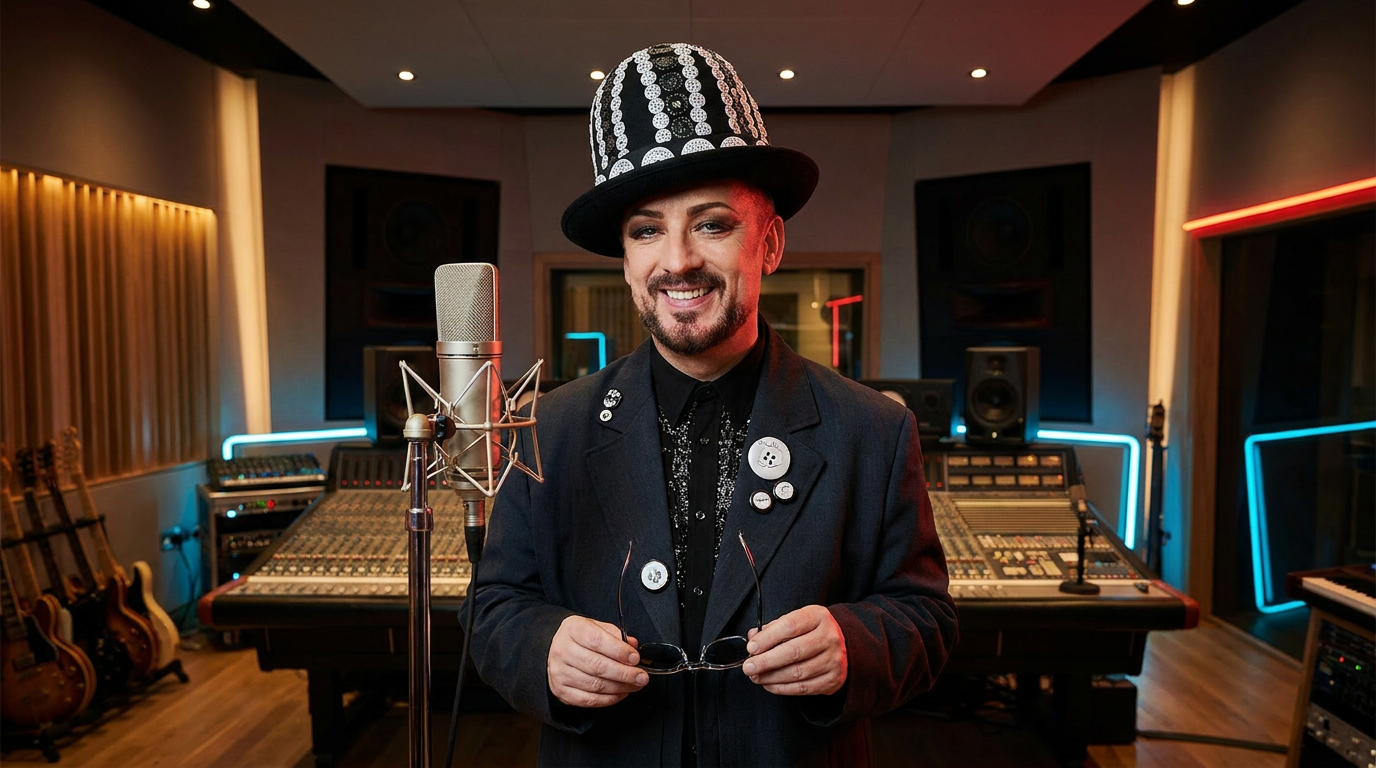
The momentum in the music sector accelerated in June 2026 with the launch of Artist Included, a Los Angeles-based music technology company. Founded with the explicit goal of creating an ethical, creator-owned AI music ecosystem, the company allows legendary artists to train AI models exclusively on their own verified vocals. To mark its launch, Artist Included partnered with Boy George to release a newly recorded version of the Culture Club classic 'Karma Chameleon.' The track was not a synthetic deepfake; rather, the artist performed the vocals in the studio, utilizing artist-approved AI technology to support and enhance the final recording. This model allows legacy artists to reimagine their catalogs and create new, fully owned masters for the modern streaming era.[4]
The push for ethical sourcing is equally urgent in the visual arts, where the backlash against non-consensual scraping has been particularly fierce. Early pioneers like Adobe Firefly set a corporate standard by training their image generators exclusively on licensed stock libraries and public domain content, compensating contributors based on historical usage. This proved that a commercially viable, high-quality image generator could be built without resorting to mass copyright infringement.[1]
Today, a new wave of platforms is taking the concept further by allowing individual illustrators to build and monetize their own bespoke AI models. Platforms like Exactly.ai empower creators to upload their own sketches and paintings to train a personalized algorithm. The artist retains the copyright to any images generated by their custom model and can license access to brands or agencies. This allows a popular illustrator to safely scale their output, taking on massive commercial commissions that would previously have been impossible for a single human to execute manually.[8]

However, the transition to a Fair Trade AI economy is not without severe growing pains. Building a two-sided marketplace that ethically sources training data while remaining competitively priced is a monumental business challenge. In early 2026, the ethical AI startup Tess.Design—which offered artists a generous 50 percent royalty every time a user generated an image in their specific style—was forced to shut down. The founders cited the immense difficulty of recruiting artists one by one, noting that a significant portion of the creative community simply refuses to participate in AI training on principle, regardless of the financial incentives.[6]
Furthermore, the legacy of non-consensual scraping continues to cast a long shadow over the industry. In June 2026, an investigation by The Atlantic exposed four massive, searchable music datasets—one containing roughly 12 million tracks—that had been widely circulated among AI developers. The revelation that the catalogs of artists ranging from Taylor Swift to the Beatles had been ingested without permission has fueled ongoing, multi-billion-dollar class-action lawsuits spearheaded by the Recording Industry Association of America and various creator coalitions. For many artists, the emergence of opt-in platforms does not erase the fact that the foundational models dominating the market were built on a bedrock of unauthorized labor.[7]

Legal experts, such as European intellectual property scholar Eleonora Rosati, argue that the tech industry's reliance on 'text and data mining' exceptions is legally fragile when applied to commercial generative AI. As the European Union enforces strict transparency obligations under its AI Act, developers are being forced to disclose exactly what data they have used, making it harder to hide behind the black box of algorithmic training. The era of consequence-free data harvesting is rapidly coming to a close.[5]
Ultimately, the rise of Fair Trade AI suggests that the future of generative technology will not be defined solely by who has the most computing power, but by who can secure the highest-quality, legally cleared data. For the first time since the AI boom began, the humans behind the data are demanding their seat at the table—and the market is finally beginning to pay them. The shift from an extractive economy to a collaborative one may just save the soul of the creative industry.[1]
How we got here
2018
Jaron Lanier and E. Glen Weyl introduce the concept of 'Data Dignity' and 'Data as Labor'.
March 2023
Adobe launches Firefly, an AI image generator trained exclusively on licensed and public domain content.
July 2024
Music platform LANDR launches its Fair Trade AI program, offering artists a 20% royalty share.
January 2026
Ethical AI art marketplace Tess.Design shuts down, highlighting the difficulty of building creator-first AI platforms.
June 2026
Artist Included launches to allow legacy musicians to train AI on their own vocals, while The Atlantic exposes massive unauthorized AI training datasets.
Viewpoints in depth
Ethical AI Platforms & Startups
AI can be a tool for creator empowerment if the underlying economics are restructured.
Companies like LANDR, Exactly.ai, and Artist Included argue that artificial intelligence is not inherently exploitative. They view generative models as the next evolution of creative software, akin to the synthesizer or digital photography. By implementing opt-in consent and revenue-sharing models, these platforms believe AI can help artists scale their output, monetize their back catalogs, and reach new audiences without sacrificing their intellectual property rights.
Copyright Traditionalists & Unions
AI companies must be held legally accountable for past scraping, and strict opt-in is the only legal path forward.
Organizations like the Recording Industry Association of America (RIAA) and the Music Artists Coalition maintain that the foundational AI models currently dominating the market were built on mass copyright infringement. They reject the tech industry's 'fair use' defense, arguing that ingesting copyrighted works to build competing commercial products is theft. For this camp, ethical AI cannot simply start today; it requires compensating creators for the historical data that made these billion-dollar models possible in the first place.
AI Skeptics & Purists
AI inherently devalues human art, and royalty models will only drive down wages to pennies.
A significant faction of independent illustrators, writers, and musicians refuse to participate in AI training on principle. They argue that even 'ethical' royalty models—like the micro-payments seen in music streaming—will ultimately commoditize art and force human creators to compete against algorithmic doppelgängers. For these purists, the act of creation is inherently human, and feeding one's distinct style into a machine devalues the emotional labor and years of practice required to master a craft.
What we don't know
- Whether courts will ultimately rule that early AI training on copyrighted material constituted fair use or infringement.
- How standard royalty rates for AI training data will settle across different creative industries.
- Whether consumers will pay a premium for content certified as 'ethically sourced' or 'Fair Trade AI'.
Key terms
- Data Dignity
- The principle that individuals should have control over their digital data and be compensated when it is used by technology companies.
- Opt-in Attribution Model
- A system where creators must explicitly give permission for their work to be used, and are credited and paid when it is.
- Text and Data Mining (TDM)
- The automated process of analyzing large datasets to extract information, often cited by AI companies as a legal exception to copyright law.
- Digital Replica Rights
- Emerging legal protections designed to prevent AI from imitating a specific person's voice or visual likeness without their consent.
Frequently asked
What is Fair Trade AI?
Fair Trade AI refers to artificial intelligence models trained exclusively on data that has been legally licensed or explicitly opted-in by the original creators, who typically receive a share of the revenue.
What does 'Data Dignity' mean?
Data dignity is the philosophical concept that digital data is an extension of human labor and identity. It argues that people should have control over their data and be compensated when it is used to generate commercial value.
Can artists opt out of AI training?
Under ethical AI frameworks, participation is strictly opt-in, and creators can revoke their consent at any time. However, many foundational models built before 2024 scraped data without offering an opt-out mechanism.
How do creators get paid for AI data?
Platforms use various models, ranging from one-time licensing fees to recurring royalties based on how often a creator's specific style or data is used to generate new content.
Sources
Source coverage
8 outlets
3 viewpoints surfaced








[1]Factlen Editorial TeamEthical AI Platforms
Synthesis by Factlen editorial team
Read on Factlen Editorial Team →[2]TechTargetData Dignity Advocates
What is data dignity? (Data as labor)
Read on TechTarget →[3]Sound On SoundEthical AI Platforms
LANDR announce Fair Trade AI programme
Read on Sound On Sound →[4]Music Business WorldwideEthical AI Platforms
Artist Included launches to let artists re-record classic tracks using AI
Read on Music Business Worldwide →[5]El PaísCopyright Traditionalists
Is it possible to protect intellectual property rights in the age of AI?
Read on El País →[6]KapwingEthical AI Platforms
Learnings from Paying Artists Royalties for AI-Generated Art
Read on Kapwing →[7]Startup FortuneCopyright Traditionalists
The Atlantic identifies four music datasets used for AI training
Read on Startup Fortune →[8]Exactly.aiEthical AI Platforms
Scale up your artwork with ethical AI made for artists
Read on Exactly.ai →
Every angle. Every day.
Get culture stories with full source coverage and perspective breakdowns delivered to your inbox.