
Fact-Checking the 'Cognitive Vaccine': Does Prebunking Actually Stop Misinformation?
Governments and tech platforms are increasingly using 'prebunking' to inoculate voters against political misinformation before it spreads. A review of the latest behavioral science reveals where these cognitive vaccines succeed—and where their effects wear off.
By Factlen Editorial Team
- Behavioral Scientists
- Argue that prebunking is a highly scalable, proactive defense that builds cognitive resilience without triggering partisan defensiveness.
- Election Administrators
- View prebunking as a necessary tool to get ahead of AI-generated hoaxes and maintain trust in democratic processes before crises occur.
- Traditional Fact-Checkers
- Maintain that while prebunking is useful for general media literacy, rigorous, evidence-based debunking remains essential for correcting specific falsehoods.
What's not represented
- · Social Media Platform Engineers
- · Free Speech Advocates
Why this matters
As AI-generated hoaxes and sophisticated manipulation tactics flood the 2026 election cycle, traditional fact-checking is struggling to keep pace. Understanding how psychological inoculation works empowers readers to recognize deceptive strategies and build their own mental defenses against digital propaganda.
Key points
- Prebunking uses psychological inoculation to teach people how to spot manipulation tactics before they encounter real disinformation.
- Cambridge studies show the technique works across the political spectrum because it focuses on tactics, not specific facts.
- The protective effects of prebunking wear off after two to three months, requiring periodic 'booster shots.'
- While highly scalable, prebunking struggles to penetrate populations that are already deeply radicalized.
- Researchers conclude that prebunking and traditional fact-checking must be used together for maximum effectiveness.
The traditional approach to political fact-checking resembles a high-stakes game of whack-a-mole. A false claim goes viral, fact-checkers scramble to verify the underlying data, and a detailed correction is published days later. By the time the truth arrives, the deceptive narrative has already taken root in millions of feeds, and the correction rarely reaches the same audience that saw the original lie.[6]
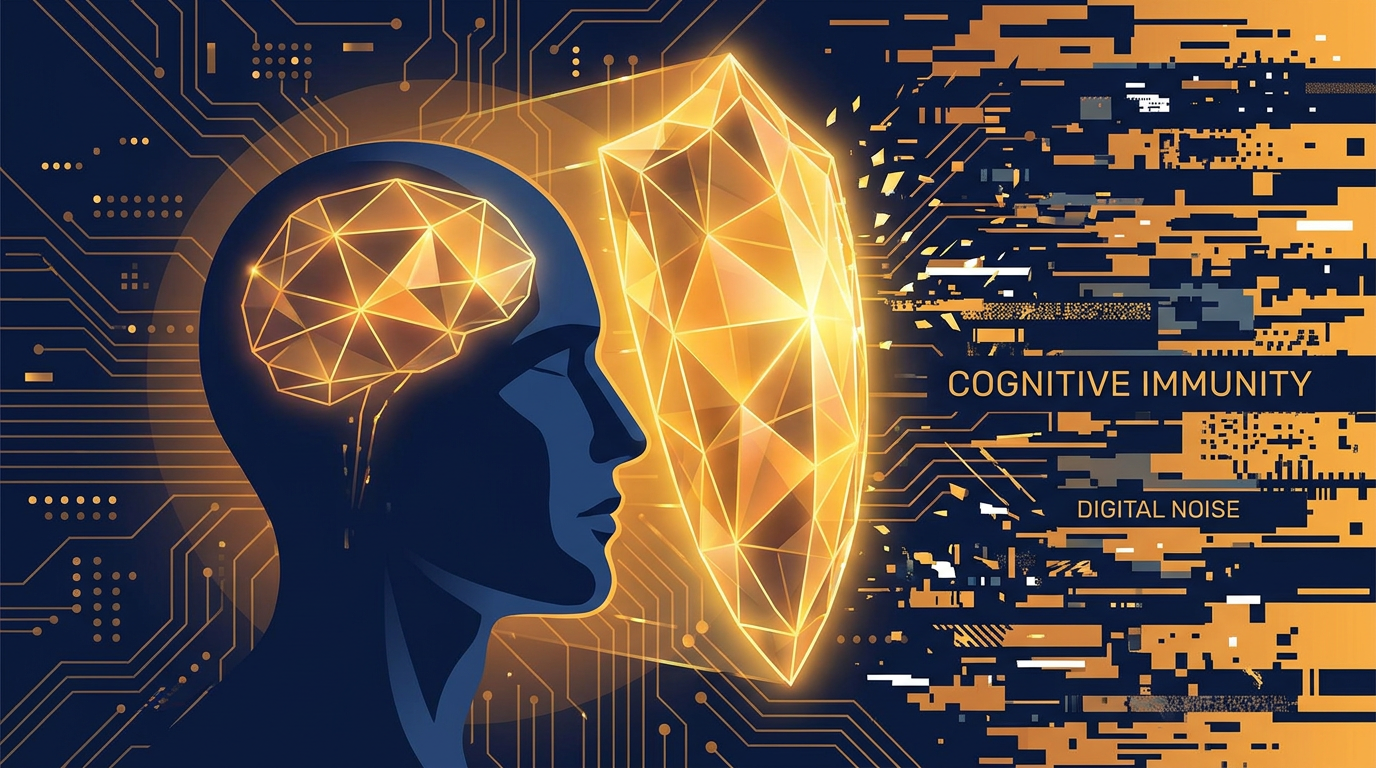
In response to this structural lag, governments, tech platforms, and behavioral scientists have increasingly turned to a proactive strategy known as "prebunking." Drawing on a psychological framework from the 1960s called inoculation theory, prebunking attempts to build cognitive immunity within a population before a user ever encounters a specific piece of political disinformation.[1][5]
The mechanism works much like a medical vaccine. Instead of injecting a biological virus, a prebunking intervention exposes the public to a "weakened dose" of common manipulative tactics—such as scapegoating, false dichotomies, or emotionally charged language. By familiarizing the brain with the architecture of a lie, the individual becomes resistant to future, fully weaponized attempts at manipulation.[1][2]

A standard prebunking campaign typically involves a short, 90-second video or an interactive digital game. It begins with a clear warning that the viewer might be targeted by manipulation, provides a microdose of the deceptive tactic using a low-stakes or pop-culture example, and then offers a refutation that explains exactly how the psychological trick works.[1][2]
The empirical evidence supporting this approach has grown robust over the last several years. A landmark study led by the University of Cambridge's Social Decision-Making Lab tested prebunking videos on nearly 30,000 participants across the YouTube platform, representing the largest real-world field study of inoculation theory to date.[1]
The Cambridge researchers found that a single viewing of an inoculation video significantly improved a user's ability to identify manipulation techniques. Crucially, the intervention proved "source agnostic"—meaning it was effective across different political ideologies, education levels, and personality types. Because the videos focused on the mechanics of deception rather than disputing specific political facts, they bypassed the partisan defensiveness that often blocks traditional fact-checks.[1]
This theoretical success has translated into massive real-world deployments. In a major initiative targeting anti-refugee disinformation in Eastern Europe, Google's Jigsaw unit rolled out prebunking advertisements across Poland, Slovakia, and the Czech Republic. The campaign reached 38 million viewers, with post-campaign surveys indicating a measurable improvement in the public's ability to discern disinformation tactics and a reduced likelihood of sharing false claims.[2]

This theoretical success has translated into massive real-world deployments.
Interactive formats have also shown strong empirical results. The Harvard Kennedy School Misinformation Review published findings on "Bad News," an online game where players step into the shoes of a fake news creator. By actively deploying manipulation strategies in a simulated environment, players cultivated mental antibodies that reduced their susceptibility to real-world fake news across multiple cultural and linguistic settings.[3]
Election officials have increasingly adopted this playbook to protect democratic infrastructure. From local jurisdictions in Arizona to national agencies in Taiwan, administrators are deploying prebunking campaigns to preemptively explain voting procedures and warn citizens about anticipated AI-generated hoaxes before election day arrives, hoping to insulate the electorate from last-minute digital chaos.[5]
However, the evidence pack on prebunking also reveals distinct limitations. While the cognitive vaccine is highly effective in the short term, its protection is not permanent. Studies indicate that the inoculation effect begins to decay within weeks, with a significant drop-off occurring two to three months after the initial exposure.[2][6]

This decay means that prebunking cannot be a one-and-done intervention. To maintain public resilience, populations require periodic "booster shots" of media literacy, particularly in the immediate run-up to a major election when the volume of manipulative content spikes.[2]
Furthermore, prebunking is not a universal cure for deeply entrenched beliefs. Researchers have found that while the strategy works well on the general public, it has little to no effect on individuals who already hold strong, radicalized viewpoints or who are deeply embedded in polarized echo chambers where manipulation is actively welcomed as ideological validation.[2]
There is also ongoing debate about how prebunking compares to traditional fact-checking. A recent study led by the European Commission's Joint Research Centre found that while both methods are effective, traditional debunking actually maintained a slight edge in reducing belief in specific false claims.[4]

The European researchers hypothesized that because debunking refutes specific narratives with concrete, verifiable evidence, it can be more persuasive on a case-by-case basis than prebunking, which merely alerts users to general misleading strategies and can sometimes be perceived by skeptical viewers as abstract or manipulative in its own right.[4]
Ultimately, the consensus among behavioral scientists is that prebunking and debunking are complementary tools rather than competing ones. Prebunking serves as the broad, scalable shield that reduces the overall viral coefficient of manipulative tactics, while traditional fact-checking remains necessary to surgically dismantle specific, high-stakes falsehoods once they breach the public consciousness.[4][6]
How we got here
1960s
Social psychologist William McGuire develops inoculation theory as a framework for resisting persuasion.
2020
Researchers publish findings showing that the online game 'Bad News' successfully builds psychological immunity to fake news.
2022
Google Jigsaw launches a massive prebunking video campaign in Eastern Europe to counter anti-refugee disinformation.
2024
Election officials globally begin adopting prebunking strategies to prepare voters for AI-generated hoaxes ahead of major democratic votes.
Viewpoints in depth
Behavioral Scientists' view
Advocating for scalable, proactive cognitive defense.
Researchers in this camp argue that the internet moves too fast for traditional fact-checking to ever catch up. By focusing on the underlying architecture of deception—such as emotional manipulation or false dichotomies—behavioral scientists believe we can build a baseline level of media literacy across the entire population. They emphasize that because prebunking doesn't tell people what to believe, it bypasses the partisan defenses that often render traditional fact-checks ineffective.
Election Administrators' view
Using prebunking as a shield for democratic infrastructure.
For those running elections, prebunking is a practical tool for crisis prevention. Administrators are increasingly worried about last-minute, AI-generated deepfakes or false claims about voting procedures that could suppress turnout or spark violence. By preemptively warning voters about the specific types of hoaxes they are likely to see, officials hope to create a buffer of skepticism that prevents panic on election day.
Traditional Fact-Checkers' view
Maintaining the necessity of concrete, evidence-based debunking.
While supportive of prebunking as a general educational tool, traditional fact-checkers and some European researchers caution against viewing it as a silver bullet. They point to data showing that when a specific, highly damaging lie is circulating, a direct debunking backed by concrete evidence is still slightly more effective at changing minds. They argue that prebunking is the broad shield, but rigorous journalism remains the necessary sword.
What we don't know
- How to effectively design prebunking interventions that can reach and persuade deeply radicalized individuals.
- The exact frequency of 'booster shots' required to maintain optimal cognitive immunity over a multi-year election cycle.
- Whether AI can be used to dynamically generate personalized prebunking content in real-time as new disinformation narratives emerge.
Key terms
- Inoculation theory
- A psychological framework suggesting that exposing people to a weak version of a persuasive argument builds their resistance to future, stronger manipulative attacks.
- Prebunking
- The practical application of inoculation theory, usually delivered via short videos or games that explain how digital manipulation works.
- Microdose
- In the context of misinformation, a harmless or low-stakes example of a deceptive tactic used to teach someone how the trick operates.
- Source agnostic
- An intervention that works regardless of where the information comes from or the political leanings of the person viewing it.
Frequently asked
What exactly is prebunking?
Prebunking is a psychological technique that warns people about misinformation tactics before they encounter them, exposing them to a 'weakened dose' of the tactic so they can recognize and reject it in the future.
How is it different from debunking?
Debunking reacts to a specific lie after it has already spread by providing factual corrections. Prebunking is proactive, teaching people how to spot the manipulative tactics used to create the lies in the first place.
Does prebunking work on everyone?
Studies show it works across different political ideologies and education levels for the general public, but it is largely ineffective on individuals who already hold deeply radicalized or entrenched views.
How long does the protection last?
The cognitive immunity provided by prebunking is temporary. Research indicates that the ability to spot manipulation begins to decay within weeks and significantly drops off after two to three months.
Sources
Source coverage
6 outlets
3 viewpoints surfaced






[1]University of CambridgeBehavioral Scientists
Psychological inoculation against misinformation
Read on University of Cambridge →[2]Google Jigsaw
Prebunking: Building resilience to manipulation
Read on Google Jigsaw →[3]Harvard Kennedy School Misinformation ReviewBehavioral Scientists
Prebunking interventions based on 'inoculation' theory can reduce susceptibility to misinformation across cultures
Read on Harvard Kennedy School Misinformation Review →[4]European CommissionTraditional Fact-Checkers
Debunking and prebunking both effective against misinformation
Read on European Commission →[5]The Washington PostElection Administrators
Election officials around the world are adopting 'prebunking' campaigns
Read on The Washington Post →[6]Factlen Editorial Team
Synthesis by Factlen editorial team
Read on Factlen Editorial Team →

More in news politics
See all 6 stories →US-Iran Conflict
U.S. and Iran Open High-Stakes Peace Talks in Switzerland to Halt 114-Day War
7 sources

UK Government
UK Prime Minister Keir Starmer Expected to Resign Amid Party Pressure
7 sources
Peace Negotiations
US and Iranian Delegations Open High-Stakes Peace Talks in Switzerland
8 sources
Labour Leadership
Keir Starmer Expected to Resign as UK Prime Minister Amid Labour Mutiny
6 sources
Every angle. Every day.
Get news politics stories with full source coverage and perspective breakdowns delivered to your inbox.