
The End of the Extreme Weight Cut: How Biometrics and Hydration Testing Are Saving MMA Fighters
Driven by tragic outcomes and advanced sports science, mixed martial arts is systematically phasing out dangerous dehydration practices. New hydration testing protocols and biometric wearables are allowing fighters to compete safely at their natural weight.
By Factlen Editorial Team
- Regulatory & Safety Advocates
- Prioritize fighter health by mandating hydration tests and banning extreme weight cuts.
- Sports Science Innovators
- Focus on using biometric data and long-term periodization to optimize performance safely.
- Combat Sports Media & Analysts
- Synthesize the impact of new regulations and technology on the broader combat sports landscape.
What's not represented
- · Fighters who successfully utilize extreme weight cuts
- · Promoters of smaller regional leagues without testing budgets
Why this matters
For decades, extreme dehydration was the most dangerous opponent a mixed martial artist faced, leading to organ failure and shortened careers. The shift toward biometric tracking and hydration testing is fundamentally transforming the sport, ensuring athletes compete safely at their natural physical peaks.
Key points
- UFC athletes historically lose an average of 6.7% of their body weight in the final 72 hours before a fight.
- Extreme dehydration impairs cognitive function and drastically increases the risk of traumatic brain injury.
- Promotions like ONE Championship now mandate Urine Specific Gravity (USG) tests to ensure fighters are adequately hydrated.
- The integration of biometric wearables allows training camps to manage weight year-round, extending athletic longevity.
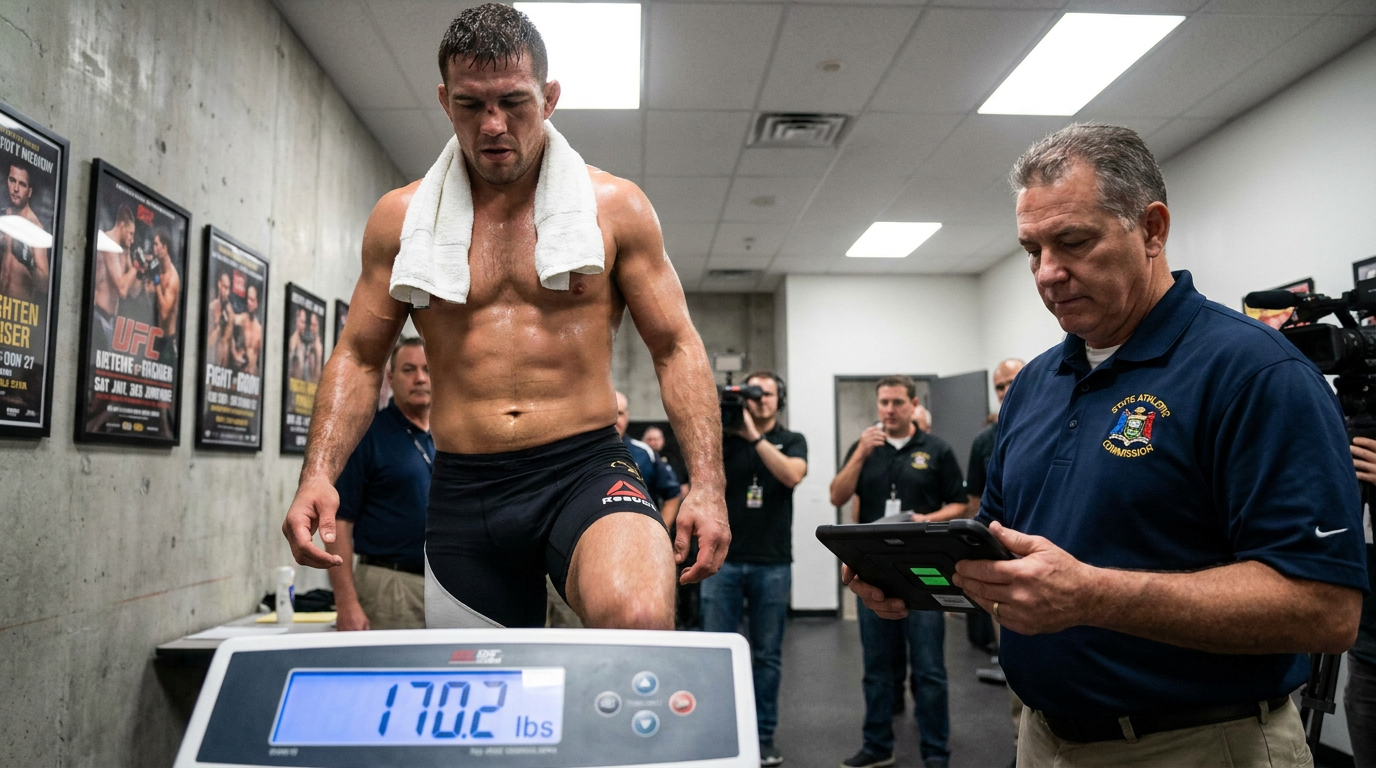
The weigh-in spectacle has long been one of the most jarring visuals in combat sports. The gaunt faces, the sunken eyes, and the trembling legs of elite athletes stepping onto a scale. For decades, the brutal process of shedding water weight was accepted as an unavoidable rite of passage in mixed martial arts.
But a quiet revolution is taking place across the combat sports landscape. Driven by tragic outcomes and advanced sports science, the era of extreme dehydration is being systematically phased out in favor of sustainable, health-focused preparation.
This shift represents one of the most significant health and safety upgrades in modern sports history, fundamentally transforming how fighters prepare, compete, and survive their grueling careers.
To understand the solution, one must first understand the mechanism of the traditional 'weight cut.' Fighters typically spend weeks in a caloric deficit to lose fat, but the final 72 hours are drastically different, focusing almost entirely on fluid manipulation.

During this critical window, athletes restrict their water intake, utilize sauna suits, and take hot salt baths to artificially sweat out massive amounts of fluid from their muscles and organs.
According to research published in the Journal of Functional Morphology and Kinesiology, UFC athletes historically lose an average of 6.7% of their total body weight in just the final three days before an official weigh-in.[3]
The goal is to step on the scale, hit the contracted weight limit, and then immediately begin a frantic intravenous or oral rehydration process. The same study found that fighters regain nearly 10% of their body weight before stepping into the cage 24 to 36 hours later.[3]

This extreme physiological fluctuation comes with severe costs. Research indicates that acute dehydration impairs cognitive function, reduces cardiovascular endurance, and drastically increases the risk of traumatic brain injury, as the protective fluid surrounding the brain is temporarily depleted.[6]
The turning point for the industry arrived in late 2015, following the tragic death of a fighter due to weight-cutting complications. In response, Asia's ONE Championship completely overhauled its regulatory framework.[2]
The turning point for the industry arrived in late 2015, following the tragic death of a fighter due to weight-cutting complications.
ONE Championship implemented a pioneering 'walking-weight' model. Instead of a single weigh-in 24 hours before the bout, athletes are subjected to multiple weigh-ins and mandatory hydration tests throughout fight week.[1]
The cornerstone of this system is the Urine Specific Gravity (USG) test. Fighters must register a USG of 1.025 or lower, proving they are adequately hydrated. If they fail the hydration test, their scale weight is invalidated, and they are disqualified from competing at that weight.[1]

"By banning weight cutting by dehydration, we are leading the way globally for enhanced safety standards," ONE Championship executives announced during the rollout, fundamentally altering the incentive structure of the sport.[5]
The ripple effects of these reforms have reached North America. The California State Athletic Commission (CSAC), one of the most influential regulatory bodies in combat sports, introduced a comprehensive 10-point plan designed to curb severe dehydration.[4]
CSAC's protocols include mandatory weight checks 30 days and 10 days before a fight. Furthermore, ringside physicians are empowered to pull fighters from a card if they attempt to cut more than 10% of their body weight, ensuring athletes compete closer to their natural size.[4]
Beyond regulatory mandates, the culture of fighter preparation is evolving thanks to the proliferation of consumer and clinical technology. The integration of biometric wearables has moved training camps from guesswork to precision science.[8]
Devices tracking heart rate variability, sleep architecture, and metabolic strain allow coaches to monitor a fighter's physiological load in real-time, identifying the early warning signs of overtraining and dangerous dehydration.[8]

Nutritionists and sports scientists now use this continuous data stream to implement long-term periodization. Instead of crashing their systems in the final week, fighters are guided to maintain a body composition much closer to their competition weight year-round.[7]
This data-driven approach not only prevents the need for extreme dehydration but also extends athletic longevity. Fighters utilizing these scientific protocols are experiencing fewer injuries in camp and reporting higher sustained energy levels during the actual bouts.[7]
Challenges certainly remain. Some traditionalists argue that weight manipulation is an inherent tactical skill of combat sports, and highly motivated athletes will always look for loopholes to gain a perceived size advantage over their opponents.
However, the momentum is clearly shifting toward health and sustainability. As biometric tracking becomes ubiquitous and athletic commissions share data across borders, the gaunt, dehydrated fighter on the scale is slowly becoming a relic of the past, replaced by athletes competing safely at their natural, optimal capacity.
How we got here
Pre-2015
Extreme dehydration weight cutting is largely unregulated, viewed as a standard practice in MMA.
Dec 2015
Following a fighter fatality, ONE Championship bans dehydration weight cutting and introduces hydration testing.
May 2017
The California State Athletic Commission (CSAC) approves a 10-point plan to curb severe dehydration in combat sports.
2020s
Biometric wearables and year-round periodization become standard in elite training camps to manage weight safely.
Viewpoints in depth
Regulatory & Safety Advocates
Prioritize fighter health by mandating hydration tests and banning extreme weight cuts.
This camp, led by organizations like ONE Championship and the California State Athletic Commission, argues that extreme dehydration is the greatest existential threat to combat sports. They point to medical data showing that fighting in a dehydrated state exponentially increases the risk of traumatic brain injury and organ failure. By implementing Urine Specific Gravity (USG) testing and continuous weight monitoring, they aim to force athletes to compete at their natural 'walking weight,' prioritizing long-term health over short-term size advantages.
Sports Science Innovators
Focus on using biometric data and long-term periodization to optimize performance safely.
Nutritionists, performance institutes, and wearable technology companies view the traditional weight cut as an outdated, inefficient practice. Instead of relying on brute-force dehydration in the final 72 hours, this camp advocates for year-round metabolic management. By tracking heart rate variability, sleep architecture, and daily caloric expenditure, they help fighters maintain a leaner baseline weight, eliminating the need for drastic, performance-sapping water cuts while actually improving cardiovascular endurance in the cage.
Combat Sports Media & Analysts
Synthesize the impact of new regulations and technology on the broader combat sports landscape.
Media outlets and industry analysts document the cultural shift within the sport. They note that while traditionalists once viewed grueling weight cuts as a badge of honor and a test of mental toughness, the narrative has changed. Analysts highlight how public opinion and media coverage now heavily scrutinize extreme weight cuts, praising promotions that adopt safer protocols and celebrating fighters who choose to move up a weight class to prioritize their health and performance longevity.
What we don't know
- Whether the largest global promotions will fully adopt mandatory hydration testing across all their events.
- How the long-term use of biometric wearables will alter the standard aging curve and retirement age of elite fighters.
Key terms
- Weight Cutting
- The practice of rapidly losing body mass, primarily through dehydration, in the days leading up to a fight to qualify for a lower weight class.
- Urine Specific Gravity (USG)
- A laboratory measure of the concentration of particles in urine, used by athletic commissions to determine a fighter's hydration level.
- Periodization
- The systematic planning of athletic training and nutrition over a long period to ensure peak performance and optimal body composition on fight night.
- Catchweight
- A bout where the fighters agree to compete at a predetermined weight that does not align with traditional weight class boundaries.
Frequently asked
Why do MMA fighters cut weight?
Fighters cut weight to qualify for a lower weight class, hoping to gain a size, strength, and leverage advantage over their opponent once they rehydrate before the actual fight.
How does hydration testing work in MMA?
Promotions like ONE Championship test a fighter's Urine Specific Gravity (USG) during fight week. If the urine is too concentrated, it indicates dehydration, and the fighter is not cleared to compete at that weight.
Can fighters still regain weight after a hydration test?
While hydration tests prevent extreme dehydration, fighters still manage their diets to lose fat. However, regulations like the 105% rule prevent them from regaining massive amounts of weight between the weigh-in and the fight.
Sources
Source coverage
8 outlets
3 viewpoints surfaced








[1]ONE ChampionshipRegulatory & Safety Advocates
ONE Championship Global Ruleset
Read on ONE Championship →[2]Combat Sports LawRegulatory & Safety Advocates
Following Fighter Death ONE Championship Creates Strict Weight Cut Reforms
Read on Combat Sports Law →[3]Journal of Functional Morphology and KinesiologySports Science Innovators
Weight loss and competition weight in Ultimate Fighting Championship (UFC) athletes
Read on Journal of Functional Morphology and Kinesiology →[4]California State Athletic CommissionRegulatory & Safety Advocates
10-Point Plan to Curb Severe Dehydration
Read on California State Athletic Commission →[5]MMA FightingCombat Sports Media & Analysts
ONE Championship announces new weigh-in program
Read on MMA Fighting →[6]ResearchGateSports Science Innovators
Individualised dietary strategies for Olympic combat sports: Acute weight loss, recovery and competition nutrition
Read on ResearchGate →[7]Factlen Editorial TeamCombat Sports Media & Analysts
Synthesis by Factlen editorial team
Read on Factlen Editorial Team →[8]Wired2Win RadioSports Science Innovators
Biometric Wearables and Performance
Read on Wired2Win Radio →

Every angle. Every day.
Get sports stories with full source coverage and perspective breakdowns delivered to your inbox.