
WNBA celebrates 30th anniversary as Liberty and Sparks rematch highlights three decades of growth
Exactly 30 years after the WNBA's inaugural game, the league is celebrating its transformation from an eight-team experiment into a thriving 15-team sports and cultural powerhouse.
By Factlen Editorial Team
- League Pioneers
- Early players and founders who emphasize the immense pressure of the inaugural seasons and express profound relief at the league's long-term survival.
- Sports Business Analysts
- Industry experts who point to expanded media rights and prime-time broadcast windows as the primary financial engines driving the WNBA's current boom.
- Current Generation Stars
- Modern players who are focused on leveraging the new collective bargaining agreement and elevating the on-court product to unprecedented athletic heights.
What's not represented
- · International basketball federations
- · Grassroots youth basketball organizers
Why this matters
The WNBA's survival and subsequent explosion in popularity serves as the ultimate proof of concept for women's professional sports. Its 30-year journey from a heavily scrutinized startup to a lucrative, expanding enterprise paves the way for future investments in female athletes worldwide.
Key points
- The WNBA is celebrating exactly 30 years since its inaugural game on June 21, 1997.
- The New York Liberty and Los Angeles Sparks will play an anniversary rematch tonight.
- The league has grown from 8 teams with a $50,000 max salary to 15 teams with a $1.4 million max salary.
- A record 216 games will be nationally televised during the 2026 season.
- The Dallas Wings highlighted the league's current excitement with a 14-point comeback win over the Chicago Sky on the eve of the anniversary.
Thirty years ago today, on June 21, 1997, the New York Liberty and the Los Angeles Sparks stepped onto the court at the Great Western Forum to play the first game in WNBA history. The atmosphere was a mix of profound relief, sheer exhaustion, and intense pressure, as pioneers like Lisa Leslie and Rebecca Lobo carried the weight of an entire gender's professional athletic future on their shoulders.[1][2]
Tonight, exactly three decades later, the Liberty and the Sparks will meet again in Los Angeles to commemorate the league's 30th anniversary. But the league they are playing in today is virtually unrecognizable from the eight-team experiment that tipped off in the late 1990s.[1][2]
The sheer scale of the WNBA's evolution is staggering. In 1997, the maximum player salary was capped at $50,000, teams played a brief 28-game schedule, and the postseason consisted of a single-elimination Final Four format. Today, the league boasts a $1.4 million maximum salary, a grueling 44-game regular season, and a best-of-seven championship series.[2]

Expansion has also been a hallmark of the league's recent era. The WNBA has grown to 15 franchises in 2026, bolstered by the recent additions of the Golden State Valkyries, the Toronto Tempo, and the Portland Fire. League officials have already signaled plans to reach 18 teams by 2030, reflecting an insatiable demand from ownership groups and fans alike.[3]
Much of this growth is fueled by a massive shift in media distribution. For its 30th season, the WNBA secured a record 216 nationally televised games across a sprawling network of partners, including ABC/ESPN, NBC/Peacock, CBS, and Prime Video. Sports business analysts note that this expanded footprint is the true financial engine of the league, finally providing the consistent prime-time visibility that women's sports were historically denied.[4]
Much of this growth is fueled by a massive shift in media distribution.
The on-court product has more than justified the investment. The anniversary weekend arrives amidst a thrilling 2026 season that showcases the depth of modern talent. Just last night, the Dallas Wings—led by 2025 No. 1 overall pick Paige Bueckers—erased a 14-point fourth-quarter deficit to stun the Chicago Sky 93-92.[5]

Bueckers poured in 19 points, including a critical stretch where she scored 10 of her team's 11 points, while teammate Li Yueru sank the game-winning free throws with 12.5 seconds remaining. The high-octane comeback perfectly encapsulated the elite athleticism and drama that now defines the league on a nightly basis.[5]
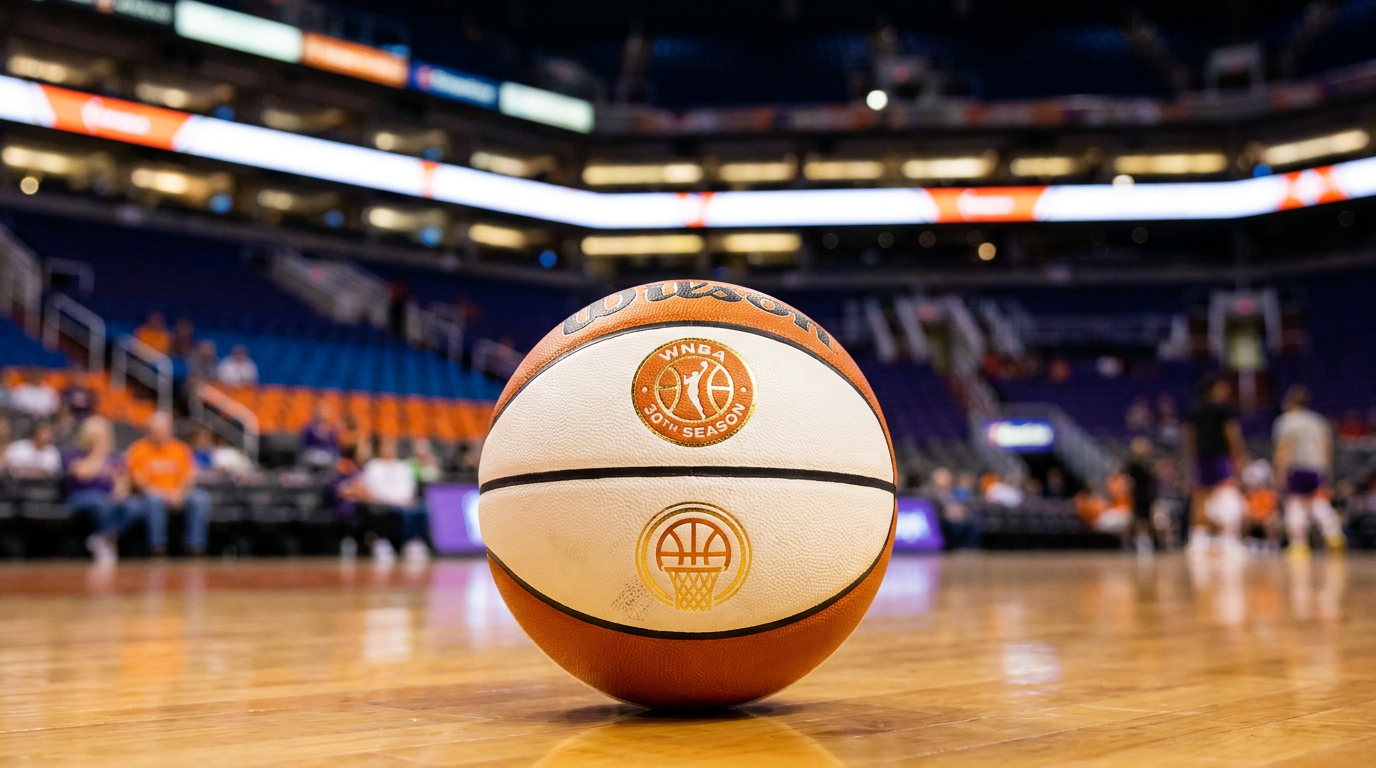
The cultural footprint of the WNBA's 30th anniversary extends well beyond the hardwood. The league launched a massive "There's More Where Thirty Came From" brand campaign, featuring commemorative court logos, legacy merchandise, and retro "Court Origins" nights honoring the original franchises.[3]
Major corporate partners are also leaning heavily into the milestone. Nike released a highly anticipated "WNBA 30th Anniversary" collection, headlined by a special edition of A'ja Wilson's signature A'Two sneaker. The shoe blends modern performance technology with the red, white, and blue color palette of the league's original 1997 logo.[6]

Behind the scenes, the players are operating under a transformational new collective bargaining agreement reached earlier this year. The new CBA represents a hard-fought victory for the players' union, securing elevated travel standards, comprehensive family planning benefits, and a larger share of the league's skyrocketing revenue.[3][4]
When the Liberty and Sparks tip off tonight on ESPN, the broadcast will feature a special reunion of 1997 alumni, including Leslie and Lobo, reflecting on the survival of their startup league. Yet, for the current players on the floor, the focus will remain squarely on winning a crucial regular-season matchup.[1][2]
How we got here
June 21, 1997
The New York Liberty and Los Angeles Sparks play the first game in WNBA history.
July 30, 2002
Lisa Leslie becomes the first player to successfully dunk in a WNBA game.
January 2020
The WNBA and the players' union sign a landmark CBA that significantly increases salaries and benefits.
May 8, 2026
The WNBA tips off its 30th season, welcoming the Toronto Tempo and Portland Fire to expand to 15 teams.
June 21, 2026
The Liberty and Sparks meet in Los Angeles for the official 30th anniversary rematch game.
Viewpoints in depth
League Pioneers
Early players reflect on the immense pressure of the inaugural seasons and the relief of the league's survival.
For the women who took the court in 1997, the WNBA was an incredibly fragile experiment. Pioneers like Lisa Leslie and Rebecca Lobo have frequently spoken about the immense burden they carried, knowing that the failure of the league would likely be weaponized by critics as proof that women's professional sports were unviable. Their perspective today is one of profound relief and vindication. They view the 30th anniversary not just as a milestone of longevity, but as the ultimate triumph over decades of systemic skepticism and underinvestment.
Sports Business Analysts
Industry experts point to expanded media rights as the primary financial engine driving the WNBA's current boom.
From a business perspective, analysts argue that the WNBA's recent explosion in popularity is less about a sudden change in the on-court product and more about the correction of historical media inequities. For decades, women's sports were trapped in a cycle of low visibility leading to low revenue. By securing a record 216 nationally televised games across major networks and streaming platforms in 2026, the league has finally built the media distribution engine necessary to monetize its product at scale. Analysts view this expanded footprint as the definitive turning point that will fund future expansion and salary growth.
Current Generation Stars
Modern players are focused on leveraging the new collective bargaining agreement and elevating the on-court product.
Today's WNBA stars acknowledge the sacrifices of the pioneers but are fiercely focused on the future. Operating under a new, transformational collective bargaining agreement, this generation expects professional standards that match their male counterparts—from chartered flights to million-dollar salaries. On the court, players like Paige Bueckers and A'ja Wilson are pushing the athletic boundaries of the game, viewing their role as both elite competitors and active stakeholders in a rapidly appreciating global business.
What we don't know
- How the upcoming expansion to 18 teams by 2030 will affect the league's talent distribution and competitive balance.
- The exact financial terms and revenue-sharing triggers that will be activated under the newest collective bargaining agreement as media rights continue to climb.
Key terms
- Collective Bargaining Agreement (CBA)
- A written legal contract between the players' union and the league that dictates salaries, travel conditions, revenue sharing, and benefits.
- WNBA Tip-Off
- The official opening weekend of the WNBA regular season, which in 2026 featured all 15 teams in action.
- Court Origins
- A retro programming initiative launched for the 30th season to celebrate the league's earliest years and original franchises.
Frequently asked
When was the first WNBA game played?
The inaugural WNBA game took place on June 21, 1997, featuring the New York Liberty and the Los Angeles Sparks.
How many teams are in the WNBA in 2026?
The league currently has 15 teams, having recently expanded to include the Golden State Valkyries, the Toronto Tempo, and the Portland Fire.
What is the maximum salary in the WNBA today?
Under the current financial structure, the maximum player salary has reached $1.4 million, a massive increase from the $50,000 maximum in 1997.
How many games are televised nationally?
The 2026 season features a record 216 nationally televised games across networks like ABC/ESPN, NBC/Peacock, CBS, and Prime Video.
Sources
Source coverage
6 outlets
3 viewpoints surfaced






[1]ESPNLeague Pioneers
'It really had all come to life': Leslie, Lobo and the WNBA's inaugural game
Read on ESPN →[2]CBS SportsLeague Pioneers
WNBA 30th anniversary: How Liberty vs. Sparks highlights league's incredible evolution
Read on CBS Sports →[3]WNBA OfficialSports Business Analysts
WNBA Launches 30th Season Celebration Honoring League's Past, Present and Future
Read on WNBA Official →[4]TogethxrSports Business Analysts
Expanded media footprint for WNBA's 30th season
Read on Togethxr →[5]Associated PressCurrent Generation Stars
Li Yueru hits two late free throws as the Wings rally past the Sky
Read on Associated Press →[6]Sneaker FilesCurrent Generation Stars
Nike A'Two “WNBA 30th Anniversary” Release Date
Read on Sneaker Files →
Every angle. Every day.
Get sports stories with full source coverage and perspective breakdowns delivered to your inbox.