
How Freestyle Chess is Saving the Game from Computer Memorization
Thirty years after its invention, the randomized variant known as Chess960 has been fully embraced by the chess elite, culminating in the inaugural 2026 FIDE Freestyle World Championship.
By Factlen Editorial Team
- Freestyle Advocates
- Argue that eliminating opening theory restores human creativity and intuition to the game.
- Online Chess Platforms
- Focus on the format's rapid growth among amateur players and its appeal for streaming and esports.
- Classical Traditionalists
- Value the deep historical continuity and theoretical richness of standard starting positions.
What's not represented
- · Chess engine developers
- · Scholastic chess coaches
Why this matters
For decades, artificial intelligence and rote memorization have threatened to solve classical chess, making the opening phase a test of memory rather than skill. The mainstream adoption of Freestyle Chess strips away computer preparation, returning the sport to a pure test of human creativity and leveling the playing field for casual players and new prodigies alike.
Key points
- Freestyle Chess randomizes the back rank of pieces, creating 960 possible starting positions.
- The format eliminates the ability to memorize computer-generated opening theory.
- Magnus Carlsen won the inaugural FIDE Freestyle Chess World Championship in February 2026.
- June 2026 marks the 30th anniversary of Bobby Fischer introducing the variant to the public.
- Online platforms are seeing massive growth in the format among amateur players.
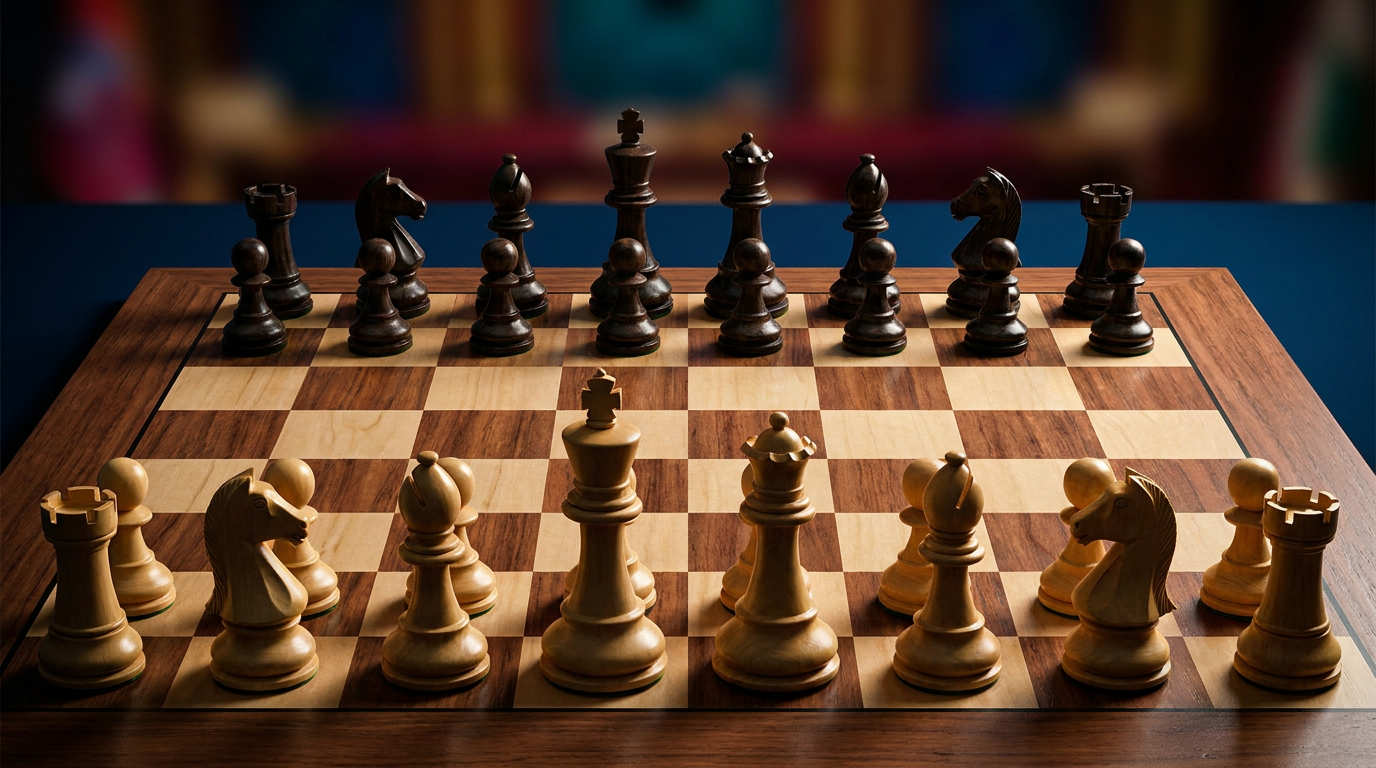
For centuries, the starting position of a chess game has remained identical: rooks in the corners, knights beside them, bishops next, and the king and queen in the center. This static setup allowed generations of players to build an immense library of "opening theory." Today, however, the advent of superhuman artificial intelligence has fundamentally altered the landscape of classical chess. Top grandmasters now memorize computer-generated opening lines up to thirty moves deep, transforming the early phase of the game into a test of silicon-assisted memory rather than human creativity.[6]
The chess world is currently undergoing a massive paradigm shift to solve this memorization crisis. In June 2026, the global chess community celebrated the 30th anniversary of a variant designed to strip away opening theory entirely: Fischer Random Chess, now widely rebranded as "Freestyle Chess." First introduced by former world champion Bobby Fischer in June 1996, the format has evolved from a niche curiosity into the vanguard of modern competitive play.[3][6]
The momentum behind this shift culminated in February 2026, when the International Chess Federation (FIDE) hosted the inaugural FIDE Freestyle Chess World Championship. Held at the luxurious Weissenhaus resort on Germany's Baltic Sea coast, the event marked a historic milestone, fully integrating the randomized format into the official world championship cycle. The tournament featured a $300,000 prize fund and brought together eight of the world's elite players to compete for the first official title under the Freestyle banner.[1][2][5]

The mechanics of Freestyle Chess are elegantly simple, yet they completely dismantle traditional preparation. The pawns remain fixed on the second rank, just as in classical chess. However, the pieces on the first rank are shuffled randomly before the game begins. To maintain the fundamental balance and rules of the game, two constraints are applied: the king must be placed somewhere between the two rooks to allow for castling, and the two bishops must be placed on opposite-colored squares.[6]
These constraints result in exactly 960 possible starting positions—hence the variant's original moniker, Chess960. Because the specific starting position is drawn and revealed to the players only minutes before the clocks start, it is impossible to consult a computer or rely on memorized opening lines. From move one, players are thrown into uncharted territory, forced to rely purely on their intuition, calculation, and fundamental understanding of chess principles.[5][6]
The 2026 World Championship showcased exactly why top players are gravitating toward the format. The tournament began with a rapid round-robin stage, where players had just 10 minutes plus a 5-second increment per move. This blistering pace, combined with unfamiliar starting positions, led to highly dynamic and unpredictable games. The top four players then advanced to a knockout stage featuring longer time controls of 25 minutes plus a 10-second increment, allowing for deeper strategic battles.[2][5]
The 2026 World Championship showcased exactly why top players are gravitating toward the format.
Magnus Carlsen, the former classical world champion and current world number one, has been the most vocal advocate for Freestyle Chess. Carlsen has frequently expressed fatigue with the exhaustive computer preparation required in classical chess, arguing that the randomized format returns the game to its purest form. His advocacy was validated on the board in Weissenhaus, where he defeated American grandmaster Fabiano Caruana 2.5–1.5 in the final match to claim the $100,000 first prize.[1][3][6]

Carlsen's victory was dramatic, turning on a pivotal third game where he managed to win from a seemingly lost position, ultimately securing his 21st world title across all chess formats. The triumph was particularly sweet for the Norwegian grandmaster, who had previously attempted to win the FIDE Fischer Random title in past iterations but had fallen short. By capturing the inaugural Freestyle crown, Carlsen cemented his legacy as the most versatile player in the history of the game.[1][6]
Beyond the veterans, Freestyle Chess is proving to be a powerful equalizer for the younger generation of prodigies. Without the need to spend years building a massive repertoire of opening theory, young talents can compete directly on calculation and raw talent. This was evident in Weissenhaus, where 21-year-old Nodirbek Abdusattorov of Uzbekistan defeated 21-year-old Vincent Keymer of Germany in the third-place match, proving that the next generation thrives in the chaotic, theory-free environments of Chess960.[1][3][6]
The format's appeal extends far beyond the elite grandmaster circuit. Online chess platforms have reported a massive surge in Chess960 games played by amateur enthusiasts. In June 2026, to coincide with the 30th anniversary of Bobby Fischer's original announcement, platforms like Lichess hosted massive global team battles and streamer competitions dedicated entirely to the variant. These events drew thousands of participants, highlighting the format's growing popularity among everyday players who want to avoid being trapped by opponents who have memorized engine lines.[3][4][6]
The visual and broadcast appeal of Freestyle Chess is also driving its adoption. Because players are out of their comfort zones immediately, broadcasts are filled with tension from the very first move. Commentators can focus on explaining the creative plans players are formulating in real-time, rather than simply reciting known theory or waiting for the players to reach move twenty before the "real game" begins. This makes the sport more accessible and entertaining for casual viewers.[6]

Looking ahead, the integration of Freestyle Chess into the official FIDE ecosystem is only accelerating. The top three finishers from the 2026 Weissenhaus event—Carlsen, Caruana, and Abdusattorov—have already secured their qualification for the 2027 World Championship. Furthermore, FIDE has announced plans to expand the franchise, including a planned Women's Freestyle Chess Championship later in 2026, ensuring that the format's growth is inclusive across the sport.[1][5]
The rise of Freestyle Chess does not necessarily spell the end of classical chess, which retains its prestige and deep historical continuity. However, it offers a vital parallel path for the sport's future. By stripping away the silicon armor of modern opening preparation, Freestyle Chess guarantees that the game remains a fundamentally human struggle of wits, creativity, and adaptability.[5][6]
As the chess world reflects on the 30 years since Bobby Fischer first proposed shuffling the back rank, his vision has finally been fully realized. What began as a radical experiment to save chess from memorization has matured into the sport's most exciting frontier, proving that even after centuries of play, the 64 squares still hold infinite, unexplored possibilities.[3][6]
How we got here
June 1996
Bobby Fischer officially introduces 'Fischer Random Chess' to the public in Buenos Aires.
2019
FIDE hosts its first officially recognized Fischer Random World Championship.
February 2026
The inaugural FIDE Freestyle Chess World Championship is held in Weissenhaus, Germany, fully integrating the format into the official cycle.
June 2026
The global chess community celebrates the 30th anniversary of the format's creation with massive online tournaments.
Viewpoints in depth
Freestyle Advocates
Supporters believe randomized starting positions are essential to saving chess from computer-driven memorization.
For decades, elite chess has been plagued by the 'draw death' and the overwhelming influence of artificial intelligence. Players spend months memorizing engine-approved opening lines, leading to games where the first 20 to 30 moves are played from memory. Advocates of Freestyle Chess argue that shuffling the back rank immediately forces players to think for themselves. By neutralizing the advantage of home preparation, the format rewards pure calculation, strategic intuition, and adaptability, returning the game to a battle of human minds rather than a test of who has the better supercomputer.
Classical Traditionalists
Purists maintain that the standard starting position offers a unique historical continuity and structural harmony.
While acknowledging the excitement of Chess960, traditionalists argue that the standard starting setup is not arbitrary, but rather a perfectly balanced arrangement that has stood the test of centuries. They value the rich, evolving tapestry of opening theory as a collaborative human achievement. For these purists, the beauty of classical chess lies in finding microscopic improvements in well-trodden positions, and they worry that randomizing the pieces discards hundreds of years of strategic heritage and literature.
Online Chess Platforms
Digital platforms view the format as a crucial driver for casual engagement and esports broadcasting.
For platforms like Chess.com and Lichess, Freestyle Chess is a massive growth engine. Casual players, who lack the time to study opening theory, find the format highly approachable because it levels the playing field against opponents who memorize traps. Furthermore, from a broadcasting perspective, Chess960 generates immediate tension. Commentators no longer have to fill time while players blitz out known moves; instead, every game is a novel puzzle from move one, making it highly attractive for the fast-paced world of chess esports and streaming.
What we don't know
- Whether Freestyle Chess will eventually replace classical chess as the primary format for the World Chess Championship.
- How chess engines will adapt to analyzing and evaluating 960 different starting positions in real-time broadcasts.
Key terms
- Chess960
- A chess variant where the pieces on the first rank are randomized, creating 960 possible starting positions.
- Opening Theory
- The established, memorized sequences of moves at the beginning of a standard chess game, often analyzed deeply by computers.
- Armageddon
- A tie-breaking game format where White has more time but must win, while Black wins if the game ends in a draw.
- FIDE
- The International Chess Federation, the governing body of world chess.
Frequently asked
Why is it called Chess960?
The name comes from the exact number of possible starting positions that can be generated under the variant's rules.
Can players still castle in Freestyle Chess?
Yes. The rules require the king to be placed between the two rooks in the starting position, allowing castling to occur under modified mechanics.
Who won the 2026 Freestyle World Championship?
Magnus Carlsen won the inaugural official FIDE title in February 2026, defeating Fabiano Caruana in the final.
What are the rules for placing the bishops?
The two bishops must be placed on opposite-colored squares in the starting position to maintain the fundamental balance of the game.
Sources
Source coverage
6 outlets
3 viewpoints surfaced






[1]FIDEFreestyle Advocates
Magnus Carlsen wins 2026 FIDE Freestyle World Championship
Read on FIDE →[2]WikipediaOnline Chess Platforms
FIDE Freestyle Chess World Championship 2026
Read on Wikipedia →[3]LichessOnline Chess Platforms
Fischer Random 30th Anniversary Team Battle
Read on Lichess →[4]Chess.comOnline Chess Platforms
FIDE Freestyle Chess World Championship - All the Information
Read on Chess.com →[5]GrokipediaClassical Traditionalists
2026 FIDE Freestyle Chess World Championship
Read on Grokipedia →[6]Factlen Editorial TeamFreestyle Advocates
Synthesis by Factlen editorial team
Read on Factlen Editorial Team →
Every angle. Every day.
Get sports stories with full source coverage and perspective breakdowns delivered to your inbox.