
Heat Pump vs. Vented Dryers: Which Laundry Tech Makes Sense in 2026?
Heat pump dryers offer massive energy savings and ventless installation, but traditional vented models still win on drying speed and upfront cost. Here is how the two technologies compare.
By Factlen Editorial Team
- Efficiency Prioritizers
- Focuses on the massive reduction in power draw and the long-term financial savings of the technology.
- Speed & Budget Buyers
- Prioritizes the rapid drying times and lower initial purchase price of traditional vented models.
- Space-Constrained Dwellers
- Values the ventless nature of heat pumps, allowing laundry setups in apartments and interior rooms.
What's not represented
- · Commercial laundromat operators
- · Appliance repair technicians
Why this matters
Dryers are typically the second most energy-intensive appliance in a home after the HVAC system. Choosing the right technology dictates not only your monthly electricity bill but also how long your clothes last and where you can place your laundry setup.
Key points
- Heat pump dryers use a closed-loop system to recycle hot air, cutting energy use by up to 70%.
- Vented dryers remain significantly faster, utilizing high heat to power through heavy loads.
- The lower operating temperature of heat pumps (50°C) prevents fabric shrinkage and wear.
- Ventless designs allow heat pump dryers to be installed in closets or interior rooms.
- Heat pump models cost roughly $650 more upfront but recoup the cost via lower utility bills.
The laundry room is undergoing a quiet but profound technological revolution. For decades, the traditional vented dryer was the undisputed and only viable option for most households looking to dry clothes quickly. It was a simple, reliable appliance that did one job well, albeit with a massive appetite for electricity. Today, however, heat pump technology is rapidly replacing the old standard, promising massive energy savings, gentler fabric care, and the freedom to install a laundry setup almost anywhere in a home.[7]
To understand why this shift is happening, it helps to look at the historical dominance of the vented dryer. Built on mid-20th-century engineering, these machines were designed for an era when electricity was cheap and environmental impact was rarely a consumer priority. They became a staple of the modern home, dictating the architecture of laundry rooms because they fundamentally required a hole in the wall to function.[7]
Vented dryers operate on a brute-force principle. They pull in ambient room air, pass it over electric heating coils or gas burners to raise its temperature, and tumble that hot air through wet clothes. The heated air absorbs the moisture from the tumbling garments, and a powerful fan pushes that hot, damp exhaust out of the house through an aluminum duct. It is, essentially, a giant hair dryer enclosed in a metal box.[1][4]
The hidden cost of this traditional mechanism is staggering. When a vented dryer pulls in room air, it is often pulling in air that you have already paid to heat with your furnace or cool with your air conditioner. It takes that perfectly conditioned indoor air, uses it once to dry your clothes, and blasts it outside. Your home's HVAC system then has to work overtime to condition the new replacement air that seeps into the house to equalize the pressure.[1]

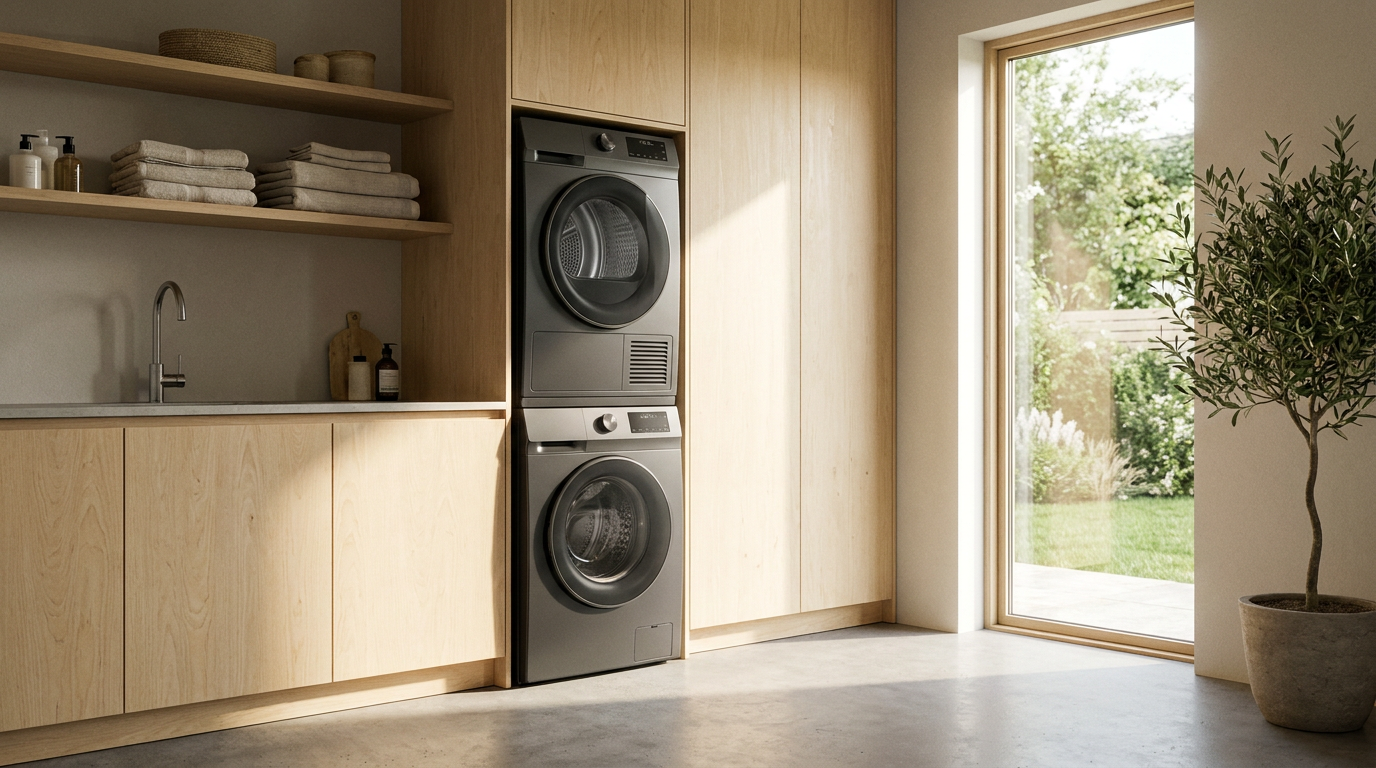
Enter the heat pump dryer, which completely reimagines the physics of doing laundry. Instead of pulling in new air and throwing it away, a heat pump dryer uses a sophisticated closed-loop system. It seals the air inside the drum and continuously recirculates it, extracting the moisture while retaining the valuable thermal energy. Because it does not exhaust anything, it requires no exterior vent.[2][5]
The magic happens through a miniature refrigeration cycle, much like the one inside your kitchen fridge or home air conditioner. The dryer pushes the warm, damp air from the drum through a cold evaporator coil. This sudden temperature drop causes the moisture in the air to condense into liquid water, which is drained away. The now-dry air is then passed over a warm condenser coil, reheated, and sent back into the drum to absorb more moisture.[4][5]
Because they recycle their heat rather than constantly generating it from scratch, heat pump dryers are astonishingly efficient. Industry data shows they use 50% to 70% less energy than their vented counterparts. In regions with high electricity costs, such as the Northeast United States or much of Europe, this efficiency can translate to $75 to $175 in direct annual savings on utility bills, making the dryer one of the easiest places to cut household energy waste.[1][6]
That remarkable efficiency, however, comes with a notable upfront cost barrier. Buyers can expect to pay a premium of roughly $650 for a heat pump model compared to a basic vented unit. But when factoring in the dramatic reduction in operating costs, the appliance often reaches a break-even point within three to five years. Over a typical 10- to 15-year lifespan, the heat pump dryer ultimately costs significantly less to own.[1][3]

That remarkable efficiency, however, comes with a notable upfront cost barrier.
The most common trade-off consumers face when switching to a heat pump dryer is the loss of absolute speed. Vented dryers still hold the crown for rapid drying. Because they blast clothes with high heat and constantly introduce dry room air, they can power through a heavy load of thick cotton towels in under an hour. Heat pump dryers take a more measured approach, often adding 20 to 40 minutes to a standard drying cycle.[4][5]
This difference in speed is directly tied to operating temperatures. A traditional vented dryer often reaches internal temperatures exceeding 70°C (158°F) to force rapid evaporation. A heat pump dryer, by contrast, operates at a much cooler, more consistent temperature of around 50°C (122°F). While this cooler air takes longer to extract moisture, it fundamentally changes how the appliance interacts with your wardrobe.[2]
The cooler operating temperature of a heat pump system is a massive advantage for fabric care and clothing longevity. High heat is the enemy of textiles; it degrades elastic waistbands, shrinks cotton fibers, and causes colors to fade prematurely. The gentler, cooler tumbling of a heat pump dryer extends the life of everyday garments and allows for the safe machine-drying of delicates, wools, and activewear that would otherwise require air-drying.[2][4]

Beyond efficiency and fabric care, the biggest selling point of heat pump technology is its installation flexibility. Because it is entirely ventless, it frees the laundry room from the exterior walls of the house. You no longer need to drill a four-inch hole through your siding or worry about routing rigid metal ductwork through crawlspaces and attics.[3][4]
This ventless freedom is particularly transformative for urban renters, apartment dwellers, and owners of historic homes. A heat pump dryer can be seamlessly installed in a hallway closet, tucked under a kitchen counter, or placed in an interior bathroom. It opens up floor plans and allows architects and homeowners to place laundry facilities exactly where they are most convenient, rather than where the exhaust duct dictates.[4][5]
While you do not need an air vent, the extracted moisture still has to go somewhere. Heat pump dryers handle this liquid water in one of two ways. Most models can be hooked up to a standard drain hose, sharing the same drain pipe as the washing machine for a completely hands-off experience. Alternatively, for setups away from plumbing, the water collects in a pull-out reservoir drawer that the user simply empties into a sink after every few loads.[2][4]
Maintenance requirements also differ significantly between the two technologies. Vented dryers require annual duct cleaning to remove lint buildup—a chore that, if ignored, becomes a severe household fire hazard. Heat pump dryers eliminate this duct fire risk entirely. However, they do require the user to regularly clean a secondary condenser filter, usually located at the bottom of the machine, to ensure the closed-loop system maintains its peak airflow and efficiency.[1][4]

On a macro level, the widespread adoption of heat pump dryers represents a meaningful step toward residential sustainability. By drastically reducing the electrical load required to do laundry and keeping conditioned air inside the home, these appliances align perfectly with broader electrification and green-energy goals. They reduce strain on local power grids during peak hours and lower the overall carbon footprint of the modern household.[5][6]
Ultimately, the verdict depends on a household's specific priorities and existing infrastructure. If upfront budget constraints are tight, drying speed is the absolute top priority for a large family, and the home already has a clean, functional exterior exhaust duct, a traditional vented dryer remains a reliable, hard-working choice that gets the job done quickly.[1][5]
However, for those looking to the future, the heat pump dryer is the superior long-term investment. If you prioritize lowering your monthly utility bills, preserving the quality and fit of your clothes, or need the flexibility to install laundry in a space without exterior access, the heat pump model is the clear winner. It is a smarter, gentler, and vastly more efficient way to handle a fundamental household chore.[1][6]
How we got here
1938
The first electric vented clothes dryer is introduced to the consumer market.
1997
Heat pump dryer technology is first introduced in Europe, prioritizing energy conservation.
2014
Heat pump dryers begin entering the North American market in meaningful numbers.
2024-2026
Adoption accelerates globally as energy prices rise and ventless combination washer-dryer units gain popularity.
Viewpoints in depth
Efficiency & Sustainability Advocates
Focuses on the environmental and financial benefits of reducing energy consumption.
This perspective highlights the sheer wastefulness of traditional vented dryers, which literally blow conditioned indoor air outside. Advocates point to the 50% to 70% reduction in power draw as a critical step in lowering household carbon footprints and easing the strain on local power grids. They argue that the higher upfront cost is a temporary barrier that is quickly offset by long-term savings, making heat pumps the only logical choice for the future.
Large Households & Speed Seekers
Prioritizes the rapid turnover of laundry loads over energy efficiency.
For families generating multiple loads of laundry per day, the primary metric of success is speed. This camp argues that the 20 to 40 extra minutes required by a heat pump dryer creates an unacceptable bottleneck on laundry day. They favor the 70°C brute force of a vented dryer, which can power through heavy towels and thick jeans in under an hour, arguing that the time saved is worth the higher electricity bill.
Urban Renters & Apartment Dwellers
Values the architectural freedom provided by ventless technology.
This viewpoint celebrates heat pump dryers not just for their efficiency, but for their ability to be placed anywhere. In high-rise apartments, historic homes, or tight urban spaces where drilling an exterior exhaust vent is structurally impossible or prohibited by landlords, heat pump technology is a game-changer. It allows residents to upgrade from communal laundromats to in-unit setups seamlessly.
What we don't know
- How quickly the upfront cost premium for heat pump dryers will compress as manufacturing scales globally.
- Whether future building codes will begin phasing out vented dryers entirely in new construction, as seen in some European markets.
Key terms
- Closed-loop system
- A mechanism that recirculates the same air continuously rather than pulling in new air and exhausting it outside.
- Condenser
- The component in a heat pump dryer that cools the warm, damp air to extract liquid water from it.
- Ventless dryer
- Any dryer that does not require an exhaust duct to the outside of the building.
Frequently asked
Do heat pump dryers need a water drain?
Yes, they extract water from your clothes. This water can either be routed to a standard drain hose or collected in a pull-out tank that you empty manually.
Will a heat pump dryer heat up my laundry room?
Very slightly, but much less than a traditional condenser dryer. Because the system is highly insulated and recycles its heat, most of the thermal energy stays inside the drum.
Can I dry delicates in a heat pump dryer?
Yes. Because they operate at around 50°C—significantly cooler than vented dryers—they are much safer for wool, silk, and activewear.
Sources
Source coverage
7 outlets
3 viewpoints surfaced






[1]Yale ApplianceEfficiency Prioritizers
Heat Pump vs. Vented Dryers: Cost, Speed, and Efficiency
Read on Yale Appliance →[2]BekoSpace-Constrained Dwellers
Heat Pump Tumble Dryers Guide
Read on Beko →[3]Appliances OnlineEfficiency Prioritizers
Energy Savings: Heat Pump vs Vented Dryers
Read on Appliances Online →[4]Aztec ApplianceSpeed & Budget Buyers
Pros and Cons of Heat Pump Dryers
Read on Aztec Appliance →[5]East Coast ApplianceSpeed & Budget Buyers
Discover the Benefits of a Heat Pump Dryer
Read on East Coast Appliance →[6]Urner'sEfficiency Prioritizers
Heat Pump Dryers: A Smart Investment for Long-Term Savings
Read on Urner's →[7]Factlen Editorial TeamSpace-Constrained Dwellers
Synthesis by Factlen editorial team
Read on Factlen Editorial Team →


Every angle. Every day.
Get shopping stories with full source coverage and perspective breakdowns delivered to your inbox.