
The Science of Collective Effervescence: Why Humans Need Shared Experiences
From concert halls to sports stadiums, the intense feeling of shared emotion is a measurable biological state called collective effervescence. Neuroscience reveals how synchronizing our attention and behavior with others physically aligns our heartbeats, offering a powerful antidote to modern loneliness.
By Factlen Editorial Team
- Evolutionary Psychologists
- View collective effervescence as an ancient survival mechanism designed to forge unbreakable bonds and ensure group cohesion in the face of threats.
- Cognitive Neuroscientists
- Focus on the biological reality of the phenomenon, measuring how shared experiences physically synchronize heart rates and breathing through entrainment.
- Sociologists & Behavioral Ethicists
- Examine the societal impacts of shared emotion, highlighting both its power to heal communities and its potential to trigger dangerous groupthink.
What's not represented
- · Individuals with sensory processing differences who may find collective effervescence overwhelming rather than unifying.
- · Virtual community builders attempting to replicate the physiological benefits of this phenomenon in digital spaces.
Why this matters
In an era defined by digital isolation and rising loneliness, understanding the biological need for shared physical experiences provides a scientifically backed roadmap for improving mental health. Cultivating these moments of synchronized emotion can act as a powerful protective buffer against anxiety and social disconnection.
Key points
- Collective effervescence is the measurable biological state of shared euphoria that occurs during group gatherings.
- The process requires joint attention and behavioral synchrony, such as clapping, singing, or moving together.
- Biometric studies show that audiences at live events physically synchronize their heart rates and breathing.
- The experience triggers 'kama muta,' a profound feeling of being moved that reinforces prosocial behavior.
- While deeply beneficial for mental health, extreme emotional synchrony can also lead to identity fusion and conformity.
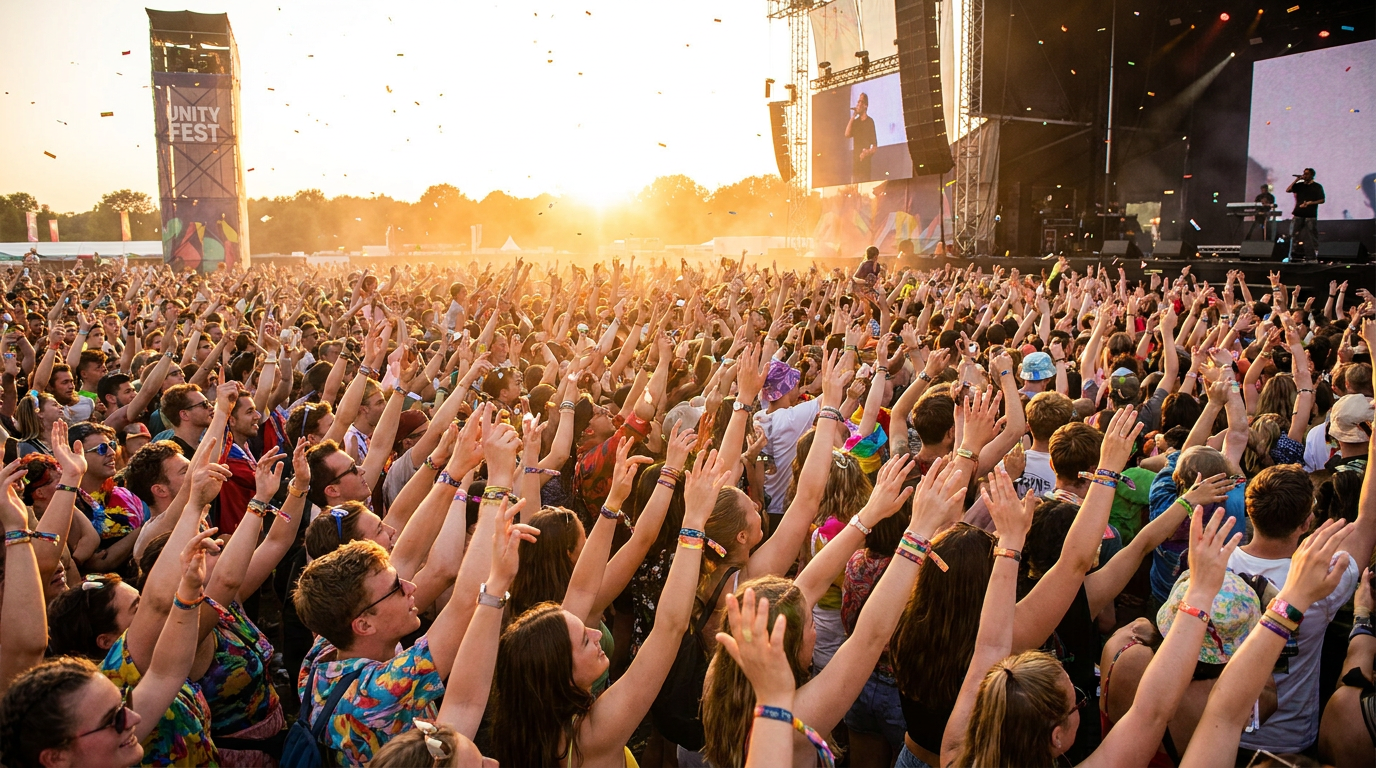
Have you ever stood in a crowded stadium when the home team scores a game-winning goal, or in a packed concert hall just as the beat drops? In that fraction of a second, the boundaries between individuals seem to vanish. A sudden, palpable electricity ripples through the crowd, transforming thousands of strangers into a single, breathing organism. You feel a rush of warmth, a prickle of goosebumps, and an overwhelming sense of unity that defies logical explanation. This is not merely a poetic metaphor or a trick of the light. It is a deeply ingrained, measurable biological and psychological state that humans have relied on for millennia to build trust, forge societies, and find meaning in a chaotic world.[6]
Psychologists and sociologists refer to this phenomenon as "collective effervescence." It is the distinct, sparkling energy that emerges when a group of people synchronize their attention, behavior, and emotions around a shared focal point. In an era increasingly defined by digital isolation and an epidemic of loneliness, understanding the mechanics of this shared euphoria is more than an academic exercise. It is a crucial blueprint for reclaiming our collective well-being. While virtual interactions can transmit information, they consistently fail to replicate the visceral, physiological resonance of physical co-presence. Collective effervescence is the missing ingredient in our modern social diet, a potent antidote to the alienation of the digital age.[6]
The concept was first introduced over a century ago by the pioneering French sociologist Émile Durkheim. In his 1912 observations of cultural and religious rituals, Durkheim noted that the very act of congregating acted as an exceptionally powerful stimulant. He argued that when individuals gather together, their physical closeness generates a sort of social electricity that launches them into an extraordinary height of exaltation. Durkheim believed that without these intense moments of shared emotion, individuals would struggle to face the intellectual and existential challenges of life. For him, collective effervescence was the fundamental glue that kept communities intact, requiring frequent repetition to prevent the social fabric from fraying.[1][2]
Modern neuroscience and psychology have since validated Durkheim’s century-old theory, revealing the precise mechanisms that trigger this state. The process begins with joint attention. For collective effervescence to take hold, a group must direct its focus toward a single, unifying stimulus—a charismatic speaker, a captivating theatrical performance, or a critical moment in a sports match. This shared focal point acts as an anchor, pulling individual minds away from their private anxieties and internal monologues. As attention converges, the psychological distance between strangers begins to collapse, setting the stage for a deeper, more profound level of interpersonal connection.[4]

Once joint attention is established, the next critical catalyst is behavioral synchrony. This involves the rhythmic coordination of physical actions among the group. It can be as overt as a stadium full of fans clapping in unison, a choir singing in perfect harmony, or a crowd swaying to the same musical tempo. However, it can also be remarkably subtle, such as an audience collectively holding their breath during a tense movie scene or nodding in agreement during a compelling lecture. This physical mirroring sends powerful signals to the brain that we are safe, aligned, and part of a cohesive unit, dramatically enhancing the neuroception of safety.[5]
This behavioral alignment triggers a fascinating biological phenomenon known as entrainment. Entrainment is the physical process by which independent rhythmical systems interact and eventually synchronize with one another. Just as pendulum clocks on the same wall will eventually swing in unison, human bodies in close proximity begin to align their physiological rhythms. When we engage in synchronous behaviors, our respiratory rates, electrodermal activity, and even our heartbeats begin to fall into a shared cadence. We are not just acting together; on a fundamental biological level, our bodies are functioning as a unified system.[4][5]
Biometric studies have provided striking visual evidence of this physiological synchronization. In controlled experiments, researchers have compared the biometric data of individuals watching a musical performance alone on a screen versus those watching it live in a theater surrounded by others. The data reveals that the live audience experiences significantly more intense emotional fluctuations, and crucially, their heart rates synchronize. The peaks and valleys of their cardiovascular responses align in real-time with the emotional beats of the performance. This biometric harmony proves that emotions are not isolated experiences confined to the individual mind; they are inherently social and deeply contagious.[4]

Biometric studies have provided striking visual evidence of this physiological synchronization.
This aligns perfectly with a growing movement in cognitive science known as "4E cognition." This framework posits that human cognition is not just something that happens inside the brain; it is enactive, embodied, embedded, and extended. From a 4E perspective, collective effervescence is the ultimate demonstration of extended cognition. The emotion does not merely exist within you; it exists in the shared physical space, co-created by the dynamic interactions of the crowd. You are not just observing an event; you are actively participating in a self-organizing system where the boundary between the observer and the observed temporarily dissolves.[2]
The psychological payoff of this biological synchronization is what researchers call Perceived Emotional Synchrony (PES). PES is the profound subjective realization that your internal emotional state is perfectly aligned with the emotional states of the people around you. It is the feeling of being swept away, of losing the rigid boundaries of the ego and merging with a larger, more powerful entity. This realization triggers a cascade of self-transcendent emotions, including awe, inspiration, and a deep sense of moral elevation. It shifts our perspective from a narrow focus on the self to a broader appreciation of our place within the human community.[3]
In many cases, this intense emotional alignment culminates in an experience psychologists refer to as "kama muta." Derived from Sanskrit, kama muta translates to being deeply moved or touched by love and communal sharing. It is the sudden, overwhelming sensation of warmth in the chest, the prickle of tears in the eyes, or the shiver of chills down the spine when witnessing a profound act of unity or triumph. Kama muta acts as a powerful psychological reward, reinforcing prosocial behaviors and leaving participants with a renewed sense of hope, benevolence, and trust in society.[3]
The benefits of experiencing collective effervescence extend far beyond the fleeting moment of the event itself. Empirical research demonstrates that participating in emotionally synchronized gatherings yields significant long-term psychological dividends. It serves as a robust protective factor against depression and anxiety, boosting both individual self-esteem and perceived social support. Studies have shown that the social well-being benefits and the enhanced sense of community generated by a major collective event can persist for weeks, or even months, after the crowd has dispersed. It fundamentally rewires our perception of our social environment, making the world feel less hostile and more welcoming.[1][3]
From an evolutionary standpoint, the human capacity for collective effervescence is a brilliant survival strategy. Early hominids faced a brutal, unforgiving environment where individual survival was nearly impossible. To overcome the hardships of existence, early communities needed a mechanism to forge unbreakable bonds, enforce shared norms, and instill the grit necessary to face collective threats. Collective effervescence provided that mechanism. By gathering for rhythmic rituals around a fire, our ancestors amplified their shared emotional experiences, transforming a loose collection of individuals into a fiercely loyal, cohesive tribe capable of extraordinary cooperation.[2]

Fortunately, you do not need to attend a massive music festival or a religious pilgrimage to reap the benefits of this phenomenon. While large crowds certainly amplify the effect, collective effervescence can be cultivated in everyday, micro-interactions. It can spark during a highly collaborative brainstorming session at work, a synchronized fitness class, or even when sharing a moment of collective frustration with strangers in a delayed airport terminal. The essential ingredients remain the same: physical co-presence, shared attention, and a willingness to engage in the emotional rhythm of the group.[5][6]
However, like any powerful psychological force, collective effervescence possesses a shadow side that must be navigated with care. When the boundaries between the individual and the group dissolve too completely, it can lead to a state known as "identity fusion." In this state, a person's personal identity becomes so deeply intertwined with the social group that they may lose their sense of individual autonomy. While identity fusion can inspire incredible acts of self-sacrifice and altruism, it can also be weaponized to demand absolute conformity and suppress dissenting voices within the community.[1]

The very mechanisms that make a choir sound beautiful or a sports crowd feel euphoric can also make a mob highly dangerous. Because emotions are highly contagious in a synchronized state, negative affect can spread just as rapidly as joy. If the shared focal point of a gathering is rooted in anger, fear, or collective bitterness, the resulting effervescence can mobilize groups toward coercion, out-group hostility, and extreme behaviors. Understanding the mechanics of emotional contagion is crucial for recognizing when a unifying force is being manipulated into a destructive one.[1][6]
Despite these risks, the overwhelming consensus among psychologists and sociologists is that collective effervescence is a vital, life-affirming component of the human experience. In a society that often prioritizes individual achievement and digital connectivity over physical community, we are starving for the visceral, shared sparkle that Durkheim identified a century ago. By intentionally seeking out spaces where we can synchronize our attention, our movements, and our emotions with others, we can tap into one of the most ancient and effective strategies for cultivating joy, resilience, and a profound sense of belonging.[6]
Viewpoints in depth
Evolutionary Psychologists
View collective effervescence as an ancient survival mechanism designed to forge unbreakable bonds.
From an evolutionary perspective, the human capacity for collective effervescence was not an accident, but a vital survival strategy. Early hominids faced environments where individual survival was nearly impossible without intense group cohesion. By gathering for rhythmic rituals, our ancestors amplified their shared emotional experiences, transforming a loose collection of individuals into a fiercely loyal tribe. This synchronized state instilled the grit and mutual trust necessary to face collective threats and overcome the hardships of early human existence.
Cognitive Neuroscientists
Focus on the biological reality of the phenomenon, measuring how shared experiences physically synchronize our bodies.
Neuroscientists approach collective effervescence through the lens of biometrics and 4E cognition (the idea that the mind is embodied and extended). Through controlled studies, they have proven that when humans share a physical space and focus on a joint stimulus, their autonomic nervous systems begin to align. This process, known as entrainment, causes heart rates and respiratory patterns to synchronize. For neuroscientists, this proves that emotion is not a purely internal, isolated experience, but a deeply contagious biological state co-created by the crowd.
Sociologists & Behavioral Ethicists
Examine the societal impacts of shared emotion, highlighting both its power to heal and its potential for danger.
While acknowledging the profound mental health benefits of collective effervescence, sociologists warn of its shadow side. When the boundary between the individual and the group dissolves completely, it can lead to 'identity fusion,' where personal autonomy is surrendered to the collective. In this highly synchronized state, critical thinking can be bypassed, making crowds susceptible to emotional contagion. If the shared focal point is rooted in anger or fear, the exact same biological mechanisms that create joyful solidarity can be weaponized to enforce conformity and mobilize destructive mob behavior.
What we don't know
- Exactly how much physical proximity is required to trigger physiological entrainment.
- Whether the rise of virtual and augmented reality can ever fully replicate the biometric synchronization of physical co-presence.
- The precise neurological threshold where healthy social bonding tips into dangerous identity fusion.
Key terms
- Collective Effervescence
- A shared emotional state of high intensity that emerges when a group synchronizes its attention and behavior, first coined by Émile Durkheim in 1912.
- Perceived Emotional Synchrony (PES)
- The profound subjective feeling that one's own internal emotions are perfectly aligned and coordinated with the emotions of the surrounding crowd.
- Kama Muta
- A psychological term derived from Sanskrit used to describe the sudden feeling of being deeply moved or touched, often resulting in tears, chills, or warmth in the chest.
- Entrainment
- The physical process by which independent rhythmical systems, such as human heartbeats or breathing rates, begin to interact and align with each other.
- Identity Fusion
- A psychological state where a person's individual identity and their social group identity become so deeply intertwined that they may lose their sense of personal autonomy.
- 4E Cognition
- A framework in cognitive science proposing that the mind is not just in the brain, but is enactive, embodied, embedded, and extended into the physical environment.
Frequently asked
Do I have to go to a massive concert to experience this?
No. While large crowds amplify the effect, research shows collective effervescence can happen in everyday moments, like sharing a laugh with colleagues, participating in a fitness class, or reacting to a movie in a theater.
Is emotional contagion always positive?
Not necessarily. While it can spread joy and solidarity, emotional contagion can also spread panic, anger, or collective bitterness if the group's shared focus is negative.
How does collective effervescence affect physical health?
Studies show that regular experiences of shared emotion act as a protective factor against depression and anxiety, boosting overall life satisfaction and perceived social support for weeks after the event.
Sources
Source coverage
6 outlets
3 viewpoints surfaced






[1]The Group PsychologistSociologists & Behavioral Ethicists
Collective Effervescence: A Unifying and Dangerous Force
Read on The Group Psychologist →[2]Journal of Social OntologyEvolutionary Psychologists
Collective Effervescence as Self-Organization and Enaction
Read on Journal of Social Ontology →[3]Frontiers in PsychologySociologists & Behavioral Ethicists
Positive emotions and kama muta during collective effervescence
Read on Frontiers in Psychology →[4]Royal Society Open ScienceCognitive Neuroscientists
Sharing emotions with other individuals: physiological synchrony and social bonding
Read on Royal Society Open Science →[5]Psychology TodayCognitive Neuroscientists
Synchrony, Entrainment, and Collective Effervescence
Read on Psychology Today →[6]Factlen Editorial Team
Synthesis by Factlen editorial team
Read on Factlen Editorial Team →

Every angle. Every day.
Get culture stories with full source coverage and perspective breakdowns delivered to your inbox.