
How Teams Are Using Sports Science to Beat the Heat at the 2026 World Cup
With summer temperatures soaring across North American host cities, European squads are deploying advanced thermoregulation strategies to maintain elite performance. From ingestible core-temperature sensors to pre-cooling ice vests, sports science has become the tournament's ultimate equalizer.
By Factlen Editorial Team
- Sports Scientists & Physiologists
- Focuses on data-driven acclimatization, sweat profiling, and minimizing core temperature spikes to maintain physical output.
- Tactical Analysts & Managers
- Prioritizes adapting game plans, lowering pressing intensity, and utilizing substitutions to manage energy reserves.
- Player Welfare Advocates
- Emphasizes the health risks of extreme heat and the necessity of strict medical guidelines and cooling breaks.
What's not represented
- · Local North American teams accustomed to the climate
- · Amateur athletes lacking access to elite cooling technology
Why this matters
Understanding how elite athletes manage extreme heat provides valuable insights into human physiology and resilience. The cutting-edge cooling protocols developed for this tournament are already trickling down to amateur sports and occupational safety guidelines for outdoor workers.
Key points
- European teams are using advanced sports science to combat extreme heat and humidity at the 2026 World Cup.
- Strategies include pre-tournament heat chambers, ice vests, and internal cooling via ice slushies.
- Customized hydration is managed through wearable sweat patches that analyze individual electrolyte loss.
- Tactics have shifted away from high-intensity pressing to energy-conserving mid-blocks.
- High humidity remains the ultimate challenge, as it prevents sweat from evaporating and cooling the body.
The 2026 World Cup in North America has introduced a formidable opponent that cannot be scouted or tackled: extreme summer heat. As the tournament progresses through June, host cities like Houston, Miami, and Monterrey are regularly experiencing temperatures exceeding 95 degrees Fahrenheit, compounded by stifling humidity. For European teams accustomed to milder climates, this environmental shift presents a profound physiological challenge that threatens to neutralize technical superiority. In response, national federations have turned their training camps into cutting-edge sports science laboratories.[1][3]
To understand the interventions, one must first understand the mechanism of heat stress on an elite footballer. When a player sprints in high temperatures, their working muscles generate massive amounts of metabolic heat. To prevent the core body temperature from reaching dangerous levels, the cardiovascular system diverts blood flow away from the muscles and toward the skin, where heat can be dissipated through sweat. This diversion means less oxygen is delivered to the legs, accelerating muscular fatigue and reducing sprint recovery times.[3][4]
The impact is not purely physical; it is heavily cognitive. As the body loses fluids through sweat—sometimes up to three liters per match—dehydration begins to impair the brain's processing speed. Decision-making, spatial awareness, and technical execution all degrade as core temperature rises. A player who normally executes a flawless 40-yard pass might suddenly misjudge the weight of the ball simply because their brain is prioritizing thermoregulation over motor control.[4]

To combat this, teams began their preparations long before crossing the Atlantic. Several European squads installed specialized heat chambers at their domestic training bases. These sealed environments allow players to cycle or run on treadmills while exposed to artificially elevated temperatures and humidity levels. This process, known as heat acclimatization, forces the body to adapt before the tournament even begins.[2][6]
The physiological adaptations triggered by heat acclimatization are remarkable. Over a period of seven to fourteen days, the athlete's body increases its blood plasma volume—the liquid component of blood. This expansion provides a larger reservoir of fluid for sweating without compromising cardiovascular function. Furthermore, acclimatized players begin sweating earlier in their exercise routines and produce sweat with a lower sodium concentration, preserving crucial electrolytes.[3][4]
Once on the ground in North America, the strategy shifts from long-term adaptation to acute pre-cooling. The goal is to lower the player's baseline core temperature as much as possible before kickoff, creating a 'thermal buffer.' If a player starts the match with a core temperature of 37 degrees Celsius rather than 37.5, it takes significantly longer for them to reach the critical threshold of 39 degrees where severe fatigue sets in.[1][7]
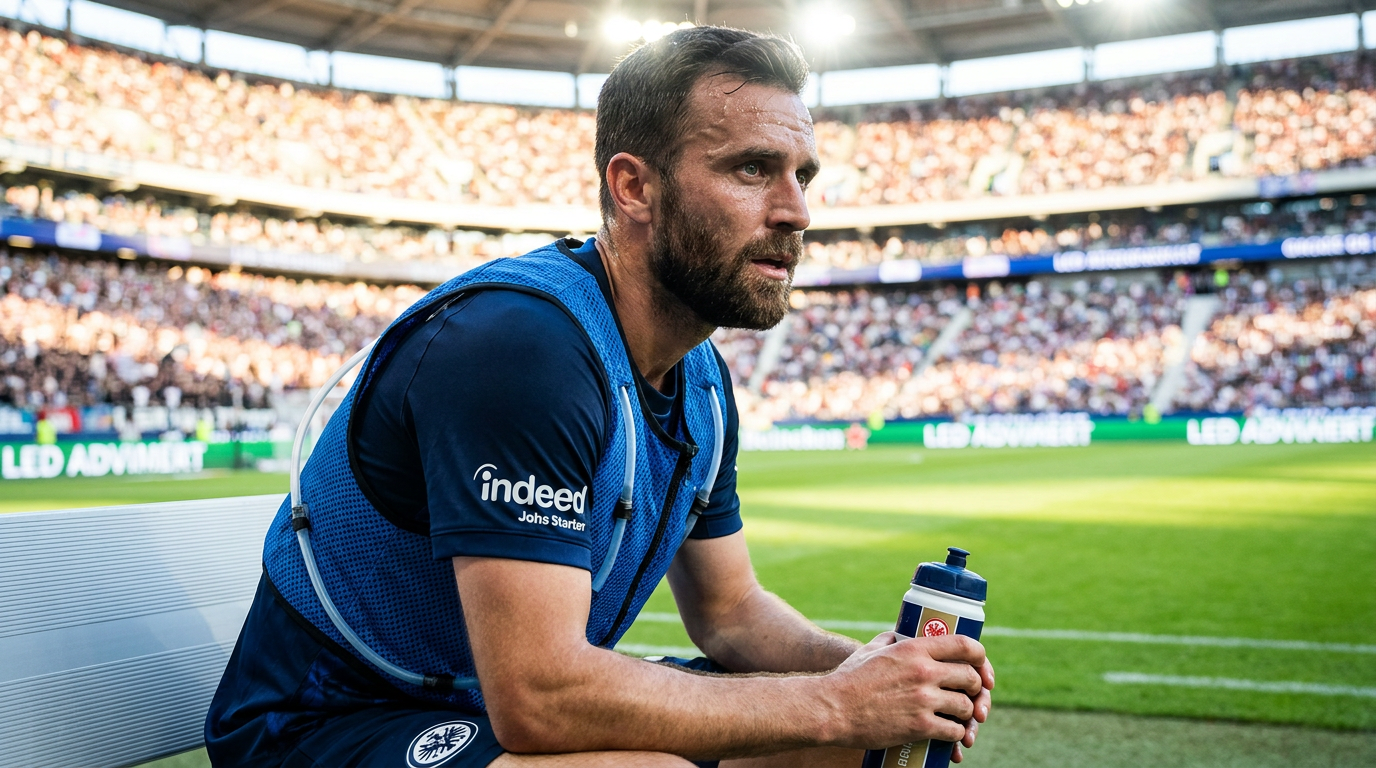
Pre-cooling takes several forms in the modern locker room. Players routinely wear specialized ice vests during their pre-match warm-ups, which circulate near-freezing water around the torso. Cooling collars are applied to the neck to chill the carotid artery, sending cooler blood directly to the brain and lowering the athlete's perceived exertion. Some teams have even mandated the consumption of ice slushies in the dressing room.[2][6]
Players routinely wear specialized ice vests during their pre-match warm-ups, which circulate near-freezing water around the torso.
The science behind the slushy is particularly elegant. Ingesting crushed ice requires the body to expend internal heat energy to melt the ice into water before it can be absorbed. This process cools the athlete from the inside out, providing a highly efficient reduction in core temperature without the muscle stiffness that can accompany external ice baths.[4][7]
During the match, interventions are strictly regulated but highly optimized. FIFA's medical guidelines mandate official cooling breaks when the Wet Bulb Globe Temperature (WBGT)—a metric that combines heat, humidity, wind speed, and solar radiation—exceeds 32 degrees Celsius. These three-minute pauses at the 30th and 75th minutes have become critical tactical and medical pit stops.[5]

In those 180 seconds, sports scientists deploy customized hydration strategies. Gone are the days of shared water bottles; each player receives a bespoke electrolyte fluid mixed according to their specific sweat profile. These profiles are generated using wearable sweat patches worn during training, which analyze the exact concentration of sodium, potassium, and magnesium an individual loses per liter of sweat.[2][3]
Technology has also permeated the monitoring of internal metrics. Several squads utilize ingestible thermometer pills—small, safe electronic capsules swallowed hours before training. As the pill travels through the gastrointestinal tract, it transmits real-time core temperature data to tablets on the sideline. This allows medical staff to identify which players are naturally more susceptible to heat stress and adjust their workloads accordingly.[1][4]
The heat has fundamentally altered the tactical landscape of the tournament. High-intensity pressing systems, popularized in the cooler climates of the English Premier League and the German Bundesliga, are physically unsustainable for 90 minutes in the North American summer. Managers are instructing their teams to drop into mid-blocks, conserving energy and picking specific triggers to press rather than chasing the ball relentlessly.[6][7]
Substitutions have also been weaponized for thermoregulation. With five substitutions available, managers are systematically rotating players in the most physically demanding positions, such as fullbacks and box-to-box midfielders. The data shows that a fresh player introduced in the 60th minute has a disproportionate impact in extreme heat, as the thermal fatigue of the opposition defenders compounds exponentially in the final third of the match.[1][6]

Despite these advancements, science has its limits. The primary challenge remains high humidity, which prevents sweat from evaporating off the skin. Since evaporation is the mechanism that actually cools the body, a humid environment neutralizes the athlete's primary defense system, regardless of how well-acclimatized or hydrated they are. In these conditions, pacing and game management become the only viable solutions.[4][5]
Ultimately, the 2026 World Cup is serving as a masterclass in human adaptation. The teams advancing deep into the knockout stages are not necessarily those with the most raw talent, but those who have most effectively married tactical intelligence with physiological resilience. The tournament is proving that in the modern era of elite sports, the battle against the elements is won in the laboratory long before the first whistle blows.[1][3]
How we got here
Pre-Tournament
European squads utilize domestic heat chambers to begin physiological acclimatization.
Matchday Minus 1
Players swallow ingestible thermometer pills to establish baseline core temperature data.
Pre-Match
Athletes wear ice vests and consume slushies to create a thermal buffer.
30th & 75th Minute
Mandatory FIFA cooling breaks are triggered if the WBGT exceeds 32 degrees Celsius.
Viewpoints in depth
Sports Scientists & Physiologists
Focuses on data-driven acclimatization, sweat profiling, and minimizing core temperature spikes to maintain physical output.
For sports scientists, the World Cup is a massive data-gathering exercise in extreme human performance. Their primary objective is delaying the onset of thermal fatigue by manipulating the athlete's internal environment. By utilizing ingestible sensors and sweat patches, they treat each player as a unique thermodynamic system. Their evidence suggests that matches in extreme heat are won not by running the fastest, but by maintaining cognitive function and decision-making capabilities when the core temperature approaches 39 degrees Celsius. They argue that pre-cooling and customized electrolyte replenishment are now just as vital as tactical film study.
Tactical Analysts & Managers
Prioritizes adapting game plans, lowering pressing intensity, and utilizing substitutions to manage energy reserves.
Managers and tactical analysts view the heat as a structural constraint that dictates the style of play. They argue that attempting to play a high-octane, relentless pressing game in Houston or Miami is tactical suicide. Instead, the focus shifts to game management: dropping into compact defensive blocks, controlling possession at a slower tempo to dictate the physical exertion of the opponent, and weaponizing the five-substitution rule. For this camp, the heat is a puzzle to be solved through strategic pacing and squad rotation, ensuring that the team's physical peak coincides with the final twenty minutes of the match.
Player Welfare Advocates
Emphasizes the health risks of extreme heat and the necessity of strict medical guidelines and cooling breaks.
Player welfare advocates, including union representatives and medical governing bodies, approach the heat primarily as an occupational hazard. Their focus is on the strict enforcement of the Wet Bulb Globe Temperature (WBGT) thresholds and ensuring that commercial pressures do not override medical sense. They point to the severe risks of exertional heat stroke and the long-term cumulative fatigue placed on players who are already managing congested domestic calendars. This camp continuously pushes for mandatory cooling breaks, expanded squad sizes, and the willingness to suspend matches if environmental conditions cross into the danger zone.
What we don't know
- Whether the cumulative fatigue of playing multiple matches in extreme heat will lead to a spike in muscular injuries during the knockout stages.
- How effectively teams can maintain their acclimatization benefits if they travel between drastically different climate zones across the host nations.
- The long-term impact of repeated extreme heat exposure on the players' recovery times ahead of their upcoming domestic club seasons.
Key terms
- Heat Acclimatization
- A biological adaptation process achieved by training in hot conditions, resulting in increased blood plasma volume and earlier, more efficient sweating.
- Thermal Buffer
- The strategy of artificially lowering a player's baseline core temperature before a match, giving them a larger margin before reaching the fatigue threshold.
- Blood Plasma Volume
- The liquid component of blood; increasing its volume allows the body to sweat more profusely without compromising the cardiovascular system's ability to pump blood.
- Wet Bulb Globe Temperature (WBGT)
- A composite temperature used to estimate the effect of temperature, humidity, wind speed, and visible and infrared radiation on humans.
Frequently asked
What is the Wet Bulb Globe Temperature (WBGT)?
WBGT is a comprehensive metric that measures heat stress in direct sunlight. It accounts for temperature, humidity, wind speed, and solar radiation, providing a more accurate picture of the physical toll than temperature alone.
Why do players drink ice slushies before games?
Ingesting crushed ice forces the body to use internal heat to melt it, which efficiently lowers the core body temperature from the inside out and creates a thermal buffer before exertion.
How long does it take for a player to acclimatize to heat?
Physiological adaptation, which includes an increase in blood plasma volume and a more efficient sweat rate, typically takes between seven and fourteen days of consistent training in hot environments.
Why is humidity more dangerous than dry heat?
The body cools itself through the evaporation of sweat. In highly humid environments, the air is already saturated with moisture, preventing sweat from evaporating and neutralizing the body's primary cooling mechanism.
Sources
Source coverage
7 outlets
3 viewpoints surfaced







[1]ESPNSports Scientists & Physiologists
How European teams are trying to beat the World Cup heat
Read on ESPN →[2]BBC SportPlayer Welfare Advocates
Cooling vests and hydration: Inside the European World Cup camps
Read on BBC Sport →[3]The AthleticSports Scientists & Physiologists
The sports science behind heat acclimatization at the 2026 World Cup
Read on The Athletic →[4]Journal of Sports SciencesSports Scientists & Physiologists
Thermoregulation in elite football players during extreme heat
Read on Journal of Sports Sciences →[5]FIFA OfficialPlayer Welfare Advocates
FIFA Medical guidelines for heat at the 2026 World Cup
Read on FIFA Official →[6]KickerTactical Analysts & Managers
Wie die DFB-Elf der Hitze in Nordamerika trotzt
Read on Kicker →[7]MarcaTactical Analysts & Managers
El plan de España para combatir las altas temperaturas
Read on Marca →

More in sports
See all 7 stories →Grassroots Football
How a Small Cumbrian Club Became England's World Cup Goalkeeper Factory
7 sources
NWSL Expansion
NWSL Launches Aggressive Summer Expansion to Capture World Cup Momentum
6 sources

Premiership Rugby
Northampton Saints Clinch 2026 Premiership Rugby Title With Late Surge Against Exeter
7 sources

Tennis Comeback
Andy Murray Returns to Tennis to Coach Jack Draper Ahead of Grass-Court Season
5 sources

Every angle. Every day.
Get sports stories with full source coverage and perspective breakdowns delivered to your inbox.