
U.S. and Iranian Delegations Arrive in Switzerland to Finalize War-Ending Accord
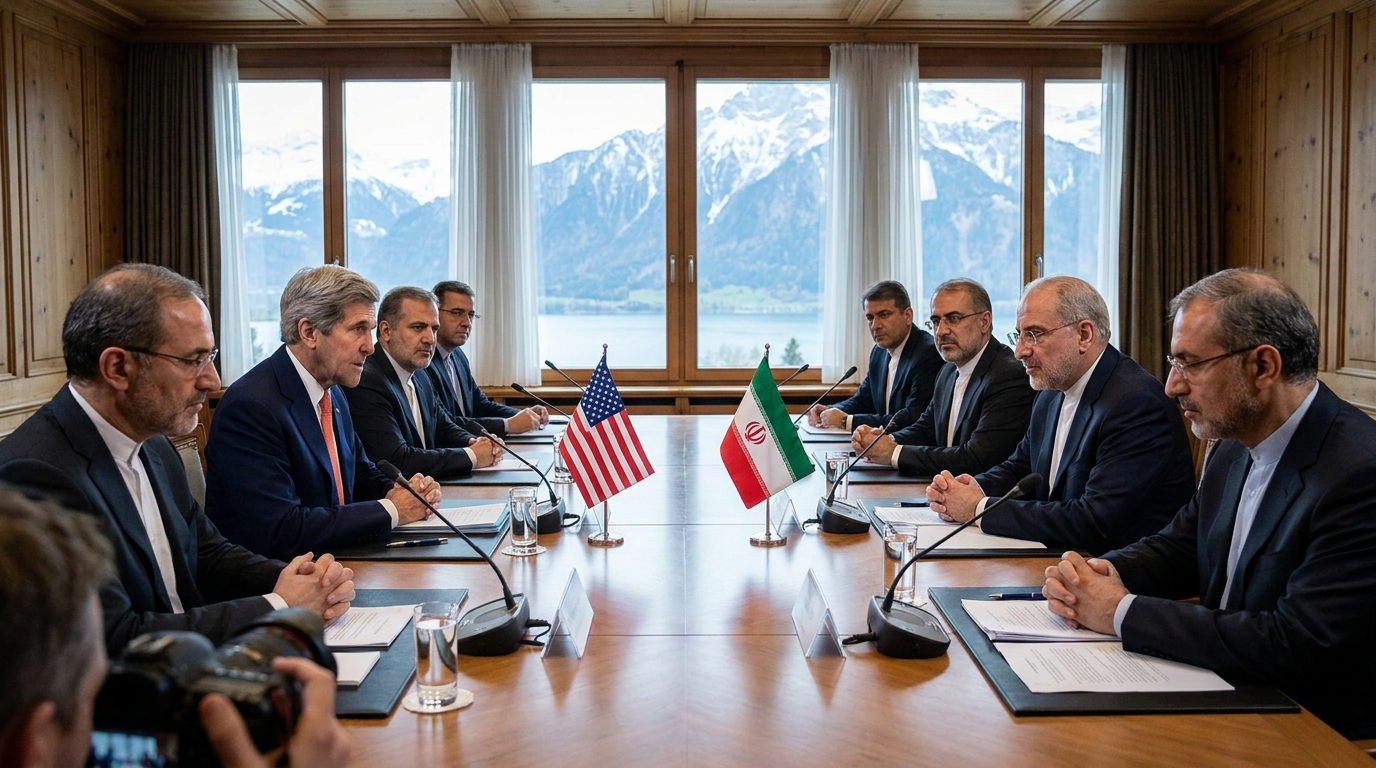
Vice President JD Vance and Iranian parliamentary speaker Mohammad Bagher Ghalibaf have converged on a Swiss resort for high-stakes talks aimed at cementing a fragile memorandum of understanding. The negotiations, mediated by Pakistan and Qatar, seek to end the 114-day conflict, restore nuclear inspections, and stabilize the Lebanese border.
By Factlen Editorial Team
- U.S. Administration
- Focuses on securing IAEA access to Iranian nuclear sites and stabilizing the region while navigating domestic political pressure from hardliners.
- Iranian Negotiators
- Demands immediate unfreezing of assets and strict adherence to the MoU, using the Strait of Hormuz and regional proxies as leverage.
- Regional Mediators
- Prioritizes de-escalation and the prevention of a wider regional war, acting as a crucial bridge between Washington and Tehran.
What's not represented
- · European Union diplomats
- · Global energy market analysts
- · Lebanese civilian leadership
Why this matters
These negotiations represent the most significant diplomatic effort to end a 114-day war that has destabilized the Middle East and spiked global energy costs. If the 60-day sprint to finalize the technical details fails, the region risks a return to full-scale conflict and severe disruptions to the global oil supply.
Key points
- U.S. and Iranian delegations have arrived in Switzerland to negotiate the technical details of a war-ending accord.
- The talks aim to secure IAEA access to Iranian nuclear sites in exchange for unfreezing billions in Iranian assets.
- Pakistan and Qatar are serving as mediators for the indirect negotiations.
- The summit was briefly delayed by renewed fighting between Israel and Hezbollah in Lebanon.
- The U.S. and Iran dispute whether the Strait of Hormuz remains open to commercial shipping.
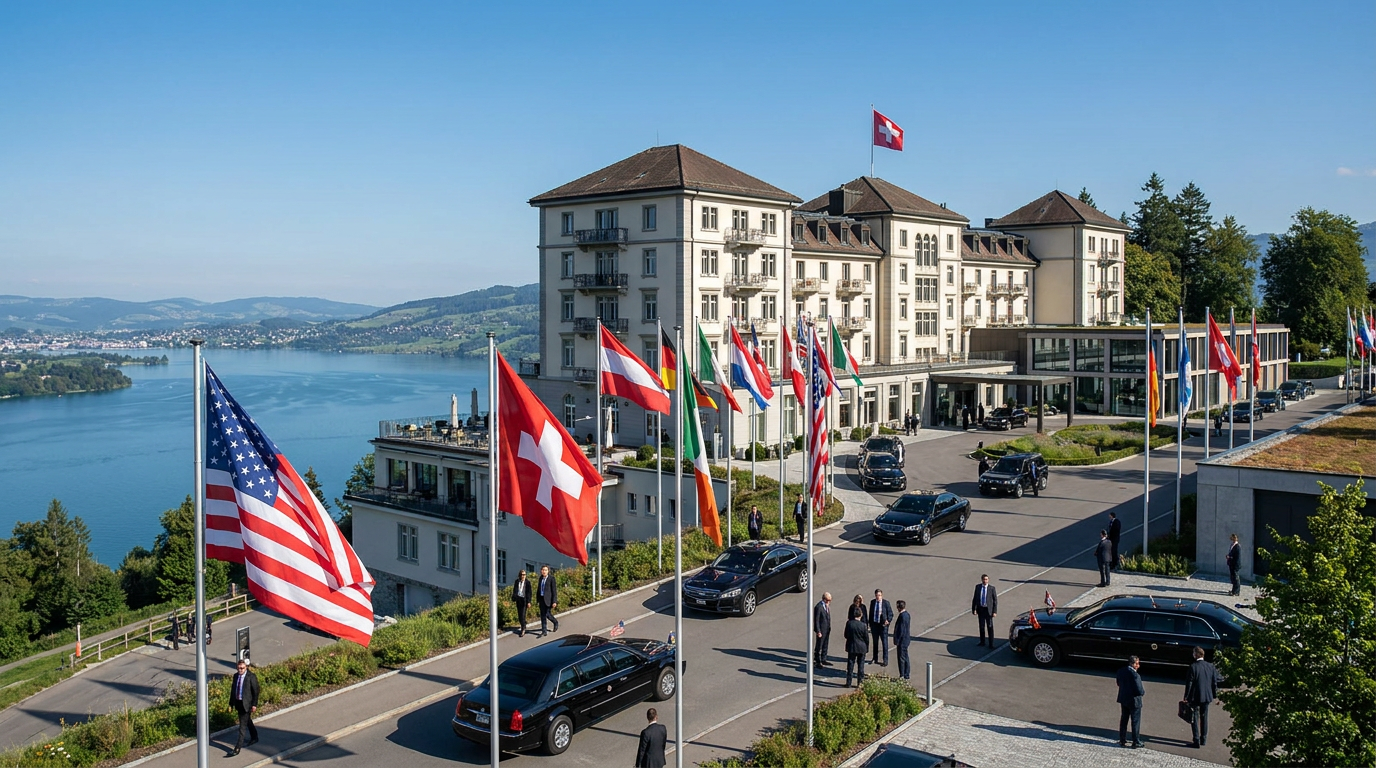
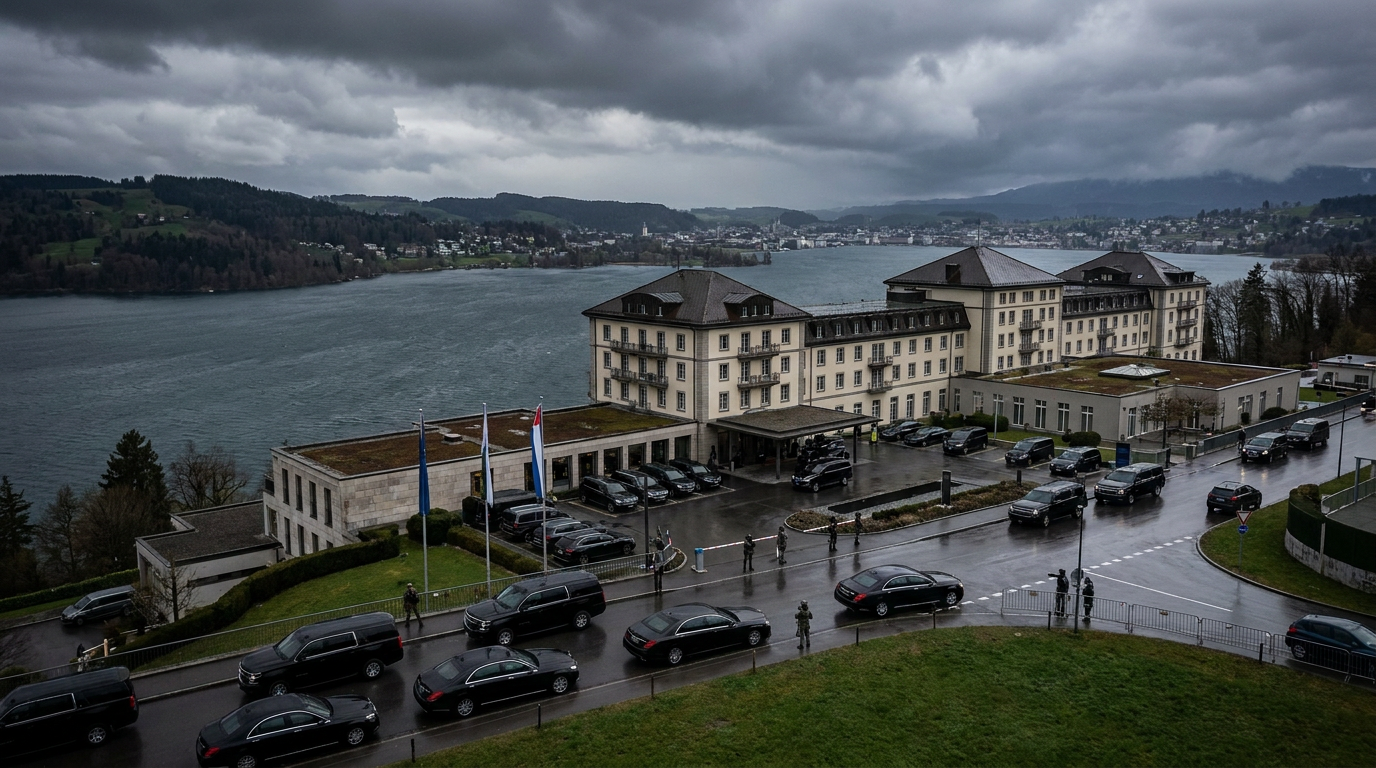
High-level delegations from the United States and Iran have descended upon the Bürgenstock resort in Switzerland, kicking off a critical phase of negotiations aimed at ending the 114-day war that has convulsed the Middle East.[1][4]
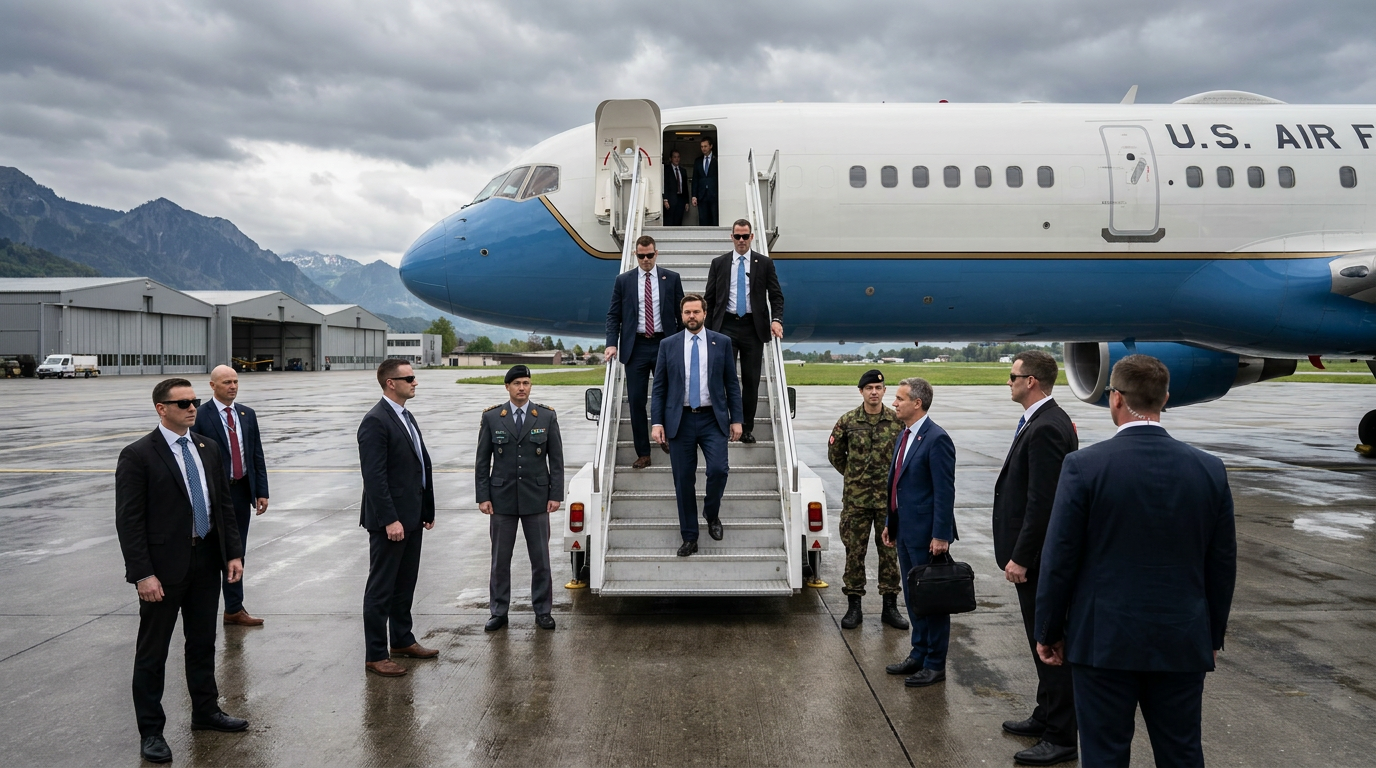
U.S. Vice President JD Vance arrived at Emmen Air Base near Lucerne early Sunday morning, joining special envoys Jared Kushner and Steve Witkoff, who were already on the ground laying the technical groundwork.[2][4]
The Iranian delegation, which arrived late Saturday, is led by parliamentary speaker Mohammad Bagher Ghalibaf and Foreign Minister Abbas Araghchi. The team also includes Central Bank Governor Abdolnaser Hemmati and senior oil officials, signaling Tehran's focus on immediate economic relief.[6][8]
The summit marks the beginning of a 60-day sprint to finalize the technical details of a 14-point memorandum of understanding (MoU) signed last week. The preliminary framework halted direct hostilities but left the most contentious issues—nuclear inspections, sanctions relief, and regional proxy conflicts—unresolved.[4][6][7]

Mediators from Pakistan and Qatar are facilitating the indirect talks. Pakistani Prime Minister Shehbaz Sharif and Army Chief Field Marshal Asim Munir traveled to Switzerland to hold separate meetings with both delegations, underscoring the regional anxiety surrounding the fragile truce.[1][4][8]
The primary U.S. objective is to secure an agreement allowing International Atomic Energy Agency (IAEA) inspectors to return to Iranian nuclear sites, including the Fordo, Natanz, and Isfahan facilities that were targeted by U.S. bombing campaigns last year.[4][5]
In exchange for nuclear compliance, Iran is demanding the unfreezing of billions of dollars in assets currently held in Qatar. Iranian Foreign Ministry spokesperson Esmail Baghaei warned on state television that if the U.S. fails to uphold its commitments, "the memorandum of understanding as a whole will be jeopardized."[5][7][8]
In exchange for nuclear compliance, Iran is demanding the unfreezing of billions of dollars in assets currently held in Qatar.
The talks were originally scheduled to begin on Friday but were abruptly delayed after a severe flare-up in violence between Israel and Hezbollah in southern Lebanon. The fighting threatened to derail the entire diplomatic process before a renewed ceasefire was brokered.[7][8]
Before departing Joint Base Andrews, Vance told reporters that his focus would be on making "progress on the nuclear issue" and solidifying the "Lebanon ceasefire issue," which he identified as the two largest hurdles to a lasting peace.[1][5][8]
The Lebanon escalation triggered immediate secondary crises. Over the weekend, Iran's Islamic Revolutionary Guard Corps (IRGC) Navy claimed it had completely closed the Strait of Hormuz to commercial shipping in retaliation for the Israeli strikes.[6][7]

U.S. Central Command and Vice President Vance quickly disputed Tehran's claim, stating that there was no evidence of a blockade and that millions of barrels of oil continued to flow through the vital waterway under U.S. monitoring.[4][6]
The status of the Strait of Hormuz remains a deeply contentious domestic issue in the United States. President Donald Trump recently suggested on Truth Social that the U.S. might impose its own tolls on vessels transiting the strait after the 60-day MoU period expires, framing it as reimbursement for acting as the region's "Guardian Angel."[3][5]
Vance's high-profile role in the talks has drawn intense scrutiny from Republican hardliners, who have unfavorably compared the current MoU to the Obama-era Joint Comprehensive Plan of Action (JCPOA)—an agreement the GOP has long criticized as insufficient to curb Iran's nuclear ambitions.[4]
Vance indicated he would only remain in Switzerland for "a day or two" to formally launch the negotiations, leaving the grueling, detailed technical work to Kushner and Witkoff.[4][5][8]

In Tehran, the political climate is equally fraught. Rival factions are locking horns over the concessions made in the MoU, with hardliners demanding immediate, tangible economic benefits before allowing IAEA inspectors back into the country.[1][6]
How we got here
June 2025
The U.S. bombs Iranian nuclear facilities at Fordo, Natanz, and Isfahan.
Early 2026
The 114-day U.S.-Israel war on Iran begins, sending global oil prices above $100 per barrel.
Mid-June 2026
A 14-point memorandum of understanding is signed, halting direct hostilities and triggering a 60-day negotiation window.
June 19, 2026
Talks in Switzerland are delayed following a deadly flare-up between Israel and Hezbollah in Lebanon.
June 21, 2026
U.S. and Iranian delegations arrive at the Bürgenstock resort to begin technical negotiations.
Viewpoints in depth
U.S. Administration's View
The U.S. views the talks as a critical mechanism to permanently cap Iran's nuclear capabilities while avoiding a prolonged regional war.
For the U.S. delegation, the primary metric of success is verifiable access for IAEA inspectors to Iran's most sensitive nuclear sites. Vice President JD Vance and the negotiating team are operating under immense domestic pressure, with Republican hardliners demanding strict enforcement and criticizing the framework as overly lenient. The administration maintains that the economic leverage of frozen assets is sufficient to force Iranian compliance, while simultaneously insisting that the U.S. military will keep the Strait of Hormuz open regardless of Tehran's threats.
Iran's View
Tehran approaches the negotiations demanding immediate economic relief and linking the broader peace to Israeli actions in Lebanon.
Iran's leadership, represented by parliamentary speaker Mohammad Bagher Ghalibaf, views the unfreezing of billions of dollars in assets as a non-negotiable prerequisite for nuclear compliance. Facing intense domestic pressure from hardline factions who oppose any concessions to Washington, the Iranian delegation is using regional instability—specifically the threat of closing the Strait of Hormuz and the actions of Hezbollah in Lebanon—as leverage. Tehran insists that if the U.S. cannot control Israeli military operations, the entire memorandum of understanding is void.
Regional Mediators' View
Pakistan and Qatar are focused on preventing a collapse of the truce, which would have devastating economic and security consequences for the broader Middle East.
For mediators like Pakistani Prime Minister Shehbaz Sharif and Qatari diplomats, the technical specifics of the nuclear dispute are secondary to the immediate need for de-escalation. These nations bear the brunt of the economic fallout from the 114-day war, particularly the disruption of energy markets and shipping lanes. Their role in Switzerland is to keep both sides at the table by compartmentalizing the crises—attempting to separate the Lebanon border clashes from the core nuclear and financial negotiations to prevent a total diplomatic breakdown.
What we don't know
- Whether the U.S. will agree to unfreeze Iranian assets before or after IAEA inspectors are granted access to nuclear sites.
- How long the renewed ceasefire between Israel and Hezbollah in Lebanon will hold.
- If President Trump will actually attempt to impose tolls on commercial shipping in the Strait of Hormuz after the 60-day period.
Key terms
- Memorandum of Understanding (MoU)
- A preliminary, non-binding agreement outlining the broad terms of a deal, which in this case triggered a 60-day window to negotiate binding technical details.
- Strait of Hormuz
- A narrow, strategically vital waterway between the Persian Gulf and the Gulf of Oman through which roughly a fifth of the world's traded oil passes.
- IAEA
- The International Atomic Energy Agency, the United Nations watchdog responsible for monitoring and verifying nuclear programs.
Frequently asked
Why are the U.S. and Iran meeting in Switzerland?
The delegations are meeting to finalize the technical details of a 14-point memorandum of understanding designed to end their 114-day conflict.
What does the U.S. want from the talks?
The U.S. is primarily seeking the return of International Atomic Energy Agency (IAEA) inspectors to Iranian nuclear sites, including those bombed last year.
What is Iran demanding in return?
Iran is demanding the unfreezing of billions of dollars in assets currently held in Qatar, as well as broader sanctions relief.
How does the situation in Lebanon affect the talks?
Renewed fighting between Israel and Hezbollah in Lebanon temporarily delayed the talks, and Iran has warned that the entire deal could collapse if the ceasefire there does not hold.
Sources
Source coverage
8 outlets
3 viewpoints surfaced








[1]Al JazeeraIranian Negotiators
Iran war day 114: US, Iranian delegations in Switzerland for key talks
Read on Al Jazeera →[2]Fox NewsU.S. Administration
JD Vance arrives in Switzerland to join Kushner and Witkoff for new round of Iran negotiations
Read on Fox News →[3]The New York TimesU.S. Administration
Mideast Live Updates: New Round of U.S.-Iran Talks Set to Start in Switzerland
Read on The New York Times →[4]The Washington PostU.S. Administration
U.S. Vice President JD Vance has landed in Switzerland to help launch negotiations with Iranian leaders over Tehran's nuclear program
Read on The Washington Post →[5]The Times of IsraelRegional Mediators
Heading to Iran talks, Vance says hoping for progress on Lebanon ceasefire and nuclear issue
Read on The Times of Israel →[6]Iran InternationalIranian Negotiators
Iran negotiators head to Switzerland for US talks, Vance expected to join
Read on Iran International →[7]PBS NewsHourRegional Mediators
U.S. and Iranian negotiators head to Switzerland for talks on adding key details to their interim agreement
Read on PBS NewsHour →[8]Channel News AsiaRegional Mediators
US and Iran set for new talks in Switzerland after delay and deadly Lebanon strikes
Read on Channel News Asia →
More in news politics
See all 6 stories →US-Iran Conflict
U.S. and Iran Open High-Stakes Peace Talks in Switzerland to Halt 114-Day War
7 sources
UK Government
UK Prime Minister Keir Starmer Expected to Resign Amid Party Pressure
7 sources
Peace Negotiations
US and Iranian Delegations Open High-Stakes Peace Talks in Switzerland
8 sources
Labour Leadership
Keir Starmer Expected to Resign as UK Prime Minister Amid Labour Mutiny
6 sources
Every angle. Every day.
Get news politics stories with full source coverage and perspective breakdowns delivered to your inbox.