
The 'Zebra Striping' Boom: How Mindful Drinking is Reshaping the $1.29 Trillion Beverage Industry
As consumers increasingly alternate between alcoholic and zero-proof drinks, major beverage corporations are pouring billions into premium non-alcoholic spirits to capture a high-margin market.
By Factlen Editorial Team
- Beverage Corporations
- Legacy alcohol brands investing in zero-proof options to capture new revenue.
- Mindful Consumers
- Health-conscious drinkers demanding sophisticated, hangover-free social options.
- Hospitality Operators
- Bars and restaurants leveraging premium non-alcoholic drinks to boost margins.
What's not represented
- · Traditional Alcohol Distributors
- · Addiction Recovery Advocates
Why this matters
The shift away from all-or-nothing drinking is creating healthier social habits for consumers while opening a massive $46.5 billion revenue stream for bars and legacy alcohol brands, fundamentally changing how the world socializes.
Key points
- The 'zebra striping' trend involves alternating between alcoholic and non-alcoholic drinks during a single outing.
- An estimated 78% of Generation Z consumers actively practice this mindful drinking habit.
- The global low- and no-alcohol market is projected to reach $46.5 billion by 2034.
- Legacy alcohol giants like Diageo and LVMH are acquiring premium non-alcoholic brands to offset declining traditional alcohol volumes.
- Bars are replacing cheap mocktails with $15 zero-proof cocktails, creating a highly profitable new revenue stream.
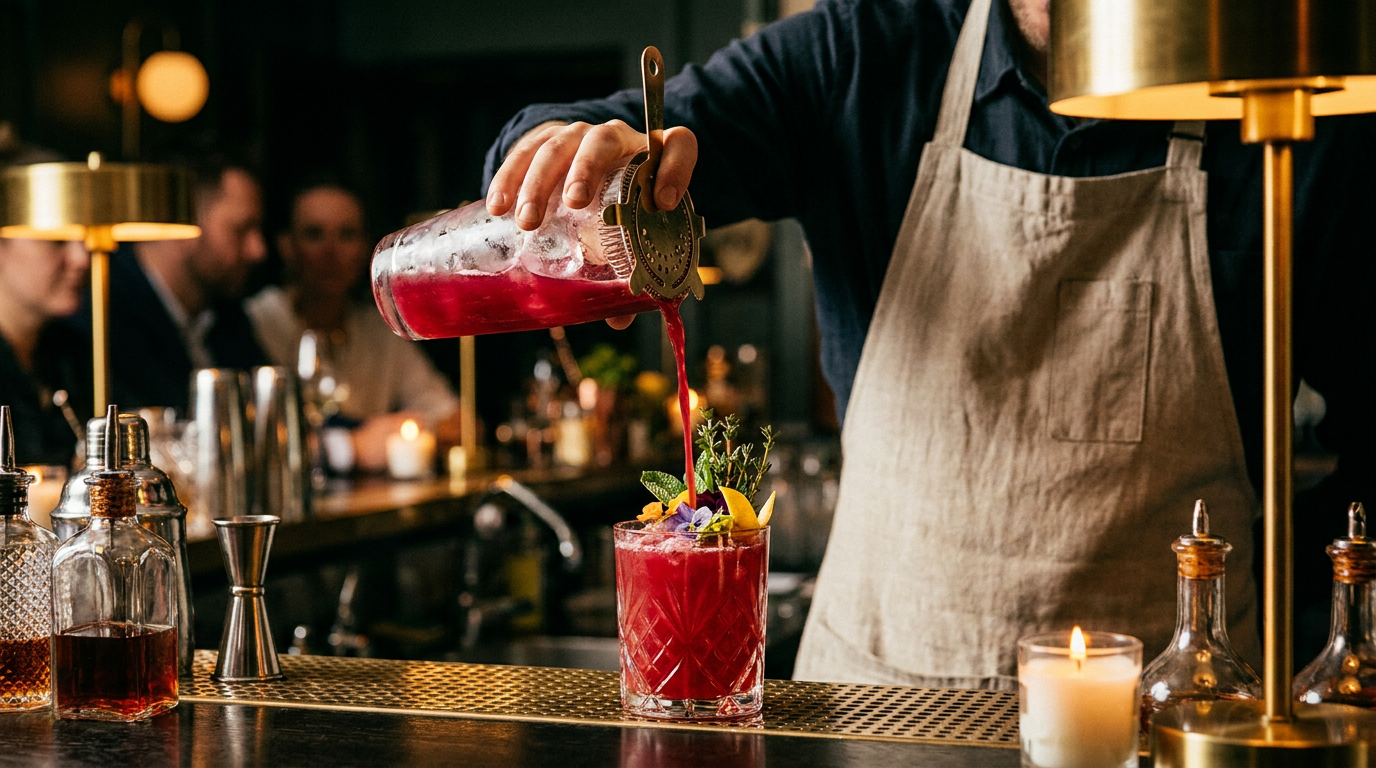
The scene at a modern upscale bar is visually indistinguishable from a decade ago. The glassware is premium, the garnishes are elaborate, and the liquids inside range from deep ambers to vibrant botanicals. Yet, a closer look reveals a fundamental shift in the room's chemistry: half the patrons are drinking zero alcohol. This is the "dry bar illusion," a phenomenon that is rapidly reshaping global nightlife and forcing a massive pivot within the corporate beverage industry.[1][7]
At the heart of this transformation is a behavioral trend known as "zebra striping"—the practice of consciously alternating between full-strength alcoholic drinks and non-alcoholic alternatives throughout a single evening. Rather than choosing between total abstinence and a heavy night out, consumers are pacing themselves. They are extending the social experience, maintaining the ritual of the round, and entirely avoiding the next-day hangover.[1][2]
The demographic data driving this shift is staggering, proving it is far more than a temporary wellness fad. Industry analysts report that 78% of Generation Z consumers now actively alternate between alcoholic and non-alcoholic rounds when they socialize. But the trend is not isolated to the youngest drinkers. Millennials and older demographics are rapidly adopting the practice, motivated by a desire for longevity, better sleep, and a more mindful approach to consumption.[2][5][7]

For the $1.29 trillion global non-alcoholic beverage industry, this behavioral shift represents a massive reallocation of consumer capital. Global alcohol volumes are projected to decline slightly in the coming years, with traditional categories like wine taking a noticeable hit. In response, legacy alcohol giants are not fighting the trend; they are aggressively moving to capture the "zebra striping" consumer.[2][3][4]
The corporate strategy is clear: if consumers are drinking less total alcohol, they must be sold premium, high-margin alternatives. The global low- and no-alcohol market is projected to reach an astonishing $46.5 billion by 2034, prompting a wave of corporate acquisitions, venture capital investments, and rapid product innovation.[2][4]
Recent moves by industry titans validate the sector's permanence. Diageo, the world's largest spirits maker, recently acquired the non-alcoholic brand Ritual Zero Proof, sending a clear signal that the future of the back bar includes alcohol-free options. Similarly, luxury conglomerate LVMH has invested heavily in French Bloom, a premium non-alcoholic sparkling wine, proving that even the highest-end consumers demand sophisticated zero-proof choices. Constellation Brands has also taken minority stakes in functional social tonic makers, moving legacy alcohol money deliberately into the wellness space.[2][8]

Recent moves by industry titans validate the sector's permanence.
The economics of the hospitality industry are transforming alongside these corporate investments. Historically, non-drinkers were a low-revenue demographic, relegated to cheap sodas, sugary juices, or tap water. Today, bars and restaurants are building what industry insiders call the "Zero-Proof Profit Center."[6]
Instead of serving $7 mocktails, establishments are now offering $15 zero-proof cocktails crafted with sophisticated non-alcoholic spirits like Seedlip, Lyre's, and Monday. These drinks require the same level of culinary care, premium ingredients, and research and development as their alcoholic counterparts. This allows bars to maintain high check averages and robust profit margins even as overall alcohol consumption drops.[6][9]
The formulation of these beverages has also evolved dramatically to meet the demands of the modern consumer. Drinkers practicing zebra striping refuse to pay premium prices for "sugar water." They demand functional complexity—beverages that offer the bite, tannin, acidity, and mouthfeel of traditional spirits and wines.[2][4]

To achieve this, beverage scientists are utilizing functional ingredient stacking, clean label formulations, and advanced fermentation techniques. Ingredients like adaptogens, nootropics, and complex botanicals are increasingly being used to provide a "mood-boosting" effect, offering consumers a different kind of buzz and relaxation without the ethanol.[2][5]
The rise of these premium non-alcoholic options is also solving a long-standing social friction. The "dry bar illusion" allows individuals to seamlessly blend into a drinking environment. Because a zero-proof Negroni or a non-alcoholic IPA looks identical to the real thing, the social pressure to consume alcohol evaporates, making mindful drinking an effortless choice rather than a social sacrifice.[1][7]

Looking ahead, 2026 is widely viewed by analysts as the critical inflection point where non-alcoholic beverages transition from a niche wellness category to a mainstream hospitality requirement. The infrastructure for large-scale distribution and production of high-quality non-alcoholic alternatives is finally in place, allowing brands to scale rapidly.[4]
For corporate beverage leaders and local bar owners alike, the mandate is clear: the future of drinking is hybrid. By embracing zebra striping and investing heavily in the zero-proof ecosystem, the industry is proving that it can thrive—and even increase its margins—in an era of mindful consumption.[4][9]
How we got here
2020-2022
The 'Sober Curious' movement gains mainstream traction, driving initial demand for alcohol alternatives.
2024
Diageo acquires non-alcoholic brand Ritual Zero Proof, signaling major corporate validation of the sector.
2025
Luxury conglomerate LVMH invests in French Bloom, establishing a high-end market for non-alcoholic wine.
2026
The 'zebra striping' trend peaks, with 78% of Gen Z actively alternating drinks on nights out.
Viewpoints in depth
Beverage Corporations
Legacy alcohol brands view the zero-proof market as a critical growth vector to offset declining traditional alcohol volumes.
For conglomerates like Diageo and LVMH, the rise of mindful drinking is not a threat but an acquisition opportunity. As global alcohol volumes face structural declines, these companies are aggressively investing in premium non-alcoholic spirits and functional tonics. Their strategy relies on premiumization: selling complex, high-margin alternatives that maintain their brand prestige while catering to health-conscious consumers who are drinking less but are willing to spend more per glass.
Hospitality Operators
Bars and restaurants see zero-proof cocktails as a high-margin 'profit center' that keeps guests staying longer.
Historically, non-drinkers were a low-revenue demographic for bars, often relegated to cheap sodas or tap water. The advent of the 'Zero-Proof Profit Center' has revolutionized hospitality economics. By offering $15 sophisticated non-alcoholic cocktails that require the same culinary craftsmanship as traditional drinks, venues can maintain high check averages. Operators report that guests who practice zebra striping tend to stay at the venue longer, ultimately spending more over the course of the evening.
Mindful Consumers
Consumers value the ability to socialize without the hangover or health impacts, demanding complex flavors over sugary mocktails.
Led by Generation Z but rapidly expanding across all age groups, mindful consumers are rejecting the binary choice between total abstinence and heavy intoxication. They view 'zebra striping' as a sustainable lifestyle hack that preserves the ritual and social connection of nightlife while protecting their physical health and next-day productivity. This camp actively rejects overly sweet mocktails, demanding beverages with the bite, tannin, and functional complexity of real spirits.
What we don't know
- Whether the premium pricing of $15 zero-proof cocktails will remain sustainable as the non-alcoholic market becomes more saturated.
- How traditional alcohol distributors will adapt their supply chains if the volume of full-strength spirits continues to decline globally.
Key terms
- Zebra Striping
- The practice of alternating between alcoholic and non-alcoholic beverages during a single social occasion.
- Zero-Proof
- Beverages that contain zero alcohol but are crafted to mimic the complexity and flavor profile of traditional spirits.
- Functional Beverages
- Drinks formulated with ingredients like adaptogens or botanicals intended to provide a specific health benefit or mood-boosting effect.
- Dry Bar Illusion
- The social phenomenon where non-alcoholic drinks are visually indistinguishable from alcoholic ones, removing the stigma of not drinking.
Frequently asked
What exactly is zebra striping?
Zebra striping is the growing trend of alternating between full-strength alcoholic drinks and non-alcoholic alternatives throughout a night out, allowing people to pace themselves and reduce their overall alcohol intake.
Why are non-alcoholic cocktails so expensive?
Premium zero-proof cocktails use sophisticated, distilled non-alcoholic spirits that require complex manufacturing processes. They also demand the same level of culinary care, fresh ingredients, and bartender labor as traditional cocktails.
Are major alcohol companies losing money because of this?
While traditional alcohol volumes are seeing slight declines, major corporations are actually capitalizing on the trend by acquiring non-alcoholic brands and selling premium zero-proof products at high margins.
Sources
Source coverage
9 outlets
3 viewpoints surfaced








[1]ForbesMindful Consumers
The Dry Bar Illusion And The Rise Of Zebra Striping
Read on Forbes →[2]Good Culture IngredientsBeverage Corporations
Non-Alcoholic Beverage Market Trends 2026: A $46.5bn Opportunity
Read on Good Culture Ingredients →[3]Mordor IntelligenceBeverage Corporations
Non-alcoholic Beverages Market Analysis
Read on Mordor Intelligence →[4]Protis GlobalBeverage Corporations
Investment and Growth: Capital Flowing to Category Leaders
Read on Protis Global →[5]DatassentialMindful Consumers
Non-Alcoholic Beverage Trends for 2026
Read on Datassential →[6]GetBackBarHospitality Operators
2026 Bar Trends: The Zero-Proof Profit Center
Read on GetBackBar →[7]Spiritu DrinksMindful Consumers
Zebra Striping: The Global Mindful Drinking Movement
Read on Spiritu Drinks →[8]Pinky BeveragesBeverage Corporations
Constellation Brands Investment in Hiyo and Functional Beverages
Read on Pinky Beverages →[9]Factlen Editorial TeamHospitality Operators
Synthesis by Factlen editorial team
Read on Factlen Editorial Team →
Every angle. Every day.
Get business stories with full source coverage and perspective breakdowns delivered to your inbox.