
Evidence Pack: Does the Shingles Vaccine Lower Dementia Risk?
A major new study links the recombinant shingles vaccine to a 24% lower risk of dementia in nursing home residents, adding to growing evidence of a neuroprotective effect.
By Factlen Editorial Team
- Epidemiological Researchers
- Focus on the strong statistical association across massive datasets and the potential of vaccines as a neuroprotective tool.
- Clinical Methodologists
- Emphasize the need for randomized controlled trials and caution against assuming direct causation due to healthy vaccinee bias.
- Geriatric Care Providers
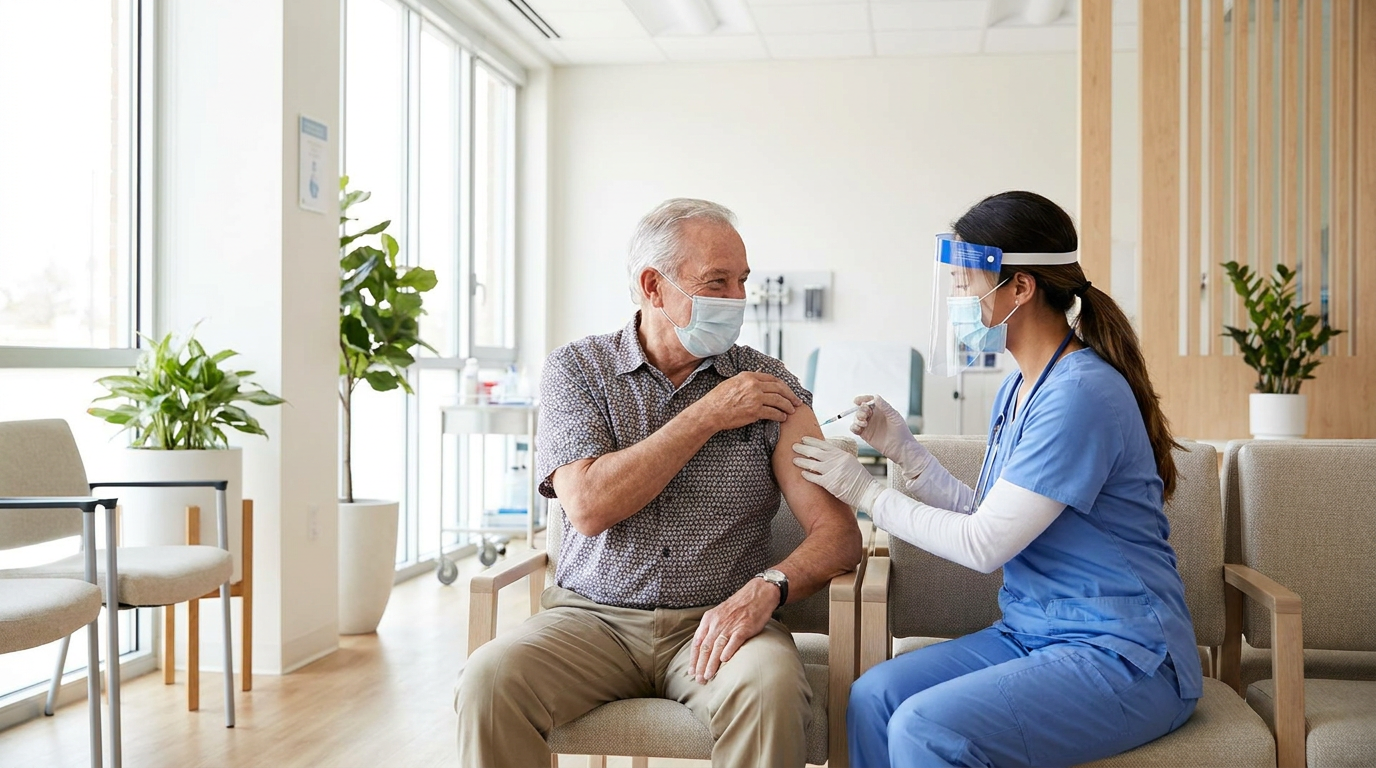
- Advocate for increased vaccine uptake in vulnerable populations based on the dual benefits of preventing shingles and potentially delaying cognitive decline.
What's not represented
- · Neurologists specializing in Alzheimer's disease
- · Patients and families affected by dementia
Why this matters
With dementia rates climbing globally and no definitive cure available, identifying accessible, existing interventions that can delay cognitive decline is one of the most urgent priorities in modern medicine. If vaccines offer dual protection, it fundamentally changes preventative care for older adults.
Key points
- A major study found the recombinant shingles vaccine is associated with a 24% lower risk of dementia in nursing home residents.
- The absolute risk of developing dementia over four years dropped from 24.6% in unvaccinated patients to 18.8% in vaccinated patients.
- Researchers used "target trial emulation" on data from over 500,000 Medicare patients to adjust for underlying health differences.
- The biological mechanism remains unproven, but theories include reduced viral inflammation, fewer micro-strokes, or immune system stimulation.
- Health watchdogs caution that while the association is strong, randomized controlled trials are required to definitively prove causation.
The search for a defense against dementia has historically been a graveyard of failed drug trials and dashed hopes. But a growing body of epidemiological evidence suggests that a powerful tool for preserving cognitive health might already be sitting in pharmacy refrigerators. The recombinant zoster vaccine (RZV), commonly known as Shingrix, is highly effective at preventing shingles. Now, researchers are increasingly confident that it also provides a substantial shield against cognitive decline.[6]
The latest and most compelling data point arrived in June 2026, via a massive study published in the Annals of Internal Medicine. Researchers from the Brown University School of Public Health analyzed the medical records of more than 500,000 Medicare patients aged 66 and older who had been admitted to skilled nursing facilities.[2][3]
The findings were stark. Patients who received at least one dose of the recombinant shingles vaccine within a year of their admission had a 24 percent lower relative risk of being diagnosed with dementia over the following four years, compared to their unvaccinated peers.[1][2]
In absolute terms, the difference is highly clinically significant. Among the unvaccinated group, 24.6 percent developed dementia during the four-year follow-up window. In the vaccinated cohort, that figure dropped to 18.8 percent—an absolute risk reduction of 5.8 percentage points. According to the study's lead author, Dr. Kaley Hayes, this translates to roughly one in 17 dementia cases potentially being prevented through vaccination.[2][3]

The Brown University study is particularly vital because it focuses on a highly vulnerable, understudied population. Older adults entering skilled nursing facilities are at an elevated risk for both shingles and dementia, yet they are routinely excluded from traditional clinical trials. Demonstrating a protective effect in this specific demographic provides a crucial evidence base for geriatric care.[1][2]
This new data does not exist in a vacuum; it builds upon a foundation of prior observations. In 2024, a major study led by the University of Oxford and the National Institute for Health and Care Research (NIHR) examined over 200,000 patients. That research found that the newer Shingrix vaccine was associated with a 17 percent lower risk of dementia compared to the older, live-attenuated Zostavax vaccine, which is no longer used in the United States.[4]
The Oxford study also compared Shingrix to other common adult immunizations, finding that it was associated with a 23 to 27 percent lower risk of dementia than vaccines for influenza or tetanus, diphtheria, and pertussis (Tdap). This specificity suggests that the neuroprotective effect might be unique to the shingles vaccine, rather than a general benefit of immune system activation.[4]
This specificity suggests that the neuroprotective effect might be unique to the shingles vaccine, rather than a general benefit of immune system activation.
If the statistical link is real, the scientific community faces a pressing question: what is the biological mechanism? Researchers currently propose three primary theories to explain how a shot in the arm could protect the brain.[6]
The first theory centers on the prevention of the virus itself. Shingles is caused by the reactivation of the varicella-zoster virus—the same virus that causes chickenpox. When it reactivates, it triggers widespread, systemic inflammation. Chronic inflammation is a well-established driver of neurodegeneration, and preventing these inflammatory spikes may preserve neural tissue.[2][3]
The second theory focuses on vascular health. Severe shingles infections are known to increase the risk of cardiovascular events, including strokes and micro-strokes. By preventing the infection, the vaccine may protect the brain's delicate blood vessels, thereby reducing the incidence of vascular dementia.[1][2]

The third, and perhaps most intriguing, theory involves the vaccine's chemical adjuvant—the ingredient designed to supercharge the body's immune response. Some researchers hypothesize that the specific adjuvant used in Shingrix (AS01) might stimulate the immune system in a way that helps clear amyloid plaques or neurofibrillary tangles from the brain, effectively acting as an immunotherapy for cognitive decline.[2][4]
Despite the compelling data and plausible biological mechanisms, the evidence remains observational. This introduces a critical methodological caveat known as the "healthy vaccinee bias." People who proactively seek out vaccinations often have better access to healthcare, healthier lifestyles, and fewer underlying risk factors—all of which independently lower their risk of dementia.[5][6]
The Irish Health Information and Quality Authority (Hiqa) recently published a scoping review highlighting this exact limitation. The watchdog concluded that while the observational studies show a clear association, they cannot definitively prove that the vaccine directly causes the reduction in dementia risk. Without randomized controlled trials, residual confounding variables cannot be entirely ruled out.[5]
To mitigate this bias, the Brown University researchers utilized a rigorous statistical framework called "target trial emulation." This methodology is designed to mimic the strict parameters of a randomized controlled trial using retrospective data, carefully adjusting for age, underlying health conditions, and healthcare access. Even after these adjustments, the 24 percent risk reduction held firm.[2][6]

For geriatricians and public health officials, the clinical calculus is already clear. Shingles is a deeply painful, debilitating condition that can cause long-term nerve damage. The vaccine is already recommended for adults over 50 to prevent this suffering. If it also offers a 24 percent reduction in dementia risk, the imperative to increase vaccination rates—especially in nursing homes where uptake remains low—becomes an urgent priority.[1][2]
The scientific consensus is that a large-scale, randomized controlled trial is the necessary next step to definitively prove causation. Until those trials are conducted, the shingles vaccine stands as one of the most promising, accessible, and low-risk interventions in the global fight against cognitive decline.[2][6]
How we got here
2017
The FDA approves the recombinant zoster vaccine (Shingrix), offering higher efficacy than the older live-attenuated vaccine.
July 2024
An Oxford University study links the newer Shingrix vaccine to a 17% lower risk of dementia compared to the older Zostavax.
May 2026
The Irish Health Information and Quality Authority publishes a review cautioning that observational studies cannot yet prove direct causation.
June 2026
A Brown University study in the Annals of Internal Medicine demonstrates a 24% lower dementia risk in vaccinated nursing home residents.
Viewpoints in depth
Epidemiological Researchers
Focus on the strong statistical association across massive datasets and the potential of vaccines as a neuroprotective tool.
Public health researchers and epidemiologists point to the sheer scale of the data as compelling evidence. By analyzing over 500,000 patient records and utilizing target trial emulation, researchers argue they have accounted for as many confounding variables as possible short of a randomized trial. For this camp, the consistent findings across different populations and vaccine types strongly suggest a genuine biological mechanism at play, making the vaccine a highly promising candidate for neuroprotection.
Clinical Methodologists
Emphasize the need for randomized controlled trials and caution against assuming direct causation.
Methodologists and health watchdogs, such as the Irish Health Information and Quality Authority, emphasize that observational data—no matter how vast—cannot definitively prove causation. They highlight the 'healthy vaccinee bias,' noting that individuals who receive vaccinations often have better overall healthcare access and healthier lifestyles, which inherently lowers their dementia risk. This camp insists that until a double-blind, randomized controlled trial is conducted, the vaccine should not be formally prescribed or marketed as a dementia preventative.
Geriatric Care Providers
Advocate for increased vaccine uptake based on the dual benefits of preventing shingles and potentially delaying cognitive decline.
For frontline healthcare providers and geriatricians, the academic debate over causation is secondary to immediate patient welfare. Shingles is a severe, painful condition that disproportionately affects older adults, yet vaccine uptake in nursing homes remains remarkably low. This camp argues that the potential 24 percent reduction in dementia risk serves as a powerful additional incentive to increase vaccination rates. Even if the neuroprotective effect is only partial, the established benefits of preventing shingles make the vaccine a critical priority for vulnerable populations.
What we don't know
- Whether the vaccine directly causes the reduction in dementia risk, or if the association is partially driven by the healthier lifestyles of those who seek vaccination.
- The exact biological mechanism by which preventing shingles—or stimulating the immune system with an adjuvant—protects neural tissue.
- How long the potential neuroprotective effects of the vaccine last beyond the four-year follow-up period observed in the recent study.
Key terms
- Recombinant Zoster Vaccine (RZV)
- A newer type of shingles vaccine (marketed as Shingrix) that uses a piece of the virus combined with an adjuvant to trigger a strong immune response.
- Adjuvant
- An ingredient used in some vaccines that helps create a stronger immune response in people receiving the vaccine.
- Target Trial Emulation
- A statistical method that uses observational data to mimic the design and rigorous conditions of a randomized controlled trial.
- Healthy Vaccinee Bias
- A statistical distortion where people who choose to get vaccinated also tend to have healthier lifestyles and better healthcare access, making the vaccine look more effective than it might actually be.
Frequently asked
Does the shingles vaccine cure dementia?
No. The vaccine is associated with a lower risk of developing dementia in the first place, but it is not a treatment or cure for those who already have the condition.
Which shingles vaccine was studied?
The recent studies focused on the recombinant zoster vaccine (RZV), commonly known as Shingrix, which has been available in the U.S. since 2017.
How might a vaccine protect the brain?
Researchers theorize it could prevent brain inflammation caused by the virus, reduce the risk of micro-strokes, or that the vaccine's immune-boosting ingredients might help clear harmful plaques from the brain.
Is it proven that the vaccine prevents dementia?
Not definitively. While massive observational studies show a strong link, scientists agree that a randomized controlled trial is needed to prove that the vaccine directly causes the reduction in risk.
Sources
Source coverage
6 outlets
3 viewpoints surfaced






[1]STAT NewsGeriatric Care Providers
STAT+: Shingles vaccine may lower dementia risk, new study finds
Read on STAT News →[2]MedPage TodayEpidemiological Researchers
Study Looks at Risk for Dementia After Shingles Vaccine in High-Risk Group
Read on MedPage Today →[3]Inc.Epidemiological Researchers
A common vaccine may be the secret to avoiding cognitive decline
Read on Inc. →[4]National Institute for Health and Care ResearchEpidemiological Researchers
Major study finds new shingles vaccine could lower risk of dementia
Read on National Institute for Health and Care Research →[5]The Irish TimesClinical Methodologists
'Not possible to determine' if single shingles vaccine lowers risk of dementia, says Hiqa
Read on The Irish Times →[6]Factlen Editorial TeamClinical Methodologists
Synthesis by Factlen editorial team
Read on Factlen Editorial Team →
Every angle. Every day.
Get health stories with full source coverage and perspective breakdowns delivered to your inbox.