
Smart Bassinets vs. Traditional Bassinets: Weighing the Costs and Benefits for Newborn Sleep
Smart bassinets offer automated soothing to maximize parental sleep, while traditional models provide affordable, low-tech simplicity. This side-by-side analysis breaks down the evidence, costs, and specific conditions where each sleep space makes the most sense.
By Factlen Editorial Team
- Tech-Forward Parents
- Families who view smart bassinets as a necessary investment in sleep and mental health.
- Minimalist Caregivers
- Parents who prefer low-tech, affordable solutions and prioritize natural movement.
- Neutral Analysts
- Observers weighing the objective costs and benefits of automated sleep technology.
What's not represented
- · Pediatric physical therapists evaluating the long-term muscular impact of restrictive smart swaddles.
- · Second-hand market buyers navigating the complexities of locked smart bassinet software.
Why this matters
Choosing the right bassinet dictates how much sleep parents will get during the grueling first six months of a child's life. Understanding the true financial and practical trade-offs prevents families from overspending on unnecessary tech or underinvesting in tools that could save their sanity.
Key points
- Traditional bassinets cost between $150 and $300 and require manual rocking by parents.
- Smart bassinets cost upwards of $1,000 and use microphones and motors to automatically soothe crying babies.
- Both types of bassinets are typically outgrown by the time a baby reaches four to six months of age.
- Some smart bassinet brands now charge monthly subscription fees to access their sleep-tracking apps.
- Traditional models offer greater portability and allow for non-restrictive swaddling.
- There is no single "best" option; the choice depends entirely on a family's budget and tech preferences.
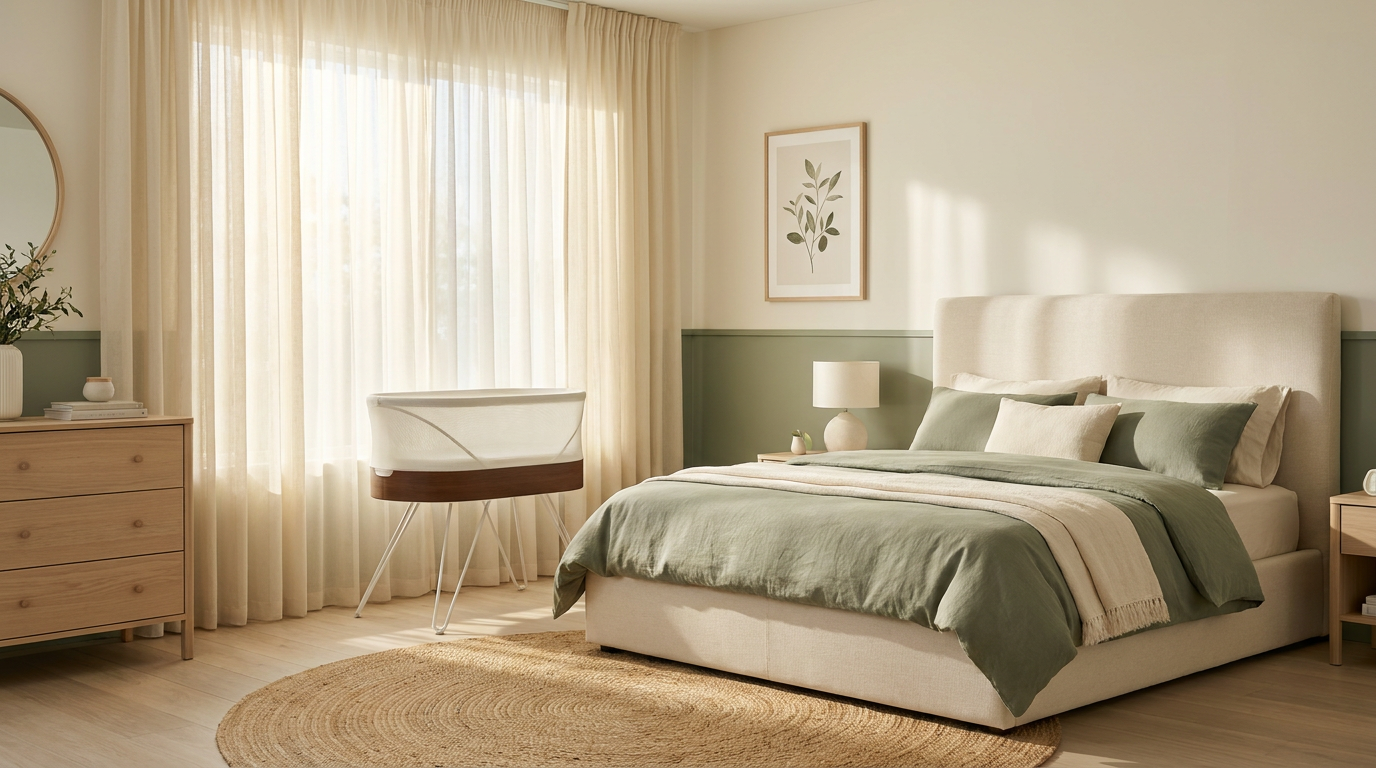
The arrival of a newborn introduces parents to a profound level of sleep deprivation, transforming the simple act of putting a baby to bed into a high-stakes negotiation. For decades, the traditional bassinet served as the undisputed standard for the first six months of life, offering a safe, flat sleeping surface right next to the parents' bed. However, the last decade has seen the rapid rise of the smart bassinet, a category pioneered by the Happiest Baby Snoo and now populated by competitors like the Maxi-Cosi Starling and the Cradlewise Smart Crib. These robotic sleep assistants promise to act as an extra set of hands, using microphones, sensors, and motorized bases to detect a baby's cries and automatically respond with escalating motion and white noise. The core dilemma for modern parents is whether the promise of an extra hour or two of sleep justifies a price tag that can exceed a thousand dollars for a piece of furniture with a maximum lifespan of six months. This side-by-side trade-off analysis examines the evidence, the arguments for and against each option, and the specific conditions under which each type of bassinet makes the most sense for a family.[1][6]
When evaluating the case for the traditional bassinet, the primary argument centers on accessibility, simplicity, and adherence to the most basic safe-sleep guidelines. The American Academy of Pediatrics recommends that infants sleep in the parents' room, on a separate, flat, and firm surface, for at least the first six months. Traditional bassinets, ranging from the popular Halo BassiNest to the UPPAbaby Bassinet, fulfill this requirement perfectly without requiring Wi-Fi connections, app subscriptions, or power outlets. The evidence supporting traditional models is largely economic and practical: they typically cost between $150 and $300, making them highly accessible. Furthermore, they are lightweight and often portable, allowing parents to easily move the sleep space from the bedroom to the living room during the day. The argument against the traditional bassinet is entirely about manual labor. When a baby wakes at two in the morning, the parent becomes the engine, forced to lean over the bed and manually rock the infant back to sleep, interrupting their own rest and demanding constant physical intervention.[3][5]
The case for the smart bassinet is built on the profound impact of automated, responsive soothing. Proponents argue that these devices mimic the sensory environment of the womb, utilizing constant motion and white noise to keep babies asleep longer and settle them faster when they stir. The evidence for this approach is compelling for many families; manufacturers and pediatricians note that rhythmic motion is a proven sleep cue for infants, often preventing a minor stirring from escalating into a full crying fit. Devices like the Maxi-Cosi Starling even use artificial intelligence to analyze the frequency of a baby's cry, attempting to translate whether the infant is hungry, gassy, or simply sleepy before initiating a rocking sequence. The argument against smart bassinets focuses heavily on their exorbitant cost and the potential for technological over-reliance. With flagship models priced between $1,000 and $1,700, they represent a massive financial investment for a product that a baby will outgrow as soon as they can roll over or reach twenty pounds.[2][4]

A critical point of comparison in this trade-off analysis is the ongoing cost and technological friction associated with smart models. The evidence shows that the financial burden of a smart bassinet increasingly extends beyond the initial purchase price. Several premium brands have recently introduced monthly subscription fees to access the very sleep-tracking apps and premium features that parents believed they were buying outright. This paywalling of data has frustrated consumers and shifted market preferences toward models that include all software features in the base price. Furthermore, smart bassinets are tethered to the wall and reliant on home internet networks; if the Wi-Fi drops or the app glitches, the thousand-dollar robotic assistant temporarily reverts to a very heavy, very expensive traditional bassinet. In contrast, the traditional bassinet requires zero onboarding, zero software updates, and zero monthly fees, offering a frictionless experience that appeals to parents who are already overwhelmed by the complexities of newborn care.[2][6]
A critical point of comparison in this trade-off analysis is the ongoing cost and technological friction associated with smart models.
The debate also extends to the physical design and the implications for infant development. The evidence regarding smart bassinet safety is generally positive, but specific design choices have sparked debate among pediatric physical therapists. The original smart bassinet, the Snoo, utilizes a proprietary swaddle that clips into the sides of the bed, effectively locking the baby on their back to prevent dangerous rolling. While this guarantees adherence to safe-sleep positioning, critics argue that this "straitjacket" approach restricts natural movement and could potentially impact hip development if overused. Newer smart models have attempted to address this by allowing for more natural movement while still providing automated rocking. Traditional bassinets avoid this controversy entirely, allowing parents to use any standard, pediatrician-approved swaddle or sleep sack. This freedom of movement is a strong argument for the traditional route, particularly for parents who prefer a less restrictive sleep environment or who want to practice transitioning their baby out of a swaddle earlier in the newborn phase.[1][2]
When comparing the longevity and versatility of the two options, the evidence heavily favors traditional and convertible models over standard smart bassinets. The strict safety guidelines for bassinets dictate that babies must transition to a full-size crib once they reach roughly twenty pounds or begin pushing up on their hands and knees, which typically occurs between four and six months of age. Spending $1,500 on a smart bassinet yields a remarkably high cost-per-use ratio over such a short window. Some companies have attempted to solve this by creating smart cribs, like the Cradlewise, which offer the same automated bouncing and white noise but can accommodate a child up to two years of age. However, these convertible smart options are even more expensive and lack the bedside intimacy and small footprint of a newborn bassinet. Traditional bassinets, while also limited to a six-month lifespan, require a fraction of the investment, making the inevitable transition to a standard crib far less financially painful for the average family.[1][5]

Ultimately, the decision requires clear guidance on when each option is appropriate, as there is no single winner without conditions. A smart bassinet fits well when a family has a high budget, places a premium on maximizing every possible minute of nighttime sleep, and feels comfortable navigating apps and connected devices. It is particularly well-suited for parents of multiples, caregivers returning to work immediately, or families who have previously struggled with severe sleep deprivation and are willing to pay a premium for an automated "night nurse." It also fits well when parents are highly anxious about safe sleep positioning, as the clip-in swaddles of certain smart models provide an absolute guarantee that the infant will remain on their back throughout the night. For these specific demographics, the high cost is often viewed as a necessary investment in parental mental health and household stability.[1][3][6]
Conversely, a smart bassinet does not fit well when a family is operating on a strict budget, as the financial strain will likely outweigh the benefits of an extra hour of sleep. It also does not fit well for parents who prefer a minimalist, low-tech approach to child-rearing, or those who plan to move the bassinet frequently between rooms, given the heavy, corded nature of robotic beds. A traditional bassinet fits well when parents want a lightweight, portable, and highly affordable safe-sleep space that can be easily positioned flush against the adult bed for middle-of-the-night feedings. It is the ideal choice for families who prioritize simplicity and are comfortable with the manual labor of rocking and soothing their infant. In the end, both options successfully fulfill the fundamental requirement of keeping a newborn safe; the true trade-off is simply deciding how much a family is willing and able to pay to outsource the midnight rocking.[2][5][6]
How we got here
First 6 Months
The American Academy of Pediatrics recommends infants sleep in the parents' room on a flat, firm surface.
4 to 6 Months
Babies typically reach the 20-pound weight limit or begin rolling over, requiring a transition out of the bassinet.
Post-Bassinet
Infants are moved to a full-size crib or a convertible toddler bed for long-term sleep.
Viewpoints in depth
Tech-Forward Parents
Families who view smart bassinets as a necessary investment in sleep and mental health.
For this camp, the exorbitant cost of a smart bassinet is easily justified by the promise of an extra hour or two of sleep each night. They point to the physical and mental toll of severe sleep deprivation during the newborn phase, arguing that outsourcing the manual labor of rocking a baby is a modern necessity rather than a luxury. This group values data, often utilizing the companion apps to track sleep cycles and optimize routines, and they appreciate the absolute safety guarantee provided by clip-in swaddle systems.
Minimalist Caregivers
Parents who prefer low-tech, affordable solutions and prioritize natural movement.
This perspective argues that the newborn phase has been unnecessarily complicated and commodified by the tech industry. They advocate for traditional bassinets, emphasizing that babies have slept safely for generations without the need for Wi-Fi or robotic motors. Minimalists often express concern over the restrictive nature of smart bassinet swaddles, preferring sleep spaces that allow infants to move their hips and arms naturally. Furthermore, they view the $1,500 price tag and monthly app subscriptions as predatory expenses targeted at vulnerable, exhausted new parents.
What we don't know
- Whether the long-term use of automated rocking devices impacts a baby's ability to self-soothe later in childhood.
- How upcoming right-to-repair legislation might affect the resale market for expensive smart bassinets with proprietary software.
Key terms
- Smart Bassinet
- An infant bed equipped with microphones, sensors, and motors that automatically rocks and plays white noise when a baby cries.
- White Noise
- A consistent, ambient sound used to mask background household noises and mimic the auditory environment of the womb.
- Sleep Sack
- A wearable blanket designed to keep a baby warm without the suffocation risks associated with loose bedding.
- SIDS (Sudden Infant Death Syndrome)
- The unexplained death of a seemingly healthy baby, the risk of which is reduced by following safe-sleep guidelines like back-sleeping on a firm surface.
Frequently asked
How long can a baby sleep in a bassinet?
Most babies outgrow a bassinet between four and six months of age. You must transition them to a crib once they reach the manufacturer's weight limit (usually 20 pounds) or begin pushing up on their hands and knees.
Do smart bassinets actually help babies sleep longer?
Many parents and pediatricians report that the rhythmic motion and white noise of smart bassinets can help settle babies faster and extend sleep by 1 to 2 hours, though results vary widely by infant.
Are traditional bassinets safe?
Yes. As long as a traditional bassinet has a firm, flat mattress and meets current consumer safety standards, it is a perfectly safe sleep environment recommended by pediatricians.
Sources
Source coverage
6 outlets
3 viewpoints surfaced






[1]ForbesTech-Forward Parents
The Best Bassinets Of 2025, Tested And Reviewed By Parents
Read on Forbes →[2]Baby enRouteTech-Forward Parents
Smart Bassinet vs. Standard: Is It Worth The Price Tag?
Read on Baby enRoute →[3]MaydollyMinimalist Caregivers
The Traditional Bassinet vs. The Smart Bassinet
Read on Maydolly →[4]SleepytrollNeutral Analysts
What is a smart bassinet and do you need one?
Read on Sleepytroll →[5]Newton BabyMinimalist Caregivers
Bassinet vs. Crib: Safe Sleep Options
Read on Newton Baby →[6]Factlen Editorial TeamNeutral Analysts
Synthesis by Factlen editorial team
Read on Factlen Editorial Team →
More in shopping
See all 7 stories →Diamond Market
Lab-Grown vs. Mined Diamonds: The 2026 Buyer's Guide
9 sources

Sleep Tech
What the Science Actually Says About Your Sleep Tracker
6 sources

Smart Home Hubs
Home Assistant vs. Cloud Hubs: Choosing Your Smart Home Architecture
7 sources
Wearable Tech
Do Smart Rings Actually Track Sleep Accurately? A Review of the Clinical Evidence
8 sources
Every angle. Every day.
Get shopping stories with full source coverage and perspective breakdowns delivered to your inbox.