
The Death of the Password: How Passkeys Reached 5 Billion Users and Crushed Phishing
With 5 billion passkeys now active globally, the tech industry's decades-long effort to eliminate the password has reached a tipping point. A new evidence pack reveals how cryptographic, device-bound authentication is systematically dismantling credential phishing and account takeovers.
By Factlen Editorial Team
- Standards Bodies
- Advocates for open, interoperable authentication standards to eliminate passwords globally.
- Enterprise Identity Providers
- Focuses on deploying passkeys to secure workforces, reduce helpdesk costs, and phase out legacy systems.
- Consumer Security Vendors
- Prioritizes user experience, automatic upgrades, and seamless cross-device syncing for the general public.
- High-Assurance Sectors
- Requires strict, device-bound passkey implementations to meet regulatory compliance and secure financial assets.
- Independent Analysts
- Evaluates the empirical evidence of passkey adoption and its measurable impact on cybercrime.
What's not represented
- · Cybercriminals adapting to post-password attack vectors
- · Users lacking access to modern biometric smartphones
Why this matters
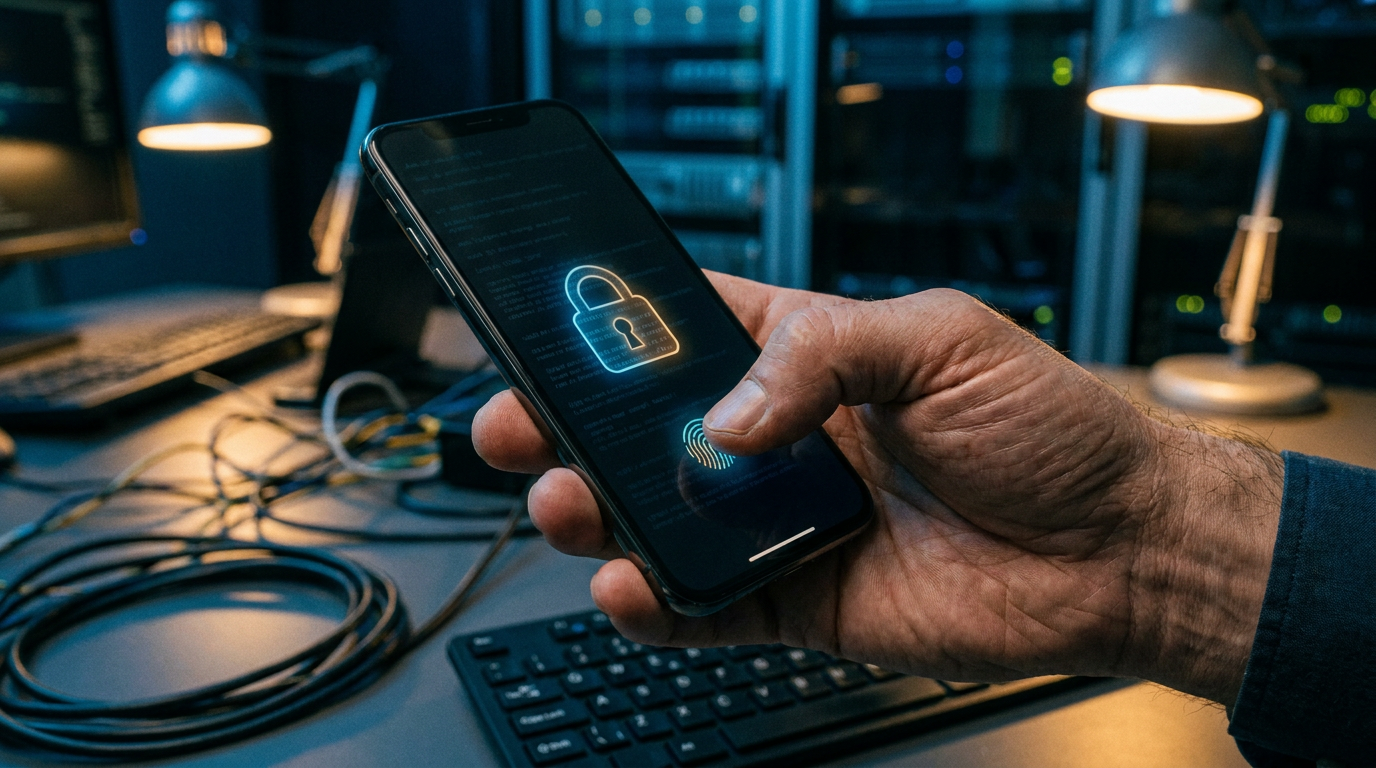
Passwords are the root cause of most identity theft and corporate data breaches. The mainstream adoption of passkeys means the internet is fundamentally upgrading its security architecture, allowing users to protect their digital lives with a simple fingerprint or face scan while rendering credential phishing obsolete.
Key points
- An estimated 5 billion passkeys are now in active use worldwide, marking a major milestone in the transition away from passwords.
- Consumer awareness has reached 90 percent, with 75 percent of users enabling passkeys on at least one account.
- Passkeys eliminate credential phishing by using cryptographic keypairs that never transmit a shared secret over the internet.
- Enterprise adopters report a 47 percent improvement in security posture and a 35 percent reduction in password-reset helpdesk tickets.
- Highly regulated industries, such as banking, are adopting stricter 'device-bound' passkeys that cannot be synced to the cloud.
For decades, the cybersecurity industry has chased a seemingly impossible goal: killing the password. In 2026, the data suggests the industry has finally crossed the tipping point. According to a milestone report released this month, an estimated 5 billion passkeys are now in active use worldwide. This transition represents the most significant upgrade to consumer and enterprise digital security since the invention of the internet, fundamentally shifting authentication away from vulnerable shared secrets to cryptographic proofs. By replacing memorized character strings with device-bound keys, the technology sector is systematically dismantling the primary vector for identity theft and corporate data breaches.[1][7]
The scale of the behavioral shift is staggering. A global survey of 11,000 consumers revealed that 90 percent of internet users are now aware of passkeys, and 75 percent have enabled them on at least one account. Nearly half of all consumers now use passkeys whenever possible. This rapid uptake is not merely a security victory; it is a usability triumph. By replacing complex character strings with the biometric sensors already built into smartphones and laptops, the tech industry has aligned the most secure login method with the path of least resistance, eliminating the friction of forgotten passwords.[1][3][4]
The urgency behind this transition is driven by the catastrophic failure of the password. Stolen credentials and phishing remain the primary vectors for account takeovers and enterprise data breaches. Traditional passwords, even when paired with SMS-based two-factor authentication, are easily intercepted by sophisticated adversaries using convincing fake login pages or adversary-in-the-middle attacks. The fundamental flaw of the password is that it is a shared secret: if a user can be tricked into typing it into a malicious prompt, an attacker can instantly steal it and compromise the account.[5][6][7]

The central claim driving the adoption of passkeys is that they inherently eliminate credential phishing. The primary security advantage of a passkey is that it cannot be phished or stolen from a database breach. When a user registers a passkey, their device generates a unique cryptographic keypair. The public key is shared with the service provider and stored on their servers, while the private key remains securely locked within the device's secure hardware enclave, never to be transmitted over the internet.[5][6]
The evidence for this phishing resistance lies in the cryptographic challenge-response mechanism. During authentication, the website issues a cryptographic challenge. The user's device signs this challenge using the private key—unlocked locally via a fingerprint, face scan, or PIN—and sends the signature back to the server. Because the private key never leaves the device, there is no secret for an attacker to intercept. Furthermore, the WebAuthn standard cryptographically binds the passkey to the specific website domain. If a user is tricked into visiting a lookalike phishing site, the device simply recognizes the domain mismatch and refuses to authenticate, neutralizing the attack entirely.[2][5][6]
Beyond security, industry proponents claim that consumer adoption is accelerating primarily due to invisible upgrades and cross-device syncing. Security tools historically fail when they introduce friction, but passkeys are succeeding by removing it. Consumer security vendors are deploying automatic upgrades, which seamlessly prompt users to create a passkey during a standard password login, making the transition nearly invisible to the end user. By integrating the creation process directly into the existing login flow, platforms are rapidly converting legacy accounts without requiring users to navigate complex security settings menus.[3]
Beyond security, industry proponents claim that consumer adoption is accelerating primarily due to invisible upgrades and cross-device syncing.
The evidence supporting this usability claim is found in the widespread deployment of synced passkeys across major platform ecosystems. Apple, Google, and Microsoft now allow passkeys to sync securely across a user's devices via cloud password managers. This means a passkey created on a smartphone can instantly be used to log into the same service on a tablet or desktop. This interoperability, built on the FIDO Alliance's open standards, has driven sign-in success rates significantly higher than legacy passwords, proving that users prefer the biometric experience over typing characters.[2]

In the corporate sector, identity providers claim that enterprise deployment is reaching mainstream levels and delivering measurable operational returns. The corporate world is aggressively following the consumer trend, seeking to lock down vulnerable corporate networks. Currently, 68 percent of large organizations are deploying, piloting, or rolling out passkeys for employee authentication. The motivations for this shift extend beyond mitigating cyber risk to achieving tangible operational efficiency and reducing IT overhead. By removing the weakest link in the corporate security perimeter, companies are fundamentally modernizing their digital infrastructure.[1][4]
The empirical evidence from early enterprise adopters demonstrates a clear return on investment. Organizations report a 47 percent improvement in overall security posture and a 45 percent reduction in employee login times. Crucially, companies are seeing a 35 percent reduction in helpdesk tickets related to password resets—a notorious and expensive drain on IT resources. By eliminating the need for employees to memorize rotating, complex passwords, organizations are simultaneously reducing daily friction and closing their largest security vulnerability.[1][4][7]
Despite the rapid rollout, there is transparent uncertainty regarding the gap between deployment and total password deprecation. True passwordless environments remain aspirational for many businesses. Even among organizations that have deployed passkeys, 57 percent still rely on phishable authentication methods for primary day-to-day sign-ins. Legacy system compatibility, technical debt, and complex account recovery workflows continue to slow the complete eradication of the password in enterprise environments, leaving a transitional window where hybrid risks persist. Until these legacy fallback methods are entirely disabled, attackers can still target the weakest available authentication route.[1]
Another area of nuance involves high-assurance sectors, which require specialized passkey implementations rather than the consumer-friendly synced versions. While synced passkeys are ideal for consumer convenience, highly regulated industries like banking require stricter controls to prevent unauthorized access. Financial institutions are increasingly adopting device-bound passkeys to comply with stringent regulatory frameworks, such as Europe's PSD3 regulations for strong customer authentication. These sectors argue that the convenience of cloud syncing introduces unacceptable risks for high-value financial assets.[5]
The evidence for this bifurcated approach is visible in how banking applications handle cryptographic keys. Unlike synced credentials, a device-bound passkey cannot be backed up to the cloud or transferred to another piece of hardware. This guarantees that the authentication is tied to a specific, physical device, providing the highest level of assurance for sensitive actions like wire transfers or account modifications. Hardware security keys operate on this same principle, ensuring the credential remains entirely isolated from internet exposure and immune to remote compromise.[5]

A final point of transparent uncertainty involves the evolution of post-passkey attack vectors. As passkeys successfully eliminate credential phishing, threat actors are being forced to adapt their methodologies. Security researchers note that attackers are shifting their focus toward session hijacking—stealing the authentication cookies generated after a successful login—and sophisticated social engineering attacks targeting account recovery mechanisms. While passkeys secure the front door, the industry must now fortify the windows and the customer support channels. This arms race highlights that while passkeys solve the password problem, they do not eliminate the broader threat of identity fraud.[6][7]
The data from 2026 marks a definitive inflection point for the internet. The infrastructure for a passwordless future is no longer theoretical; it is actively securing billions of accounts and fundamentally altering the economics of cybercrime. The focus for the technology industry now shifts from building the cryptographic capability to aggressively deprecating legacy passwords, permanently closing the door on the internet's oldest and most damaging vulnerability. As awareness reaches near-universal levels and deployment scales across both consumer and enterprise environments, the password is finally entering its terminal phase.[1][2][7]
How we got here
2012
The FIDO Alliance is founded to develop open standards for passwordless authentication.
2019
WebAuthn becomes an official W3C web standard, laying the foundation for browser-based cryptographic logins.
2022
Apple, Google, and Microsoft announce expanded, cross-platform support for passkeys.
May 2026
The FIDO Alliance reports that 5 billion passkeys are now in active use globally.
Viewpoints in depth
Standards Bodies & Advocates
Focuses on open standards and global interoperability to eliminate passwords.
The FIDO Alliance and affiliated standards bodies view the 5 billion passkey milestone as validation of a decade-long effort to build open, interoperable authentication protocols. They argue that security must be built into the fabric of the web via standards like WebAuthn, rather than relying on proprietary, siloed solutions. Their primary goal now is pushing organizations to move beyond merely offering passkeys to actively deprecating passwords and closing fallback vulnerabilities.
Enterprise Identity Providers
Prioritizes workforce security, operational efficiency, and reducing IT overhead.
For enterprise vendors like Microsoft and Descope, passkeys are a critical tool for modernizing corporate security perimeters. They emphasize the measurable return on investment, pointing to drastic reductions in helpdesk tickets for password resets and faster employee login times. However, they also acknowledge the friction of legacy system compatibility, noting that true passwordless environments require overhauling deeply entrenched IT infrastructure and retraining workforces.
Consumer Security Vendors
Emphasizes seamless user experience, automatic upgrades, and cross-device syncing.
Consumer-focused companies like Dashlane argue that the battle for passkey adoption will be won on usability, not just security. They prioritize features like automatic passkey upgrades and secure cloud syncing, ensuring that users do not lose access to their accounts when they buy a new phone. This camp believes that eliminating the cognitive load of remembering passwords is the most effective way to protect the general public from phishing.
High-Assurance Sectors
Demands strict, device-bound credentials to secure financial assets and meet regulatory compliance.
The banking and highly regulated sectors view synced consumer passkeys with caution. Organizations like Wultra argue that for high-value transactions, authentication must be inextricably linked to a single, physical piece of hardware. They advocate for device-bound passkeys and hardware security keys that cannot be backed up to the cloud, ensuring compliance with strict financial regulations like Europe's PSD3 while protecting against sophisticated remote compromises.
What we don't know
- How quickly legacy websites and smaller businesses will update their infrastructure to support passkeys.
- Whether the increase in session hijacking will offset the security gains made by eliminating credential phishing.
- How seamless cross-ecosystem passkey transfers (e.g., moving from Apple to Android) will become in practice.
Key terms
- Passkey
- A consumer-friendly term for a FIDO2 cryptographic credential that replaces a password with a public/private keypair.
- Phishing-Resistant Authentication
- A login method that cannot be intercepted or stolen by a fake website or social engineering attack.
- WebAuthn
- The web standard that allows browsers and websites to communicate with the secure authenticators built into devices.
- Device-Bound Passkey
- A passkey that is permanently locked to a single physical device and cannot be synced to the cloud, used primarily in high-security sectors like banking.
- Public Key Cryptography
- A security system using two mathematically linked keys: a public key stored on the server, and a private key kept secretly on the user's device.
Frequently asked
What exactly is a passkey?
A passkey is a digital credential tied to your device that uses cryptography instead of a password. You unlock it using your device's built-in biometric sensor (fingerprint or face scan) or a PIN.
How does a passkey prevent phishing?
Passkeys are cryptographically bound to the specific website they were created for. If a scammer tricks you into visiting a fake login page, your device will recognize the domain mismatch and refuse to authenticate.
What happens if I lose my phone?
Most consumer passkeys are synced securely to the cloud via password managers from Apple, Google, or Microsoft. If you lose your phone, you can recover your passkeys by logging into your cloud account on a new device.
Are passkeys completely unhackable?
While they eliminate credential phishing and password breaches, no system is perfect. Attackers are now shifting to session hijacking (stealing cookies after you log in) or trying to trick customer support into resetting your account.
Sources
Source coverage
7 outlets
5 viewpoints surfaced







[1]FIDO AllianceStandards Bodies
The State of Passkeys 2026: Global Consumer and Workforce Report
Read on FIDO Alliance →[2]MicrosoftEnterprise Identity Providers
Passkey adoption continues to grow industry wide
Read on Microsoft →[3]DashlaneConsumer Security Vendors
Passkeys in 2026: Five Innovations Changing How the World Logs In
Read on Dashlane →[4]DescopeEnterprise Identity Providers
How consumer awareness moved from awareness to habit
Read on Descope →[5]WultraHigh-Assurance Sectors
Passwordless authentication in banking
Read on Wultra →[6]Sticky PasswordConsumer Security Vendors
Why Are Passkeys Safer Than Passwords
Read on Sticky Password →[7]Factlen Editorial TeamIndependent Analysts
Synthesis by Factlen editorial team
Read on Factlen Editorial Team →
More in technology
See all 5 stories →Right to Repair
Right to Repair Laws Take Effect Across the US, Saving Consumers Billions and Slashing E-Waste
7 sources
Digital Wellness
Why Consumers Are Ditching Smartwatches for Screen-Free Wearables
8 sources

RISC-V Adoption
How the Open-Source RISC-V Architecture Captured 25% of the Global Chip Market
6 sources

Every angle. Every day.
Get technology stories with full source coverage and perspective breakdowns delivered to your inbox.