
How AI is Decoding the Sounds of Nature to Save Wildlife
Artificial intelligence models are now processing decades' worth of ecological audio in days, allowing scientists to track endangered species, detect poachers, and even identify individual animals by their calls.
By Factlen Editorial Team
- AI Conservationists
- Advocate for the rapid deployment of AI to process massive audio datasets and scale global biodiversity monitoring.
- Field Biologists
- Value AI as a tool but emphasize that algorithms cannot replace on-the-ground ecological context and physical habitat protection.
- Bioacoustic Ethicists
- Focus on the risks of 'acoustic piracy' by poachers and the need for strict data governance over animal tracking.
What's not represented
- · Indigenous communities managing local ecosystems
- · Policymakers regulating AI deployment in natural reserves
Why this matters
By automating the analysis of millions of hours of audio, AI is giving scientists a real-time dashboard for the planet's health. This allows conservationists to detect poaching, track endangered species, and measure the success of habitat restoration at a scale and speed that was previously impossible.
Key points
- Artificial intelligence is solving the massive data bottleneck in bioacoustics, processing terabytes of environmental audio in days rather than decades.
- Deep learning models can now identify individual animals, such as lions, with over 95% accuracy based solely on their vocalizations.
- Edge computing devices process audio locally in the wild, sending real-time text alerts for poaching threats without requiring heavy data uploads.
- The Earth Species Project has developed NatureLM-audio, a foundational model designed to analyze the complex communication of the animal kingdom.
The natural world is constantly broadcasting its status, but for decades, humanity has lacked the bandwidth to listen. In dense rainforests and deep oceans, the decline of species often happens invisibly—a phenomenon biologists call "defaunation," where habitats appear physically intact but have been quietly emptied of their inhabitants.[2][6]
Traditionally, tracking these shifts required field biologists to trek into remote areas, sit quietly, and manually log the calls of birds, frogs, and mammals. It was a painstaking, expensive process that yielded only a narrow, localized snapshot of an ecosystem's health.[2]
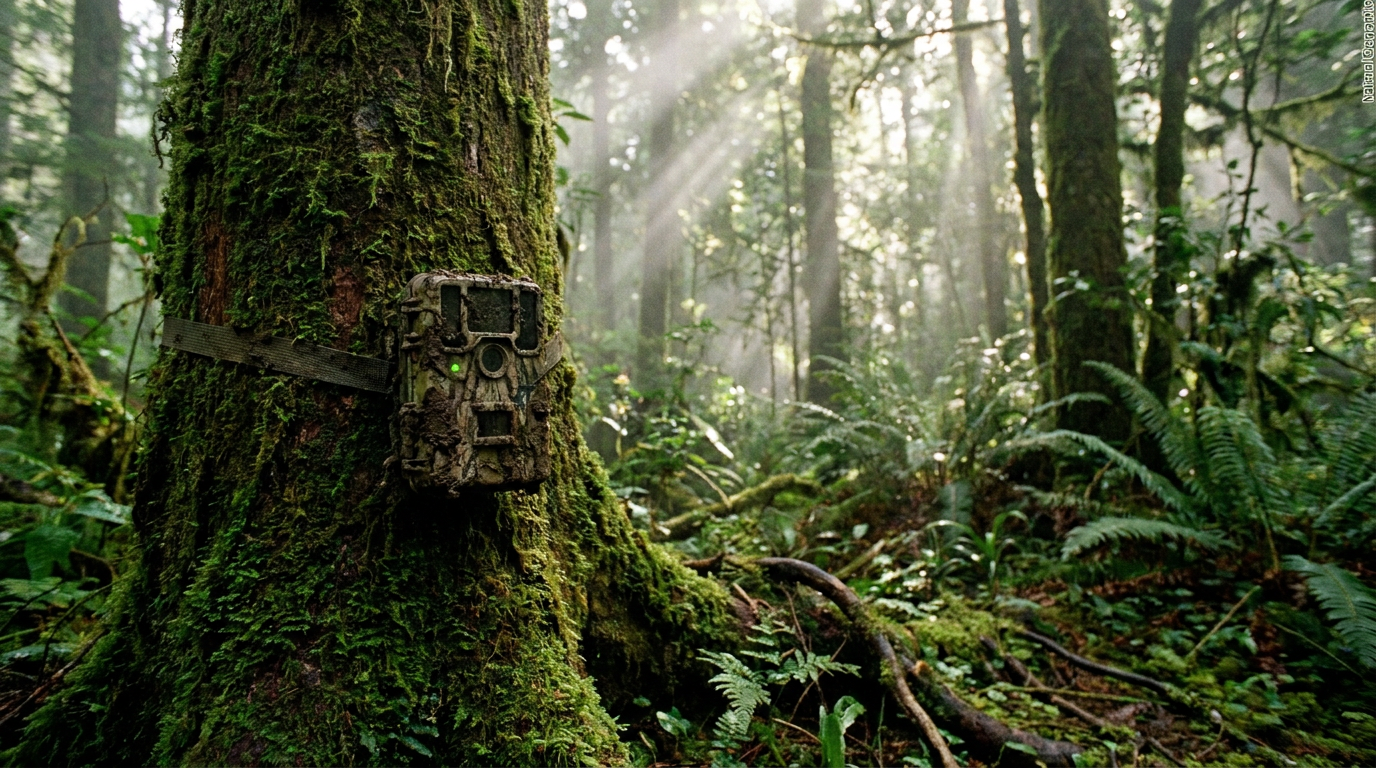
The advent of cheap, autonomous recording units changed the collection side of the equation, allowing scientists to leave microphones strapped to trees in the wild for months at a time. However, this created a massive new bottleneck: data overload. A single network of modern sensors can generate hundreds of terabytes of audio a year, requiring twenty to thirty years of human labor to manually analyze just twelve months of recordings.[1]
Now, a rapid convergence of artificial intelligence and bioacoustics is clearing that bottleneck, transforming wildlife conservation from a purely descriptive science into a predictive one. AI models are learning to decode the cacophony of nature, isolating individual species, tracking population health, and even identifying individual animals by their unique vocal signatures.[6][8]

The mechanism driving this breakthrough relies on deep learning and spatial embeddings. Instead of requiring a human to manually tag every sound, modern AI systems place audio clips into a mathematical space where acoustically similar patterns naturally cluster together.[1]
This allows algorithms to filter out the chaotic background noise of wind, rain, and human interference, isolating the specific frequencies of target species. For well-documented animals, the AI can instantly identify the species with superhuman speed and accuracy, flagging unusual or previously unclassified sounds for further human investigation.[1]
But the technology is now pushing past simple species identification. In late 2025, researchers working in Tanzania's Nyerere National Park demonstrated that AI could identify individual lions solely by the sound of their roars.[3]
But the technology is now pushing past simple species identification.
By analyzing thousands of recordings, a deep learning model isolated a previously undocumented "intermediate roar" that is deeper and more uniform than standard calls. The system achieved over 95 percent accuracy in distinguishing individual cats, and could even extract data on the animal's sex, age, and physiological state from the audio signal alone.[3]

This capability offers a non-intrusive alternative to GPS collars and camera traps, which can be stressful for animals to wear and difficult for researchers to maintain in harsh environments. Microphones can be hidden high in the canopy or deep in the brush, silently logging the presence of apex predators and endangered species across vast territories.[3]
To make these systems viable in the most remote corners of the globe, developers are moving the AI out of the cloud and directly into the field. Initiatives like Microsoft's Project SPARROW are pioneering "edge computing" for global conservation efforts.[5]
Instead of transmitting massive audio files over expensive and slow satellite connections, solar-powered edge devices run the AI models locally. They listen to the environment, process the data on the device, and transmit only the final text-based insights—such as a daily species count or an immediate alert for the sound of a poacher's gunshot or a chainsaw.[5][6]

Beyond counting populations, some of the most ambitious work in bioacoustics aims to understand the actual content of animal communication. The Earth Species Project, a nonprofit research group, has developed NatureLM-audio, the world's first large-scale audio language model tailored specifically for the animal kingdom.[4][7]
Trained on a massive dataset of bioacoustics, NatureLM-audio can distinguish traits like life stage and sex, and is being used to analyze the complex vocal repertoires of species ranging from zebra finches to beluga whales.[4][7]
Conservationists are already applying these insights to active recovery efforts. For example, researchers are studying the vocalizations of the highly endangered Hawaiian crow to ensure that captive-bred birds haven't lost the critical cultural vocabulary they need to survive and integrate when reintroduced to the wild.[4]

The ultimate goal of these AI listening networks is to create a live biodiversity dashboard for the planet. By establishing acoustic baselines, scientists can measure exactly how ecosystems respond to climate change, habitat restoration, or human encroachment in real-time.[6]
Challenges remain, particularly regarding data governance and the risk of "acoustic piracy," where poachers might intercept location data of valuable species. Furthermore, AI cannot entirely replace the nuanced understanding of field biologists; ground-truthing remains essential to ensure the algorithms aren't hallucinating species that aren't actually present.[6]
Yet, the trajectory is clear. By giving scientists the tools to process the immense symphony of the natural world, AI is providing a critical early-warning system for biodiversity loss. It is a technological leap that promises not just to count the animals that remain, but to finally understand what they are saying.[6][8]
How we got here
Pre-2010s
Wildlife acoustic monitoring relied on biologists manually listening to tapes and logging species by ear.
Mid-2010s
Cheap, autonomous recording units (ARUs) became widely available, leading to a massive bottleneck of unanalyzed audio data.
2021
Major studies highlighted the potential of machine learning to process ecological soundscapes at scale.
2024
The Earth Species Project released foundational AI models designed specifically to analyze animal vocalizations.
Late 2025
Researchers demonstrated AI's ability to identify individual lions with over 95% accuracy based solely on their roars.
2026
Edge computing initiatives like Project SPARROW began deploying AI directly into remote habitats for real-time monitoring.
Viewpoints in depth
AI Conservationists
Advocate for the rapid deployment of AI to process massive audio datasets and scale global biodiversity monitoring.
This camp argues that the biodiversity crisis is moving too fast for human-speed science. They view large language models and edge computing as the only viable way to process the hundreds of terabytes of audio generated by global listening networks. By automating the analysis, they believe conservationists can turn passive data into actionable, real-time alerts that can stop poaching and track ecosystem health before it's too late.
Field Biologists
Value AI as a tool but emphasize that algorithms cannot replace on-the-ground ecological context and physical habitat protection.
While acknowledging the power of bioacoustics, traditional ecologists caution against treating AI as a silver bullet. They argue that while algorithms can count calls, they cannot observe the physical degradation of a habitat or the nuanced behavioral context of an animal. They stress that AI must remain a supplement to, not a replacement for, traditional field ecology and ground-truthing.
Bioacoustic Ethicists
Focus on the risks of 'acoustic piracy' by poachers and the need for strict data governance over animal tracking.
This perspective highlights the unintended security risks of mapping endangered species with high-precision AI. They warn that if poachers intercept live acoustic dashboards, the very tools designed to protect wildlife could be weaponized to hunt them. This camp advocates for robust encryption, delayed data releases, and strict governance over who can access the outputs of these powerful listening networks.
What we don't know
- Whether AI models can eventually translate complex animal communication into human-understandable language, or if animal 'speech' lacks direct human equivalents.
- How to fully secure live acoustic dashboards from 'acoustic piracy' by poachers seeking to locate high-value endangered species.
- The extent to which AI models might 'hallucinate' the presence of species in noisy environments without rigorous on-the-ground verification.
Key terms
- Bioacoustics
- The scientific study of sound production, dispersion, and reception in animals.
- Defaunation
- The decline or extinction of animal populations from a habitat, often leaving the physical environment intact but ecologically degraded.
- Edge Computing
- Processing data locally on a device (like a smart microphone) rather than sending raw data to a central cloud server.
- Spatial Embeddings
- An AI technique that maps complex data (like audio clips) into a mathematical space where similar sounds are grouped closely together.
- Acoustic Piracy
- The theoretical risk of poachers or bad actors intercepting scientific tracking data to locate endangered species.
Frequently asked
What is bioacoustics?
Bioacoustics is the scientific study of sounds produced by living organisms, used by researchers to monitor the presence, behavior, and overall health of wildlife populations.
How does AI help with wildlife audio?
AI models can process years' worth of audio in days, filtering out background noise to automatically identify specific species, count populations, and even distinguish individual animals.
Can AI understand what animals are saying?
Not yet in the way humans converse, but models like NatureLM-audio are beginning to decode the context of calls, such as identifying an animal's sex, age, and specific behavioral alerts.
What is edge computing in conservation?
Edge computing involves running AI models directly on recording devices in the wild, allowing them to instantly transmit text alerts (like a species count or a gunshot detection) without needing the bandwidth to upload heavy audio files.
Sources
Source coverage
8 outlets
3 viewpoints surfaced








[1]The Good Men ProjectAI Conservationists
AI Listens in to Help Protect Wildlife
Read on The Good Men Project →[2]University of Chicago NewsField Biologists
Scientists eavesdrop on wildlife to help protect ecosystems
Read on University of Chicago News →[3]aivancityBioacoustic Ethicists
AI can identify lions by their voices, a major breakthrough for wildlife
Read on aivancity →[4]Open Data ScienceAI Conservationists
AI-Powered Breakthroughs in Animal Communication Open Doors to Deeper Conservation Efforts
Read on Open Data Science →[5]WILDLABSAI Conservationists
AI for conservation on the edge with Project SPARROW
Read on WILDLABS →[6]Biologia FuturaField Biologists
Listening forward: emerging roles of bioacoustics in ecology, evolution, and conservation
Read on Biologia Futura →[7]Earth Species ProjectAI Conservationists
NatureLM-audio: Our Flagship Model
Read on Earth Species Project →[8]Factlen Editorial TeamBioacoustic Ethicists
Synthesis by Factlen editorial team
Read on Factlen Editorial Team →
Every angle. Every day.
Get environment stories with full source coverage and perspective breakdowns delivered to your inbox.