
How to Optimize Your Heat Pump for Maximum Summer Cooling Efficiency
Proper maintenance and smart operational settings can improve a heat pump's summer cooling efficiency by up to 25%, extending its lifespan and lowering utility bills.
By Factlen Editorial Team
- HVAC Professionals
- Emphasize the mechanical necessity of annual servicing, correct refrigerant charging, and preventing catastrophic equipment failures.
- Homeowners
- Prioritize practical DIY maintenance, lowering monthly utility bills, and maximizing indoor comfort during summer heatwaves.
- Energy Efficiency Advocates
- Focus on reducing overall grid load and maximizing the system's coefficient of performance (COP) through optimal user habits.
What's not represented
- · Renters who lack control over their building's HVAC maintenance schedules.
Why this matters
A poorly maintained heat pump can consume up to 25% more electricity during the summer months. By performing simple DIY maintenance and adjusting a few thermostat settings, homeowners can significantly lower their energy bills while extending the life of their system.
Key points
- A neglected heat pump can consume up to 25% more energy than a well-maintained unit.
- Cleaning indoor air filters every three months is the most critical DIY maintenance task.
- Outdoor condenser units need at least 18 inches of clearance from foliage and debris to release heat efficiently.
- Heat pumps operate most efficiently when set to a steady temperature, rather than being turned off during the day.
- Homeowners should avoid 'Auto' mode in the summer to prevent the system from accidentally switching to heating on cool nights.
- Annual professional servicing is required to check refrigerant levels and prevent compressor failure.
Heat pumps have become the darling of modern home climate control, rapidly replacing traditional furnaces and air conditioners across the globe. As summer temperatures rise, millions of homeowners are switching their systems from heating to cooling mode.[7]
But while these systems are celebrated for their remarkable efficiency, that performance is not guaranteed by default. A heat pump requires specific, regular maintenance and optimized settings to deliver on its promise of lower utility bills and consistent comfort.[2][3]
The stakes for proper upkeep are surprisingly high. According to the U.S. Department of Energy, the difference in energy consumption between a well-maintained heat pump and a severely neglected one can range from 10% to 25%.[3]
Over a long, hot summer, that efficiency gap translates directly into inflated electricity bills and unnecessary strain on the electrical grid. To understand why maintenance matters so much, it helps to understand the mechanism.[7]

Unlike a furnace that generates heat by burning fuel, a heat pump simply moves heat from one place to another. In the summer, it acts exactly like an air conditioner: it extracts heat from the indoor air and pumps it outside, leaving the cooled air to circulate through the home.[6]
Because the system relies entirely on the smooth transfer of heat across its coils, anything that impedes airflow forces the compressor to work harder. This is why the single most important maintenance task for any heat pump owner is managing the air filters.[2][3][4]
Experts universally recommend checking, cleaning, or replacing indoor air filters at least every three months, though homes in dusty environments or those with pets may need monthly filter checks. A clogged filter restricts the volume of air passing over the indoor coil, which not only reduces cooling capacity but can also cause the coil to freeze over, potentially damaging the system.[2][3][4]

For ductless mini-split systems, this process is highly accessible. Homeowners can simply lift the front panel of the indoor unit, unclip the reusable mesh filters, and wash them with lukewarm water or vacuum them with a brush attachment. For ducted systems, upgrading to a pleated filter with a higher MERV rating can improve indoor air quality, provided the system is rated to handle the tighter weave.[3][4]
For ductless mini-split systems, this process is highly accessible.
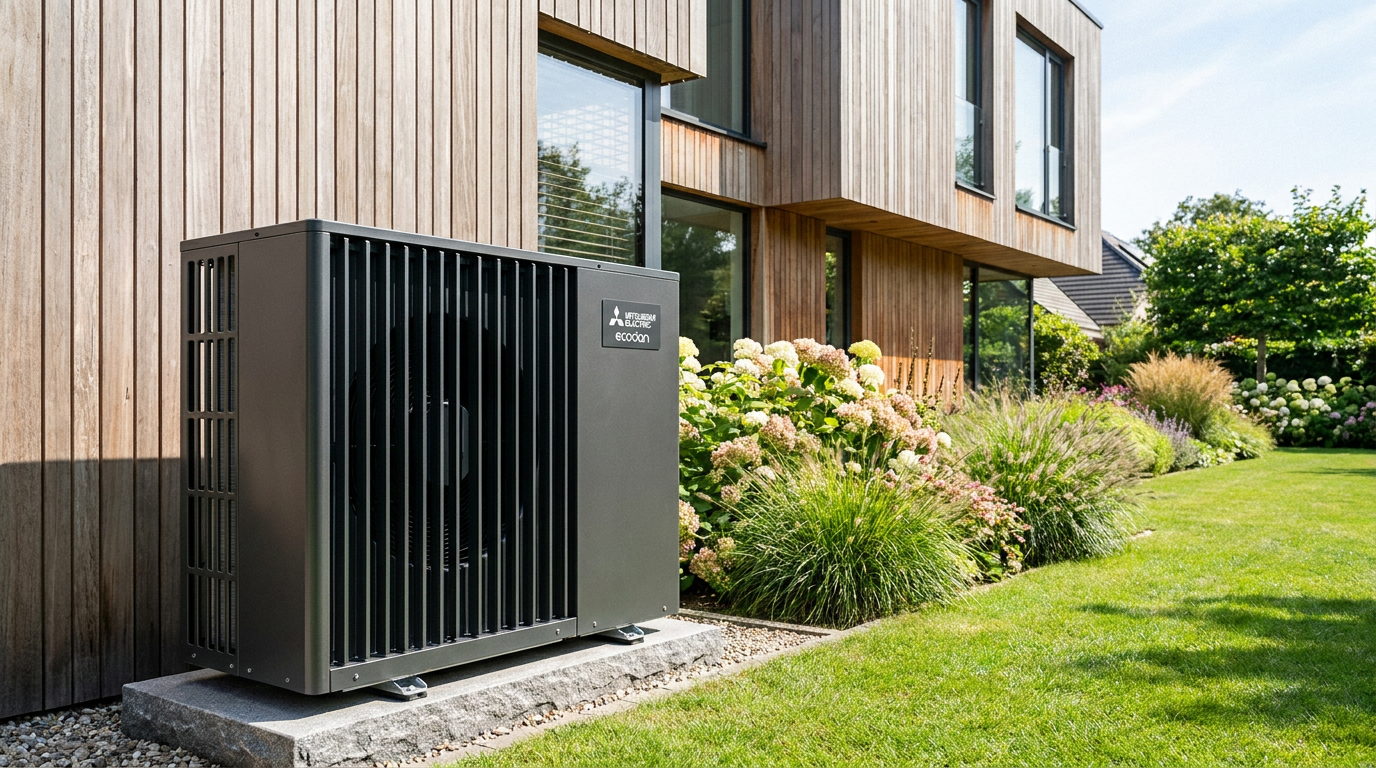
The outdoor unit, known as the condenser, requires equal attention. Because it is responsible for dumping the extracted indoor heat into the outside air, it needs plenty of breathing room. HVAC professionals advise keeping foliage, shrubs, and debris trimmed back at least 18 inches from all sides of the unit.[2]
Over time, the outdoor coils can become caked with dust, pollen, and grass clippings. When the coils are insulated by dirt, they cannot release heat efficiently. While light debris can be gently brushed or rinsed away by a homeowner, chemical cleaning of the coils is typically best left to a professional during an annual service visit.[2][3]
Beyond physical maintenance, how a homeowner operates the heat pump profoundly impacts its summer efficiency. One of the most common mistakes is leaving the system in "Auto" mode.[1][5]

In "Auto" mode, the heat pump attempts to maintain a strict temperature by automatically toggling between heating and cooling. On a cool summer night, the system might accidentally switch into heating mode, wasting energy to warm a house that will naturally heat up when the sun rises. Utility experts recommend manually setting the system to "Cool" for the duration of the summer.[1][5]
Temperature management also requires a paradigm shift for those used to traditional HVAC systems. While older advice often suggested turning the thermostat off or drastically up when leaving the house, heat pumps operate best under a "set it and forget it" philosophy.[5]
Because modern heat pumps use variable-speed inverter technology, they are incredibly efficient at maintaining a steady temperature by running continuously at a low speed. Forcing the system to rapidly cool a hot house after a workday requires it to ramp up to maximum capacity, which consumes more energy than simply holding a moderate temperature all day.[5][6]

Fan settings offer another avenue for optimization. While it might be tempting to leave the indoor fan set to "On" for continuous circulation, this can actually degrade summer performance. Continuous fan operation can re-evaporate moisture that the system just extracted from the air, blowing humidity back into the home. Setting the fan to "Auto" ensures it only runs when the compressor is actively cooling and dehumidifying.[3]
For ductless systems, directional airflow plays a crucial role in comfort. Cold air naturally sinks, so directing the indoor unit's louvers horizontally or slightly upward allows the chilled air to fall evenly across the room. Pointing the airflow directly at occupants might feel good momentarily, but it can lead to uneven room temperatures and a drafty environment.[4][5]
While homeowners can handle filters, debris, and thermostat settings, the mechanical complexity of a heat pump necessitates professional oversight. Manufacturers and energy departments strongly recommend an annual service visit by a certified HVAC technician.[2][3][4]

During a professional tune-up, technicians perform tasks that are unsafe or impossible for the average user. They verify the correct refrigerant charge; an undercharged system can drop efficiency significantly and risk catastrophic compressor failure. They also inspect electrical terminals, lubricate motors, and clear the condensate drain line, which can easily become clogged with algae during humid summer months, leading to indoor water damage.[3]
Ultimately, the return on investment for this diligence is substantial. An air-source heat pump represents a significant financial investment, and a well-maintained unit boasts an average lifespan of 15 years or more. By combining simple DIY habits with smart operational settings and annual professional check-ups, homeowners can ensure their heat pumps deliver maximum cooling power for minimal cost.[2][7]
Viewpoints in depth
Energy Efficiency Advocates
Focus on reducing overall grid load and maximizing the system's coefficient of performance (COP) through optimal user habits.
Energy advocates and utility companies emphasize that the true value of a heat pump lies in its variable-speed inverter technology. By encouraging homeowners to adopt a "set it and forget it" mentality, these groups aim to flatten the curve of residential energy demand. Rapidly cooling a hot house during peak afternoon hours strains the electrical grid, whereas maintaining a steady temperature all day utilizes the heat pump's most efficient, low-draw operating state.
HVAC Professionals
Emphasize the mechanical necessity of annual servicing, correct refrigerant charging, and preventing catastrophic equipment failures.
For technicians and manufacturers, the focus is on the mechanical health and longevity of the equipment. They warn that while DIY filter cleaning is helpful, it cannot replace the need for professional diagnostics. An undercharged refrigerant line, for example, forces the compressor to work overtime, drastically reducing efficiency and risking a catastrophic failure that could cost thousands of dollars to replace. Regular servicing is viewed as an insurance policy for a major home investment.
Homeowners
Prioritize practical DIY maintenance, lowering monthly utility bills, and maximizing indoor comfort during summer heatwaves.
From the consumer perspective, heat pump maintenance is primarily about cost savings and comfort. Homeowners are highly motivated by the immediate feedback of lower summer electricity bills and the prevention of mid-heatwave breakdowns. The appeal of ductless systems, in particular, lies in the accessibility of the filters, allowing residents to take direct control over their indoor air quality and system performance without needing to call a professional for basic upkeep.
What we don't know
- How extreme, prolonged heatwaves in the coming years might push current residential heat pump capacities beyond their design limits.
- Whether future smart-grid integrations will allow utility companies to automatically optimize residential heat pump settings during peak summer demand.
Key terms
- Heat Pump
- An HVAC system that provides both heating and cooling by moving heat between the indoors and outdoors, rather than generating it.
- Condenser
- The outdoor unit of a heat pump system, responsible for releasing extracted indoor heat into the outside air during the summer.
- Variable-Speed Inverter
- Technology that allows a heat pump's compressor to run continuously at lower speeds to maintain a steady temperature, rather than turning completely on and off.
- Refrigerant
- The chemical fluid that circulates through the heat pump's coils, absorbing and releasing heat as it changes between liquid and gas states.
- MERV Rating
- Minimum Efficiency Reporting Value; a measurement scale designed to rate the effectiveness of air filters at trapping airborne particles.
Frequently asked
How often should I clean my heat pump's air filter?
Experts recommend checking and cleaning the filter every three months. If you have pets or live in a dusty environment, you should check it monthly.
Should I turn my heat pump off when I leave for work?
No. Heat pumps operate most efficiently when maintaining a steady temperature. Turning them off forces the system to work harder and use more energy to cool the house back down later.
Why shouldn't I use the 'Auto' mode in summer?
In 'Auto' mode, a cool summer night might trick the heat pump into turning on its heating function, wasting energy. It is much more efficient to manually set the system to 'Cool'.
Do I really need a professional to service my heat pump?
Yes. While you can clean filters and clear outdoor debris yourself, a certified technician is required to safely check refrigerant levels, inspect electrical components, and clear internal drain lines.
Sources
Source coverage
7 outlets
3 viewpoints surfaced







[1]BC HydroHomeowners
Tips to maintain your heat pump
Read on BC Hydro →[2]Palmetto SolarHomeowners
Heat Pump Maintenance: For the Best Efficiency and Savings
Read on Palmetto Solar →[3]Department of EnergyEnergy Efficiency Advocates
Operating and Maintaining Your Heat Pump
Read on Department of Energy →[4]DaikinHVAC Professionals
How to maintain your heat pump: tips and tricks
Read on Daikin →[5]Efficiency MaineEnergy Efficiency Advocates
Heat Pump User Tips
Read on Efficiency Maine →[6]CarrierHVAC Professionals
Heat Pump Efficiency Guide | SEER2 & HSPF2 Ratings Explained
Read on Carrier →[7]Factlen Editorial TeamEnergy Efficiency Advocates
Synthesis by Factlen editorial team
Read on Factlen Editorial Team →

Every angle. Every day.
Get home stories with full source coverage and perspective breakdowns delivered to your inbox.