
Harley-Davidson's Sub-$6,000 'Sprint' Launch: How the Legacy Brand is Fighting the Affordability Crisis
Facing an aging customer base and a massive inventory backlog, Harley-Davidson is launching a lightweight, single-cylinder motorcycle targeted under $6,000. The 'Sprint' represents a radical pivot to attract younger riders and save struggling dealerships.
By Factlen Editorial Team
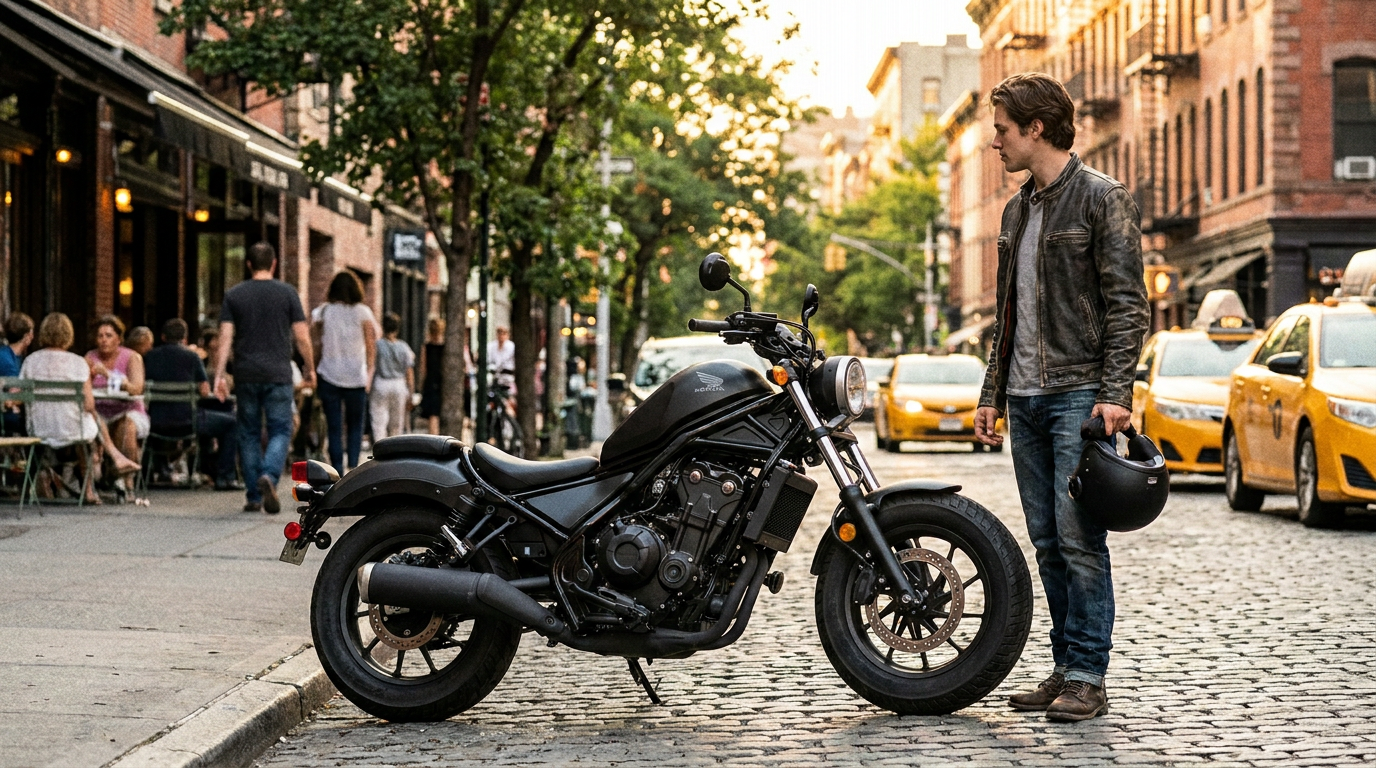
- New & Younger Riders
- Price-conscious consumers looking for an accessible entry point into motorcycling.
- Dealership Network
- Franchise owners desperate for foot traffic and inventory relief.
- Legacy Harley Enthusiasts
- Traditionalists who believe the brand is diluting its premium heritage.
- Industry Analysts
- Financial experts focused on the demographic cliff and corporate profitability.
What's not represented
- · Electric Motorcycle Advocates
- · Domestic Manufacturing Unions
Why this matters
For consumers, this launch signals the return of affordable, entry-level options from a premium American brand, making motorcycling accessible to a demographic previously priced out. For the industry, it represents a make-or-break moment that will determine if legacy manufacturers can survive the aging out of their core customer base.
Key points
- Harley-Davidson is launching the 'Sprint,' a 440cc single-cylinder motorcycle targeted under $6,000.
- The move aims to solve a demographic crisis, as the average Harley buyer is now 63 years old.
- Dealerships are currently struggling with an estimated 80,000 unsold premium motorcycles.
- The Sprint was co-developed with Indian manufacturer Hero MotoCorp to keep production costs low.
- Legacy purists are skeptical of the overseas manufacturing and small engine displacement.
- Import tariffs and supply chain costs could push the final retail price higher than the $6,000 target.
For decades, the Harley-Davidson badge has been synonymous with heavyweight cruisers, roaring V-twin engines, and premium price tags that often exceed the cost of a new car. But in 2026, the Milwaukee icon is attempting a radical pivot to secure its future. The company is preparing to launch the "Sprint," a lightweight, single-cylinder motorcycle with a target entry price of under $6,000. The move represents one of the most significant strategic shifts in the brand's 123-year history, signaling a departure from the luxury-exclusive model that has defined its modern era.[2][3][4]
Harley-Davidson is currently navigating what industry analysts describe as a severe "demographic cliff." The average Harley buyer is now 63 years old, and the core customer base of baby boomers is shrinking by roughly 8 to 10 percent annually. Without a pipeline of younger riders to replace them, the brand faces an existential threat. The Sprint is specifically engineered to bridge this generational gap, offering a financially accessible entry point for twenty-somethings who previously viewed the brand as an unattainable luxury.[6]
Compounding the demographic shift is an acute affordability crisis across the powersports industry. A base-model Harley-Davidson currently starts at over $20,000, while fully equipped touring models like the Street Glide or Road Glide can easily reach $35,000 out the door once dealer fees and accessories are included. This pricing strategy, driven by previous leadership's focus on high-margin premium models, successfully boosted short-term profits but ultimately alienated price-conscious consumers. As inflation and rising interest rates squeezed household budgets over the last three years, everyday riders were effectively priced out of the showroom, leaving dealers with products they could not move.[6]
The direct result of this premium-only strategy is a massive, crippling inventory backlog. In early 2026, industry data revealed that roughly 80,000 unsold new motorcycles were sitting on dealer lots and in overflow warehouses across the United States. Dealerships finance this inventory through floor-plan loans, typically carrying 8 to 10 percent interest rates. At those rates, a single $18,000 motorcycle can cost a dealership $1,500 a year just in holding fees. For a dealer with 300 bikes on the lot, that translates to nearly half a million dollars in annual interest, creating an urgent financial crisis for the brand's retail network.[6]

Enter the Sprint. To achieve the aggressive sub-$6,000 price point, Harley-Davidson had to completely abandon its traditional domestic manufacturing playbook. The Sprint is built around a 440cc single-cylinder engine, a stark departure from the massive 1,800cc V-twins that define the brand's modern lineup. By shrinking the engine displacement and simplifying the overall mechanics, the company has created a motorcycle that is not only cheaper to produce but also significantly lighter and less intimidating for first-time riders navigating dense urban environments. It is a fundamental rethinking of what a Harley-Davidson can be.[4]
The motorcycle is heavily based on the X440 platform, which Harley-Davidson co-developed with Hero MotoCorp, the Indian manufacturing giant. By leveraging Hero's massive scale, supply chain efficiency, and deep expertise in small-displacement commuter bikes, Harley can produce the Sprint at a fraction of the cost of its American-made models. This international partnership allows the legacy brand to compete directly with affordable metric cruisers from Honda, Royal Enfield, and Triumph, which have dominated the entry-level market for the past decade.[4][5]
The motorcycle is heavily based on the X440 platform, which Harley-Davidson co-developed with Hero MotoCorp, the Indian manufacturing giant.
Despite its budget-friendly origins and overseas DNA, the Sprint is meticulously designed to look and feel like a true Harley-Davidson. Early dealer communications indicate it features a lightweight chassis, a low seat height, and relaxed ergonomics tailored specifically for beginners. It intentionally lacks the advanced infotainment screens, complex electronic rider aids, and heavy fairings of the touring models, focusing instead on pure, simple, everyday usability. The goal is to provide the aesthetic and cultural cachet of the bar-and-shield logo without the crushing financial burden.[5]
The Sprint serves as the centerpiece of CEO Artie Starrs' new "Back to the Bricks" corporate strategy. The comprehensive plan aims to generate over $350 million in core profit from the motorcycle business by 2027 while simultaneously cutting $150 million in corporate overhead. By offering a $6,000 entry point, Harley-Davidson hopes to pull younger riders into its ecosystem early. The long-term bet is that these entry-level buyers will eventually upgrade to larger, higher-margin motorcycles and spend heavily on the brand's lucrative parts, accessories, and apparel lines.[1]

The Sprint name itself is a calculated nod to the company's heritage, designed to soften the blow for traditionalists. In the 1960s, facing an influx of cheap, reliable Japanese motorcycles from Honda and Yamaha, Harley-Davidson partnered with Italian manufacturer Aermacchi to produce a line of lightweight 250cc and 350cc bikes. Those original Sprints became legendary on American dirt tracks and successfully introduced an entire generation to the brand. Executives are hoping this historical precedent will validate the new 440cc model in the eyes of skeptical loyalists.[3][4]
However, Harley's recent attempts at capturing the entry-level market have been fraught with missteps. Between 2014 and 2021, the company sold the Street 500 and Street 750 models. Priced around $7,000, they faced heavy resistance from traditional dealers who felt the liquid-cooled, budget-focused bikes diluted the brand's premium prestige. The Street lineup ultimately failed to capture significant market share in the United States, leaving many industry observers to wonder if the Sprint can overcome the same internal cultural hurdles that doomed its predecessors.[3]
This history fuels the current debate surrounding the 2026 Sprint launch. Legacy Harley enthusiasts remain highly skeptical of a small-displacement, single-cylinder motorcycle developed in partnership with an overseas manufacturer. For these purists, a "real" Harley-Davidson must feature a heavyweight V-twin engine, emit a signature exhaust rumble, and be assembled by union workers in the United States. They argue that slapping the iconic badge on a budget commuter bike risks destroying the exclusivity that allows the company to charge premium prices in the first place.[4][6]
But industry analysts and financial experts argue that Harley-Davidson can no longer afford to cater exclusively to its aging purist base. With the demographic cliff rapidly approaching, the company must compete on price or risk aging out of existence entirely. The Sprint is not designed to impress the veteran rider who already owns a $35,000 bagger; it is designed for the 25-year-old who wants a stylish, reliable motorcycle for city commuting. For the brand to survive the next century, accessibility must take precedence over exclusivity.[4][6]

There remains significant uncertainty about the final execution of the launch. While the sub-$6,000 target was proudly announced to investors, ongoing supply chain friction and import tariffs—which cost the company $45 million in the first quarter of 2026 alone—threaten the bottom line. Some industry outlets report that these mounting costs could force the final MSRP closer to $8,000 or even $10,000 by the time the Sprint hits showroom floors, potentially erasing the exact affordability advantage the bike was created to provide.[1][7]
Ultimately, the 2026 Sprint represents a high-stakes gamble for an American manufacturing institution. If successful, it could solve the affordability crisis, clear out stagnant dealership inventory by driving massive foot traffic, and introduce thousands of new riders to the Harley-Davidson lifestyle. If it fails, or if the price creeps too high, it may prove that the brand's premium image is simply too entrenched to ever truly go mainstream again. The future of the bar-and-shield now rests on its smallest, cheapest motorcycle.[1][6]
How we got here
1960
Harley-Davidson partners with Aermacchi to launch the original Sprint 250 to compete with Japanese imports.
2014
The company launches the Street 500 and 750 models, which ultimately struggle to gain traction in the US market.
2023
Harley-Davidson and Hero MotoCorp successfully launch the small-displacement X440 in the Indian market.
July 2025
Harley-Davidson executives first confirm a sub-$6,000 target price for a new entry-level US model.
May 2026
CEO Artie Starrs officially unveils the 'Back to the Bricks' strategy, centering the 440cc Sprint as the brand's future.
Viewpoints in depth
New & Younger Riders
Price-conscious consumers looking for an accessible entry point into motorcycling.
For twenty-somethings and urban commuters, the Sprint represents a long-awaited olive branch from a brand that had seemingly abandoned them. This demographic values lightweight maneuverability, fuel efficiency, and low monthly payments over massive engine displacement and heritage styling. They view the overseas manufacturing and single-cylinder engine not as a betrayal, but as a necessary compromise to achieve a price point that actually fits a modern entry-level budget.
Legacy Harley Enthusiasts
Traditionalists who believe the brand is diluting its premium heritage.
Long-time Harley owners and purists are deeply skeptical of the Sprint project. To this camp, a true Harley-Davidson is defined by a heavyweight chassis, a roaring V-twin engine, and domestic assembly by American workers. They argue that slapping the iconic bar-and-shield logo on a small-displacement commuter bike built in partnership with an Indian manufacturer cheapens the brand's prestige. Their primary concern is that chasing volume at the bottom of the market will alienate the high-spending loyalists who kept the company afloat for decades.
Dealership Network
Franchise owners desperate for foot traffic and inventory relief.
Dealers are caught in the middle of the affordability crisis, currently suffocating under the floor-plan interest costs of 80,000 unsold premium motorcycles. For showroom owners, the Sprint isn't about heritage—it's about survival. They desperately need a sub-$6,000 loss-leader to drive foot traffic into their stores. Even if the margins on the Sprint are razor-thin, dealers are betting that getting a young rider through the door will lead to lucrative financing deals, apparel sales, and eventual upgrades to larger, more profitable bikes.
What we don't know
- Whether ongoing import tariffs will force Harley-Davidson to abandon the sub-$6,000 price target before launch.
- How traditional dealerships will market and position the Sprint alongside $35,000 touring models.
- If the Sprint will successfully convert entry-level buyers into lifelong Harley-Davidson customers.
Key terms
- Floor-plan loan
- A type of short-term financing used by dealerships to purchase inventory, where the dealer pays interest on the vehicles until they are sold to a customer.
- Metric cruiser
- A cruiser-style motorcycle produced by a non-American manufacturer (typically Japanese or European), which historically used metric measurements.
- V-twin engine
- A two-cylinder internal combustion engine where the cylinders are arranged in a V configuration, providing the signature sound and feel of traditional Harley-Davidsons.
Frequently asked
What is the Harley-Davidson Sprint?
The Sprint is a new, lightweight 440cc single-cylinder motorcycle designed as an entry-level option for new riders, with a target price of under $6,000.
Why is Harley-Davidson making a cheaper motorcycle?
The company is facing a 'demographic cliff' where its average buyer is 63 years old. The Sprint is designed to attract younger, price-conscious riders who cannot afford the brand's $20,000+ premium models.
Where is the Harley-Davidson Sprint manufactured?
The motorcycle is heavily based on the X440 platform, which was co-developed with the Indian manufacturing giant Hero MotoCorp to keep production costs low.
When will the Sprint be available to buy?
The Sprint is slated to be part of Harley-Davidson's 2026 model year lineup, with initial dealer presentations occurring in late 2025.
Sources
Source coverage
7 outlets
4 viewpoints surfaced





[1]ReutersIndustry Analysts
Harley-Davidson outlines new strategy focused on lower-priced motorcycles
Read on Reuters →[2]RevZillaNew & Younger Riders
Harley-Davidson confirms sub-$6,000 motorcycle for 2026
Read on RevZilla →[3]Ride-CTLegacy Harley Enthusiasts
Harley-Davidson Plans New Sprint For Under $6,000
Read on Ride-CT →[4]TopSpeedNew & Younger Riders
Harley-Davidson's Upcoming Entry-Level Bike Will Be Called 'Sprint'
Read on TopSpeed →[5]Powersports BusinessDealership Network
Harley-Davidson and Hero MotoCorp expand partnership for global Sprint launch
Read on Powersports Business →[6]AAPEFIIndustry Analysts
80,000 Unsold Harley-Davidson Motorcycles: The 2026 Inventory Crisis Explained
Read on AAPEFI →[7]Motorcycle.comIndustry Analysts
2027 Harley-Davidson Sprint Won't Reach Sub-$6,000 Target Price
Read on Motorcycle.com →
More in shopping
See all 6 stories →Greenwashing Law
The End of 'Eco-Friendly' Labels: How the EU's Greenwashing Directive Will Change How You Shop for Sustainable Products
7 sources

Green Financing
The 2026 PACE Loan Overhaul: How New CFPB Rules Protect Homeowners Financing Solar and Energy Upgrades
8 sources

E-Commerce Tariffs
The €3 Per-Item Tax: How the EU's New Customs Duty Changes the Economics of Low-Value E-Commerce Shopping
8 sources

Trade Policy
CBP Suspends $800 De Minimis Rule, Forcing Tariffs and Compliance on All Low-Value E-Commerce Imports
8 sources
Every angle. Every day.
Get shopping stories with full source coverage and perspective breakdowns delivered to your inbox.