
Pentagon Discloses Massive Cuts to Strategic Military Assets Available to NATO
The United States has informed allies it will sharply reduce the fighter jets, bombers, and naval vessels it commits to NATO's crisis response plans, reorienting its forces toward the Indo-Pacific.
By Factlen Editorial Team
- U.S. Defense Planners
- The U.S. must prioritize homeland defense and the Indo-Pacific over subsidizing European security.
- European NATO Leadership
- The alliance must adapt to a transactional U.S. posture by rapidly building strategic autonomy.
- Eastern Flank Nations
- The sudden withdrawal of U.S. conventional forces invites Russian aggression and undermines deterrence.
What's not represented
- · Russian Strategic Command
- · Indo-Pacific Allies (Japan, South Korea, Australia)
Why this matters
The United States is fundamentally altering the security architecture of Europe by withdrawing its most advanced military assets. For decades, European nations relied on American planes, ships, and troops for their defense; this sudden pivot forces the continent to rapidly rebuild its own militaries or face a degraded deterrent against Russia.
Key points
- The U.S. is sharply reducing the conventional military assets it commits to NATO's crisis response plans.
- Cuts include a one-third reduction in fighter jets, the removal of all aerial refueling tankers, and zero allocated submarines.
- The Pentagon is reorienting its most advanced military assets toward the Indo-Pacific to deter China.
- Approximately 5,000 U.S. troops are being withdrawn from Europe, including a canceled armored brigade rotation to Poland.
- Washington is demanding European allies increase their defense spending to 3.5% of GDP to fill the capability gaps.
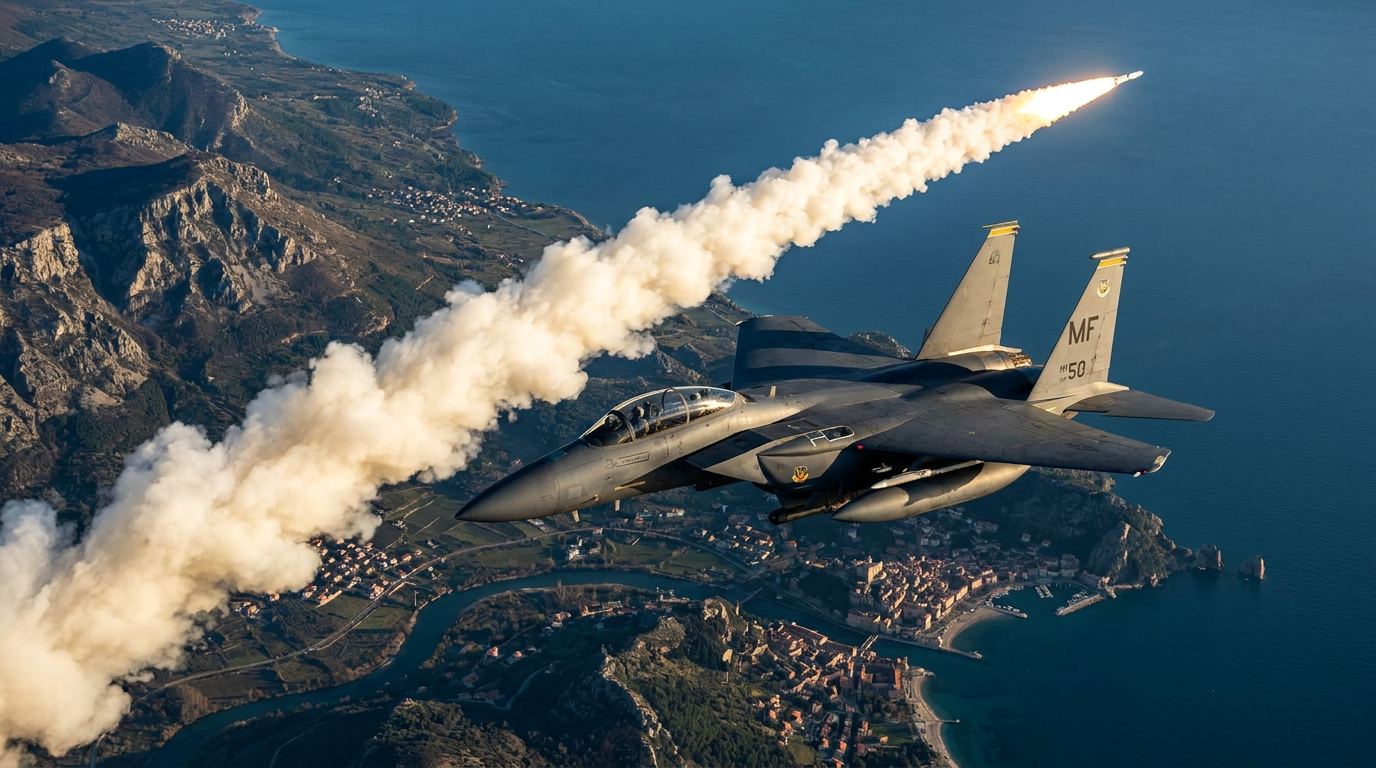
The United States has formally notified its European allies of sweeping reductions to the conventional military assets it will make available to NATO during a crisis, marking one of the most significant shifts in transatlantic defense posture since the Cold War. In a series of closed-door briefings in Brussels, Pentagon officials outlined plans to sharply scale back the deployment of fighter jets, strategic bombers, and naval vessels previously earmarked for the alliance's emergency response framework. The drawdown reflects a structural reorientation by the Trump administration to prioritize homeland defense and deter Chinese military expansion in the Indo-Pacific. While Washington will maintain its nuclear umbrella over Europe, the message to the continent is clear: European capitals must now assume primary responsibility for their own conventional defense.[1][3][7]
The scale of the reductions has jolted European defense planners, targeting the high-end capabilities that NATO has long relied upon the United States to provide. According to documents shared with the alliance, the Pentagon will reduce its contribution of F-16 and F-15E fighter jets from roughly 150 to 100. Maritime reconnaissance aircraft, critical for tracking submarine movements, will be cut from 26 to 15. Most severely, the U.S. intends to withdraw all eight of the aerial refueling tankers it previously dedicated to the European theater, a move that will drastically limit the operational range and endurance of remaining allied combat aircraft.[2][3][5]
Naval and strategic strike assets are facing equally deep cuts. The United States will no longer allocate any submarines to the NATO Force Model—the alliance's blueprint for generating combat power in the first six months of a conflict. Furthermore, an entire aircraft carrier strike group, along with its escort warships and carrier-based aviation wings, is slated for redeployment. The Pentagon also plans to reallocate one of the two strategic bomber groups currently assigned to European defense, effectively halving NATO's capacity to conduct deep, long-range strikes against enemy air defenses.[2][4][6]

The removal of these specific assets fundamentally alters how NATO would fight a war. Without American aerial refueling tankers, European fighter jets will be tethered closer to their home bases, unable to maintain the persistent combat air patrols required to secure contested airspace. Similarly, the halving of the strategic bomber force strips the alliance of its primary tool for the suppression and destruction of enemy air defenses. Military analysts note that these are not simply numbers on a spreadsheet; they are the enabling capabilities that allow the rest of the alliance's forces to operate effectively in a high-intensity conflict.[4][6]
The hardware reductions coincide with a physical drawdown of American personnel on the continent. The Department of Defense is proceeding with the withdrawal of approximately 5,000 troops from Europe. This includes the abrupt cancellation of a planned 4,200-person armored brigade rotation to Poland, a deployment that had been intended to fortify the alliance's eastern flank. The combined loss of ground forces and high-end aerial assets leaves immediate gaps in NATO's deterrence posture at a time when Russian drones routinely violate allied airspace and the war in Ukraine grinds on.[3][4][6]
The hardware reductions coincide with a physical drawdown of American personnel on the continent.
The strategic logic driving the withdrawal is codified in the 2026 U.S. National Defense Strategy, which explicitly downgrades Europe in favor of the First Island Chain in the Pacific. Alexander Velez-Green, an envoy for U.S. Defense Secretary Pete Hegseth, briefed NATO officials that the United States requires greater flexibility to respond to contingencies in Asia, and can no longer afford to lock its most exquisite military assets into rigid European defense plans. American military leaders have characterized the alliance's historical reliance on U.S. forces as an unhealthy co-dependence that must be broken to ensure long-term readiness.[3][6]
The pivot to the Indo-Pacific is not merely rhetorical. The Pentagon's focus on deterring China requires a heavy reliance on the exact assets being pulled from Europe: nuclear-powered submarines, carrier strike groups, and long-range bombers. In the vast maritime expanses of the Pacific, these platforms are the currency of military power. By freeing these assets from formal NATO commitments, the United States gains the strategic agility to surge forces toward Taiwan or the South China Sea without technically defaulting on its obligations to European allies.[6][7]
At NATO headquarters, leadership is publicly projecting calm while privately scrambling to rewrite operational plans. Secretary-General Mark Rutte has sought to downplay the friction, noting that the alliance is adapting to a reality where the U.S. security commitment is becoming more conditional. General Alex Grynkewich, NATO's supreme allied commander, is currently developing alternative defense models that rely heavily on European militaries to backfill the American shortfalls. However, NATO officials acknowledge that many of the withdrawn assets are in critically short supply across European arsenals.[1][2]

The American drawdown is coupled with an aggressive new demand for burden-sharing. The Trump administration is pressuring European and Canadian allies to increase their baseline defense spending to 3.5 percent of their gross domestic product, a massive leap from the 2 percent target that many member states only recently achieved. For major economies like Italy and Spain, which are already grappling with high public debt, reaching a 3.5 percent threshold would require tens of billions of euros in new spending, a prospect that domestic politicians have warned is financially and politically unfeasible.[4][7]
The shift has exposed fault lines within the alliance, particularly among Eastern European nations that view rapid American reinforcement as an existential necessity. Countries like Poland, Romania, and the Baltic states have invested heavily in interoperability with U.S. forces and view the withdrawal of the armored brigade and strike aircraft as a direct weakening of the deterrent against Moscow. While Western European nations like France have long advocated for strategic autonomy, the sudden acceleration of the U.S. pivot leaves the continent with a dangerous interim period where American capabilities are departing before European replacements can be procured and fielded.[4][6]

The timeline for these changes is moving faster than many European capitals anticipated. Washington has demanded that its allies present concrete plans for how they intend to replace the departing U.S. assets by the time NATO leaders convene for a high-stakes summit in Turkey this July. As the United States reorients its military center of gravity toward the Pacific, Europe is facing a stark ultimatum: rapidly build a self-sufficient military apparatus, or accept a degraded security environment on its own borders.[1][5]
How we got here
2022
NATO establishes the new Force Model to coordinate allied responses following the escalation of the war in Ukraine.
January 2026
The U.S. releases its National Defense Strategy, pivoting focus toward homeland defense and the Indo-Pacific.
Early May 2026
The U.S. announces the withdrawal of 5,000 troops from Europe, including halting a brigade rotation to Poland.
May 20, 2026
Pentagon envoy Alexander Velez-Green confidentially briefs NATO officials in Brussels on the massive hardware cuts.
Late May 2026
Details of the sweeping reductions leak to the press, sending shockwaves through European defense capitals.
July 2026
NATO leaders are scheduled to meet for a summit in Turkey, where allies must present plans to backfill the U.S. capability gaps.
Viewpoints in depth
U.S. Defense Planners
The U.S. must prioritize homeland defense and the Indo-Pacific over subsidizing European security.
Proponents of the 2026 National Defense Strategy argue that the United States can no longer afford to lock its most critical, high-end military assets into European defense plans while the primary strategic threat lies in Asia. By withdrawing submarines, bombers, and tankers from the NATO Force Model, the Pentagon gains the flexibility to deploy these scarce resources to the First Island Chain to deter China. Furthermore, American officials view the cuts as a necessary shock to force European allies out of an unhealthy co-dependence and into taking genuine responsibility for their own conventional defense.
European NATO Leadership
The alliance must adapt to a transactional U.S. posture by rapidly building strategic autonomy.
For officials in Brussels and Western European capitals, the American drawdown validates long-standing arguments that Europe must develop its own independent military capabilities. While NATO leadership publicly downplays the immediate danger, they acknowledge that replacing U.S. aerial refueling, long-range strike, and maritime reconnaissance assets will take years of coordinated procurement. Their primary focus is managing the transition smoothly, urging member states to pool resources and increase defense budgets to prevent a catastrophic gap in deterrence while the continent builds its own defense industrial base.
Eastern Flank Nations
The sudden withdrawal of U.S. conventional forces invites Russian aggression and undermines deterrence.
Nations closest to Russia, including Poland, Romania, and the Baltic states, view the rapid American drawdown with deep alarm. For these countries, the promise of overwhelming U.S. reinforcement is the only credible deterrent against Moscow. The cancellation of the armored brigade rotation to Poland and the removal of strike aircraft are seen as dangerous signals of wavering resolve. Eastern European leaders argue that while burden-sharing is necessary, stripping away the alliance's most potent conventional capabilities while a war rages in Ukraine creates a window of vulnerability that adversaries may seek to exploit.
What we don't know
- Whether European nations will actually be able to meet the new 3.5% GDP defense spending target demanded by Washington.
- How quickly European defense industries can manufacture the high-end assets, like aerial refueling tankers, needed to replace the departing U.S. equipment.
- Whether the withdrawal of U.S. conventional forces will embolden Russia to test NATO's borders more aggressively.
Key terms
- NATO Force Model
- The alliance's framework for identifying and generating military forces from member nations that can be activated during a crisis or conflict.
- Article 5
- The principle of collective defense in the NATO treaty, which states that an attack on one member is considered an attack on all members.
- Strategic Autonomy
- The concept, often championed by France, that Europe should develop the military and industrial capacity to defend itself without relying on the United States.
- First Island Chain
- A strategic geographic line of major archipelagos off the East Asian continental mainland, including Japan and Taiwan, central to U.S. defense planning against China.
- Aerial Refueling Tanker
- Specialized aircraft designed to transfer aviation fuel to other military planes in flight, crucial for extending the range and endurance of fighter jets and bombers.
Frequently asked
What specific military equipment is the U.S. withdrawing from NATO?
The Pentagon is cutting its commitment of F-16 and F-15E fighter jets from roughly 150 to 100, reducing maritime reconnaissance aircraft, and removing all eight aerial refueling tankers. Additionally, the U.S. will no longer allocate submarines to NATO crisis plans and is halving its strategic bomber commitment.
Is the United States leaving NATO?
No. The U.S. remains a member of the alliance and continues to provide its nuclear umbrella over Europe. However, it is significantly reducing the conventional forces it guarantees for immediate crisis response.
Why is the U.S. making these cuts now?
The 2026 U.S. National Defense Strategy prioritizes homeland defense and deterring China in the Indo-Pacific. The Pentagon argues it needs the flexibility to deploy high-end assets like submarines and bombers to Asia, rather than locking them into European defense plans.
How many troops are being withdrawn?
The U.S. is withdrawing approximately 5,000 troops from Europe, which includes the cancellation of a planned 4,200-person armored brigade rotation to Poland.
What is the U.S. demanding from European allies in return?
The Trump administration is pressuring European and Canadian allies to increase their defense spending to 3.5% of their GDP, a significant increase from the previous 2% target, to backfill the capabilities the U.S. is withdrawing.
Sources
Source coverage
7 outlets
3 viewpoints surfaced







[1]Associated PressEuropean NATO Leadership
NATO allies ordered to address gaps as US cuts military assets
Read on Associated Press →[2]ReutersEuropean NATO Leadership
US plans fewer assets for NATO crisis response
Read on Reuters →[3]Der SpiegelEuropean NATO Leadership
US will significantly reduce its military contribution to NATO
Read on Der Spiegel →[4]Defense NewsU.S. Defense Planners
Report: US to cut strategic bombers and warships available to NATO in a crisis
Read on Defense News →[5]NewsweekU.S. Defense Planners
U.S. Plans to Slash Military Equipment for NATO Allies
Read on Newsweek →[6]GLOBSECEastern Flank Nations
The Scale of the Reductions: What US Posture Shifts Mean for Europe
Read on GLOBSEC →[7]Anadolu AgencyEastern Flank Nations
US to sharply cut military contributions to NATO: Report
Read on Anadolu Agency →

More in news politics
See all 5 stories →Austerity Politics
Milei's Top Aide Resigns Amid Federal Corruption Probe Into Lavish Spending
6 sources
Louisiana Senate
Trump-Backed Julia Letlow Wins Louisiana Senate Runoff, Securing GOP Nomination
6 sources

Pacific Security
South Korea and Japan Scramble Fighter Jets as Chinese and Russian Warplanes Enter Air Defense Zones
8 sources
Every angle. Every day.
Get news politics stories with full source coverage and perspective breakdowns delivered to your inbox.