
The WHO Pandemic Agreement: A Guide to the New Global Rules for Pathogen Sharing and Vaccine Equity
The historic WHO Pandemic Agreement establishes a legally binding framework for global health security, centered on a new system that trades rapid pathogen data sharing for guaranteed access to vaccines and therapeutics.
By Factlen Editorial Team
- Global South & Equity Advocates
- Argue that voluntary commitments are insufficient and demand legally binding contracts to guarantee developing nations receive a fair share of vaccines and treatments.
- Public Health Multilateralists
- Emphasize the historic nature of the treaty and the urgent need to finalize the framework to protect humanity from imminent biological threats.
- Pharmaceutical Industry & High-Income Nations
- Caution that overly strict mandatory sharing requirements and intellectual property waivers could stifle the rapid private-sector innovation needed during a crisis.
What's not represented
- · Frontline healthcare workers in low-resource settings
- · Independent intellectual property legal scholars
Why this matters
The agreement fundamentally rewrites how the world will respond to the next global health emergency. By legally linking the sharing of virus data to the equitable distribution of vaccines, it aims to prevent the hoarding and supply chain failures that cost millions of lives during the COVID-19 pandemic.
Key points
- The WHO Pandemic Agreement establishes a legally binding framework to prevent and respond to future global health emergencies.
- The core of the treaty is the PABS system, which trades rapid pathogen data sharing for guaranteed access to medical products.
- Manufacturers will be required to allocate 20 percent of their pandemic-related products to the WHO during an emergency.
- Negotiations are ongoing to finalize the PABS annex, with developing nations demanding strict, legally binding enforcement.
- The agreement explicitly protects national sovereignty and does not allow the WHO to mandate lockdowns or vaccinations.
- The treaty incorporates a 'One Health' approach to monitor diseases at the human-animal-environment interface.
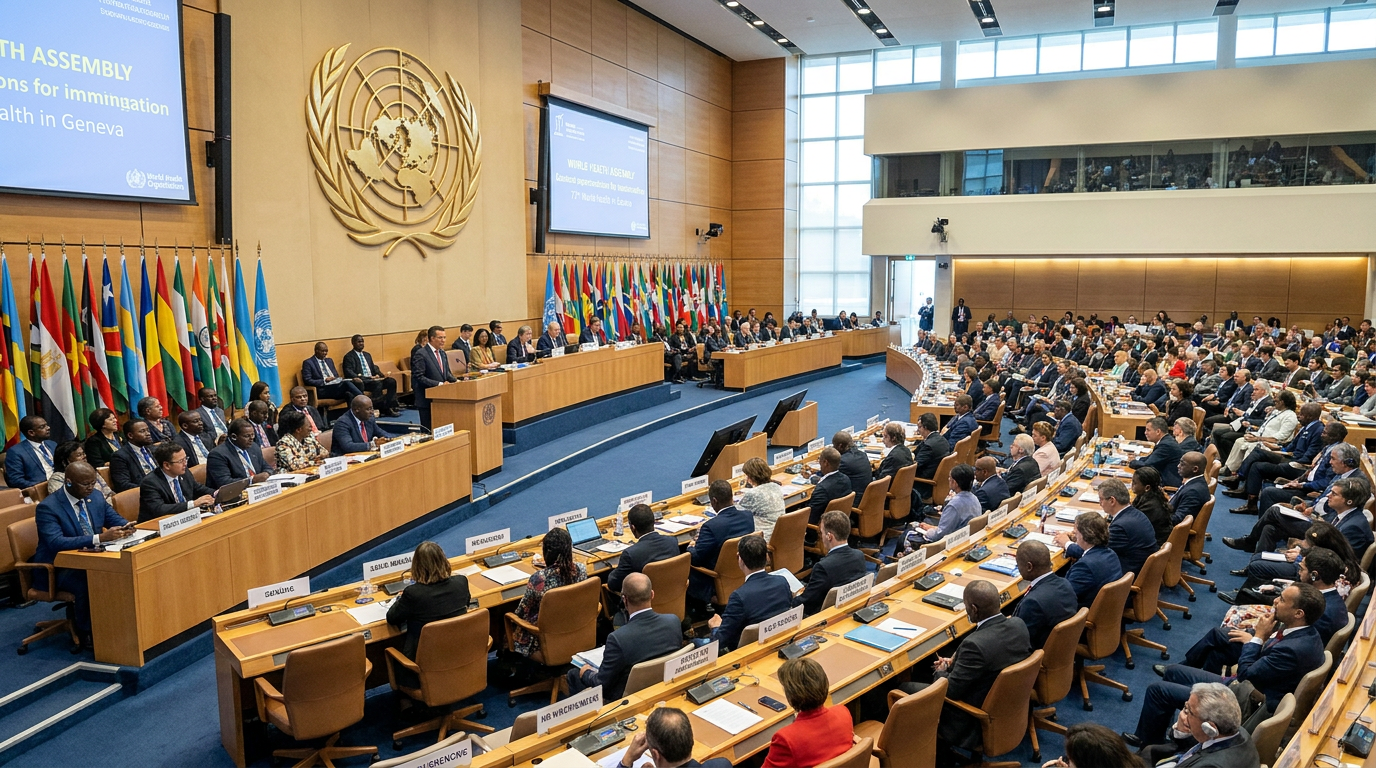
The trauma of the COVID-19 pandemic exposed systemic flaws in global health security, from fragmented supply chains to vaccine nationalism. In response, the world made a collective promise to never again face a novel virus unprepared. That promise materialized in May 2025, when the World Health Assembly formally adopted the WHO Pandemic Agreement, a historic, legally binding treaty designed to transform ad-hoc crisis responses into a cohesive global architecture.[1]
While the base agreement is now adopted, the international community is currently finalizing its most critical operational component: the Pathogen Access and Benefit-Sharing (PABS) system. This annex serves as the engine of the entire treaty, addressing the core inequity that defined the early 2020s. During previous outbreaks, developing nations frequently shared genetic sequences of emerging viruses, only to find themselves at the back of the line when pharmaceutical companies utilized that data to manufacture life-saving vaccines and treatments.[1][3]
The PABS system is designed to place data sharing and benefit sharing on an equal legal footing. Under Article 12 of the agreement, when a country detects a pathogen with pandemic potential, it is obligated to rapidly share the biological materials and genetic sequence information with a global network. In exchange, the system guarantees that the benefits derived from that data—specifically pandemic-related health products (PRHPs) like diagnostics, therapeutics, and vaccines—are distributed equitably based on public health need, rather than purchasing power.[1][4][5]

The mechanics of this equitable distribution rely on a specific formula. When the WHO declares a pandemic emergency, manufacturers utilizing the PABS network will be required to allocate 20 percent of their real-time production to the global response. Half of this allocation—10 percent of total production—must be donated directly to the WHO for deployment in the most vulnerable regions. The remaining 10 percent must be supplied to the WHO and participating nations at affordable, at-cost prices.[4][6]
Finalizing the exact legal mechanisms of this formula has proven complex. In May 2026, the World Health Assembly extended negotiations on the PABS annex for another year, tasking the Intergovernmental Working Group (IGWG) with resolving deep divisions over how these contracts will be enforced. For the Global South, represented prominently by the Africa Group, voluntary commitments from pharmaceutical companies are no longer sufficient. Developing nations are demanding legally binding contracts that ensure full transparency, traceability, and guaranteed access to the resulting medical countermeasures.[1][4][5][6]
Finalizing the exact legal mechanisms of this formula has proven complex.
Conversely, representatives from high-income nations and the pharmaceutical industry have cautioned against overly rigid mandates. Industry advocates argue that mandatory intellectual property waivers and strict contractual obligations could stifle the rapid research and development required to combat a novel threat. Finding the precise landing zone that guarantees equity without disincentivizing private-sector innovation remains the primary focus of the ongoing IGWG negotiations in Geneva.[3][4]

The urgency of finalizing these rules was underscored in June 2026, when Brazilian President Luiz Inácio Lula da Silva and WHO Director-General Dr. Tedros Adhanom Ghebreyesus issued a joint plea to world leaders. Citing a rapidly expanding Ebola outbreak in the Democratic Republic of the Congo and simultaneous hantavirus clusters, the leaders warned that shifting environmental factors and biotechnology advances have created new hotspots for disease emergence. They emphasized that the PABS annex must be completed to allow the broader Pandemic Agreement to formally enter into force.[2][3]
Beyond the PABS system, the Pandemic Agreement introduces several other transformative pillars to global health governance. Chief among them is the formal integration of the One Health approach. This framework recognizes that human health is inextricably linked to the health of animals and ecosystems. By strengthening disease surveillance at the human-animal interface, the treaty aims to detect and contain zoonotic spillovers—the primary source of novel human pathogens—before they can escalate into global crises.[1]
The agreement also establishes a Global Supply Chain and Logistics Network, coordinated by the WHO. This network is designed to prevent the export bans and supply hoarding that crippled the global response to COVID-19. By mapping manufacturing capacities and securing supply lines for essential medical goods during peacetime, the network ensures that masks, ventilators, and raw materials for vaccines can flow freely across borders the moment an emergency is declared.[1][6]

Crucially, the treaty includes strict provisions safeguarding national sovereignty, directly addressing widespread misinformation that circulated during the drafting process. The text explicitly states that the agreement does not grant the WHO any authority to impose domestic public health measures. Decisions regarding lockdowns, travel restrictions, and vaccination mandates remain firmly and exclusively within the jurisdiction of individual national governments.[2]
The implementation of the Pandemic Agreement will also rely on a newly established Coordinating Financial Mechanism. This fund is designed to support low- and middle-income countries in building their domestic pandemic prevention and preparedness capacities. By investing in local healthcare workforces, laboratory infrastructure, and regional manufacturing hubs, the mechanism ensures that the global health system is not solely reliant on a handful of centralized producers during a crisis.[1][5]

As the final details of the PABS annex are hammered out, the path forward requires sustained political will. Once the annex is formally adopted, the complete WHO Pandemic Agreement will be open for signature. It will officially enter into force 30 days after 60 member states have ratified it according to their own constitutional processes. While the diplomatic hurdles are significant, the treaty represents an unprecedented act of global solidarity—a concrete framework ensuring that when the next pandemic arrives, the world will meet it with a unified, equitable response.[1][2]
How we got here
Dec 2021
WHO member states initiate negotiations for a legally binding international instrument on pandemic prevention.
May 2025
The World Health Assembly formally adopts the base text of the WHO Pandemic Agreement.
May 2026
Negotiations on the crucial Pathogen Access and Benefit-Sharing (PABS) annex are extended after missing the initial deadline.
Jun 2026
The WHO Director-General and Brazilian President issue an urgent joint letter calling for the rapid finalization of the treaty.
Viewpoints in depth
Global South & Equity Advocates
Developing nations argue that the global health system must be fundamentally restructured with legally binding guarantees.
For nations in the Global South, the COVID-19 pandemic was a stark lesson in the failures of voluntary global solidarity. Despite initiatives like COVAX, developing countries found themselves at the back of the line for vaccines, even when they had been the ones to identify and share the genetic sequences of new variants. Consequently, this bloc—led prominently by the Africa Group—is demanding that the PABS system rely on ironclad, legally binding contracts. They argue that pharmaceutical companies utilizing the global pathogen network must be legally compelled to share their resulting products and technology, ensuring that access to life-saving countermeasures is based on public health need rather than national wealth.
Public Health Multilateralists
International organizations emphasize the necessity of trust and the urgent need to finalize the framework before the next crisis.
Public health officials and leaders of multilateral institutions view the Pandemic Agreement as a fragile but historic triumph of diplomacy. For this camp, the primary concern is time. With new outbreaks of Ebola and hantavirus emerging, they warn that the environmental and biological conditions for the next pandemic are already aligning. They are urging member states to find compromises on the PABS annex quickly, arguing that an imperfect but functional global framework is vastly superior to the fragmented, every-nation-for-itself approach that characterized the early 2020s.
Pharmaceutical Industry & High-Income Nations
Industry representatives caution that overly strict mandates could slow down the rapid innovation required to fight novel pathogens.
While generally supportive of the treaty's broad goals, pharmaceutical industry groups and several high-income nations have raised concerns about the specific mechanisms of the PABS annex. They argue that the unprecedented speed at which COVID-19 vaccines were developed was driven by robust intellectual property protections and private-sector agility. This camp warns that imposing mandatory IP waivers or overly rigid contractual obligations on manufacturers could act as a disincentive for rapid research and development. They advocate for a system that encourages voluntary partnerships and preserves the financial incentives necessary to mobilize the private sector during a global emergency.
What we don't know
- It remains unclear exactly how the WHO will enforce the 20 percent allocation mandate if a pharmaceutical company or its host nation refuses to comply during a crisis.
- The final legal language regarding intellectual property waivers and technology transfer within the PABS annex has not yet been agreed upon.
- It is unknown how quickly the required 60 member states will ratify the agreement once the annex is finalized, a process that could take years depending on domestic politics.
Key terms
- Pathogen Access and Benefit-Sharing (PABS)
- A system requiring countries to share data on dangerous pathogens in exchange for guaranteed, equitable access to the vaccines and treatments developed from that data.
- Pandemic-Related Health Products (PRHPs)
- Medical goods essential for responding to a pandemic, including diagnostics, therapeutics, vaccines, and personal protective equipment.
- One Health
- A public health framework that recognizes the deep interconnection between human health, animal health, and the environment, focusing on preventing diseases from jumping between species.
- Intergovernmental Working Group (IGWG)
- The official body of negotiators representing WHO member states tasked with drafting and finalizing the specific rules of the Pandemic Agreement.
Frequently asked
Does the WHO Pandemic Agreement allow the WHO to order lockdowns?
No. The agreement explicitly states that it does not grant the WHO any authority to impose domestic public health measures, such as lockdowns or vaccine mandates. Those decisions remain entirely with national governments.
What happens if a country discovers a new pandemic-potential virus?
Under the Pathogen Access and Benefit-Sharing (PABS) system, the country is obligated to rapidly share the biological materials and genetic sequence information with a global network so researchers can begin developing countermeasures.
When does the agreement officially take effect?
The agreement will enter into force 30 days after 60 member states have formally ratified it. However, countries must first finalize the PABS annex before the ratification process can begin in earnest.
Why are developing nations demanding legally binding contracts?
During the COVID-19 pandemic, developing nations often shared virus data but were left waiting for vaccines while wealthy nations bought up the global supply. They want legally binding rules to prevent this from happening again.
Sources
Source coverage
6 outlets
3 viewpoints surfaced




[1]World Health OrganizationPublic Health Multilateralists
WHO Member States agree to extend negotiations on key annex to the Pandemic Agreement
Read on World Health Organization →[2]UN NewsPublic Health Multilateralists
WHO and Brazil urge world leaders to finalise Pandemic Agreement
Read on UN News →[3]The GuardianPharmaceutical Industry & High-Income Nations
'The next pandemic will not wait': Lula and WHO director in urgent plea for leaders to finalise agreement
Read on The Guardian →[4]Health Policy WatchGlobal South & Equity Advocates
Despite Delays, Negotiations Over Critical PABS Annex Reveal Signs of Progress
Read on Health Policy Watch →[5]South CentreGlobal South & Equity Advocates
South Centre Statement to WHA 79 – IGWG
Read on South Centre →[6]European Public Service UnionGlobal South & Equity Advocates
Final negotiations on Annex to the WHO Pandemic Treaty begin
Read on European Public Service Union →

Every angle. Every day.
Get guides stories with full source coverage and perspective breakdowns delivered to your inbox.