
Landmark Study of 34,000 People Maps Hundreds of Gut Microbes to Diet and Metabolic Health
A massive new analysis has identified the specific gut bacteria linked to metabolic health and disease, revealing that the most beneficial microbes are fed by everyday fiber-rich foods rather than commercial supplements.
By Factlen Editorial Team
- Microbiome Researchers
- Focuses on the unprecedented scale of the data and the discovery of novel bacterial species.
- Clinical Nutritionists
- Emphasizes that whole-food dietary interventions are the most effective way to engineer gut health.
- Independent Microbiologists
- Cautions against oversimplifying the complex microbial ecosystem into binary categories.
What's not represented
- · Populations outside the US and UK
- · Commercial probiotic manufacturers
Why this matters
For years, the gut microbiome has been marketed as a cure-all, but scientists lacked a definitive map of what a 'healthy' gut actually looks like. This landmark 34,000-person study finally provides that map, revealing that the most beneficial microbes are entirely unknown to science—meaning they can't be found in a probiotic pill, but must be cultivated through a diverse, fiber-rich diet.
Key points
- A massive study of over 34,000 people has mapped the specific gut bacteria linked to metabolic health.
- Researchers identified 50 highly favorable microbes and 50 unfavorable microbes.
- Many of the most beneficial bacteria are unknown to science and cannot be found in probiotic supplements.
- Favorable microbes act as chemical factories, fermenting dietary fiber into anti-inflammatory compounds.
- Clinical trials confirmed that a diverse, plant-rich diet can improve the microbiome's composition within weeks.
The gut microbiome has long been hailed as the master switch for human health, marketed as everything from a metabolism engine to a mood booster. Yet, defining what a "healthy" gut actually looks like has frustrated scientists for decades.[6]
A landmark study published in the journal Nature has finally mapped the precise microbial signatures of metabolic health. By analyzing the gut microbiomes of more than 34,000 individuals, researchers have created the most comprehensive blueprint of the human digestive ecosystem to date.[1][2]
The research team harmonized data from five massive cross-sectional cohorts across the United States and the United Kingdom. They combined high-resolution metagenomic sequencing of stool samples with detailed dietary logs, anthropometric measurements, and cardiometabolic blood markers.[1][5]
From this unprecedented dataset, the investigators identified 661 distinct bacterial species that were common enough to analyze. They then ranked each species based on its statistical association with dozens of health biomarkers, including fasting glucose, triglycerides, and visceral fat.[4][5]

This analysis culminated in the creation of a comprehensive "Microbiome Health Ranking." The researchers isolated a "Top 50" list of highly favorable microbes that consistently correlated with lower systemic inflammation, better blood sugar control, and improved lipid profiles.[2][4]
Conversely, the team identified 50 "unfavorable" microbes that were strongly linked to negative health outcomes. Individuals harboring high populations of these unfavorably ranked species were significantly more likely to exhibit a higher body mass index (BMI) and elevated cardiovascular risk factors.[1][2]
One of the study's most striking discoveries is the prevalence of "microbial dark matter." The data revealed that many of the most beneficial microbes associated with healthy aging are entirely new to science and have never been successfully cultured in a laboratory.[2][5]
This finding explains why commercial probiotic supplements often fail to deliver transformative health benefits. Because the most powerful health-promoting bacteria exist only as genetic signatures and cannot yet be manufactured, they cannot be packaged into a daily pill.[5][6]

So, how do these favorable microbes actually improve human health? The answer lies in their role as microscopic chemical factories. These specific bacterial strains are highly efficient at fermenting complex dietary fibers that the human digestive system cannot break down on its own.[5][6]
So, how do these favorable microbes actually improve human health?
During this fermentation process, the microbes produce short-chain fatty acids (SCFAs), such as butyrate. These crucial compounds cross the intestinal lining and enter the bloodstream, where they actively lower systemic inflammation, regulate appetite hormones, and improve the body's insulin sensitivity.[6]
The researchers did not merely map the microbes; they also tracked the specific foods that feed them. The data clearly demonstrated that an individual's long-term dietary patterns directly dictate which microbial populations flourish and which decline.[1][4]
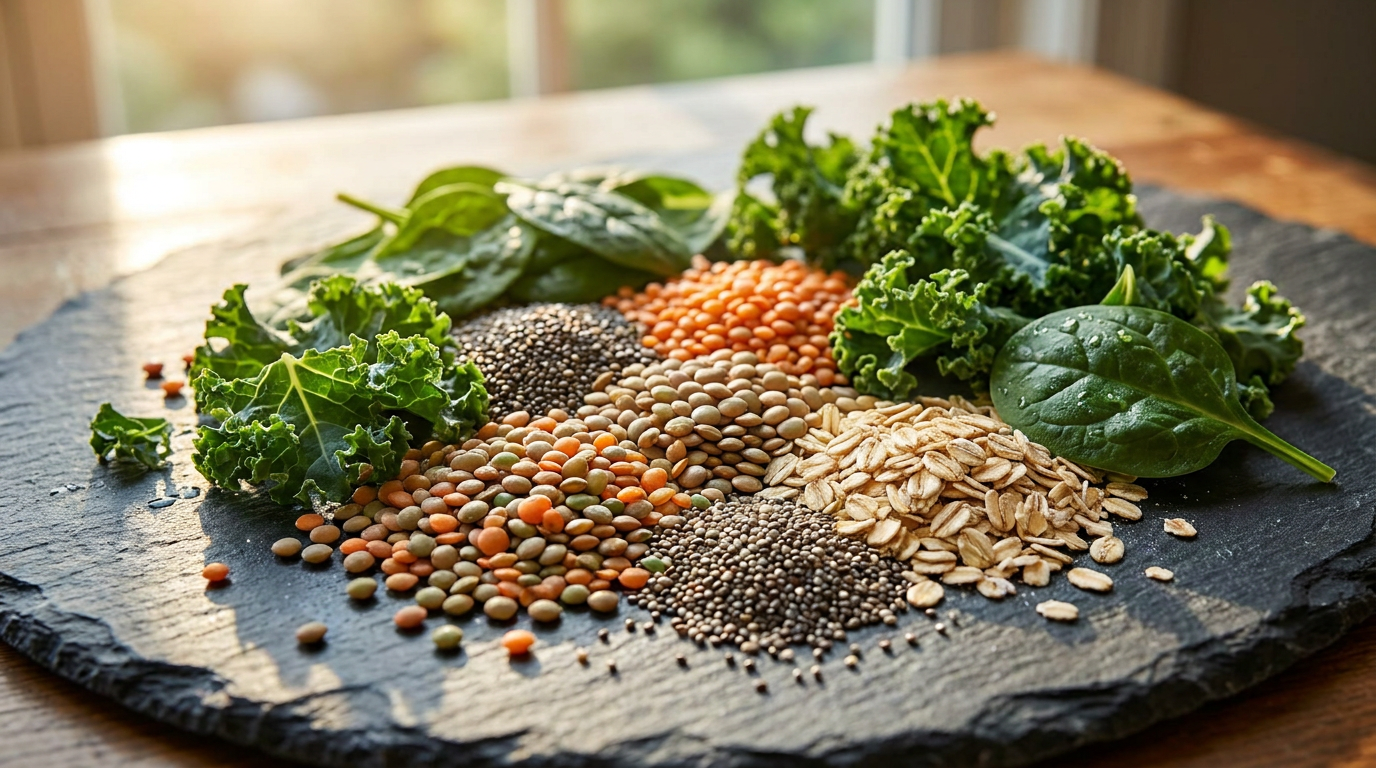
Favorable microbes thrive on a diverse matrix of plant-based foods. The dietary logs revealed that participants who consumed high amounts of legumes, oats, barley, nuts, seeds, and leafy greens hosted the most robust populations of health-promoting bacteria.[5]

In contrast, unfavorable microbes proliferated in the guts of individuals who consumed diets high in highly processed foods, refined sugars, and low-fiber carbohydrates. This stark divide highlights the microbiome's role as a direct intermediary between diet and disease.[2][5]
To prove that these associations were causal rather than coincidental, the researchers analyzed data from clinical intervention trials involving over 700 participants. These individuals were tasked with shifting their daily eating habits toward a more fiber-rich, plant-diverse diet.[1][4]
The results were rapid and measurable. Within just a few weeks of adopting the new dietary patterns, participants experienced a significant increase in favorably ranked microbial species and a corresponding decline in unfavorable ones.[4][5]
This rapid adaptation confirms that the human microbiome is highly malleable. An individual's microbial destiny is not permanently locked in by their genetics, but is actively and continuously shaped by their daily food choices.[5][6]

Despite the breakthrough, independent microbiologists caution against oversimplifying the ecosystem. They warn that labeling bacteria strictly as "good" or "bad" can obscure the complex, synergistic relationships within the gut, where microbes interact in intricate food webs.[3][4]
Furthermore, experts note that the current dataset relies heavily on populations from the US and the UK. Expanding this research to include globally diverse populations is the next critical step to ensure that these microbial health signatures are truly universal.[3]
Ultimately, this massive dataset moves microbiome science from vague associations to actionable, evidence-based interventions. It provides the scientific underpinning needed to develop precision nutrition strategies tailored to an individual's unique microbial makeup.[3][6]
The research delivers a clear and empowering message: while the science of the microbiome is incredibly complex, the most effective way to engineer a healthier gut remains surprisingly simple—and it starts in the produce aisle.[6]
How we got here
2021
The initial PREDICT 1 study identifies 15 'good' and 15 'bad' gut bacteria linked to health outcomes in a smaller cohort of 1,100 individuals.
2023
Researchers begin aggregating data from five massive cross-sectional cohorts across the US and UK to expand the dataset.
Late 2025
The landmark study is published in Nature, analyzing over 34,000 microbiomes and ranking 661 distinct microbial species.
2026
Clinical intervention trials confirm that targeted dietary changes can successfully shift the microbiome's composition within weeks.
Viewpoints in depth
Microbiome Researchers
Focuses on the unprecedented scale of the data and the discovery of novel bacterial species.
For researchers, the true breakthrough lies in the sheer volume of data and the identification of 'microbial dark matter.' By utilizing metagenomic sequencing on 34,000 samples, scientists were able to detect genetic signatures of highly beneficial bacteria that have never been cultured in a lab. This massive dataset provides the first reliable, reproducible baseline for what constitutes a healthy human microbiome, moving the field beyond small, localized studies.
Clinical Nutritionists
Emphasizes that whole-food dietary interventions are the most effective way to engineer gut health.
Nutrition experts view these findings as a powerful validation of fiber-rich, plant-diverse diets. Because the most favorable microbes cannot currently be packaged into probiotic pills, nutritionists argue that the only way to cultivate a healthy gut is by feeding the ecosystem the complex carbohydrates it requires. They highlight the clinical trial data showing that dietary shifts can measurably improve the microbiome's composition in a matter of weeks.
Independent Microbiologists
Cautions against oversimplifying the complex microbial ecosystem into binary categories.
While praising the study's scale, some independent microbiologists warn that categorizing bacteria strictly as 'favorable' or 'unfavorable' risks reductionism. They point out that the gut is a highly synergistic environment where microbes interact in complex food webs; a bacterium that appears 'bad' in isolation might perform a necessary function in a specific context. Furthermore, they stress the need to expand this research beyond US and UK populations to ensure these microbial signatures are truly universal.
What we don't know
- Whether these specific microbial health signatures hold true for populations outside the US and UK with vastly different traditional diets.
- The exact biological functions of the newly discovered 'microbial dark matter' species.
- How to successfully culture and manufacture these highly beneficial bacteria for future therapeutic use.
Key terms
- Microbiome
- The vast community of microorganisms, including bacteria, fungi, and viruses, that live in a particular environment, such as the human digestive tract.
- Metagenomic sequencing
- A comprehensive laboratory technique used to analyze the genetic material of an entire community of microbes directly from a sample, allowing scientists to identify unknown species.
- Short-chain fatty acids (SCFAs)
- Beneficial compounds, such as butyrate, produced when gut bacteria ferment dietary fiber, which play a crucial role in reducing inflammation and regulating metabolism.
- Microbial dark matter
- Microorganisms that exist in nature and can be detected via their DNA, but have never been successfully isolated or grown in a laboratory setting.
- Cardiometabolic health
- A broad term encompassing the health of the heart, blood vessels, and metabolic system, including factors like blood sugar, cholesterol, and body weight.
Frequently asked
Can I just take a probiotic to get these beneficial microbes?
No. The study revealed that many of the most favorable microbes are 'microbial dark matter'—species that are entirely new to science and have never been cultured in a lab, meaning they are not available in commercial probiotic supplements.
How quickly can diet change my microbiome?
Clinical intervention trials showed that adopting a diet rich in diverse plant fibers can significantly increase favorable microbial species and decrease unfavorable ones within just a few weeks.
What specific foods feed the favorable microbes?
Favorable microbes thrive on a diverse matrix of plant-based foods, particularly legumes, oats, barley, nuts, seeds, and leafy greens.
Sources
Source coverage
6 outlets
3 viewpoints surfaced




[1]NatureMicrobiome Researchers
Gut micro-organisms associated with health, nutrition and dietary interventions
Read on Nature →[2]ZOE ScienceMicrobiome Researchers
The ZOE Microbiome Ranking: 100 gut bacteria linked to health
Read on ZOE Science →[3]Science Media CentreIndependent Microbiologists
Expert reaction to study on gut microbiome and diet
Read on Science Media Centre →[4]Nutrition InsightClinical Nutritionists
Scientists develop gut microbe ranking system from 34,000 participants
Read on Nutrition Insight →[5]SuperAgeClinical Nutritionists
A 34,000-person Nature study reveals the microbes that shape your metabolism
Read on SuperAge →[6]Factlen Editorial Team
Synthesis by Factlen editorial team
Read on Factlen Editorial Team →


Every angle. Every day.
Get health stories with full source coverage and perspective breakdowns delivered to your inbox.