
South Korea and Japan Scramble Fighter Jets as Chinese and Russian Warplanes Enter Air Defense Zones
More than 10 Chinese and Russian military aircraft, including strategic bombers, entered South Korea's air defense identification zone on Saturday. The joint patrol prompted both Seoul and Tokyo to scramble fighter jets in a high-stakes demonstration of force amid deepening Pacific alliances.
By Factlen Editorial Team
- South Korean and Japanese Defense Establishments
- View the unannounced flights as deliberate provocations that escalate regional tensions and require constant vigilance.
- Sino-Russian Military Command
- Argue the patrols are routine, comply with international law, and are necessary to maintain a balance of power.
- Western Security Analysts
- Interpret the joint maneuvers as a coordinated stress test of allied defenses and a political message against the U.S. alliance network.
What's not represented
- · Commercial Aviation Authorities
- · Local Residents in Okinawa
Why this matters
This coordinated bomber patrol is a direct kinetic message from Beijing and Moscow challenging the expanding U.S.-Japan-South Korea military alliance. While no sovereign airspace was breached, the scale and frequency of these joint flights are stretching Western-aligned defense resources and escalating the risk of a mid-air miscalculation in the Pacific.
Key points
- Over 10 Chinese and Russian warplanes entered South Korea's air defense zone on Saturday.
- The formation included H-6 and Tu-95 strategic bombers, along with fighter escorts.
- South Korea and Japan scrambled fighter jets to monitor the aircraft.
- No sovereign territorial airspace was violated during the patrol.
- China called the flight a routine joint strategic patrol to safeguard regional peace.
- The maneuver is widely seen as a counter to the deepening U.S.-Japan-South Korea military alliance.
South Korea and Japan scrambled frontline fighter jets on Saturday after a massive formation of Chinese and Russian military aircraft entered their respective air defense identification zones. The unannounced maneuver triggered immediate tactical responses from both Seoul and Tokyo, underscoring the volatile security environment in the western Pacific.[1][2][3]
The joint patrol consisted of more than 10 warplanes, featuring Chinese H-6 and Russian Tu-95 strategic bombers. These heavy aircraft were escorted by a formidable screen of Chinese J-16 and Russian Su-30 fighter jets, as well as Russian Tu-142 maritime patrol aircraft and a Chinese KJ-500 early-warning plane.[1][2]
Tracking data released by defense officials showed the aircraft sweeping across the East Sea—also known as the Sea of Japan—before curving down toward the South Sea. A portion of the bomber fleet then navigated through the Miyako Strait, a critical and narrow waterway between Japan’s Okinawa and Miyako islands that serves as a gateway to the broader Pacific Ocean.[2][8]

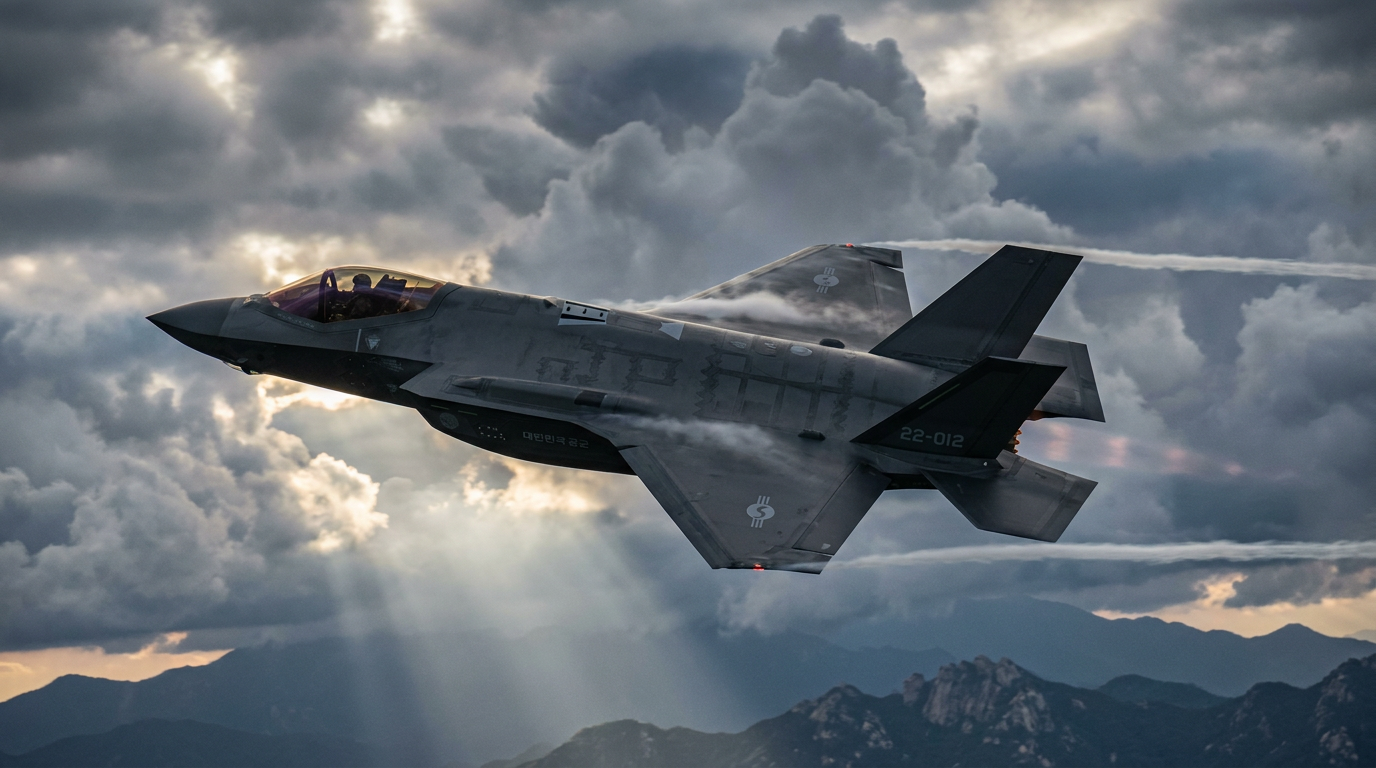
South Korea’s Joint Chiefs of Staff reported that their radar systems detected the foreign aircraft well before they crossed into the Korea Air Defense Identification Zone (KADIZ). In response, the South Korean Air Force deployed F-35A stealth fighters and other tactical aircraft to monitor the formation and prepare for any potential contingencies.[3][4][5]
Japan’s Defense Ministry similarly tracked the movements from Saturday morning through the afternoon. Tokyo scrambled its own fighter jets as the bombers approached its southwestern islands, maintaining a close visual watch until the Sino-Russian fleet returned along its original flight path.[1][8]
Japan’s Defense Ministry similarly tracked the movements from Saturday morning through the afternoon.
Both Seoul and Tokyo confirmed that the Chinese and Russian aircraft did not violate sovereign territorial airspace. An Air Defense Identification Zone is an internationally recognized buffer area where countries request approaching aircraft to identify themselves to prevent accidental collisions, though it carries no legal weight under international law.[4][6]
The Chinese Defense Ministry quickly acknowledged the operation, describing it as the 11th "joint strategic air patrol" conducted by the two nations since 2019. Beijing stated that the long-range maneuver was part of an annual cooperation plan and demonstrated the two countries' "resolve and capability to jointly safeguard regional peace and stability."[2][7]

Security analysts, however, view the unannounced incursion as a highly calculated kinetic message. The patrol comes amid a rapidly deepening trilateral military alliance between Washington, Tokyo, and Seoul, which have recently conducted joint anti-missile drills aimed at deterring regional threats.[3][4]
By seamlessly merging their air forces and testing the outer limits of allied defense zones, Beijing and Moscow are signaling their ability to counter U.S. efforts to consolidate a security architecture in the Indo-Pacific. The scale of the formation forces Western-aligned militaries to stretch their rapid-response resources.[5][6]

Similar joint patrols triggered sharp diplomatic protests in December 2025 and November 2024. While these flights have become a standardized playbook for China and Russia, military experts warn that the increasing frequency and size of the formations heighten the risk of an accidental mid-air miscalculation in one of the world's most heavily militarized corridors.[1][3]
How we got here
2019
China and Russia conduct their first joint strategic bomber patrol in the Asia-Pacific.
November 2024
South Korea scrambles jets after Chinese and Russian planes enter the KADIZ.
December 2025
Nine Chinese and Russian aircraft enter the KADIZ, drawing formal protests from Seoul and Tokyo.
June 27, 2026
Over 10 Chinese and Russian warplanes enter the KADIZ and fly through the Miyako Strait, prompting fighter scrambles.
Viewpoints in depth
Sino-Russian Military Command
Beijing and Moscow frame these joint strategic air patrols as routine operations designed to safeguard regional peace and stability.
From their perspective, the flights are fully compliant with international law, as they occur in international airspace and do not violate the sovereign territory of any nation. The Chinese Defense Ministry emphasizes that these maneuvers are part of an annual cooperation plan, not directed at any specific third party. However, the subtext of these operations is widely understood as a demonstration of a hardening military axis. By projecting power through strategic chokepoints like the Miyako Strait, China and Russia aim to prove they can operate seamlessly together to counter what they view as U.S. hegemony and the encirclement of their borders by Western-aligned alliances.
South Korean and Japanese Defense Establishments
For Seoul and Tokyo, the unannounced entry of heavily armed strategic bombers into their Air Defense Identification Zones is viewed as a deliberate provocation.
Defense officials argue that while ADIZs are not sovereign airspace, the failure to provide advance notice forces them to scramble frontline fighter jets to ensure national security, unnecessarily escalating regional tensions. These governments see the patrols as calculated stress tests designed to measure the response times and operational readiness of their air forces. In response, both nations have lodged formal diplomatic protests following past incidents, emphasizing that such massive formations threaten the delicate security balance in the heavily trafficked airspace of the western Pacific.
Western Security Analysts
Independent security analysts interpret the joint bomber patrols as a kinetic counter-message to the deepening trilateral military alliance between the United States, Japan, and South Korea.
As Washington expands its footprint with permanent reconnaissance deployments and joint anti-missile drills, Beijing and Moscow are using these flights to signal that they can easily stretch allied defense resources thin. Experts warn that the normalization of these massive joint patrols creates a dangerous new status quo. With dozens of heavily armed aircraft from rival nations operating in close proximity, the margin for error is razor-thin, significantly elevating the risk of a mid-air miscalculation that could spark a broader geopolitical crisis.
What we don't know
- Whether South Korea or Japan will lodge formal diplomatic protests as they did following a similar incident in December 2025.
- If the U.S. military provided direct support or tracking data to its allies during the incursion.
- How frequently China and Russia plan to conduct these joint patrols for the remainder of 2026.
Key terms
- Air Defense Identification Zone (ADIZ)
- A designated buffer area of airspace over land or water where a country requires the identification and tracking of aircraft for national security, though it extends beyond sovereign airspace.
- Sovereign Airspace
- The atmosphere above a nation's territory and territorial waters, extending 12 nautical miles from the coast, which is recognized under international law.
- Miyako Strait
- A strategically vital waterway between Japan's Okinawa and Miyako islands that provides the Chinese military with direct access to the western Pacific Ocean.
- Scramble
- The rapid deployment of military fighter jets to intercept, identify, or escort unknown or hostile aircraft.
Frequently asked
Did the Chinese and Russian planes enter South Korean airspace?
No. They entered the Korea Air Defense Identification Zone (KADIZ), which is an international buffer area, but they did not cross into South Korea's sovereign territorial airspace.
Why did South Korea and Japan scramble jets if their airspace wasn't violated?
Militaries routinely scramble fighter jets to visually identify foreign military aircraft approaching their airspace and to ensure they do not cross the sovereign boundary.
Why are China and Russia flying together?
The two nations have been conducting "joint strategic air patrols" since 2019 to demonstrate their deepening military alignment and to counter the expanding U.S. alliance network in the Pacific.
Sources
Source coverage
8 outlets
3 viewpoints surfaced







[1]South China Morning PostWestern Security Analysts
Japan and South Korea scramble fighters in response to Chinese-Russian bomber patrol
Read on South China Morning Post →[2]The Japan TimesWestern Security Analysts
Chinese and Russian bombers and fighter jets stage joint patrol near Japan
Read on The Japan Times →[3]The Times of IndiaSouth Korean and Japanese Defense Establishments
South Korea scrambles fighter jets as Chinese, Russian warplanes enter air defence zone
Read on The Times of India →[4]Caliber.azSouth Korean and Japanese Defense Establishments
Chinese, Russian military aircraft enter South Korean air defence zone
Read on Caliber.az →[5]MilitarnyiWestern Security Analysts
More Than 10 Chinese and Russian Aircraft Entered South Korea's Air Defense Identification Zone
Read on Militarnyi →[6]Pakistan TodaySouth Korean and Japanese Defense Establishments
South Korea scrambles jets after Chinese, Russian aircraft enter air defence zone
Read on Pakistan Today →[7]Ministry of National Defense of the PRCSino-Russian Military Command
China and Russia conduct joint strategic air patrol
Read on Ministry of National Defense of the PRC →[8]Japanese Ministry of DefenseSouth Korean and Japanese Defense Establishments
Tracking of Chinese and Russian Aircraft Movements
Read on Japanese Ministry of Defense →

More in news politics
See all 5 stories →Defense Procurement
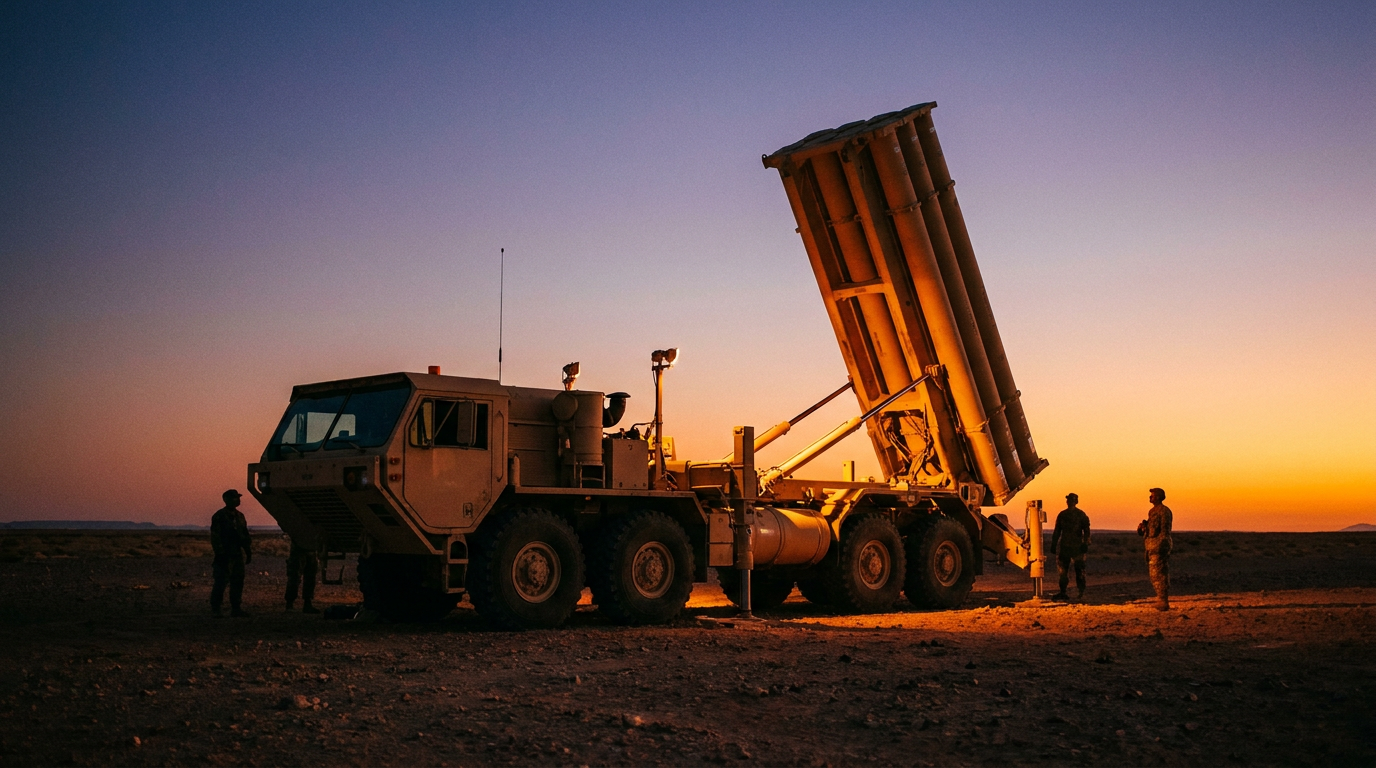
Lockheed Martin Secures $35 Billion Contract to Quadruple THAAD Interceptor Production
7 sources
Georgia Senate
Mike Collins Wins Georgia Senate Republican Runoff, Setting Up High-Stakes Race Against Jon Ossoff
7 sources

Swiss Referendum
Swiss Voters Reject Far-Right Proposal to Cap Population at 10 Million, Averting 'Swiss Brexit' With EU
8 sources

Every angle. Every day.
Get news politics stories with full source coverage and perspective breakdowns delivered to your inbox.