
Apple Complies With US Court Order, Allows Zero-Commission External Payment Links on App Store
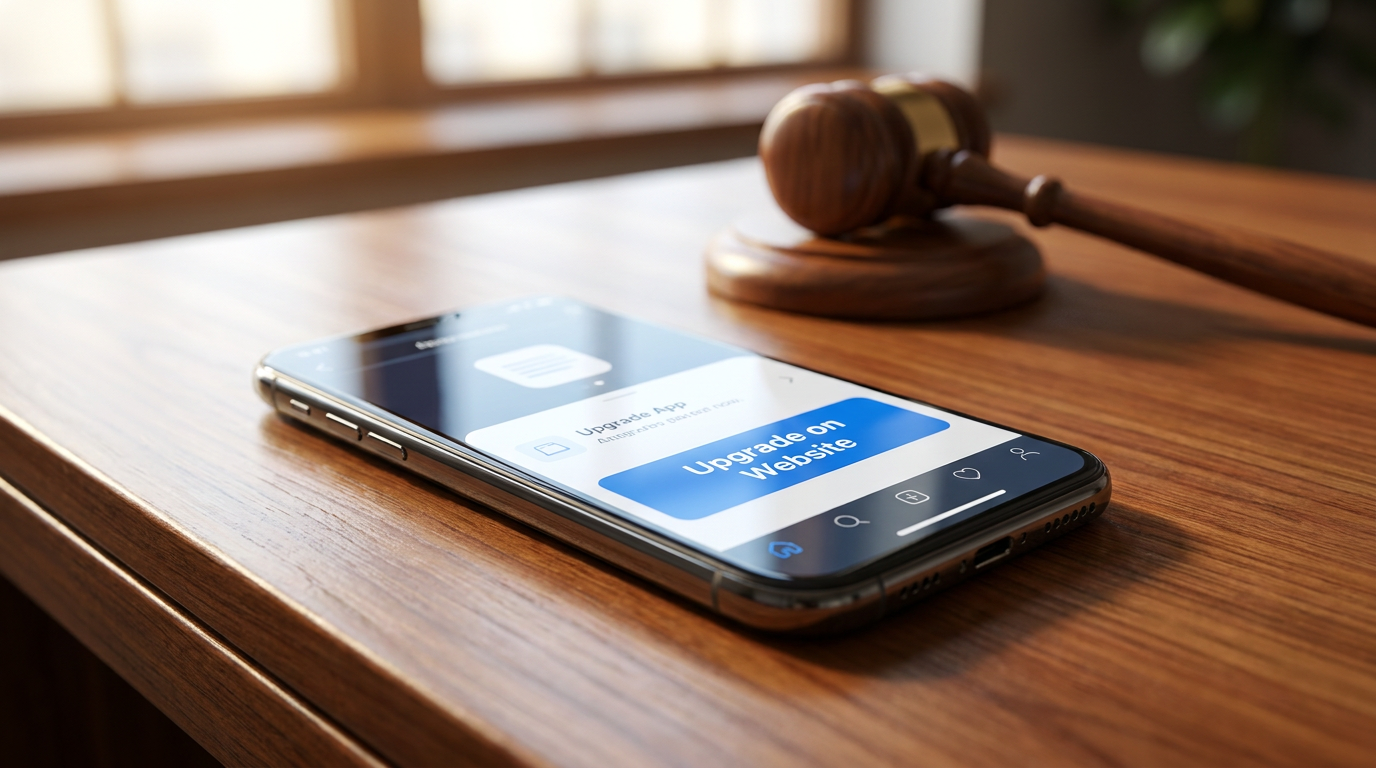
Following a federal contempt ruling, Apple has updated its US App Store guidelines to let developers link to outside payment systems without paying a commission.
By Factlen Editorial Team
- App Developers & Publishers
- Creators view the zero-commission ruling as a watershed victory for fair competition.
- Apple & Platform Defenders
- Apple maintains that commissions are necessary to fund the platform's infrastructure and security.
- Antitrust & Legal Analysts
- Legal experts view the ruling as a textbook rejection of corporate 'malicious compliance.'
What's not represented
- · Payment Processing Companies (Stripe, PayPal) who stand to gain massive transaction volume.
- · Consumer Advocacy Groups focused on digital privacy and transaction security outside the Apple ecosystem.
Why this matters
For the first time since the App Store's inception, US developers can bypass Apple's 30% commission entirely by directing users to web checkouts. This shift breaks a long-standing monopoly lock-in, paving the way for cheaper app subscriptions and more revenue for independent creators.
Key points
- Apple has updated its US App Store guidelines to allow external payment links with a 0% commission.
- The change complies with a federal court order that found Apple's previous 27% fee to be 'malicious compliance.'
- Developers no longer have to display intimidating 'scare screens' when directing users to web checkouts.
- The 0% rate is temporary while a district court determines a 'reasonable' long-term coordination fee.
- Developers are expected to offer cheaper subscription prices to users who purchase via the web.
Apple has officially updated its App Store guidelines for the United States, allowing developers to link users to external payment systems without paying any commission to the tech giant. The sweeping policy change marks a watershed moment in the mobile software industry, effectively breaking the 30% "Apple Tax" that has governed iOS app monetization for over a decade.[1][3]
The update is a direct result of a federal court order stemming from the long-running antitrust battle between Apple and Epic Games. Under the revised rules, developers can now place a single, clearly labeled link or button within their apps that directs users to a web-based checkout page. Crucially, Apple will not collect a percentage of the revenue generated through these external links while the current injunction remains in effect.[2][5]
Previously, Apple had attempted to comply with the court's anti-steering injunction by allowing external links but imposing a 27% fee on any resulting transactions. The company also required developers to display intimidating warning messages—widely dubbed "scare screens"—cautioning users about the supposed dangers of leaving the Apple ecosystem to make a purchase.[3][8]
That approach was struck down by US District Judge Yvonne Gonzalez Rogers, who found Apple in willful contempt of court. She labeled the 27% fee and the friction-heavy user experience as "malicious compliance" designed to make external payments economically unviable. The court subsequently banned Apple from collecting any commission on off-app purchases until a "reasonable, non-prohibitive" rate could be established.[1][7]

With the new guidelines now live, the 27% fee has been entirely suspended. Furthermore, Apple has removed the requirement for aggressive warning screens. Developers are now only required to show a neutral, informational "leaving the app" notice before the user is handed off to the external web browser.[3][8]
With the new guidelines now live, the 27% fee has been entirely suspended.
The developer community has reacted with widespread celebration. Companies ranging from massive streaming platforms like Spotify to creator-focused startups like Patreon have long argued that Apple's mandatory in-app purchase system stifled their business models. By routing users to their own websites, developers can now retain 100% of their revenue minus standard credit card processing fees, which typically hover around 3%.[4][5]
For consumers, this shift is expected to translate directly into lower prices. Because developers no longer have to bake Apple's 30% cut into their pricing models, many are preparing to offer discounted subscription tiers for users who choose to check out via the web rather than through Apple's native interface.[2][4]

Despite the immediate victory for developers, the zero-commission landscape is technically temporary. The Ninth Circuit Court of Appeals upheld the contempt finding against Apple but ruled that the company is eventually entitled to charge a "reasonable" fee based on the actual costs of coordinating external links and maintaining platform security.[1][6]
The exact percentage of that future fee is now the subject of intense legal wrangling. The district court is tasked with determining what rate qualifies as fair, a process that could take months. In the meantime, Apple has filed emergency requests with the US Supreme Court in an attempt to pause the fee-setting phase entirely, arguing that the contempt ruling was fundamentally flawed.[5][6]
The financial stakes for Apple are astronomical. The company recently reported that the App Store ecosystem facilitated over $1.4 trillion in billings and sales in 2025. While Apple notes that more than 90% of those transactions are commission-free (such as physical goods or ad-supported apps), the high-margin revenue from digital subscriptions and in-app purchases is a cornerstone of its booming Services division.[2][7]

The US policy shift also highlights a fracturing global regulatory environment for the iPhone maker. In the European Union, Apple faces massive fines under the Digital Markets Act for similar anti-steering practices. Meanwhile, in markets like Japan and Brazil, Apple has proactively introduced reduced 15% commissions for alternative billing systems to appease local regulators.[1][4]
While Apple continues to defend its integrated payment system as the safest and most seamless option for consumers, the zero-commission window in the US represents a profound structural change. Even if a small coordination fee is eventually reinstated by the courts, the precedent has been set: the era of the mandatory 30% toll on iOS is coming to an end.[3][7]
How we got here
September 2021
A federal judge issues an injunction ordering Apple to allow developers to steer users to external payment methods.
January 2024
The injunction takes effect; Apple allows external links but imposes a 27% commission and warning screens.
April 2025
Judge Gonzalez Rogers finds Apple in contempt, banning the 27% fee and mandating a zero-commission policy.
December 2025
The Ninth Circuit upholds the contempt ruling but states Apple can eventually charge a 'reasonable' fee.
June 2026
Apple officially updates its US App Store guidelines to allow zero-commission links while the final fee is litigated.
Viewpoints in depth
App Developers & Publishers
Creators view the zero-commission ruling as a watershed victory for fair competition.
For independent developers and massive publishers alike, the removal of the 27% fee is seen as the dismantling of an unfair monopoly. Companies argue that Apple's mandatory in-app purchase system forced them to artificially inflate prices to maintain profit margins. By routing users to their own web checkouts, developers can retain full control over their billing relationships, offer dynamic pricing, and pass the 30% savings directly to consumers in the form of cheaper subscriptions.
Apple & Platform Defenders
Apple maintains that commissions are necessary to fund the platform's infrastructure and security.
Apple and its proponents argue that the App Store is not merely a payment processor, but a comprehensive global distribution platform. They contend that the standard commission funds the massive server infrastructure, developer tools, and rigorous security reviews that keep iOS free from malware. From this perspective, forcing Apple to allow zero-commission external links allows developers to "free-ride" on the billions of dollars Apple invests in maintaining the ecosystem's safety and reach.
Antitrust & Legal Analysts
Legal experts view the ruling as a textbook rejection of corporate 'malicious compliance.'
Legal observers highlight Judge Gonzalez Rogers' contempt ruling as a critical precedent in antitrust enforcement. By striking down the 27% fee and the "scare screens," the court signaled that tech giants cannot use friction and prohibitive pricing to technically comply with an injunction while violating its spirit. Analysts note that this US ruling, combined with the EU's Digital Markets Act, represents a coordinated global dismantling of the walled-garden software model.
What we don't know
- It remains unclear what percentage the district court will eventually deem a 'reasonable' fee for external links.
- We don't know if the US Supreme Court will grant Apple's emergency request to pause the fee-setting process.
- It is uncertain how many consumers will actually choose to leave the seamless Apple Pay ecosystem for a web checkout.
Key terms
- Anti-Steering Rules
- Platform policies that prevent app developers from informing users about cheaper payment options available outside the app.
- In-App Purchase (IAP)
- Apple's proprietary payment system, which historically took a 15% to 30% cut of all digital goods sold within iOS apps.
- Malicious Compliance
- The act of strictly following the letter of a rule or court order while intentionally violating its spirit or intended outcome.
- Walled Garden
- A closed technology ecosystem where the platform provider strictly controls the hardware, software, and payment infrastructure.
Frequently asked
Will my app subscriptions get cheaper?
Likely yes. Many developers plan to offer discounted rates if you choose to subscribe through their website rather than using Apple's in-app payment system.
Does this change apply worldwide?
No. This specific zero-commission ruling applies only to the United States storefront of the App Store, though Apple faces similar regulatory pressure in the EU and Japan.
Is it safe to pay outside the App Store?
Yes, provided the developer uses a reputable payment processor like Stripe or PayPal. However, you will not have access to Apple's centralized subscription management tool for those purchases.
Will Apple ever charge a fee for these links again?
Yes, the courts have ruled that Apple is entitled to a 'reasonable' fee for coordinating the links, but the exact percentage has not yet been determined.
Sources
Source coverage
8 outlets
3 viewpoints surfaced








[1]ReutersAntitrust & Legal Analysts
Apple drops App Store external payment fees in US to comply with court order
Read on Reuters →[2]BloombergAntitrust & Legal Analysts
Apple Allows Zero-Commission External Links in US App Store Following Legal Defeat
Read on Bloomberg →[3]The VergeApp Developers & Publishers
Apple finally allows zero-commission external payment links in the US App Store
Read on The Verge →[4]TechCrunchApp Developers & Publishers
Developers celebrate as Apple drops the 27% 'Apple Tax' on external links
Read on TechCrunch →[5]The Wall Street JournalApp Developers & Publishers
Apple Bows to Court Order, Pauses Fees on Outside App Payments
Read on The Wall Street Journal →[6]AppleInsiderApple & Platform Defenders
Apple updates App Review Guidelines for US storefront, drops external link commission
Read on AppleInsider →[7]CNBCAntitrust & Legal Analysts
Apple complies with Epic Games injunction, allows fee-free external payments for now
Read on CNBC →[8]MacRumorsApple & Platform Defenders
Apple Removes 'Scare Screens' and Fees for External App Store Links in the US
Read on MacRumors →
Every angle. Every day.
Get technology stories with full source coverage and perspective breakdowns delivered to your inbox.