
Lockheed Martin Secures $35 Billion Contract to Quadruple THAAD Interceptor Production
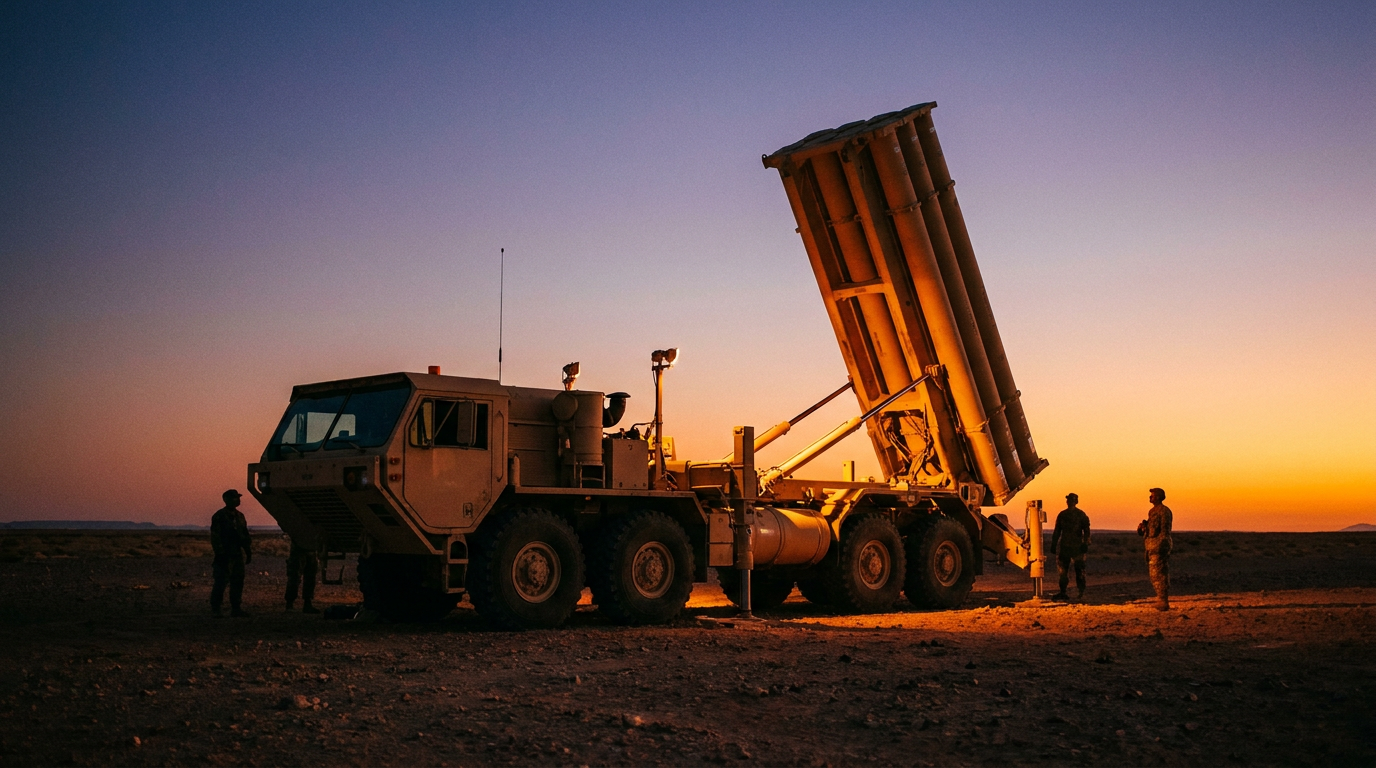
The U.S. government has awarded Lockheed Martin a $35 billion contract to quadruple production of THAAD missile interceptors. The massive multiyear deal aims to rebuild stockpiles severely depleted during the ongoing conflict with Iran.
By Factlen Editorial Team
- Defense Industry Advocates
- Argues that massive, multiyear procurement contracts are essential to give defense contractors the financial security needed to expand manufacturing capacity.
- Strategic Posture Analysts
- Focuses on the severe depletion of U.S. munitions during the Iran conflict and warns of a persistent window of vulnerability until production scales up.
- Military Procurement Officials
- Views the contract as a successful execution of the Acquisition Transformation Strategy, shifting the Pentagon toward a wartime industrial footing.
What's not represented
- · Taxpayer advocacy groups questioning the $35 billion price tag and the $15.5 million cost per interceptor.
- · Local communities in Alabama and Arkansas reacting to the rapid expansion of munitions manufacturing in their towns.
Why this matters
The rapid depletion of U.S. missile interceptors during the Iran conflict exposed a severe vulnerability in America's ability to fight a prolonged war. This $35 billion industrial expansion is a fundamental shift in defense strategy, ensuring the U.S. and its allies have the necessary shield to deter or survive high-intensity conflicts in the Middle East and the Western Pacific.
Key points
- Lockheed Martin secured a $35 billion contract to quadruple THAAD interceptor production over seven years.
- The deal aims to increase annual production from 96 missiles to 400 units by 2033.
- The U.S. expended an estimated 190 to 290 interceptors during a 39-day window of the Iran conflict.
- Lockheed is investing $9 billion to expand manufacturing facilities in Alabama, Arkansas, Texas, and California.
- The contract is part of the Department of War's new Acquisition Transformation Strategy to encourage private capital investment.
The U.S. government has awarded Lockheed Martin a sweeping $35 billion contract to quadruple the production of Terminal High Altitude Area Defense (THAAD) interceptors, marking one of the largest multiyear procurement deals in recent history. The seven-year undefinitized contract action (UCA) is designed to rapidly expand the nation's defense industrial base following severe munitions depletion during the ongoing conflict with Iran.[1][2]
Under the agreement, Lockheed Martin will scale its annual production of THAAD interceptors from the current rate of 96 missiles per year to approximately 400 units annually by 2033. The deal transitions a preliminary framework agreement signed in January 2026 into a binding, long-term procurement program. This shift provides the defense contractor with the guaranteed demand signal required to justify massive internal capital investments.[1][4]
The urgency behind the $35 billion injection stems directly from the intense 39-day combat phase of the U.S.-Iran war, which began on February 28, 2026. During that window, the U.S. Army expended a staggering portion of its global interceptor stockpile to defend military installations and allied airspace. The Center for Strategic and International Studies (CSIS) estimates that between 190 and 290 THAAD interceptors were fired during the conflict, drawn from a total pre-war inventory of roughly 360 missiles.[3][6]

At approximately $15.5 million per launch, the financial and strategic cost of the air defense effort has been immense. Military analysts estimate that defending allied airspace over a concentrated 12-day period alone cost the U.S. over $2.35 billion in THAAD expenditures. The rapid depletion of these highly advanced, hit-to-kill interceptors exposed a critical bottleneck in the Pentagon's—now officially renamed the Department of War's—supply chain.[3][5]
Currently, it takes the U.S. defense industrial base two to three years to replenish the number of interceptors expended in just over a month of high-intensity combat. Defense analysts have warned that this lag creates a dangerous "window of vulnerability," particularly regarding potential conflicts in the Western Pacific. Once Lockheed Martin reaches the 400-unit annual target, that replenishment timeline will shrink to between six and nine months.[2][6]
To meet the new production mandates, Lockheed Martin is executing a $9 billion internal investment strategy through 2030, expanding its manufacturing footprint across multiple states. The work will be distributed among facilities in Dallas, Texas; Sunnyvale, California; and Camden, Arkansas.[2][4]
The work will be distributed among facilities in Dallas, Texas; Sunnyvale, California; and Camden, Arkansas.
The centerpiece of this expansion is a newly constructed Munitions Production Center in Troy, Alabama. Dubbed "Building 47," the 87,000-square-foot facility broke ground in late May and will be dedicated specifically to THAAD interceptor assembly. The facility's naming is widely viewed as a nod to President Donald Trump's administration, which has heavily pushed the "Arsenal of Freedom" blueprint to revitalize domestic arms manufacturing.[1][4]

The THAAD contract is a flagship execution of the Department of War's new Acquisition Transformation Strategy. Historically, the defense sector has relied on short-term framework agreements that left contractors hesitant to build new factories or hire thousands of specialized workers without guaranteed long-term orders. By utilizing a multiyear UCA, the government assumes more upfront financial commitment, allowing contractors to move at commercial speeds.[5][7]
"This award reflects our shared vision with the Department of War to strengthen America's Arsenal of Freedom through a transformational shift to multiyear procurement," said Tim Cahill, president of Lockheed Martin Missiles and Fire Control. Cahill emphasized that the approach propels efforts to deliver capabilities to the warfighter at "unprecedented speed and scale."[1][5]
The THAAD system occupies a unique niche in the U.S. ballistic missile defense architecture. It is the only system engineered to intercept short-, medium-, and intermediate-range ballistic missiles both inside and outside the Earth's atmosphere. Utilizing kinetic "hit-to-kill" technology, the interceptors carry no explosive warhead, relying instead on the sheer kinetic energy of a high-speed collision to obliterate incoming threats at ranges up to 200 kilometers.[5][6]
The global shortage of THAAD batteries and interceptors has already triggered geopolitical ripple effects. During the height of the Iran conflict, the U.S. was forced to withdraw Patriot and THAAD air defense systems from South Korea to redeploy them to the Middle East. This sudden exposure has fueled intense debates in Seoul regarding the risks of over-reliance on the U.S. security umbrella, prompting calls for accelerated domestic missile defense programs.[3]

The $35 billion THAAD deal is not an isolated procurement. It follows a string of similar multiyear agreements established earlier in 2026, including a $4.7 billion contract to accelerate production of the PAC-3 Missile Segment Enhancement (MSE) and a separate initiative to ramp up the Precision Strike Missile (PrSM). Together, these contracts signal a fundamental pivot away from just-in-time military logistics toward a wartime industrial footing.[1][7]
To initiate the THAAD expansion, the Department of War has obligated over $842 million in fiscal 2026 procurement funds at the time of the award. Deliveries under the fixed-price contract line items are scheduled to run from March 2026 through June 2032, locking in the U.S. government's commitment to rebuilding its depleted shield.[2]
As the U.S. navigates the ongoing fallout from the Middle East conflict and eyes rising tensions globally, the success of the Acquisition Transformation Strategy will be heavily scrutinized. The ability of Lockheed Martin and its sprawling network of subcontractors to actually hit the 400-missile annual target will determine whether the U.S. can sustain the high-intensity, multi-theater deterrence it currently projects.[2][5]
How we got here
January 2026
The Department of War and Lockheed Martin sign an initial framework agreement to boost THAAD production.
February 2026
The most intense phase of the U.S.-Iran conflict begins, rapidly depleting American interceptor stockpiles.
May 2026
Lockheed Martin breaks ground on 'Building 47,' a new Munitions Production Center in Troy, Alabama.
June 24, 2026
The U.S. government officially awards the $35 billion undefinitized contract action to quadruple production.
Viewpoints in depth
Defense Industrial Base
Contractors require guaranteed long-term demand to justify massive internal capital investments.
For years, defense contractors have criticized the government's reliance on short-term framework agreements, arguing that they cannot build new factories or hire specialized workforces without guaranteed orders. The $35 billion undefinitized contract action represents a major victory for this camp. By locking in a seven-year procurement plan, the Department of War is absorbing the financial risk, allowing companies like Lockheed Martin to confidently deploy billions in private capital to expand facilities in Alabama, Arkansas, Texas, and California.
Strategic Posture Analysts
The rapid depletion of interceptors has exposed a critical vulnerability in U.S. global deterrence.
Military analysts point to the sheer math of the recent Iran conflict as a glaring warning sign. Expending up to 290 interceptors—each costing $15.5 million—in just 39 days outpaced the U.S. industrial base's ability to replenish them by a factor of years. While the new contract will eventually shrink the replenishment timeline from three years down to several months, analysts warn that the U.S. remains in a dangerous 'window of vulnerability' regarding potential conflicts in the Western Pacific until the 400-unit annual rate is actually achieved in the 2030s.
Allied Security Observers
The diversion of U.S. air defense systems to the Middle East has alarmed key allies.
The severe strain on the global THAAD arsenal forced the U.S. to withdraw critical air defense assets from South Korea to support the war effort against Iran. This sudden exposure has triggered intense anxiety among allied nations that rely on the U.S. security umbrella. Observers note that the shortage is accelerating debates in Seoul and other allied capitals about the urgent need to develop independent, domestic missile defense capabilities rather than relying entirely on American stockpiles.
What we don't know
- Whether Lockheed Martin and its supply chain can overcome labor and material shortages to actually hit the 400-missile annual target by 2033.
- The exact number of THAAD interceptors currently remaining in the U.S. global stockpile following the intense combat phases of the Iran war.
- How the massive financial commitment to THAAD will impact funding for the Next Generation Interceptor (NGI) and other emerging defense programs.
Key terms
- THAAD
- Terminal High Altitude Area Defense, a U.S. anti-ballistic missile defense system designed to shoot down incoming threats.
- Undefinitized Contract Action (UCA)
- A binding agreement that allows a defense contractor to begin work before the final terms and price of the contract are fully negotiated.
- Hit-to-kill technology
- A method of missile defense where the interceptor destroys the incoming threat by colliding with it at high speed, rather than using an explosive warhead.
- Acquisition Transformation Strategy
- A defense procurement framework designed to shift from short-term agreements to multiyear contracts, encouraging private capital investment in manufacturing.
Frequently asked
What does the THAAD system do?
The Terminal High Altitude Area Defense (THAAD) system intercepts short- and medium-range ballistic missiles both inside and outside the Earth's atmosphere using kinetic 'hit-to-kill' technology.
Why is the U.S. quadrupling production now?
The ongoing conflict with Iran rapidly depleted U.S. interceptor stockpiles, exposing a strategic vulnerability that the Department of War is rushing to close before potential conflicts in other regions.
Where will the new interceptors be built?
Lockheed Martin is expanding its manufacturing footprint across facilities in Troy, Alabama; Camden, Arkansas; Dallas, Texas; and Sunnyvale, California.
How much does a THAAD interceptor cost?
Each THAAD interceptor launch costs approximately $15.5 million, making prolonged air defense operations highly expensive.
Sources
Source coverage
7 outlets
3 viewpoints surfaced







[1]Breaking DefenseDefense Industry Advocates
Lockheed inks massive THAAD deal worth up to $35B
Read on Breaking Defense →[2]Defense NewsStrategic Posture Analysts
Lockheed Martin wins over $35 billion contract to boost THAAD production
Read on Defense News →[3]Military Watch MagazineStrategic Posture Analysts
U.S. Surging THAAD Interceptor Production to 444 Percent Current Levels After Iran War Rapidly Depleted Stockpiles
Read on Military Watch Magazine →[4]Manufacturing DiveDefense Industry Advocates
Lockheed Martin awarded $35B to quadruple THAAD production
Read on Manufacturing Dive →[5]Army TechnologyMilitary Procurement Officials
THAAD production to quadruple after $35bn contract
Read on Army Technology →[6]Defense ExpressStrategic Posture Analysts
U.S. Allocates $35 Billion to Expand THAAD Interceptor Missile Production Fourfold
Read on Defense Express →[7]Joint ForcesDefense Industry Advocates
Lockheed Martin Awarded $35 Billion THAAD Contract
Read on Joint Forces →



Every angle. Every day.
Get news politics stories with full source coverage and perspective breakdowns delivered to your inbox.