
The €3 Per-Item Tax: How the EU's New Customs Duty Changes the Economics of Low-Value E-Commerce Shopping
Starting July 1, 2026, the EU is abolishing its €150 duty-free threshold, imposing a €3 per-category tax on small parcels and forcing a massive shift from direct air-freight to local European warehousing.
By Factlen Editorial Team
- European Retailers & Regulators
- Argues that the €3 tax is necessary to stop undervaluation fraud, reduce customs overload, and level the playing field against foreign platforms.
- Global Logistics Providers
- Focuses on the operational reality of the tax, highlighting the massive supply chain shift from direct air freight to bulk ocean and rail warehousing.
- Asian E-Commerce Platforms
- Adapts to the new regulations by aggressively building local European fulfillment centers to bypass the per-item B2C tax and maintain market share.
What's not represented
- · Budget-conscious European consumers facing sudden price hikes on everyday goods.
- · Independent dropshippers whose business models rely entirely on direct-from-Asia fulfillment.
Why this matters
Starting July 1, 2026, the era of buying ultra-cheap, duty-free goods directly from Asia is over. Consumers will face a new €3 per-category tax at checkout, fundamentally changing whether it makes financial sense to buy impulse items online and forcing major platforms to overhaul their shipping methods.
Key points
- The EU is abolishing the €150 customs duty exemption for low-value imports on July 1, 2026.
- A temporary €3 flat customs duty will be applied per tariff category (HS code) on B2C parcels.
- Mixed-basket orders with multiple product categories will incur compounding €3 fees.
- The sheer volume of 5.9 billion low-value parcels in 2025 overwhelmed customs and drove the reform.
- E-commerce giants are rapidly shifting from direct air freight to local European warehousing to bypass the tax.
- The new tax serves as a bridge to the fully digital EU Customs Data Hub launching in 2028.
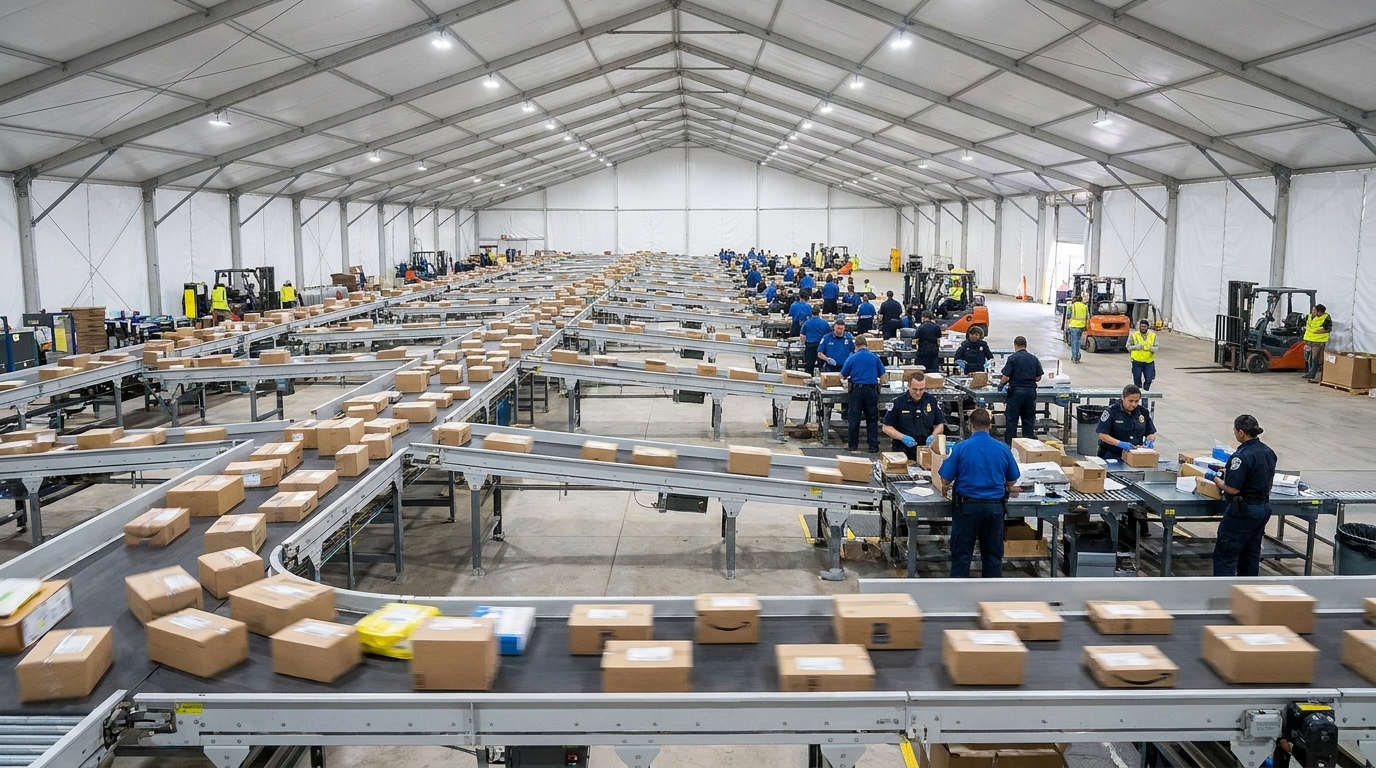
The era of the one-euro smartphone case shipped free from a Shenzhen factory directly to a Parisian doorstep is officially ending. On July 1, 2026, the European Union is abolishing its long-standing €150 de minimis threshold, closing a massive regulatory loophole that previously allowed billions of low-value e-commerce parcels to enter the bloc without paying a single cent in customs duties. For years, this exemption fueled the explosive growth of ultra-fast fashion and budget marketplaces, creating a frictionless pipeline for cheap goods. However, as the volume of these shipments reached unsustainable levels, European regulators recognized that the duty-free system was fundamentally broken. By eliminating the threshold, the EU is attempting to level the playing field for domestic retailers who have long argued that they are forced to pay standard bulk import tariffs while their overseas competitors bypass the system entirely.[1][5]
In place of the abolished threshold, the European Commission has implemented a temporary €3 flat customs duty on all business-to-consumer shipments valued under €150. Crucially, this new tax is not levied on the physical package itself, but rather per tariff line, which is dictated by the Harmonized System (HS) code of the products inside. The mathematics of this new system drastically alter consumer checkout totals. If a shopper orders three identical cotton t-shirts, the package contains only one product category, triggering a single €3 fee. However, if that same shopper builds a mixed basket containing a t-shirt, a plastic toy, and a wireless charger, the shipment spans three distinct HS codes. That mixed basket will now incur a €9 customs duty, fundamentally destroying the appeal of throwing cheap, unrelated impulse items into a single digital cart.[2][7]
The sheer scale of the previous duty-free system forced customs authorities into a state of permanent crisis, necessitating this drastic intervention. In 2025 alone, an astonishing 5.9 billion low-value parcels entered the European Union, with over 90 percent of those shipments originating from China. This unprecedented volume completely overwhelmed national customs infrastructures, making it physically impossible to inspect packages for product safety or accurate valuation. Regulators discovered widespread undervaluation fraud, where sellers would artificially deflate the declared price of goods to ensure they slipped under the €150 radar. Beyond the economic distortion, the environmental toll of flying billions of individually wrapped, low-value items across the globe drew fierce criticism from sustainability advocates, who noted that European textile consumption had surged to 53 kilograms per person annually.[1][6]

To survive this new regulatory reality, the global e-commerce industry is fracturing into two distinct operational models, forcing a massive trade-off for both logistics providers and everyday consumers. Retailers must now choose between maintaining the legacy Direct B2C Import model—flying individual parcels directly to consumers—or pivoting entirely to a B2B2C Local Warehousing model, where goods are shipped in bulk to European fulfillment centers before being dispatched locally. This structural choice dictates everything from product availability and shipping speeds to the final price paid at checkout, reshaping the fundamental mechanics of how cross-border trade operates in the modern era.[4]
The primary argument for maintaining the legacy Direct B2C Import model remains its capacity to offer a virtually infinite inventory. By shipping individual orders directly from Asian factory floors or massive centralized hubs to European doorsteps, e-commerce platforms carry absolutely zero local storage costs. They do not have to predict which items will become viral hits; they simply list millions of SKUs and manufacture or ship them on demand. This hyper-flexible supply chain allows platforms to offer highly niche, long-tail products at the lowest possible base manufacturing price, avoiding the financial risk of holding unsold inventory in expensive European real estate.[3][4]
However, the case against Direct B2C Imports is the sudden and catastrophic destruction of its unit economics under the new tax regime. The €3 per-category duty disproportionately penalizes ultra-cheap goods, effectively turning a €2 impulse buy into a €5 purchase before shipping costs are even calculated. Furthermore, the financial burden is expected to compound; the European Commission is preparing to introduce an additional €2 handling fee per consignment by November 2026. When a €4 mixed-basket order suddenly carries €11 in combined customs and handling fees, the direct air-freight model for budget items becomes mathematically unviable for both the platform and the consumer.[2][5]
However, the case against Direct B2C Imports is the sudden and catastrophic destruction of its unit economics under the new tax regime.
The empirical evidence shows that this direct-mail model is already cracking under localized regulatory pressure. Before the EU-wide rollout, France piloted a similar €2 per-item tax on ultra-fast fashion imports earlier in the year. Following the implementation of the French tax, customs declarations for direct low-value parcels plummeted by a staggering 90 percent. While some volume was temporarily rerouted through neighboring countries, the data definitively proved that budget-conscious consumers are highly sensitive to checkout shock. When the true cost of importation is transparently passed on to the buyer, the demand for individually air-freighted cheap goods evaporates almost instantly.[3][6]

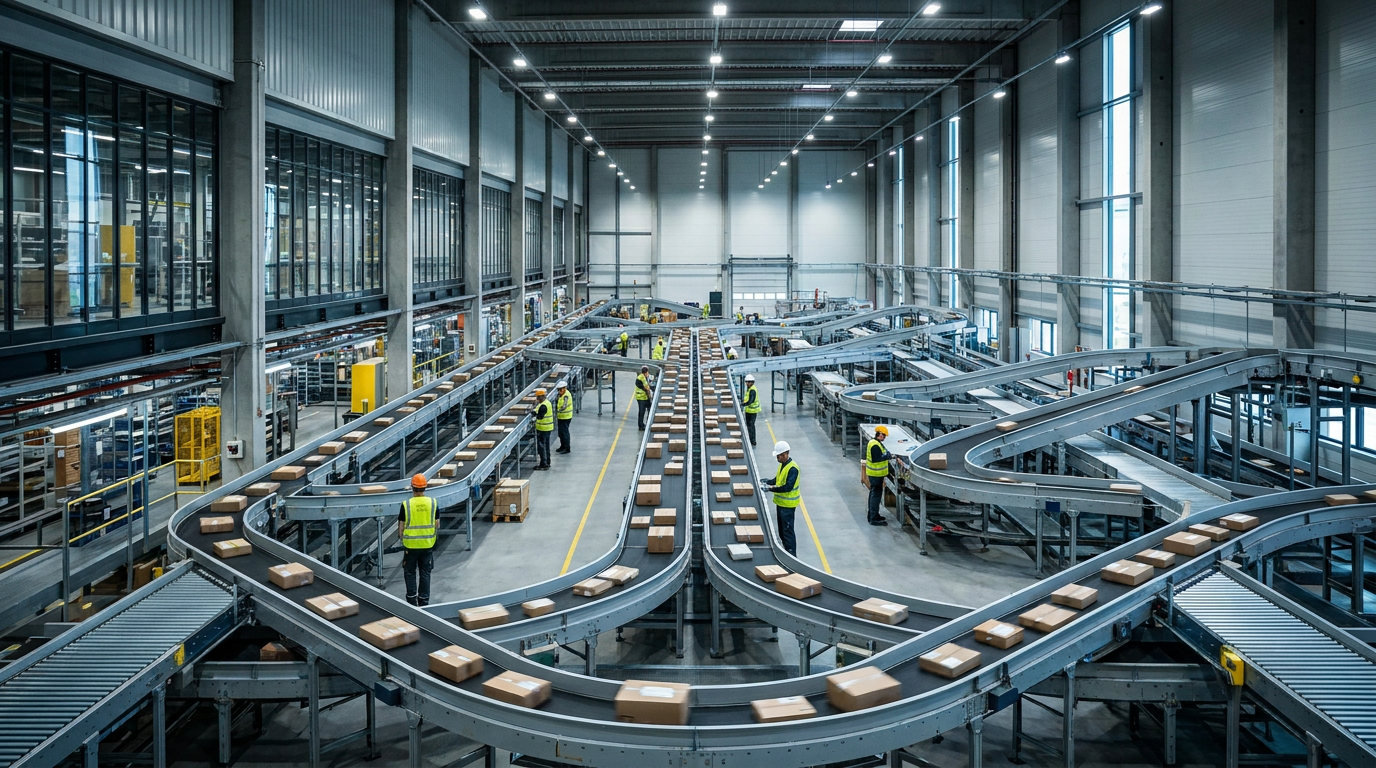
Conversely, the argument for the emerging B2B2C Local Warehousing model is its ability to legally bypass the punitive per-item tax entirely. By importing huge batches of goods into Europe via massive ocean freighters or transcontinental rail containers, platforms undergo standard bulk B2B customs clearance. Under this traditional framework, they pay fractional standard tariffs—often amounting to mere pennies per item—rather than the flat €3 B2C fee. Once the goods clear customs and enter fulfillment centers in logistics hubs like Poland or Germany, they circulate freely within the EU single market, enabling platforms to offer Amazon-style next-day delivery without any surprise duties at checkout.[4][7]
The case against Local Warehousing involves massive upfront capital expenditure and a fundamental shift in inventory risk. Operating state-of-the-art fulfillment centers in Europe requires high overhead costs, local labor compliance, and complex regional logistics networks. More importantly, platforms can no longer offer an "infinite scroll" of untested products. Because they must pay to ship and store items in advance, they are forced to limit their local European catalogs to proven bestsellers that are guaranteed to move quickly. This restricts consumer choice and forces agile tech companies to operate more like traditional, slow-moving legacy retailers.[3][4]
The evidence for this massive logistical shift is highly visible in the aggressive corporate strategies of the world's largest e-commerce platforms. Anticipating the July 2026 tax implementation, industry giants have spent the past year quietly rewriting their supply chains. Shein has already shifted 65 percent of its European orders to localized warehouses, drastically reducing its reliance on direct air freight. Meanwhile, Temu is executing an even more aggressive pivot, targeting 85 percent coverage of European warehouses by the end of the year. These multi-billion-dollar infrastructure investments confirm that the era of the individual cross-border parcel is rapidly closing.[3]
Beyond pure economics, this structural shift carries profound environmental and legal compliance trade-offs. The B2B bulk shipping model drastically reduces the carbon emissions associated with flying millions of individual, half-empty parcels across the globe on dedicated cargo planes. Furthermore, under the new Import One-Stop Shop (IOSS) 2.0 rules, platforms utilizing local warehouses now act as "deemed suppliers." This legal designation makes the marketplaces fully liable for collecting VAT and ensuring that all warehoused goods meet strict EU product safety standards, effectively ending the plausible deniability platforms previously used when third-party sellers shipped dangerous or non-compliant goods directly to consumers.[4][6][8]

Ultimately, the Direct B2C Import model fits well when consumers are purchasing highly niche, single-category items where the €3 tax is easily absorbed by the sheer lack of local alternatives. If a buyer needs a highly specific electronic component or a custom-made craft supply that simply isn't stocked in European warehouses, paying the flat duty is a necessary and acceptable premium. However, this legacy model does not fit when shoppers are building mixed baskets of cheap, cross-category impulse goods, as the compounding tariff penalties per HS code will quickly exceed the actual value of the products themselves.[2][7]
The B2B2C Local Warehousing model fits well when consumers are ordering mainstream fast-fashion, popular consumer electronics, or trending home goods where delivery speed and avoiding sudden checkout fees are paramount. It provides a frictionless, predictable shopping experience that mimics domestic retail. Conversely, it does not fit when platforms are attempting to test unproven, long-tail inventory. The financial risk of shipping thousands of untested novelty items across the ocean, only to have them sit unsold on expensive European warehouse shelves, makes the localized model far too rigid for highly experimental or rapidly shifting micro-trends.[3][4]
The implementation of the €3 tax serves as a vital transitional bridge to the EU Customs Data Hub, a fully centralized and digital tariff system slated for completion in 2028. By forcing the end of the duty-free air-freight era today, the European Union is permanently rewriting the economics of global retail. The new landscape prioritizes regulatory compliance, environmental sustainability, and fair domestic competition over unchecked volume, ensuring that the true cost of globalized e-commerce is finally reflected at the checkout screen.[1][5]
How we got here
December 2025
EU Member States officially agree to abolish the €150 duty-free threshold.
July 1, 2026
The €3 flat customs duty per tariff line takes effect for all low-value B2C imports.
November 2026
An additional €2 handling fee per consignment is expected to be introduced by the European Commission.
July 2028
Target launch for the EU Customs Data Hub, replacing the temporary €3 flat rate with a permanent digital tariff system.
Viewpoints in depth
European Regulators' View
The duty-free threshold created an unsustainable and unfair trade environment.
For European regulators and domestic retailers, the abolition of the €150 threshold is a long-overdue correction. They argue that the previous system essentially subsidized foreign e-commerce giants, allowing them to flood the single market with billions of untested, untaxed goods while local businesses paid standard import tariffs. By implementing the €3 flat fee, regulators aim to crush undervaluation fraud, reduce the environmental impact of individual air freight, and force platforms to take legal responsibility for the safety of the products they sell.
Logistics and Freight Forwarders' View
The tax forces a complete rewiring of the global e-commerce supply chain.
Logistics operators view the €3 tax not just as a financial penalty, but as a structural catalyst that is ending the era of direct-to-consumer air freight. Freight forwarders are actively advising their clients to abandon the low-cost direct mail model, warning that the compounding per-category fees will lead to massive consumer abandonment at checkout. Instead, the industry is pivoting heavily toward B2B2C models, investing billions in European fulfillment centers to clear goods in bulk and avoid the B2C tariff trap entirely.
What we don't know
- Whether the European Commission will successfully implement the proposed additional €2 handling fee by November 2026.
- How smaller, independent dropshippers will survive the transition without the capital to build local warehouses.
- The exact degree to which consumer demand will drop once the compounding €3 fees appear at checkout.
Key terms
- De Minimis Threshold
- A value limit (previously €150 in the EU) below which imported goods were exempt from customs duties.
- HS Code
- Harmonized System code, an international standardized system of names and numbers used by customs authorities to classify traded products.
- B2B2C Fulfillment
- A logistics model where goods are shipped in bulk to a local warehouse (B2B) before being sold individually to consumers (B2C).
- Import One-Stop Shop (IOSS)
- An electronic portal businesses use to comply with EU e-commerce VAT obligations on distance sales of imported goods.
Frequently asked
Does the €3 tax apply to every single item in my cart?
No, it applies per customs tariff category (HS code). Three identical t-shirts incur a single €3 fee, but a t-shirt, a toy, and a phone case would incur €9.
Are there any additional fees coming?
Yes, the European Commission is expected to introduce an additional €2 handling fee per consignment by November 2026.
Will this make Shein and Temu more expensive?
Yes, for items shipped directly from Asia. However, these platforms are rapidly moving stock to European warehouses to bypass the per-item tax and keep prices low.
Does this tax apply to all imports?
The €3 flat fee applies specifically to low-value B2C shipments under €150. Bulk B2B imports continue to pay standard fractional tariffs.
Sources
Source coverage
8 outlets
3 viewpoints surfaced








[1]European CommissionEuropean Retailers & Regulators
EU Customs Reform and the abolition of the €150 threshold
Read on European Commission →[2]DHLGlobal Logistics Providers
From 1 July 2026, the EU removes the €150 customs duty exemption
Read on DHL →[3]JCtransAsian E-Commerce Platforms
Italy's Suspension of Small Parcel Tax: A Boon or a Warning?
Read on JCtrans →[4]CARGOProGlobal Logistics Providers
EU Customs Import Reform 2026: Global Impact on E-commerce and Logistics
Read on CARGOPro →[5]Baker TillyEuropean Retailers & Regulators
EU Member States agree €3 customs duty on low-value e-commerce imports
Read on Baker Tilly →[6]The Irish TimesEuropean Retailers & Regulators
Pushback against fast fashion: France takes lead with €2 per item tax
Read on The Irish Times →[7]Switzerland Global EnterpriseAsian E-Commerce Platforms
EU flat-rate customs duty for small parcels – new from July 2026
Read on Switzerland Global Enterprise →[8]Gerlach CustomsGlobal Logistics Providers
Abolition of the €150 Exemption: What Is Changing?
Read on Gerlach Customs →

Every angle. Every day.
Get shopping stories with full source coverage and perspective breakdowns delivered to your inbox.