
Saks Global Emerges From Chapter 11 With 75% Debt Reduction to Build Modern Luxury Collective
After shedding three-quarters of its debt burden through a strategic restructuring, Saks Global has exited bankruptcy as a newly capitalized luxury retail collective. The turnaround provides a rare blueprint for legacy department stores transitioning into agile, omnichannel brand portfolios.
By Factlen Editorial Team
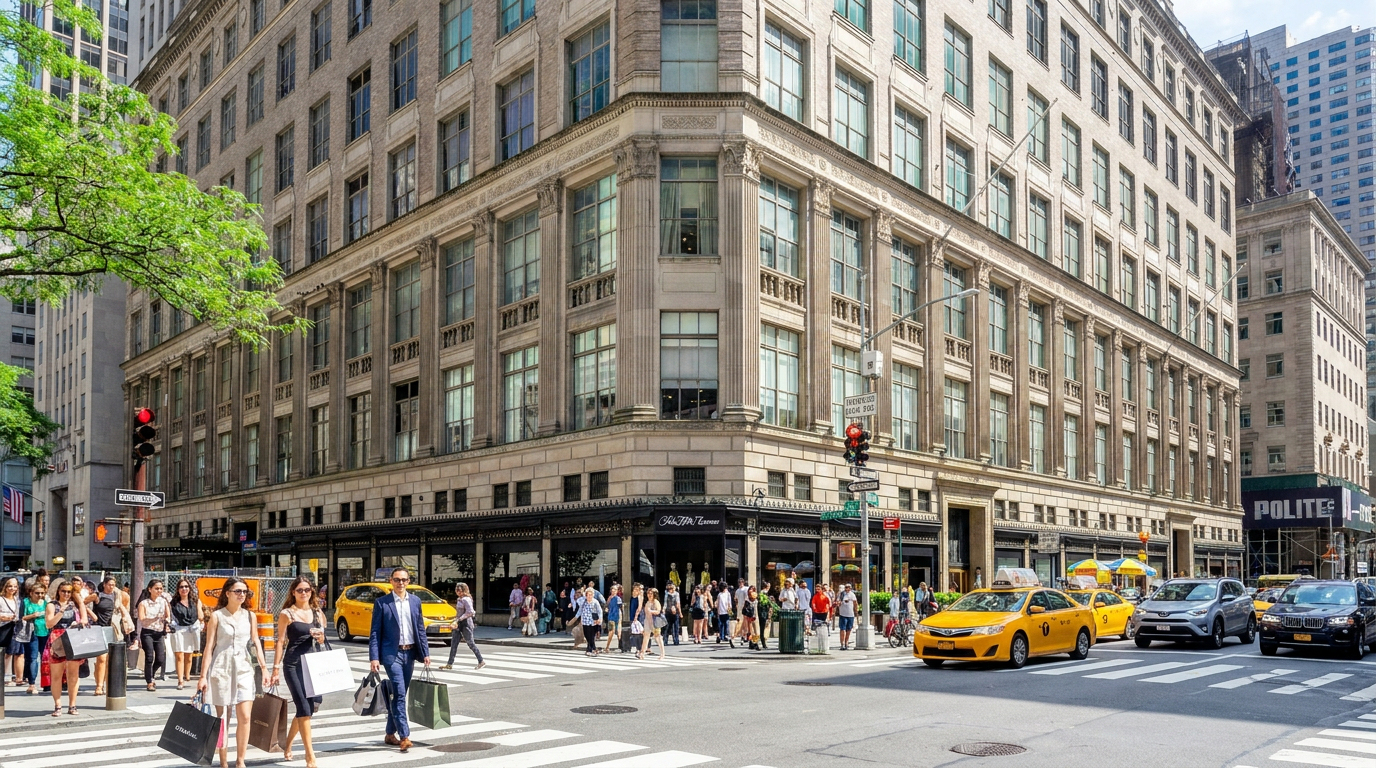
- Financial Restructuring Experts
- Argue that the pre-packaged bankruptcy and debt-for-equity swap was a textbook execution of corporate deleveraging that saved the company.
- Luxury Retail Strategists
- Emphasize the shift toward the 'Exemplar Luxury Group' model and the absolute necessity of repairing trust with European design houses.
- Retail Operations Analysts
- Focus on the successful integration of digital and physical channels, the optimization of the real estate footprint, and the preservation of jobs.
What's not represented
- · Frontline retail workers' direct experiences during the uncertainty of the bankruptcy process.
- · Independent, smaller designers who may have faced delayed payments prior to the Chapter 11 filing.
Why this matters
The successful restructuring of Saks Global proves that physical legacy retail isn't dead—it just requires the right capital structure. By clearing its balance sheet and protecting thousands of jobs, the company has created a sustainable, modern model for department stores in an e-commerce-dominated era.
Key points
- Saks Global officially exited Chapter 11 bankruptcy after shedding 75% of its total corporate debt load.
- Major creditors agreed to a $2.4 billion debt-for-equity swap, taking ownership stakes in the reorganized company.
- The company secured $850 million in exit financing to normalize vendor relationships and fund daily operations.
- Management is pivoting to an 'Exemplar Luxury Group' model, focusing on curated boutique experiences over traditional department store layouts.
- The successful restructuring preserved thousands of retail, corporate, and logistics jobs by avoiding a total liquidation.
Saks Global officially exited Chapter 11 bankruptcy protection this weekend, concluding a rapid and highly orchestrated financial restructuring that has fundamentally transformed the company's trajectory. The newly formed entity emerges with a pristine balance sheet, having successfully slashed its total debt load by an astonishing 75 percent. This massive deleveraging allows the historic retailer to pivot immediately from survival mode to aggressive reinvestment in its core luxury portfolio, securing the future of one of America's most recognizable retail brands.[1][2]
The mechanism behind this turnaround provides a masterclass in modern corporate restructuring. Unlike a Chapter 7 liquidation, which results in a company closing its doors and selling off its assets piecemeal, Chapter 11 allows a business to continue operating while it renegotiates its obligations. For Saks Global, this meant executing a pre-negotiated debt-for-equity swap that had been quietly arranged with major lenders before the initial court filing even took place.[5][6]
In this complex financial arrangement, the company's primary creditors agreed to forgive approximately $2.4 billion in outstanding loans. In exchange for wiping that debt from the ledger, those lenders received majority ownership stakes in the newly reorganized company. By converting debt into equity, the company instantly freed up hundreds of millions of dollars in annual interest payments—capital that can now be redirected toward store renovations, technology upgrades, and employee retention.[1][6]

The financial restructuring was paired with a ruthless, data-driven operational review. Management evaluated the profitability and strategic value of every square foot of real estate in their portfolio. Ultimately, the company decided to retain 45 high-performing flagship locations while using the bankruptcy process to cleanly exit underperforming leases without facing decades of lingering financial penalties. This optimized footprint ensures that every remaining physical location is a net contributor to the bottom line.[5]
With the crushing debt burden finally lifted, the executive team is rolling out what they have dubbed the "Exemplar Luxury Group" model. This strategy represents a definitive move away from the traditional, everything-under-one-roof department store concept. Instead, Saks Global is repositioning itself as a curated collective of high-end boutiques operating under a single, highly efficient corporate umbrella, offering a more intimate and specialized shopping experience.[3][4]
A critical component of this new operational model is the seamless integration of the company's digital and physical assets. In previous years, the e-commerce division and the physical stores operated in distinct silos, often competing against one another for inventory and customer loyalty. Those divisions have now been fully merged, allowing for unified inventory management, frictionless cross-channel returns, and a cohesive customer experience regardless of where the shopper engages with the brand.[5][7]
A critical component of this new operational model is the seamless integration of the company's digital and physical assets.
The successful exit from bankruptcy also serves a vital diplomatic purpose: restoring confidence among the world's top luxury design houses. During the uncertainty of the restructuring process, many European brands tightened their payment terms or withheld their most exclusive, limited-edition inventory. With $850 million in fresh exit financing now secured, Saks Global has normalized these crucial vendor relationships, ensuring that its shelves will be stocked with the high-margin products that drive luxury retail.[1][4]

Perhaps the most significant and uplifting victory of the restructuring is the preservation of human capital. By successfully navigating Chapter 11 and avoiding liquidation, the company saved thousands of retail, corporate, and logistics positions that would have otherwise been eliminated. In an industry that has seen massive job losses over the past decade, the retention of this specialized workforce provides stability for communities and retains the institutional knowledge necessary for high-end clienteling.[2][5]
The Saks Global turnaround stands in stark contrast to the high-profile retail failures of the 2010s, where legacy brands were often bled dry by private equity debt before collapsing entirely. Industry analysts note that the company's proactive approach—filing with a pre-packaged plan while they still had operational momentum, rather than waiting until cash reserves were entirely depleted—was the defining factor in their survival and swift emergence.[2][6]
The company also strategically leveraged its highly valuable real estate portfolio during the negotiations. By having previously separated the operating company from the property company, Saks was able to use its iconic flagship properties as pristine collateral. This structural advantage allowed them to secure highly favorable terms on their $850 million exit financing, providing a robust liquidity runway for the next three years of operations.[1][6]
Looking ahead, the reorganized Saks Global plans to invest heavily in experiential retail to draw shoppers away from their screens and back into physical spaces. This includes expanding private personal shopping suites, integrating high-end dining and hospitality options directly into the store footprint, and hosting exclusive, invite-only cultural events for their top-tier clients. The goal is to make a visit to the store an event in itself, rather than just a transaction.[3][7]

Despite the clean balance sheet and renewed strategic focus, the company is emerging into a complex macroeconomic environment. The broader luxury sector is currently navigating a period of normalized, slower growth following the unprecedented post-pandemic spending boom. Aspirational shoppers, in particular, have pulled back on discretionary spending due to persistent inflation and higher interest rates, meaning the new Saks Global will have to fight harder for every consumer dollar.[4][6]
To combat this, the Exemplar Luxury Group strategy relies heavily on cultivating the "True Luxury" consumer—the ultra-high-net-worth individuals whose spending habits are largely insulated from everyday economic pressures. By elevating the in-store experience and securing exclusive product lines, the company aims to increase the lifetime value of these resilient, top-tier shoppers, insulating the core business from broader retail volatility.[4][7]
Ultimately, the emergence of Saks Global represents a rare, definitive success story in the often-brutal world of corporate retail restructuring. It demonstrates that with decisive management, cooperative creditors, and a clear, modernized strategic vision, legacy brands are not doomed to obsolescence. By shedding the financial mistakes of the past, the company has successfully adapted to the modern consumer landscape, securing its place in the future of luxury retail.[3][5][7]
How we got here
Early 2026
Saks Global files for Chapter 11 bankruptcy with a pre-negotiated restructuring support agreement already in place with major lenders.
Spring 2026
The company evaluates its real estate portfolio, closing underperforming locations while merging its digital and physical operations.
May 2026
The bankruptcy court officially approves the $2.4 billion debt-for-equity swap and the broader reorganization plan.
June 2026
Saks Global officially emerges from Chapter 11 protection, armed with $850 million in new exit financing.
Viewpoints in depth
Financial Restructuring Experts
Wall Street analysts view the turnaround as a masterclass in corporate deleveraging.
Financial experts point to the pre-packaged nature of the bankruptcy as the key to its success. By negotiating the $2.4 billion debt-for-equity swap before ever stepping foot in a courtroom, Saks Global avoided the prolonged, expensive, and value-destroying litigation that often plagues retail bankruptcies. Analysts argue that this swift execution preserved enterprise value and allowed the company to secure highly favorable terms on its $850 million exit financing, providing a robust liquidity runway that most reorganized retailers lack.
Luxury Retail Strategists
Industry insiders emphasize that repairing vendor trust is the most critical next step.
For luxury strategists, the clean balance sheet is only half the battle; the real test is the implementation of the 'Exemplar Luxury Group' model. These experts note that European design houses are fiercely protective of their brand equity and often pull inventory at the first sign of a retailer's financial distress. Strategists argue that the immediate deployment of the new exit financing to normalize payment terms is crucial. If Saks can prove it is a reliable, high-end showcase for these brands, it can secure the exclusive, limited-edition products required to draw ultra-high-net-worth shoppers back into its physical stores.
Retail Operations Analysts
Focus on the operational efficiencies gained by merging digital and physical channels.
Operations analysts celebrate the end of the siloed business model that previously hampered the retailer. By using the restructuring period to fully integrate e-commerce and physical store operations, Saks Global has eliminated internal competition for inventory. Analysts point out that this unified approach allows for a frictionless customer experience—such as buying online and returning in-store—which is now considered baseline table stakes for modern retail. Furthermore, they highlight that retaining 45 optimized flagship locations preserves the physical footprint necessary to act as localized fulfillment centers for digital orders.
What we don't know
- How quickly top-tier European luxury houses will return to offering exclusive, limited-edition inventory to the retailer.
- Whether the new 'Exemplar Luxury Group' model will successfully attract younger Gen Z luxury consumers who typically shop directly with brands.
- How the reorganized company will perform if broader macroeconomic conditions and inflation dampen aspirational luxury spending further.
Key terms
- Chapter 11 Bankruptcy
- A legal process that allows a company to stay in business and restructure its financial obligations, rather than closing down and liquidating its assets.
- Debt-for-Equity Swap
- A financial transaction where a company's creditors agree to cancel outstanding debt in exchange for ownership shares in the reorganized company.
- Exit Financing
- A specialized loan provided to a company as it emerges from bankruptcy, designed to give it the working capital needed to fund its newly reorganized operations.
- Omnichannel Retail
- A business model that seamlessly integrates physical stores, online shopping, and mobile apps into a single, unified customer experience.
Frequently asked
Did Saks close all of its physical stores?
No. The company retained 45 high-performing flagship locations while using the bankruptcy process to cleanly exit leases for underperforming stores.
Who owns Saks Global now?
Following the $2.4 billion debt-for-equity swap, the company is now majority-owned by its former lenders and major creditors.
Will this restructuring affect customer returns or loyalty points?
No. Because the company reorganized under Chapter 11 rather than liquidating, normal business operations, including returns and loyalty programs, continue uninterrupted.
What is the 'Exemplar Luxury Group' model?
It is a new strategic direction that moves away from traditional department store layouts, focusing instead on a curated collective of high-end boutiques and private shopping experiences.
Sources
Source coverage
7 outlets
3 viewpoints surfaced







[1]The Wall Street JournalFinancial Restructuring Experts
Saks Global Exits Bankruptcy With Clean Balance Sheet and $850 Million in New Financing
Read on The Wall Street Journal →[2]BloombergRetail Operations Analysts
Saks Global Completes Restructuring, Saving Thousands of Retail Jobs
Read on Bloomberg →[3]CNBCRetail Operations Analysts
Saks pivots to 'Exemplar Luxury Group' model following successful Chapter 11 exit
Read on CNBC →[4]Women's Wear DailyLuxury Retail Strategists
What Saks Global’s Bankruptcy Exit Means for European Luxury Houses
Read on Women's Wear Daily →[5]Retail DiveRetail Operations Analysts
Saks Global emerges from Chapter 11 with optimized 45-store footprint
Read on Retail Dive →[6]Financial TimesFinancial Restructuring Experts
Inside the $2.4bn debt-for-equity swap that saved Saks Global
Read on Financial Times →[7]Vogue BusinessLuxury Retail Strategists
How the new Saks Global plans to win back the aspirational luxury shopper
Read on Vogue Business →

Every angle. Every day.
Get business stories with full source coverage and perspective breakdowns delivered to your inbox.