
The Engineering of Scale: MSC Finalizes Order for Six 'New Frontier' Mega-Ships with Zero-Emission Port Hotel Power
MSC Cruises and German shipbuilder Meyer Werft are finalizing a €10 billion agreement for up to six next-generation mega-ships equipped with hydrogen fuel cells that eliminate local emissions while docked.
By Factlen Editorial Team
- Cruise Operators & Shipbuilders
- Prioritize fleet expansion, economic viability, and the integration of sustainable tech to meet 2050 net-zero goals.
- Environmental Technologists
- Focus on the engineering mechanics of hydrogen fuel cells and the lifecycle emissions of LNG.
- Coastal Communities
- Advocate for the immediate elimination of local air pollution and noise from idling ships in their harbors.
What's not represented
- · Local port residents who have protested mega-ship arrivals
- · Green hydrogen supply chain logistics providers
Why this matters
The cruise industry has long struggled with the environmental impact of massive ships idling in coastal cities. By scaling hydrogen fuel cell technology to power a 5,400-passenger floating hotel with zero local emissions, this order provides a viable blueprint for decarbonizing maritime tourism.
Key points
- MSC Cruises and Meyer Werft are finalizing a €10 billion contract for up to six 'New Frontier' class mega-ships.
- Each 180,000-gross-ton vessel will accommodate up to 5,400 passengers.
- The ships will feature advanced hydrogen fuel cells to power onboard hotel systems while docked.
- This zero-emission port technology completely eliminates local air pollution and engine noise in coastal cities.
- During ocean transit, the fleet will utilize Liquefied Natural Gas (LNG) to reduce greenhouse gas emissions.
- The massive order secures production capacity at Germany's Meyer Werft shipyard well into the 2030s.
The global cruise industry is scaling up, but the environmental toll of mega-ships idling in historic ports has remained a massive friction point between operators and coastal communities. For years, residents of popular maritime destinations have protested the smog and noise generated by massive floating hotels. Now, European market leader MSC Cruises and legendary German shipbuilder Meyer Werft are finalizing a landmark agreement that attempts to solve this port-pollution problem at scale. The two maritime giants have reached the advanced stages of negotiations for a massive new vessel order valued at an estimated €10 billion, signaling a major shift in how the industry approaches sustainable growth.[1][2]
The joint statement, released by both companies in late June 2026, confirms that concrete design planning and complex contractual negotiations have reached their final phase. Executives from both firms expressed high confidence that a formal signing will be completed in the coming weeks. The deal covers the construction of four confirmed next-generation cruise vessels, alongside options for two additional ships. This multi-billion Euro order will introduce an entirely new architectural platform to the MSC fleet, officially designated as the 'New Frontier' class, which aims to balance massive passenger volume with strict new environmental mandates.[2][3]
The sheer scale of the New Frontier class places it firmly in the upper echelon of modern maritime engineering. Each vessel will measure approximately 180,000 gross tons and feature a maximum capacity of 5,400 passengers across multiple stateroom categories. While slightly smaller in total volume than MSC's existing World Class mega-ships, the new design prioritizes a highly favorable space-to-passenger ratio, suggesting a focus on premium amenities and wider promenades. The first ship is scheduled to enter commercial service in 2030, with subsequent vessels delivered annually through at least 2035 if all options are exercised by the cruise line.[1][4]

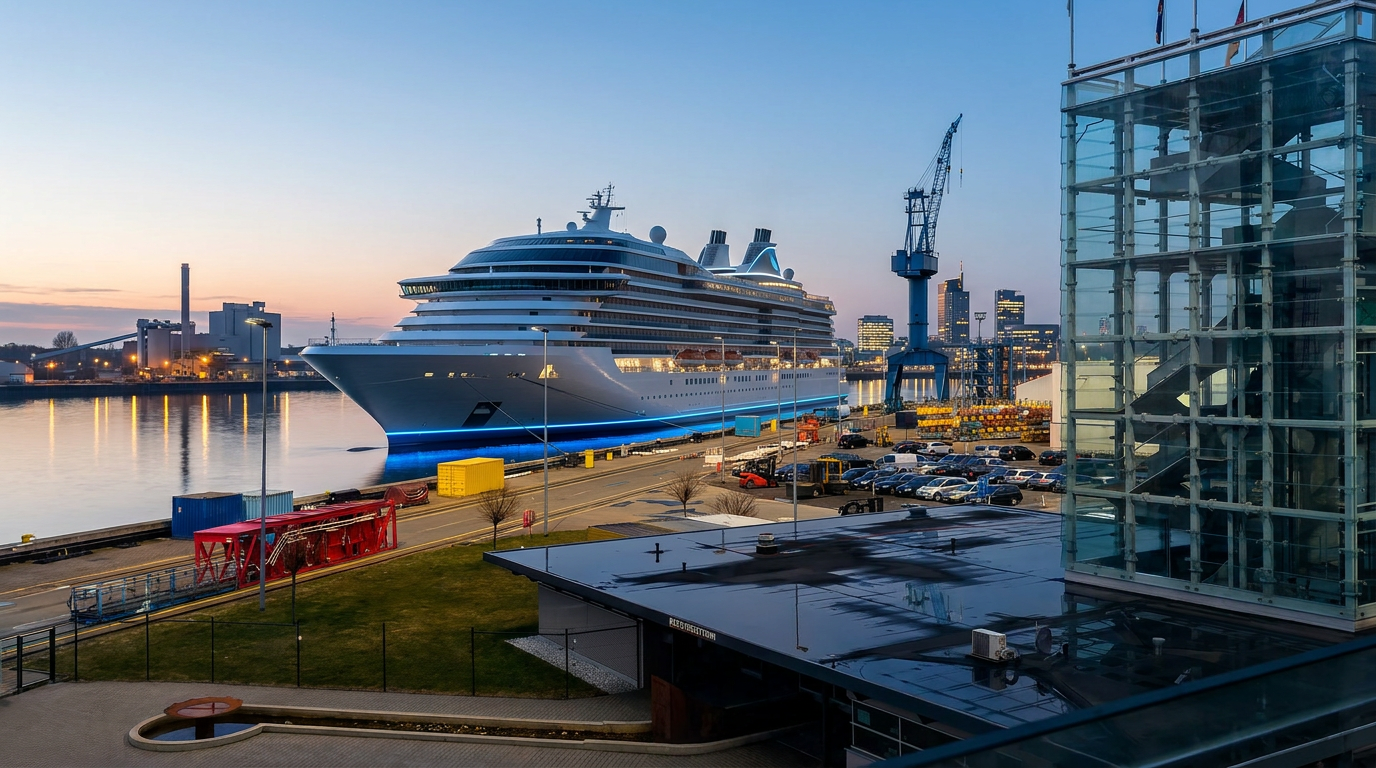
The most significant technological breakthrough of the New Frontier class is its innovative approach to 'hotel power' while the ship is docked. When a traditional mega-ship arrives at a destination, it cannot simply turn off; it must keep its massive internal combustion engines running to generate electricity for the onboard hotel operations. This includes powering the climate control, commercial kitchens, lighting, and entertainment systems for over 5,000 people. This continuous idling process generates significant local air pollution, blanketing port cities in smog and subjecting marine life to continuous underwater engine noise.[1]
To eliminate this environmental burden, the New Frontier vessels will be equipped with advanced hydrogen fuel cell systems specifically designed for port operations. This technology represents an extraordinary engineering achievement for the maritime sector, allowing the mega-ships to generate enough clean energy to operate all onboard hotel systems, dining venues, and passenger staterooms without relying on their main transit engines. By integrating these systems directly into the hull's architecture, MSC is setting a new baseline for how large-scale vessels interact with the coastal environments they visit.[1]
The mechanism behind this zero-emission port power relies on the electrochemical properties of chemically stored liquid hydrogen. When the ship docks at a terminal, the main transit engines are completely shut down. The onboard fuel cells then combine the stored hydrogen with oxygen drawn from the outside air to generate electricity. Because this process relies entirely on a chemical reaction rather than traditional combustion, the only byproduct released from the ship's exhaust stacks is pure water vapor, completely eliminating the thick plumes of smoke typically associated with cruise terminals.[1]

By utilizing these silent, zero-emission fuel cells during port stays, MSC Cruises can effectively eliminate local air pollution, including harmful nitrogen oxides, sulfur oxides, and fine particulate matter. This pioneering energy strategy not only protects the air quality of densely populated urban ports but also safeguards fragile coastal ecosystems and marine reserves across popular Caribbean and Mediterranean destinations. Furthermore, the elimination of engine vibrations drastically reduces underwater acoustic pollution, which has been shown to disrupt the communication and migratory patterns of local marine wildlife.[1]
This technological shift arrives at a critical moment for the maritime tourism sector. In recent years, popular European destinations have aggressively pushed back against the cruise industry, citing the severe environmental and acoustic impact of idling mega-ships. Cities like Venice and Amsterdam have already implemented strict regulations or outright bans on large vessels. By designing a ship that operates silently and cleanly while docked, MSC is directly addressing the primary catalyst for destination backlash, ensuring that their fleet remains welcome in the world's most sought-after and heavily regulated harbors.[1][4]
This technological shift arrives at a critical moment for the maritime tourism sector.
Beyond the zero-emission port capabilities, the New Frontier class will utilize Liquefied Natural Gas (LNG) for its primary transit propulsion across the open ocean. LNG is currently recognized by maritime regulators as the cleanest fossil fuel available at scale for commercial shipping. By running on LNG during ocean crossings, the vessels will significantly reduce their overall greenhouse gas emissions and virtually eliminate sulfur oxide outputs compared to older ships burning traditional heavy marine diesel, marking a substantial improvement in transit sustainability.[1]
However, forward-thinking maritime engineers view standard LNG as a transitional fuel rather than a permanent climate solution. To future-proof the massive €10 billion investment, the New Frontier propulsion systems are being designed with inherent adaptability. As bio-LNG and synthetic LNG become commercially viable and available at scale over the next decade, the ships will be able to seamlessly transition to these renewable fuels. This flexibility ensures that the vessels can continuously drive down their lifecycle carbon footprint without requiring expensive engine retrofits.[1][4]
The transition to more sustainable shipping technology is a core pillar of MSC's broader corporate commitment to achieve net-zero greenhouse gas emissions across its entire operating fleet by the year 2050. To complement the advanced engines, the New Frontier vessels will also incorporate state-of-the-art hull designs, high-efficiency propulsion units, and advanced air lubrication systems. These hydrodynamic innovations reduce drag and decrease fuel consumption during long ocean voyages, allowing the fleet to operate with significantly lower emissions per passenger day than any previous generation of MSC ships.[1]

The decision to build the New Frontier class in Germany represents a major strategic diversification for MSC Cruises. Historically, the Geneva-based cruise line has relied heavily on shipyards in France, such as Chantiers de l'Atlantique, and Italy's Fincantieri to construct its largest commercial vessels. Partnering with Meyer Werft marks the first time MSC has ordered ships from the legendary Papenburg facility, allowing the cruise line to tap into a completely new ecosystem of German naval engineering expertise and specialized environmental technology partners.[1][2]
For Meyer Werft, the massive contract provides a vital economic lifeline and secures the shipyard's production capacity well into the 2030s. The agreement provides a major boost to the regional economy in Lower Saxony, where the shipbuilder serves as a cornerstone employer with a 230-year history. The project will directly support more than 3,200 jobs at the Papenburg shipyard, while sustaining an estimated 20,000 additional jobs across its wider European supplier network, ensuring the survival of a critical industrial hub.[3][5]
By securing this massive multi-year order, Meyer Werft can confidently invest in new automation technologies and sustainable construction practices. This capital injection ensures that the Papenburg facility remains one of the most efficient and environmentally friendly shipyards in the world, capable of meeting the increasingly complex demands of next-generation maritime architecture. The partnership guarantees that European shipbuilding will continue to lead the global market in the development of green maritime technologies.[1][5]

While the environmental specifications are rapidly coming into focus, MSC has kept the specific onboard amenities and interior designs of the New Frontier class tightly under wraps. Industry analysts expect the vessels to feature highly refined passenger spaces and exclusive 'ship-within-a-ship' luxury retreats, balancing the massive scale of the vessel with premium, personalized vacation experiences. The cruise line has promised that the new platform will enable the creation of entirely new and exclusive global itineraries.[1][4]
The successful deployment of the hydrogen fuel cell systems will also require significant logistical coordination outside of the shipyard. While the ships will be equipped to utilize liquid hydrogen, the global supply chain for sourcing and bunkering green hydrogen at commercial ports is still in its infancy. MSC and its engineering partners will need to work closely with port authorities and energy providers worldwide to ensure the necessary refueling infrastructure is in place by the time the first vessel launches in 2030.[1]
Ultimately, the advanced negotiations between MSC Cruises and Meyer Werft represent an exciting glimpse into the future of global cruising, where massive scale meets environmental responsibility. By designing these complex emission-reduction systems directly into the vessel's architecture from the outset, the partners are ensuring that the new ships will meet or exceed the increasingly strict environmental regulations being implemented by global maritime authorities, guaranteeing that the fleet remains competitive and compliant for decades to come.[1][4]
As the cruise line continues its aggressive international expansion, the debut of these highly advanced mega-ships will undoubtedly cement its reputation as a leader in sustainable maritime tourism. The New Frontier class stands as a multi-billion Euro proof of concept, demonstrating to the rest of the industry that luxury travel, massive passenger capacity, and strict environmental stewardship can coexist beautifully on the open ocean. When the first vessel glides silently into port in 2030, it will mark the beginning of a cleaner, quieter era for the world's coastal destinations.[1][5]
How we got here
Dec 2025
MSC Cruises and Meyer Werft sign a preliminary Letter of Intent for the New Frontier class in Berlin.
Feb 2026
MSC executives visit the Papenburg shipyard to solidify design parameters and environmental targets.
Jun 2026
The companies announce that contract negotiations have reached an advanced stage, with a formal signing imminent.
2030
The first New Frontier class mega-ship is scheduled to be delivered and enter commercial service.
2050
MSC Cruises' target deadline to achieve net-zero greenhouse gas emissions across its entire global fleet.
Viewpoints in depth
Cruise Industry Executives
Focused on strategic expansion, fleet modernization, and securing long-term shipyard capacity.
For leadership at MSC Cruises and Meyer Werft, the New Frontier class is a massive capital bet on the enduring demand for mega-ship cruising. By committing €10 billion to a new platform, MSC is diversifying its supply chain away from its traditional French and Italian partners, while Meyer Werft secures its production pipeline well into the 2030s. Executives emphasize that scaling up to 5,400-passenger vessels is the only economically viable way to fund the expensive research and development required for next-generation hydrogen and LNG propulsion systems.
Environmental Engineers
Focused on the technical viability of hydrogen fuel cells and the transition away from fossil fuels.
Maritime engineers view the integration of port-use hydrogen fuel cells as a critical milestone in decarbonizing the shipping sector. While they praise the elimination of local air pollution and underwater noise during docking, they caution that the true environmental impact depends on the fuel supply chain. Engineers stress that the hydrogen must be 'green'—produced using renewable energy—rather than derived from fossil fuels, and they note that standard LNG used for transit remains a transitional step until bio-LNG becomes available at scale.
Port City Authorities
Focused on the reduction of local air pollution, noise, and the protection of coastal ecosystems.
For the municipalities that host these massive vessels, the promise of zero-emission port hotel power directly addresses their most pressing grievances. Coastal cities have increasingly pushed back against the smog, particulate matter, and constant engine hum generated by idling mega-ships. Local authorities view the New Frontier class as a necessary baseline for future maritime tourism, arguing that if a ship cannot operate silently and cleanly while docked, it should no longer be granted access to fragile urban harbors.
What we don't know
- The specific global itineraries and home ports for the New Frontier class have not yet been announced.
- It remains unclear how the global supply chain will scale to provide the massive quantities of liquid hydrogen required at various international ports.
- Details regarding the onboard amenities, interior design, and cabin configurations are still being kept under wraps.
Key terms
- Gross Tonnage (GT)
- A nonlinear measure of a ship's overall internal volume, used to determine its size and regulatory class.
- Hydrogen Fuel Cell
- A device that generates electricity through an electrochemical reaction between hydrogen and oxygen, producing only water vapor as a byproduct.
- Liquefied Natural Gas (LNG)
- Natural gas cooled to a liquid state, currently used as a cleaner-burning transitional marine fuel that significantly reduces sulfur and nitrogen emissions.
- Cold Ironing / Shore Power
- The process of providing electrical power to a ship at berth so its main engines can be turned off; the New Frontier class achieves this internally via fuel cells.
- Bio-LNG
- A renewable form of liquefied natural gas produced from organic waste, which can be used in existing LNG engines to further reduce carbon footprints.
Frequently asked
How big are the New Frontier class ships?
Each ship will measure approximately 180,000 gross tons and have a maximum capacity of 5,400 passengers, placing them among the largest cruise vessels in the world.
What makes these ships environmentally friendly?
They are equipped with advanced hydrogen fuel cells that power the ship's hotel operations while docked, allowing the main engines to be shut down completely to eliminate local air pollution.
What fuel do the ships use when sailing?
During ocean transit, the vessels will run on Liquefied Natural Gas (LNG), which significantly reduces greenhouse gas emissions compared to traditional marine diesel, with the ability to adapt to renewable bio-LNG in the future.
When will the first ship be ready?
The first vessel in the New Frontier class is scheduled for delivery in 2030, with subsequent ships arriving annually.
Sources
Source coverage
5 outlets
3 viewpoints surfaced





[1]Deep ArrivalCruise Operators & Shipbuilders
MSC Cruises and Meyer Werft Near Deal on New Frontier Ships
Read on Deep Arrival →[2]Seatrade Cruise NewsCruise Operators & Shipbuilders
MSC Cruises, Meyer close to firming 4+2 'New Frontier' order
Read on Seatrade Cruise News →[3]Cruise Industry NewsCruise Operators & Shipbuilders
MSC, Meyer Werft Expect to Seal 4+2 Ship Deal in Coming Weeks
Read on Cruise Industry News →[4]Cruise to TravelEnvironmental Technologists
MSC Cruises and Meyer Werft are in the final stage of negotiations
Read on Cruise to Travel →[5]Daily EchoCruise Operators & Shipbuilders
MSC Cruises unveils plans for four new mega cruise ships
Read on Daily Echo →
Every angle. Every day.
Get travel stories with full source coverage and perspective breakdowns delivered to your inbox.