
The Mechanics of Capital Deployment: How the FHFA's $88 Billion Lending Cap Reshapes the Multifamily Housing Market
The Federal Housing Finance Agency has set an $88 billion multifamily lending cap for Fannie Mae and Freddie Mac, prioritizing workforce housing. The directive provides crucial liquidity to the apartment sector while incentivizing developers to build more affordable units.
By Factlen Editorial Team
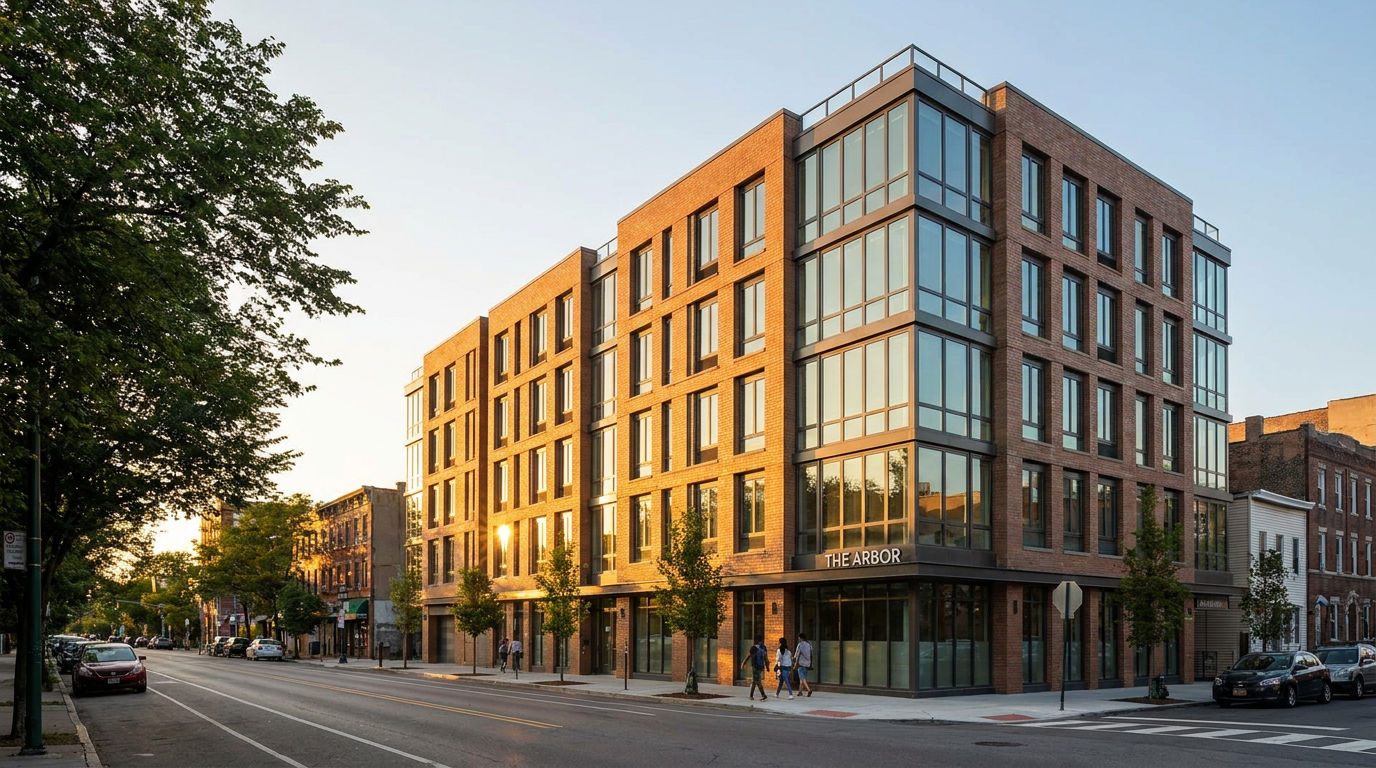
- Affordable Housing Advocates
- View the 50% mission-driven mandate as a crucial mechanism to prevent the displacement of working-class renters and incentivize the construction of the 'missing middle'.
- Commercial Real Estate Developers
- Value the predictability and liquidity the $88 billion cap provides, allowing them to plan multi-year construction projects without fear of sudden credit freezes.
- Federal Regulators
- Focus on balancing market liquidity with risk management, ensuring the GSEs support the housing market without crowding out private capital.
What's not represented
- · Local Zoning Boards
- · Individual Renters
Why this matters
By guaranteeing $176 billion in combined liquidity for apartment financing, this policy ensures developers can secure the capital needed to build and maintain workforce housing. This directly impacts rent stability and housing availability for millions of Americans by preventing credit freezes in the commercial real estate market.
Key points
- The FHFA has set the 2026 multifamily lending cap at $88 billion each for Fannie Mae and Freddie Mac.
- A strict 50% mandate requires half of the capital to be deployed toward affordable, mission-driven housing.
- The policy ensures developers have reliable access to financing for multi-year apartment construction projects.
- By guaranteeing liquidity, the cap acts as a shock absorber against volatility in the commercial real estate market.
- Private capital continues to play a major role, particularly in financing luxury and standard market-rate developments.
The Federal Housing Finance Agency (FHFA) has officially established the 2026 multifamily lending caps for Fannie Mae and Freddie Mac at $88 billion per enterprise. This combined $176 billion backstop serves as the financial bedrock for the American apartment market, dictating exactly how much capital the government-sponsored enterprises (GSEs) can deploy to purchase multifamily mortgages over the next twelve months.[1][3]
While single-family mortgages often dominate the housing conversation, the multifamily sector is what houses roughly 44 million American renter households. The FHFA's annual cap is not merely a bureaucratic limit; it is a highly calibrated economic dial that determines the flow of liquidity to developers, property managers, and ultimately, the communities relying on stable rental markets.[4][6]
To understand the mechanics of this capital deployment, it is essential to look at how Fannie Mae and Freddie Mac operate. They do not lend money directly to developers. Instead, they purchase existing multifamily loans from private lenders, package them into mortgage-backed securities, and sell them to global investors. This process replenishes the lenders' capital, allowing them to issue new loans for more apartment buildings.[3][6]
The $88 billion cap exists to strike a delicate balance. If the GSEs were allowed to buy an unlimited number of loans, they would crowd out private capital—such as life insurance companies and commercial banks—from the market. Conversely, if the cap were set too low, lenders would run out of capital, construction would stall, and the resulting housing shortage would drive rents exponentially higher.[4][5]
The 2026 figure represents a strategic increase aimed at stabilizing a commercial real estate market that has faced significant interest rate volatility in recent years. By committing to $176 billion in total liquidity, the FHFA is sending a clear signal to developers: if you build the right kind of housing, the capital will be there to finance it.[1][5]
The most transformative element of the 2026 cap is its strict "mission-driven" mandate. The FHFA has stipulated that a full 50% of the $88 billion—$44 billion per enterprise—must be directed exclusively toward mission-driven, affordable housing projects. This is not a suggestion; it is a hard regulatory requirement that reshapes how lenders evaluate potential deals.[2][3]

In the context of the FHFA, "mission-driven" housing generally refers to properties where rents are affordable to residents earning 80% or less of the Area Median Income (AMI). In particularly expensive metropolitan areas, this threshold is adjusted, but the core objective remains the same: ensuring that the working class—teachers, nurses, and emergency responders—are not priced out of their communities.[3][4]
This mandate fundamentally alters developer behavior. Because lenders know they have a guaranteed, government-backed buyer for loans attached to affordable housing, they can offer developers slightly lower interest rates and better terms for those specific projects. The policy effectively subsidizes the creation of the "missing middle" housing that the free market often struggles to build profitably.[2][6]
The policy effectively subsidizes the creation of the "missing middle" housing that the free market often struggles to build profitably.
The mechanics of this capital deployment also include powerful incentives for green financing. A portion of the mission-driven cap is carved out for properties that meet stringent energy efficiency and water conservation standards. Developers who retrofit older apartment buildings to reduce their carbon footprint gain access to this specialized pool of capital, blending environmental goals with housing affordability.[3][5]
For the private capital sector, the $88 billion cap provides a clear map of where they can compete. Because the GSEs are heavily focused on the affordable and workforce segments, private lenders—such as commercial mortgage-backed securities (CMBS) issuers and debt funds—are stepping in to finance luxury high-rises and Class-A urban developments. This creates a healthy, bifurcated market where different types of capital serve different demographic needs.[1][5]

Uncertainty is always a factor in commercial real estate, and the FHFA has built flexibility into the system. If the broader economy experiences a sudden downturn and private capital flees the market, the FHFA retains the authority to revise the $88 billion cap upward mid-year. This ensures that the GSEs can act as a shock absorber, preventing a total freeze in apartment financing during a crisis.[3][6]
Historically, this shock-absorber function has been vital. During previous periods of market stress, Fannie Mae and Freddie Mac were often the only reliable sources of liquidity for multifamily properties. The current cap structure institutionalizes this safety net while actively steering the market toward socially beneficial outcomes.[4][6]
Industry analysts note that the predictability of the cap is almost as important as the dollar amount. Real estate development operates on multi-year timelines. A developer purchasing land today needs to know that financing will be available when the building is completed in 2028. The FHFA's transparent, forward-looking cap provides that necessary horizon.[2][5]

The ripple effects of this policy extend directly to the consumer level. When developers can secure stable, lower-cost financing, the pressure to maximize rents to cover exorbitant capital costs is reduced. While it does not solve the housing crisis overnight, the mission-driven mandate acts as a structural brake on rent inflation in the workforce housing sector.[4][6]
Furthermore, the focus on preserving existing affordable housing is a critical component of the strategy. A significant portion of the $88 billion will be used to refinance older apartment buildings, providing owners with the capital needed to make essential repairs without displacing current residents or drastically raising rents to cover the improvements.[2][3]
Ultimately, the mechanics of the FHFA's capital deployment represent one of the most effective levers the federal government has to shape the housing landscape. By carefully calibrating the $88 billion cap and enforcing the 50% affordability mandate, the policy ensures that the financial system actively supports the creation and preservation of communities where Americans can afford to live.[4][6]
How we got here
Pre-2008
Fannie Mae and Freddie Mac operate with fewer restrictions on multifamily volume, leading to systemic risk.
2014
The FHFA implements the first formal caps on multifamily lending to encourage private capital participation.
2020-2022
Caps are adjusted dynamically to provide emergency liquidity during pandemic-era market disruptions.
June 2026
The FHFA announces the $88 billion cap for 2026, cementing the 50% mission-driven affordability requirement.
Viewpoints in depth
Affordable Housing Advocates
Emphasize the necessity of the 50% mission-driven mandate to combat the national housing shortage.
Advocacy groups and urban policy researchers argue that the free market alone cannot solve the affordable housing crisis, as developers naturally gravitate toward high-margin luxury builds. By legally requiring Fannie Mae and Freddie Mac to dedicate $44 billion each to workforce housing, advocates note that the federal government is effectively forcing capital down-market. They point to data showing that properties financed under the mission-driven cap maintain significantly slower rent growth compared to conventionally financed buildings.
Commercial Real Estate Developers
Focus on the stability and predictability that the $176 billion combined backstop provides to the construction pipeline.
For the development community, the specific dollar amount of the cap is often secondary to the certainty it provides. Commercial real estate projects take years to move from land acquisition to leasing. Developers argue that knowing the GSEs will be actively purchasing loans in 2026 allows them to confidently secure short-term construction debt today. Industry groups emphasize that without this guaranteed exit strategy for lenders, the entire pipeline of new apartment construction would severely contract.
Federal Regulators
Prioritize market balance, ensuring the GSEs provide a safety net without monopolizing the multifamily finance sector.
From a regulatory perspective, the $88 billion cap is an exercise in macroeconomic risk management. The FHFA's primary goal is to ensure that Fannie Mae and Freddie Mac fulfill their charter to support housing without taking on outsized risk that could threaten the broader financial system. Regulators view the cap as a ceiling that intentionally leaves room for private capital—like life insurance companies and CMBS markets—to thrive, while maintaining the authority to raise the cap if private liquidity suddenly evaporates.
What we don't know
- Whether the $88 billion cap will be fully utilized by the end of 2026, depending on broader interest rate movements.
- How aggressively private capital will compete for the non-mission-driven 50% of the market.
- The exact number of new affordable units that will be generated directly as a result of the 2026 mandate.
Key terms
- GSE (Government-Sponsored Enterprise)
- Financial services corporations created by the US Congress, such as Fannie Mae and Freddie Mac, designed to enhance the flow of credit to targeted sectors of the economy.
- Area Median Income (AMI)
- The midpoint of a region's income distribution, used by regulators to determine eligibility for affordable housing programs.
- Liquidity
- The availability of liquid assets (cash) to a market or company; in real estate, it refers to the availability of capital for lending and borrowing.
- Mortgage-Backed Security (MBS)
- An investment similar to a bond that is made up of a bundle of home loans bought from the banks that issued them.
Frequently asked
What is the FHFA multifamily lending cap?
It is a limit set by the Federal Housing Finance Agency on the total dollar amount of multifamily loans that Fannie Mae and Freddie Mac can purchase in a given year.
Why is the cap set at $88 billion?
The $88 billion figure per enterprise is calibrated to provide enough liquidity to keep apartment construction and refinancing active, without crowding private lenders out of the market.
What does 'mission-driven' housing mean?
Mission-driven housing refers to apartments where the rent is affordable to residents earning 80% or less of the Area Median Income, ensuring housing for the working class.
Do Fannie Mae and Freddie Mac lend directly to builders?
No. They purchase existing loans from private lenders, which gives those lenders the cash needed to go out and fund new apartment projects.
Sources
Source coverage
6 outlets
3 viewpoints surfaced





[1]BloombergFederal Regulators
FHFA Sets 2026 Multifamily Lending Caps at $88 Billion Each for Fannie and Freddie
Read on Bloomberg →[2]HousingWireCommercial Real Estate Developers
Fannie and Freddie receive $88B multifamily caps with strict affordability mandates
Read on HousingWire →[3]Federal Housing Finance AgencyFederal Regulators
FHFA Announces 2026 Multifamily Loan Purchase Caps for Fannie Mae and Freddie Mac
Read on Federal Housing Finance Agency →[4]Urban InstituteAffordable Housing Advocates
Analyzing the Impact of FHFA Multifamily Caps on Housing Supply and Affordability
Read on Urban Institute →[5]National Multifamily Housing CouncilCommercial Real Estate Developers
2026 Capital Markets Outlook: Navigating the $88B GSE Cap
Read on National Multifamily Housing Council →[6]Factlen Editorial TeamFederal Regulators
Synthesis by Factlen editorial team
Read on Factlen Editorial Team →

More in finance
See all 4 stories →Mortgage Policy
The Mechanics of Mainstream Integration: How the FHFA Directive Forces Fannie and Freddie to Count Crypto in Mortgage Risk
8 sources

Central Bank Policy
The Mechanics of the Policy Reversal: How the European Central Bank's Unexpected Rate Hike Reshapes the Global Inflation Fight
6 sources

Every angle. Every day.
Get finance stories with full source coverage and perspective breakdowns delivered to your inbox.