
Expanded 48-Team World Cup Group Stage Shatters Scoring Records With 215 Goals
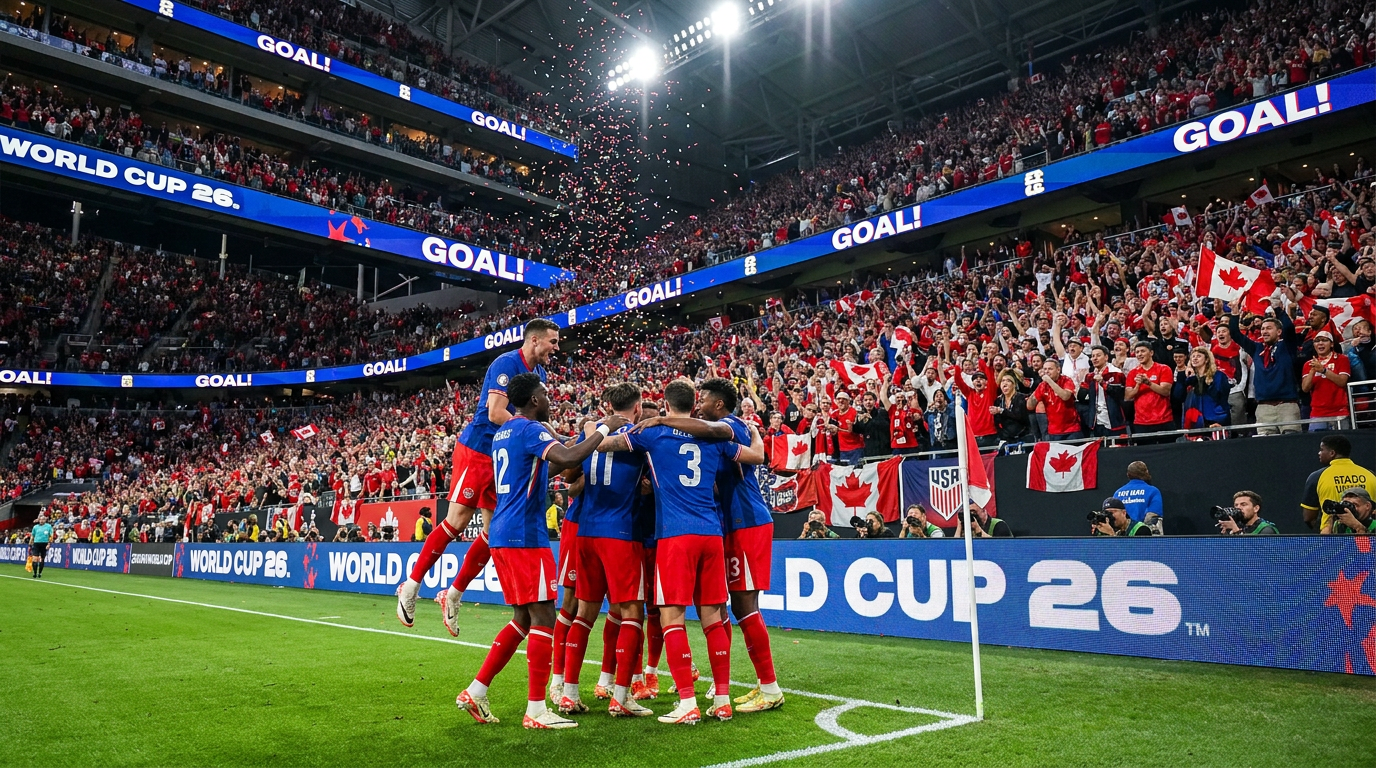
The inaugural 48-team FIFA World Cup group stage concluded with a record-breaking 215 goals across 72 matches, vindicating the expanded format with high-scoring thrillers and unprecedented global representation.
By Factlen Editorial Team
- Global Football Fans
- Thrilled by the high-scoring matches, diverse representation, and the sheer volume of daily football.
- Tactical Analysts
- Focused on how the 'best third-place' advancement rule altered risk-taking behavior and encouraged attacking play.
- Tournament Organizers
- Vindicated by the commercial success, record attendance, and entertainment value of the expanded 48-team format.
What's not represented
- · Goalkeepers and defensive coaches dealing with the increased offensive output
- · Domestic league managers managing player fatigue from the expanded schedule
Why this matters
The dramatic increase in goals and competitive parity eases pre-tournament fears that a 48-team format would dilute the quality of play. It proves that expanding the global stage can deliver unprecedented entertainment while elevating emerging football nations.
Key points
- The 2026 World Cup group stage concluded with a record 215 goals in 72 matches.
- The expanded 48-team format averaged nearly three goals per game, defying expectations of defensive play.
- The tournament has already broken the all-time attendance record set in 1994.
- The 'best third-place' advancement rule encouraged teams to attack to improve their goal difference.
- The competition now enters the newly created Round of 32 knockout phase.
The 2026 FIFA World Cup has officially closed its historic, expanded group stage, leaving behind a trail of shattered records and breathless finishes. Across 72 matches played in the United States, Mexico, and Canada, teams found the back of the net an astonishing 215 times, setting a new high-water mark for the tournament's opening phase.[1][2]
This unprecedented offensive explosion translates to nearly three goals per game, silencing early critics who warned that expanding the tournament to 48 teams would lead to defensive, low-quality stalemates. Instead, the new format has delivered a relentless attacking spectacle, rewarding teams that pushed forward rather than those that parked the bus.[3]
The sheer volume of matches—up from the traditional 48 group games in the 32-team era—naturally inflated the overall goal tally, but the rate of scoring has also remained remarkably high. Teams from every confederation have contributed to the tally, showcasing a closing gap in global footballing quality and a universal commitment to positive tactics.[2][4]

European heavyweights like Paris Saint-Germain and Real Madrid predictably lead the club charts for player goals, but the expanded format has allowed unexpected domestic clubs to shine. Players from Crystal Palace and Sunderland have surprisingly surged to the top of the Premier League's World Cup scoring contributions, reflecting the diverse talent pool on display across the 48 rosters.[1][4]
The vibrant atmosphere across North America has matched the on-pitch action. With 48 fanbases converging, the tournament has already set an all-time attendance record, surpassing the 3.58 million mark established during the 1994 World Cup before the knockout rounds have even begun.[2]
The vibrant atmosphere across North America has matched the on-pitch action.
From Mexico's passionate home crowds to Norway's traveling contingents, the cultural exchange has been as colorful as the goal-fests. The expanded field allowed nations that historically missed out on the tournament to bring their unique flair and attacking intent to the global stage, enriching the tournament's fabric.[2][6]

The dramatic final matchdays of the group stage provided late twists, with teams desperately pushing for the goals needed to secure a top-two finish or advance as one of the eight best third-place teams. This safety net for third-place finishers paradoxically encouraged more risk-taking in the final third, as goal difference became a crucial tiebreaker.[3][6]
As the tournament transitions into the newly minted Round of 32, the focus shifts from group-stage goal tallies to knockout survival. The bracket is now set, featuring heavyweight clashes and Cinderella stories that promise to test the defensive mettle of the tournament's top scorers.[3][6]
With the stakes raised, the margin for error shrinks significantly. Analysts are already looking ahead to the inevitability of penalty shootouts, noting that the 2022 final was decided from the spot after a six-goal thriller. Teams are heavily investing in shootout strategies, knowing that a single spot-kick could define their 2026 campaign.[5]

Ultimately, the 2026 group stage will be remembered as a triumph of attacking football. By inviting more teams to the party, organizers inadvertently engineered one of the most entertaining, high-scoring opening acts in the history of the sport, setting a massive benchmark for the knockout rounds to follow.[1][2][4]
How we got here
Jan 2017
FIFA officially approves the expansion of the World Cup from 32 to 48 teams.
Mar 2023
FIFA confirms the 2026 format will feature 12 groups of four teams, resulting in 104 total matches.
Jun 2026
The 2026 World Cup kicks off across the United States, Mexico, and Canada.
Jun 28, 2026
The group stage concludes with a record-breaking 215 goals scored.
Viewpoints in depth
Tournament Organizers
Vindicated by the commercial and entertainment success of the expanded format.
For FIFA and the North American host committees, the group stage's offensive explosion is the ultimate vindication. Critics spent years arguing that expanding to 48 teams would dilute the talent pool and result in unwatchable, defensive stalemates. Instead, the sheer volume of goals and the shattered attendance records have proven that the global appetite for the sport—and the depth of international talent—can easily support a larger footprint. The financial and cultural returns have already exceeded projections.
Tactical Analysts
Focused on how the tournament's new math altered risk-taking behavior.
Football tacticians point to the tournament's structure as the primary driver of the goal fest. Because eight third-place teams advance to the Round of 32, goal difference became a vital currency. Teams that might have previously settled for a 1-0 loss to protect their standing were instead forced to push for equalizers, leaving themselves open to counter-attacks. This structural safety net paradoxically created a more open, high-risk style of play across the board.
Emerging Football Nations
Celebrating the opportunity to showcase their talent on the biggest stage.
For nations making their debut or returning after long absences, the expanded format provided a crucial platform. Rather than being overwhelmed by traditional powerhouses, many emerging teams contributed heavily to the goal tally, proving they belong at the highest level. The experience gained and the moments of attacking brilliance produced by these squads are expected to accelerate football development in their home regions for years to come.
What we don't know
- Whether the high scoring rate will continue into the high-pressure knockout rounds.
- How the physical toll of the expanded tournament will affect players in the later stages.
- Which underdog team will capitalize most on the new Round of 32 format.
Key terms
- Group Stage
- The opening phase of the World Cup where teams are divided into pools and play a round-robin format to determine who advances.
- Round of 32
- The newly introduced first knockout round for the 2026 World Cup, featuring the top two teams from each group plus the eight best third-place finishers.
- Best Third-Place Teams
- A qualification mechanism where the top eight teams that finish third in their respective groups advance to the knockout rounds based on points and goal difference.
Frequently asked
How many goals were scored in the 2026 group stage?
A record 215 goals were scored across the 72 group stage matches.
Did the expanded format lower the quality of play?
No, the scoring rate remained high at nearly three goals per match, defying early predictions of defensive stalemates.
Which domestic clubs produced the most goals?
While giants like PSG and Real Madrid led the charts, players from clubs like Crystal Palace and Sunderland also made surprisingly high contributions.
What happens next in the tournament?
The tournament now moves into the inaugural Round of 32, a direct knockout phase leading to the final.
Sources
Source coverage
6 outlets
3 viewpoints surfaced



[1]BBC SportTactical Analysts
World Cup goals chart led by PSG and Real... plus Palace and Sunderland
Read on BBC Sport →[2]The GuardianTournament Organizers
World Cup 2026 colour chart: fans of all 48 teams join the party – in pictures
Read on The Guardian →[3]ESPNTactical Analysts
Overreacting to World Cup bracket: How far will US...
Read on ESPN →PSG No. 1? Reranking Europe's top clubs by player ...
Read on ESPN →World Cup glory could all come down to penalties. What’s the best strategy?
Read on The Guardian →World Cup Daily LIVE: Iran despair after late Aust...
Read on ESPN →


Every angle. Every day.
Get sports stories with full source coverage and perspective breakdowns delivered to your inbox.