
Agility Robotics Files for $2.5 Billion IPO as Nvidia Launches Dedicated Safety Platform for Humanoids
Agility Robotics has filed for a landmark $2.5 billion IPO, signaling the commercial maturation of humanoid robots, while Nvidia introduced a dedicated safety and simulation platform to accelerate their deployment in human-centric environments.
By Factlen Editorial Team
- Commercial Scalers
- Focus on the financial viability, ROI, and operational scaling of humanoid fleets as a solution to labor shortages.
- Safety & Infrastructure Providers
- Emphasize the necessity of deterministic hardware guardrails to tame the unpredictable nature of generative AI in physical spaces.
- Workforce Analysts
- Examine how human workers will interact with, trust, and adapt to working alongside heavy, autonomous machines.
What's not represented
- · Warehouse floor workers
- · OSHA regulatory officials
Why this matters
The convergence of public market funding and standardized safety infrastructure marks the transition of humanoid robots from experimental lab projects to scalable, everyday commercial labor. This dual milestone provides both the capital and the technical guardrails needed to deploy heavy bipedal machines alongside human workers safely.
Key points
- Agility Robotics has filed for a $2.5 billion IPO, marking the first major public offering for a humanoid robotics company.
- Nvidia launched 'Isaac Guardian,' a hardware-level safety platform designed to prevent humanoid robots from colliding with humans.
- The Nvidia platform acts as a deterministic override, intercepting unsafe AI commands in under 10 milliseconds.
- The combination of public capital and standardized safety tech is expected to rapidly accelerate the deployment of robots in commercial warehouses.
The humanoid robotics industry crossed a historic threshold on Tuesday as Agility Robotics filed its S-1 with the Securities and Exchange Commission, seeking a $2.5 billion valuation in the sector's first major initial public offering.[1][2]
The filing coincides with a massive infrastructure announcement from Nvidia, which unveiled the "Isaac Guardian" platform—a dedicated hardware and software stack designed specifically to guarantee the physical safety of humanoid robots operating near people.[4][7]
Together, these two developments signal the end of the humanoid robot's purely experimental phase and the beginning of its commercial scaling era. For years, the industry has promised a future where general-purpose robots could seamlessly integrate into human environments, but capital constraints and safety concerns kept deployments limited.[5][6]
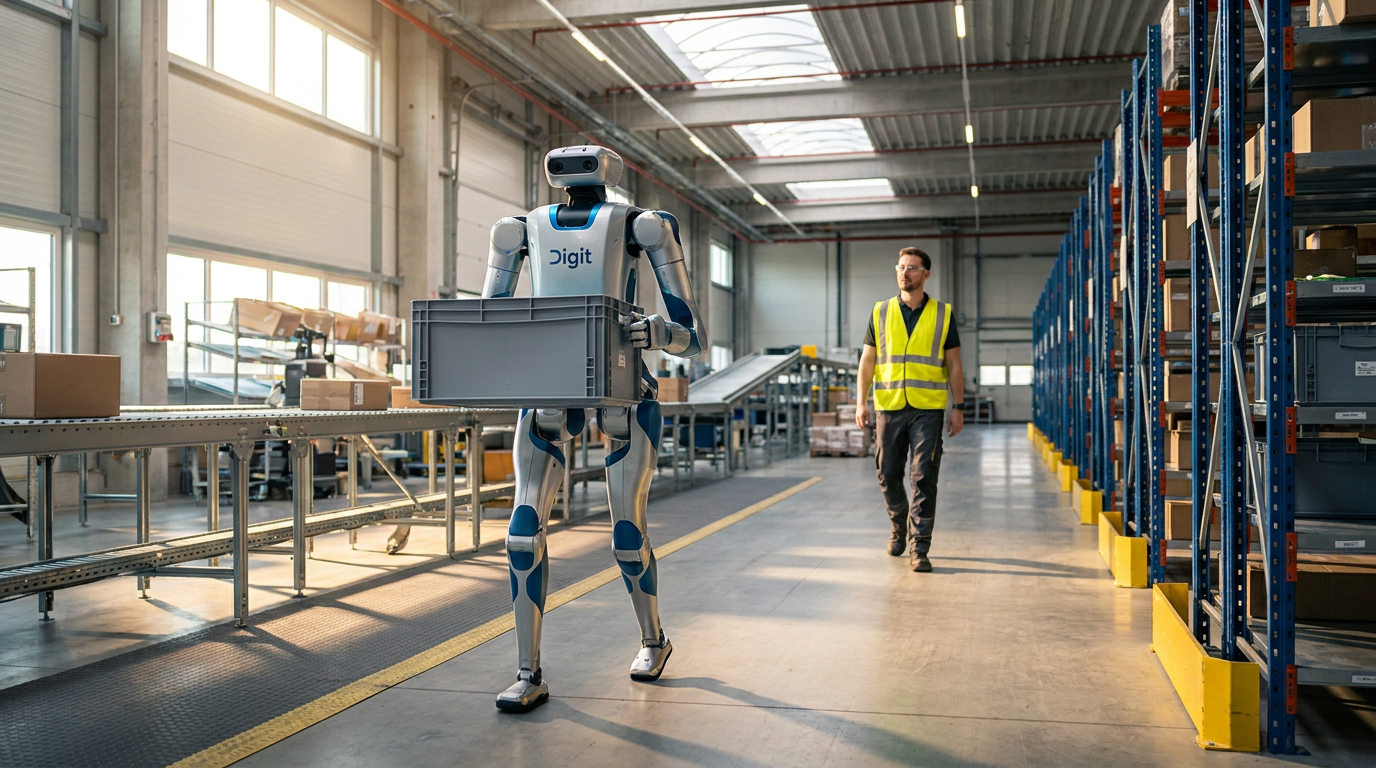
Agility Robotics, best known for its bipedal robot "Digit," has spent the last three years moving quietly from viral demonstration videos to grueling pilot programs in logistics facilities. The company's unique, bird-like leg architecture has proven highly efficient for warehouse traversal and tote-handling tasks.[3]
According to the IPO prospectus, the company generated an estimated $150 million in revenue last year, primarily through multi-year fleet leasing agreements—often referred to as Robotics-as-a-Service (RaaS)—with logistics giants like Amazon and GXO.[1]

But scaling from a few dozen robots in highly controlled, fenced-off zones to thousands of units mixing freely with human workers requires a leap in verifiable safety. This is exactly the bottleneck Nvidia's new platform aims to solve.[2][6]
Nvidia's Isaac Guardian operates as an independent, deterministic "superego" for AI-driven robots. It sits between the robot's "brain" and its physical motors, acting as an unyielding physical governor.[4]
Nvidia's Isaac Guardian operates as an independent, deterministic "superego" for AI-driven robots.
Modern humanoid robots rely on massive vision-language-action (VLA) models to understand their environment and decide what to do. However, these neural networks are inherently probabilistic; they can hallucinate, miscalculate, or experience sudden latency spikes.[4][7]
The new Nvidia platform intercepts every motor command generated by the robot's primary AI before it reaches the physical actuators. It runs a high-speed physics simulation to predict the exact physical outcome of the requested movement.[7]
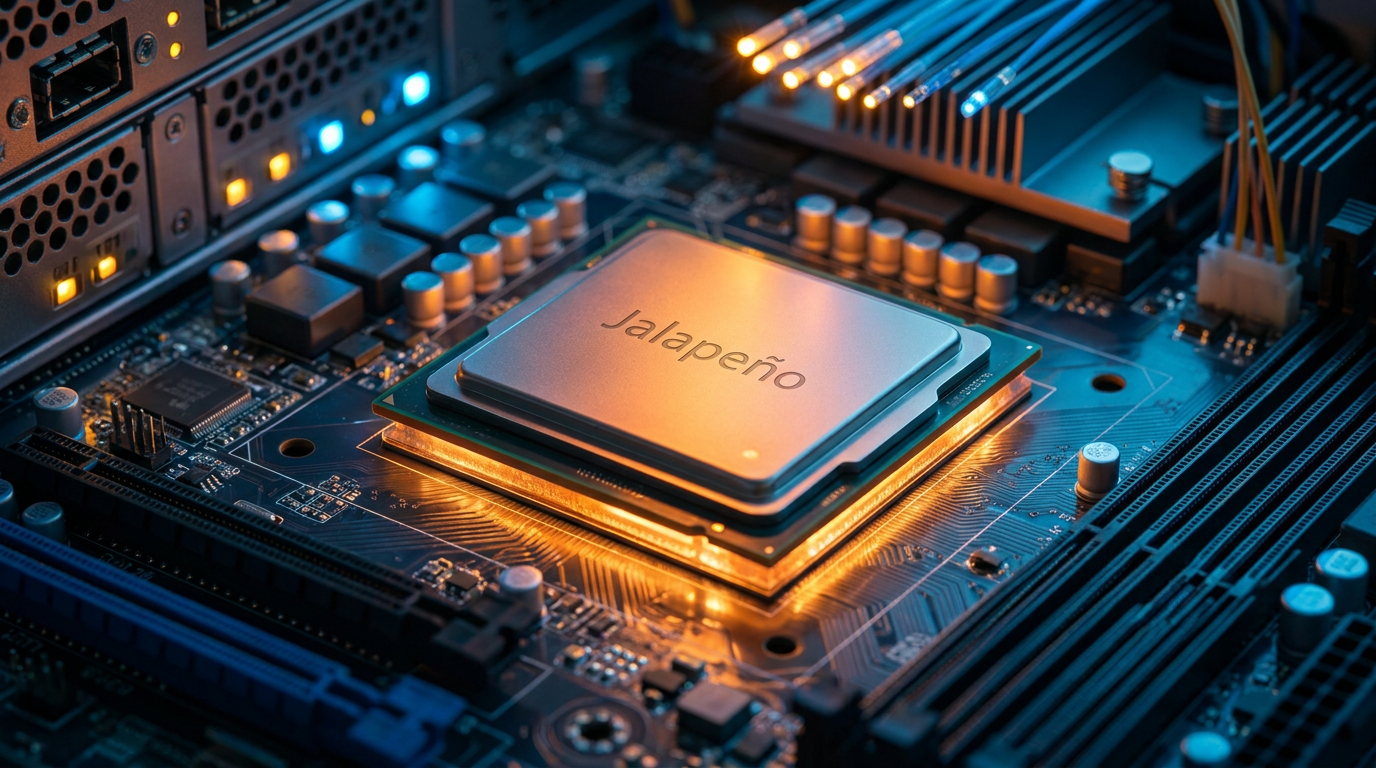
If the simulation detects that the planned movement will result in a collision with a human, a loss of balance, or a violation of kinematic constraints, the Guardian chip overrides the command in under 10 milliseconds, forcing the robot into a safe, stationary posture.[4][7]

This hardware-level veto power provides the "provable safety" that regulatory bodies like the Occupational Safety and Health Administration (OSHA) have been demanding before approving widespread, uncaged deployments of heavy bipedal machines.[5][6]
Industry analysts note that Nvidia's decision to standardize this safety layer is a rising tide that will lift all boats in the robotics sector, not just Agility. By commoditizing the safety infrastructure, Nvidia allows robotics startups to focus on capability rather than reinventing compliance mechanisms.[2]
Competitors like Figure, Tesla, and Boston Dynamics are also racing to deploy general-purpose humanoids. A shared, industry-standard safety architecture could dramatically accelerate regulatory approval and insurance underwriting across the entire board.[3][6]

The financial markets are watching Agility's IPO closely as a bellwether for the entire embodied AI sector. The offering will test whether public investors are ready to value robotics companies more like high-margin, recurring-revenue software platforms than traditional, capital-intensive hardware manufacturers.[1][2]
As Digit prepares to ring the opening bell at the Nasdaq later this year, the robotics industry is betting that the combination of massive capital influx and ironclad safety guarantees will finally bring the humanoid workforce out of the lab and permanently onto the warehouse floor.[5]

How we got here
2020
Agility Robotics introduces the first commercial version of its bipedal robot, Digit.
Late 2023
Amazon begins testing Digit in its robotics research and development facilities.
2025
Agility scales up manufacturing and begins multi-year fleet leasing agreements with major logistics firms.
June 2026
Agility files for a $2.5 billion IPO concurrently with Nvidia's launch of a dedicated humanoid safety platform.
Viewpoints in depth
Commercial Scalers
Investors and logistics executives view the IPO and safety tech as the final keys to solving chronic labor shortages.
For the logistics and manufacturing sectors, the humanoid robot is no longer a science fiction concept but a necessary operational upgrade. Facing chronic labor shortages and high turnover in physically demanding roles, commercial scalers view Agility's transition to a public company as proof that the Robotics-as-a-Service (RaaS) model is financially viable. They argue that standardized safety platforms like Nvidia's will drastically lower insurance premiums and integration costs, allowing companies to deploy thousands of units without taking on unacceptable liability risks.
Safety & Infrastructure Providers
Engineers emphasize that AI is too unpredictable to control heavy machinery without strict, hard-coded physical guardrails.
Robotics researchers and infrastructure providers have long warned about the 'sim-to-real' gap—the reality that AI models trained in virtual environments often behave unpredictably in the messy physical world. This camp argues that large neural networks, while brilliant at reasoning and object recognition, are fundamentally probabilistic and prone to hallucinations. Therefore, they view Nvidia's deterministic safety layer not just as a feature, but as a mandatory prerequisite for the industry. By physically decoupling the robot's 'brain' from its 'spinal cord,' they ensure that no matter how confused the AI gets, the machine cannot physically execute a dangerous movement.
Workforce Analysts
Labor advocates and sociologists are closely monitoring how human workers will adapt to sharing tight spaces with autonomous machines.
While the technology is maturing rapidly, workforce analysts caution that the human element remains the biggest unknown. Deploying heavy, bipedal robots into active warehouses requires a massive shift in workplace culture and ergonomics. This camp is focused on the psychological impact of working alongside machines that mimic human movement, as well as the broader implications for job displacement. However, many in this group also acknowledge that if deployed correctly, these robots could take over the most ergonomically punishing tasks—such as repetitive heavy lifting from ground level—potentially extending the physical longevity of human workers.
What we don't know
- How public market investors will ultimately value a hardware-heavy robotics company compared to pure software AI firms.
- Whether OSHA and other international regulatory bodies will accept Nvidia's safety platform as sufficient for fully uncaged, side-by-side human-robot workflows.
- How quickly competitors will adopt Nvidia's standard versus attempting to build their own proprietary safety guardrails.
Key terms
- Vision-Language-Action (VLA) Model
- An advanced AI system that processes visual input and text instructions to directly output physical movement commands for a robot.
- Deterministic Safety Layer
- A hard-coded, predictable software and hardware system that cannot 'hallucinate,' used to override the unpredictable decisions of AI.
- Kinematic Constraints
- The physical limits of how a robot's joints and limbs can safely move without breaking the machine or causing it to fall over.
- Robotics-as-a-Service (RaaS)
- A business model where companies lease robots and their accompanying software on a subscription basis, rather than buying the hardware outright.
Frequently asked
When will these robots be available for home use?
Not anytime soon. Current deployments are strictly focused on structured commercial environments like warehouses and factories, where tasks are repetitive and environments can be mapped.
How does Nvidia's safety platform actually stop a robot?
It uses a dedicated hardware chip that intercepts motor commands. If its internal physics simulation predicts a collision or loss of balance, it overrides the AI and forces the robot to stop moving in under 10 milliseconds.
Why is Agility Robotics going public now?
The company has transitioned from research and development to generating significant revenue through fleet leasing agreements, and requires public market capital to manufacture robots at a massive scale.
Sources
Source coverage
7 outlets
3 viewpoints surfaced







[1]CNBCCommercial Scalers
Agility Robotics files for IPO, targeting $2.5 billion valuation as humanoid sector heats up
Read on CNBC →[2]BloombergCommercial Scalers
Nvidia's New Safety Tech and Agility's IPO Mark a Turning Point for Embodied AI
Read on Bloomberg →[3]TechCrunchSafety & Infrastructure Providers
Agility Robotics is going public just as Nvidia solves the humanoid safety bottleneck
Read on TechCrunch →[4]IEEE SpectrumSafety & Infrastructure Providers
Inside Nvidia's Isaac Guardian: The Deterministic Safety Layer for Probabilistic Robots
Read on IEEE Spectrum →[5]ReutersCommercial Scalers
Robotics firm Agility files for IPO; Nvidia unveils safety chip for warehouse droids
Read on Reuters →[6]The VergeWorkforce Analysts
Humanoid robots are officially a real business now
Read on The Verge →[7]Nvidia NewsroomSafety & Infrastructure Providers
Nvidia Introduces Isaac Guardian Platform to Accelerate Safe Deployment of Humanoid Robots
Read on Nvidia Newsroom →
Every angle. Every day.
Get ai stories with full source coverage and perspective breakdowns delivered to your inbox.