
Japan's Largest Taxi App Just Raised $553 Million to Replace Missing Drivers with Robotaxis
Following Japan's biggest IPO of 2026, ride-hailing giant Go is funneling its new capital into autonomous vehicle networks to solve a severe national driver shortage.
By Factlen Editorial Team
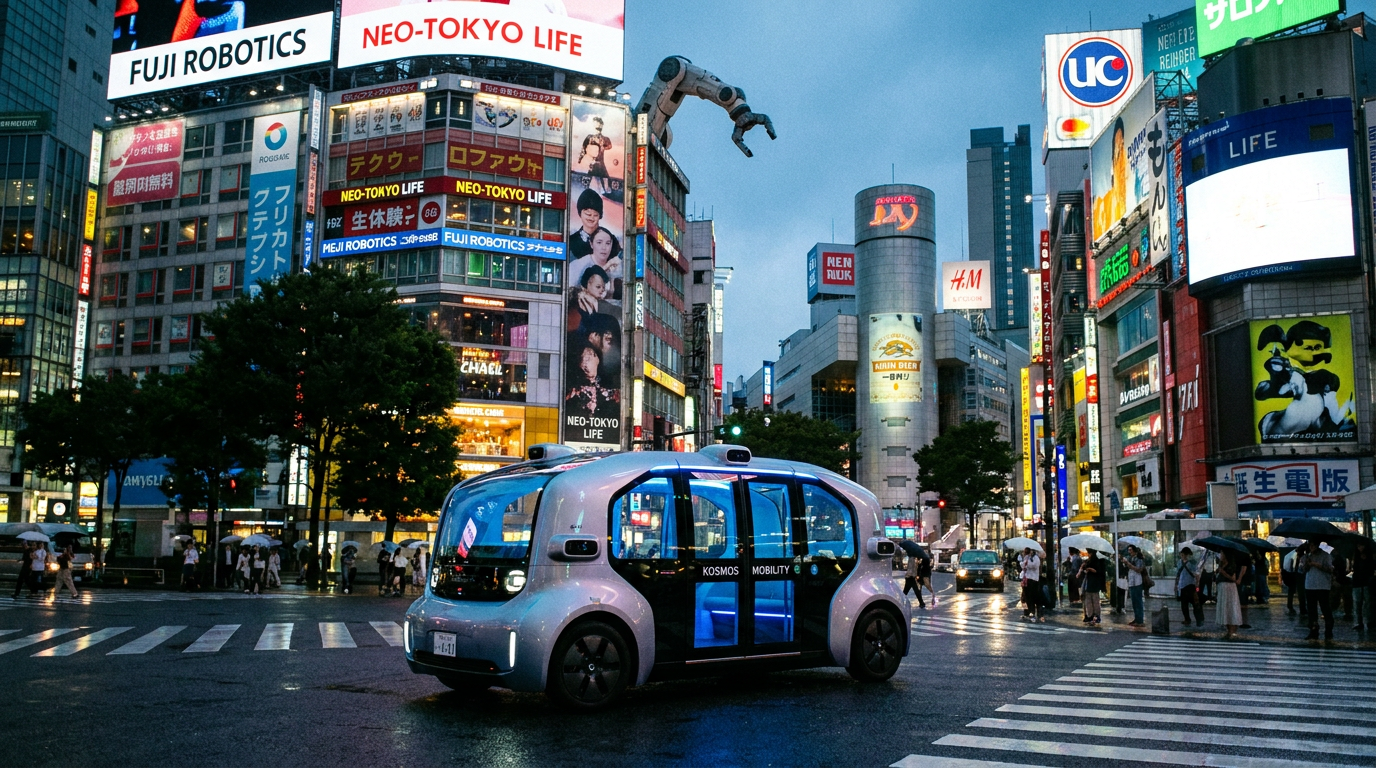
- Mobility Tech Platforms
- Software companies view autonomous vehicles as the only scalable solution to permanent labor shortages.
- Japanese Policymakers
- The government views autonomous driving as a critical economic imperative to maintain national transport capacity.
- Traditional Taxi Operators
- Legacy fleet operators are embracing tech partnerships to maintain service levels as their workforce ages out.
Why this matters
Japan is acting as a real-world laboratory for how aging nations can use autonomous technology to maintain their infrastructure. As the global workforce shrinks, the deployment of robotaxis in Tokyo offers a blueprint for keeping cities moving when human drivers retire.
In a sluggish year for public listings, Japan's dominant ride-hailing platform just pulled off the country's largest initial public offering of 2026. Go Inc. debuted on the Tokyo Stock Exchange's Growth market, raising ¥88.6 billion (approximately $553 million) in a heavily oversubscribed offering that drew major international players like BlackRock and Wellington Management. While the financial milestone provided a much-needed jolt to Japan's tech sector, the company's blueprint for the capital is what has the mobility industry paying attention.[1][5]
Go is not using its half-billion-dollar war chest merely to optimize its app or subsidize fares. According to company representatives, the proceeds are strictly earmarked for two strategic pillars: expanding its nascent robotaxi business and pursuing aggressive mergers and acquisitions. The platform, which already boasts 35 million downloads and controls roughly 80 percent of Japan's taxi app market, is pivoting from a software middleman into a foundational layer for autonomous urban transit.[1][4][6]
This aggressive push into autonomous vehicles is not born out of a desire for futuristic novelty, but rather an existential demographic crisis. Japan is simply running out of people to drive its cars. Data from the Ministry of Land, Infrastructure, Transport and Tourism reveals that the number of taxi drivers in the country has plummeted by nearly 20 percent in recent years. With the nation's population aging rapidly, labor analysts agree that this workforce is unlikely to ever recover its former numbers.[1][4]

The government has attempted legislative stopgaps to keep the country moving. In 2024, Japan finally legalized ride-sharing services, a practice it had long resisted. However, the rollout came with strict caveats—drivers were required to be officially employed and managed by established taxi companies to ensure safety and quality control. While well-intentioned, these restrictions meant the regulatory change failed to unlock the massive pool of gig-economy labor seen in the United States or Europe, leaving the core shortage unresolved.[1][4]
Recognizing that human labor cannot scale to meet demand, Go has embraced a partnership-driven approach to autonomy. Rather than spending billions to develop proprietary self-driving hardware and AI from scratch, Go is positioning itself as the indispensable network operator. The company has forged a trilateral alliance with Waymo—Alphabet's industry-leading autonomous driving unit—and Nihon Kotsu, Japan's largest traditional taxi operator.[2][4][6]
Under this framework, Waymo provides the autonomous driving technology, Nihon Kotsu manages fleet operations and vehicle maintenance, and Go supplies the routing algorithms and the massive customer base. Test runs have been quietly taking place on the streets of Tokyo, allowing the AI to learn the complex, densely packed urban environment of the Japanese capital without requiring passengers to download a new, untested application.[2][6]
Go is far from the only player racing to automate Japan's streets. In March 2026, Uber announced a partnership with Nissan and the UK-based autonomous vehicle startup Wayve to test robotaxi services in Tokyo by the end of the year. That service will utilize Nissan Leaf electric vehicles equipped with Wayve's AI systems, all accessible directly through the Uber app. Similarly, Didi Mobility Japan—a joint venture between SoftBank and China's Didi Chuxing—is laying the groundwork for its own autonomous fleets.[6]

Go is far from the only player racing to automate Japan's streets.
Domestic automakers are also feeling the pressure to adapt. Honda had previously partnered with General Motors' Cruise division to launch a driverless taxi service in central Tokyo by early 2026. Although GM pulled the plug on its robotaxi business in late 2024 amid fierce competition and regulatory hurdles in the US, Honda has maintained that it is still actively pursuing a robotaxi service, seeking new alliances to bring the technology to market.[2]
Behind this corporate maneuvering is a Japanese government that feels a profound sense of urgency. Watching the United States and China pull ahead in the commercialization of autonomous vehicles—with Waymo operating in several US cities and Baidu's Apollo Go blanketing parts of China—Tokyo has realized it cannot afford to be a non-player in the next generation of mobility. The stakes are both economic and structural.[2][3]
To accelerate development, the government recently drafted a new growth strategy targeting a 26 percent global share in self-driving cars for Japanese companies by the 2030s. This initiative actively nudges long-time domestic rivals, such as Toyota, Honda, and Nissan, to form alliances and share research on AI-powered self-driving technology, rather than duplicating efforts in isolation.[3]

The implications of this technology extend far beyond the neon-lit intersections of Tokyo. Japan's rural areas are facing an even steeper demographic cliff, with a projected shortfall of 36,000 bus drivers by 2030 already forcing service cuts in regional networks. The government views autonomous mobility—ranging from robotaxis to self-driving community shuttles—as a vital public utility required to keep aging rural populations connected to hospitals, grocery stores, and civic centers.[2][3]
While Go has not yet announced a firm date for when its vehicles will operate entirely without human safety drivers, the timeline is compressing. Industry analysts and think tanks suggest that the Japanese government is pushing to see the country's first fully operational, commercial robotaxis by 2027. To meet that deadline, 2026 is serving as the critical year for public test rides and regulatory stress-testing.[2][6]
For the rest of the world, Japan's aggressive pivot toward robotaxis serves as a preview of the future. As birth rates decline and populations age across Europe, South Korea, and eventually the Americas, the labor shortages currently squeezing Tokyo's transit networks will become a global phenomenon. By using its massive IPO to fund a robotic workforce today, Go is building the infrastructure that other nations will inevitably need tomorrow.[1][3]
Viewpoints in depth
Mobility Tech Platforms
Software companies view autonomous vehicles as the only scalable solution to permanent labor shortages.
For platforms like Go and Uber, the transition to robotaxis is a matter of long-term survival. Because Japan's demographic decline means the pool of human drivers will never recover, these companies recognize that their future growth is capped by labor availability. By partnering with AI developers like Waymo and Wayve, they aim to transition from managing gig workers to operating highly efficient, automated fleets that can run 24/7 without fatigue.
Japanese Policymakers
The government views autonomous driving as a critical economic imperative to maintain national transport capacity.
Tokyo sees the driver shortage not just as an inconvenience, but as a threat to national productivity. With a projected shortfall of 36,000 bus drivers and a 36% shortage of truck drivers expected by 2031, the government is actively pushing domestic rivals to collaborate on AI. Policymakers have set an ambitious target to capture a 26% global share in self-driving cars by the 2030s, hoping to turn a domestic demographic crisis into a global technological export.
Traditional Taxi Operators
Legacy fleet operators are embracing tech partnerships to maintain service levels as their workforce ages out.
Companies like Nihon Kotsu, Japan's largest taxi operator, are taking a pragmatic approach to autonomy. Rather than fighting the technology, they are partnering with tech giants to provide the physical infrastructure—vehicle maintenance, cleaning, and local operational expertise. For these legacy operators, robotaxis are a lifeline that will allow them to continue serving customers even as their human drivers retire.
What we don't know
- Go has not announced a specific timeline for when its robotaxis will operate commercially without human safety drivers.
- It remains unclear how quickly autonomous technology can be adapted to navigate Japan's narrow, complex rural roads where transit needs are most acute.
- The exact targets of Go's planned mergers and acquisitions remain undisclosed.
Sources
Source coverage
6 outlets
3 viewpoints surfaced






[1]TechCrunchMobility Tech Platforms
Go eyes robotaxis and acquisitions after Japan’s biggest IPO of 2026. Here’s why it matters
Read on TechCrunch →[2]The Japan TimesTraditional Taxi Operators
Waymo-backed robotaxis quietly ply the streets of Tokyo as tests continue
Read on The Japan Times →[3]Tech in AsiaJapanese Policymakers
Japan targets 26% global share in self-driving cars by 2030s
Read on Tech in Asia →[4]ZaminTraditional Taxi Operators
Revolution in Japan's Taxi Market: Go Company Launches Robotaxis
Read on Zamin →[5]CryptoBriefingMobility Tech Platforms
Japan's biggest listing of the year raised $553 million for the taxi-hailing giant
Read on CryptoBriefing →[6]KuCoin NewsMobility Tech Platforms
Japanese ride-hailing platform Go will use its 88.6 billion yen IPO proceeds to expand its Robotaxi services
Read on KuCoin News →


Every angle. Every day.
Get technology stories with full source coverage and perspective breakdowns delivered to your inbox.